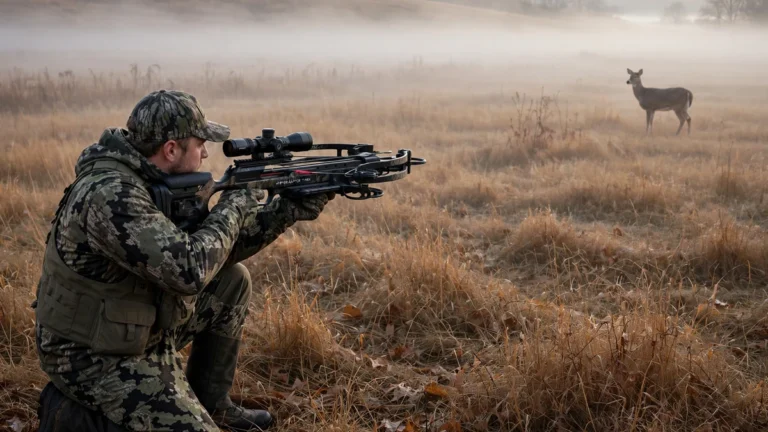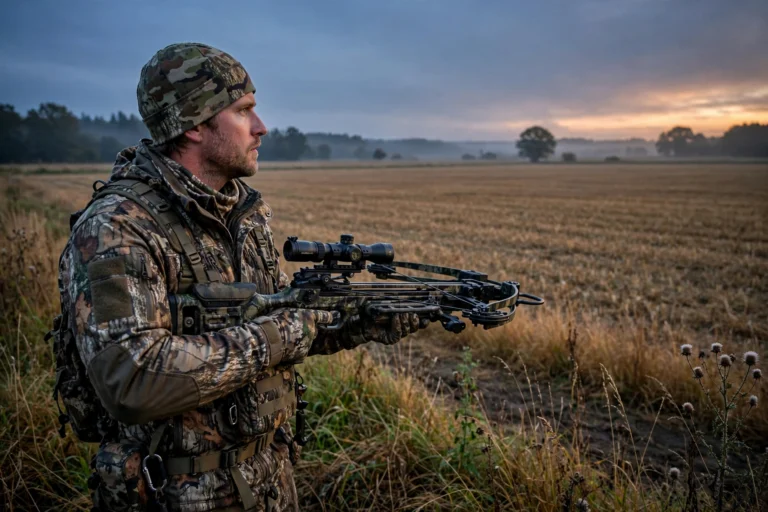
Best Crossbow for Coyote Hunting
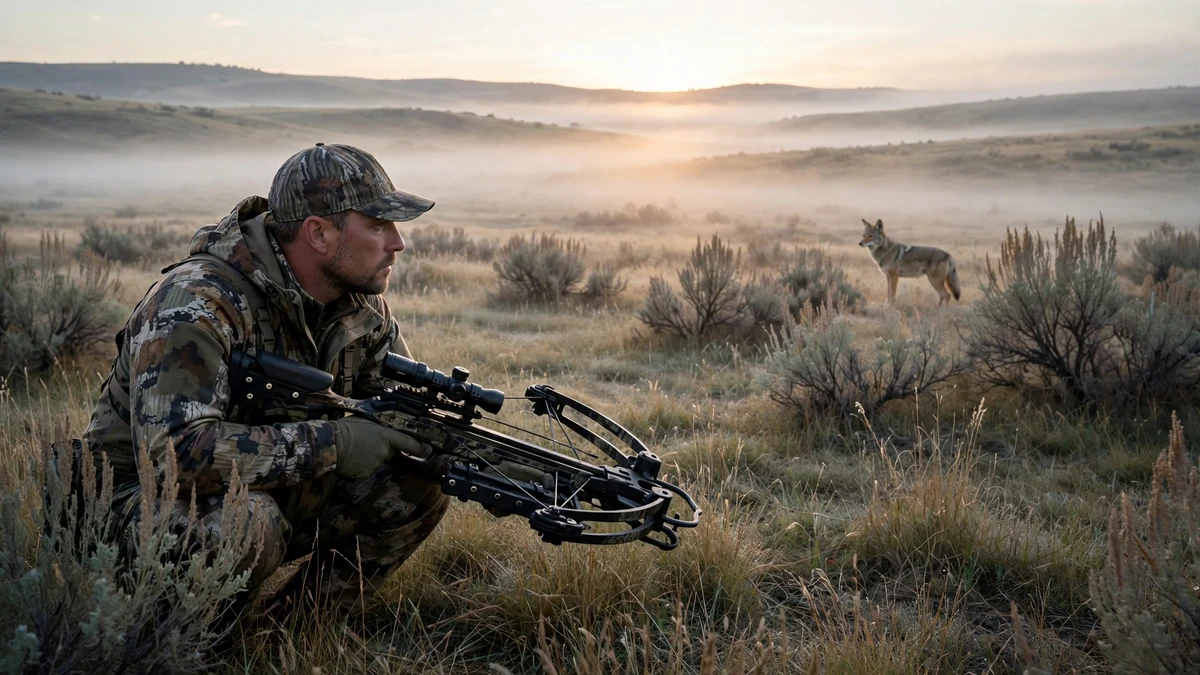
The Short Answer
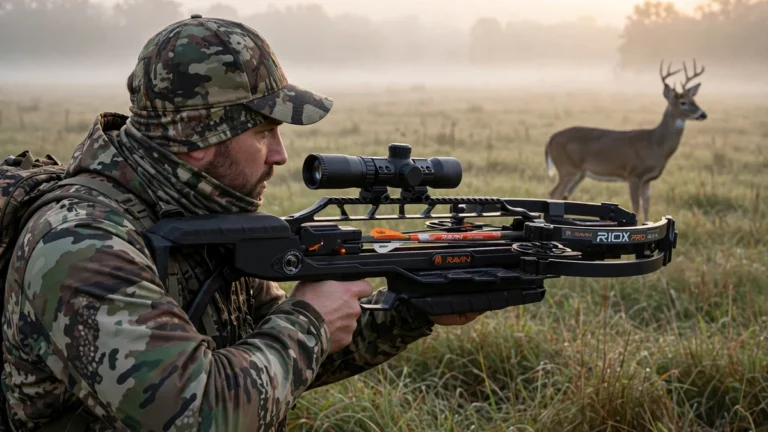
The best crossbow for coyote hunting is the Ravin R10X Pro at about $1,850. It shot the tightest tested 50 yard group in this roundup, a 0.85 inch average in the Field and Stream 2026 test, and that is the figure that matters most on a coyote. A coyote is a thin skinned, light bodied animal of about 25 to 45 lbs in most of the United States, with a small vitals zone, and it is often moving. Every bow in this article clears the published coyote energy guidance by a wide margin, so power is not the question. The question is whether the bow puts a broadhead exactly where you aim it at 50 yards, in low light, without spooking the next coyote with a loud cocking cycle.
That is why this ranking is ordered by tested 50 yard groups, not by speed. The fastest bow here is the Ravin R470 at 470 fps advertised, and it ranks third, because its 1.5 inch tested 50 yard group is wider than the R10X Pro at 0.85 inch and the TenPoint TX Ultra 29.5 at 1.125 inch. If you hunt open country and a coyote may hang up at 50 to 60 yards, the TX Ultra 29.5 at about $2,300 is the flattest premium pick. If your budget is tight, the TenPoint Turbo X at about $1,300 gives you a tested 1.23 inch 50 yard group for about half the price of the premium picks, and the TenPoint Titan X at about $800 is the budget pick with a tested 400 fps. Two honest gaps up front: no published 50 yard group could be found for the Barnett Hyper Raptor T-REX, and the Titan X has only a sub 1 inch group at 40 yards, not a 50 yard average. I say so plainly for both, and I do not invent a figure for either. If you want the full picture across every kind of hunting, see our complete crossbow roundup and our hunting bow roundup.
One more thing before the picks: night hunting legality varies sharply by state, by land type, by season, and by light and optics rules. This article does not state any state rule as settled law. Check the current year hunting digest for your state and unit before any night hunt. An illuminated reticle helps at dawn and dusk, and it does not make night hunting legal where hours or optics are restricted.
Best Crossbows for Coyote Hunting: Comparison Table
| Crossbow | Tested 50-yd group | Speed, advertised | Speed, tested | KE, advertised | Price |
|---|---|---|---|---|---|
| Ravin R10X Pro | 0.85 in (Field and Stream, 2026) | 420 fps, 400 grain arrow | 422.7 fps (Field and Stream, 2026, 400 grain arrow) | 156 ft-lb, 400 grain arrow | About $1,850, MSRP $1,849.99 |
| TenPoint TX Ultra 29.5 | 1.125 in (Field and Stream, 2026) | 460 fps, 410 grain arrow | 445 fps (Field and Stream, 2026, 440 grain arrow) | 193 ft-lb, 410 grain arrow | About $2,300, sale price |
| Ravin R470 | 1.5 in (Field and Stream, 2025) | 470 fps, 400 grain arrow | 472 fps (Field and Stream, 2025) | 196 ft-lb, 400 grain arrow | About $2,500, base black |
| TenPoint Turbo X | 1.23 in (Outdoor Life, 2025) | 415 fps | 415 fps (Outdoor Life test table, 410 grain arrow) | 157 ft-lb, 410 grain arrow | About $1,300, RangeMaster 100 package |
| Barnett Hyper Raptor T-REX | No published 50-yd group found | 440 fps | 438 fps (Shooting Sports Retailer, June 12, 2026, 401 grain arrow) | 163 ft-lb, arrow weight unstated | About $1,200, MSRP $1,199.99 |
| TenPoint Titan X | Sub 1 in at 40 yd only, not a 50-yd figure | 400 fps, 410 grain arrow | 400 fps (Outdoor Life, 2026, 410 grain arrow) | 146 ft-lb, 410 grain arrow | About $800, Moss Green |
Three notes on the table. Tested groups are averages of three shot groups unless noted, and a tested figure only means something next to the arrow it was shot with, so I state the arrow weight with every speed and energy figure. Muzzle energy is not downrange energy: no retained energy figure at 50 or 60 yards was verified for any pick, so I do not state one. Bare weight is the bow without accessories; rigged weight runs about 1.5 to 2 lbs heavier, and the R10X Pro shows that split plainly, 7.95 lbs bare against 8.9 lbs as tested rigged.
Best Overall for Coyote Hunting: Ravin R10X Pro
Speed: 420 fps advertised, 422.7 fps tested | Tested 50-yd group: 0.85 in | Price: About $1,850 | Weight: 7.95 lbs bare, 8.9 lbs as tested rigged | Width cocked: 6.5 in
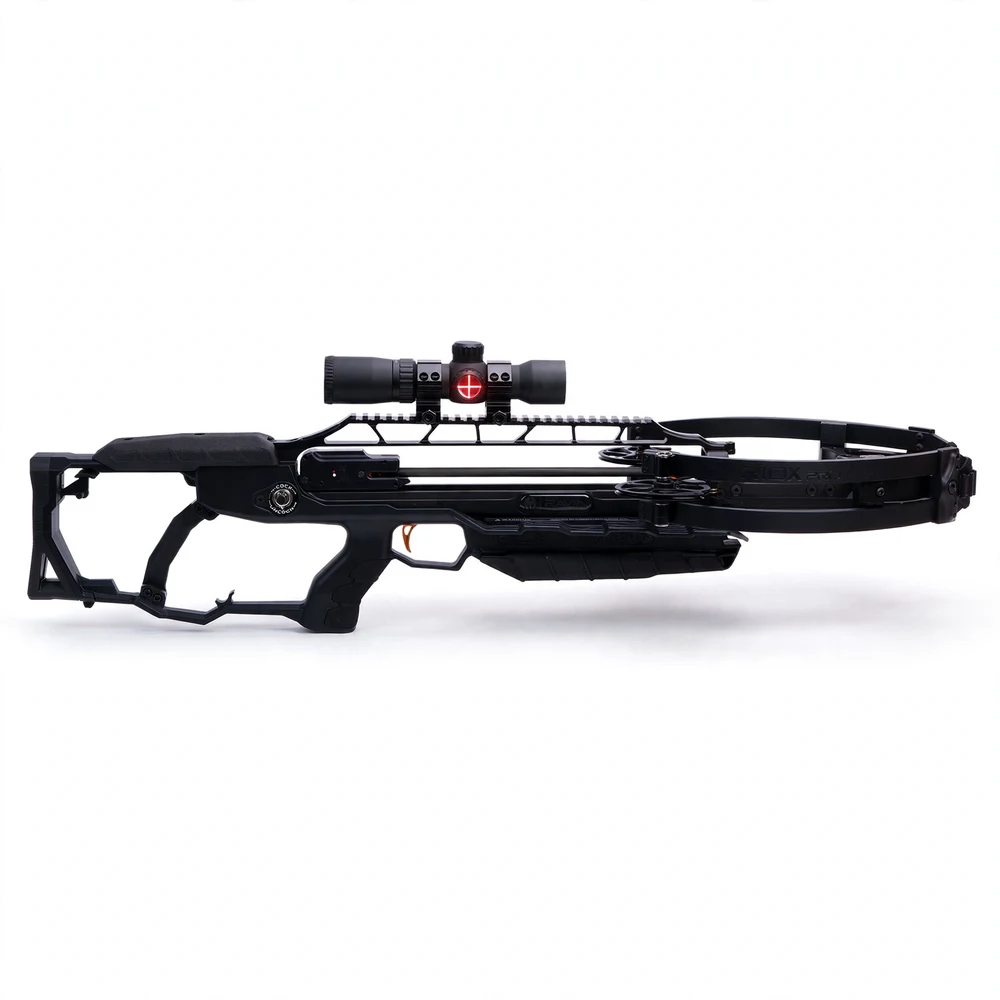
This is the bow I would buy for coyotes, and the reason is one number: 0.85 inch. In the Field and Stream 2026 test, published April 28, 2026 and updated June 8, 2026, the R10X Pro averaged 0.85 inch groups at 50 yards across five three arrow groups, and the tester called it the most accurate crossbow tested in 2026, and one of the most accurate he has ever tested. Outdoor Life 2026 also named it Best Overall in its test table. On a coyote that may only offer one small window at 40 to 50 yards, that group size is worth more than 50 extra fps. The speed backs it up honestly: 420 fps advertised with a 400 grain arrow, 422.7 fps tested by Field and Stream 2026 with a 400 grain arrow, and 424 fps tested by Shooting Sports Retailer on July 24, 2026 with a 403.7 grain bolt. The advertised energy is 156 ft-lb with a 400 grain arrow, the lowest among the premium picks here, and it is still far above anything a coyote needs, so the low energy figure is not a con for this animal. No tested energy figure was found for this bow, so I do not calculate one and present it as a test result.
Get the weight and the price right, because two widely repeated figures are wrong. The R10X Pro weighs 7.95 lbs bare, and the 8.9 lbs figure you will see in one test table is the as tested rigged weight with accessories fitted, not the bare bow. On price, the MSRP is $1,849.99, a retailer black package lists at $1,799.99, and the XK7 camo version lists at $1,999.99, about $150 more. I headline about $1,850. Do not trust a summary line that says around $1,300, and do not trust the same summary line that says 400 foot-pounds of energy. Both figures are wrong against the $1,849.99 MSRP and the 156 ft-lb advertised figure in the same review. The bow is 32.5 inches long and 6.5 inches wide when cocked, with a 100 yard illuminated Speed Lock scope whose daylight bright illuminated reticle helps at dawn and dusk. It has a silent built in crank, an adjustable comb and length of pull, a stronger scope mounting rail, and on board crank handle storage. The honest costs are the ecosystem and the length: it requires proprietary arrows and accessories, which raises ongoing costs, and 32.5 inches is long for a tight blind. One figure I will not state as a fact for this model is the 12 lb cocking effort, because that figure is attributed to the wider Ravin family and the original R10 spec, and it has not been verified on the manufacturer page for the R10X Pro itself. See our full Ravin lineup review for the rest of the lineup, and our best hunting crossbow roundup, where the same 50 yard accuracy logic applies.
Pros
- Tightest tested 50 yard group here at 0.85 inch, Field and Stream 2026
- Tested speed matches the advertised 420 fps, 422.7 fps in the same test
- 100 yard illuminated Speed Lock scope with a daylight bright reticle for low light
- 6.5 inches wide when cocked, with a silent built in crank
Cons
- About $1,850, and the camo version costs about $150 more
- Requires proprietary arrows and accessories, raising ongoing costs
- 32.5 inches long, long for a tight blind
- 156 ft-lb advertised is the lowest energy among the premium picks, though far above coyote needs
Bottom line: the best crossbow for coyote hunting, because no other bow here puts a broadhead into a 0.85 inch group at 50 yards, and that is what a small, wary coyote demands.
Best Premium for Coyote Hunting: TenPoint TX Ultra 29.5
Speed: 460 fps advertised, 445 fps tested | Tested 50-yd group: 1.125 in | Price: About $2,300, sale price | Weight: 8.0 lbs bare | Width cocked: 6.5 in
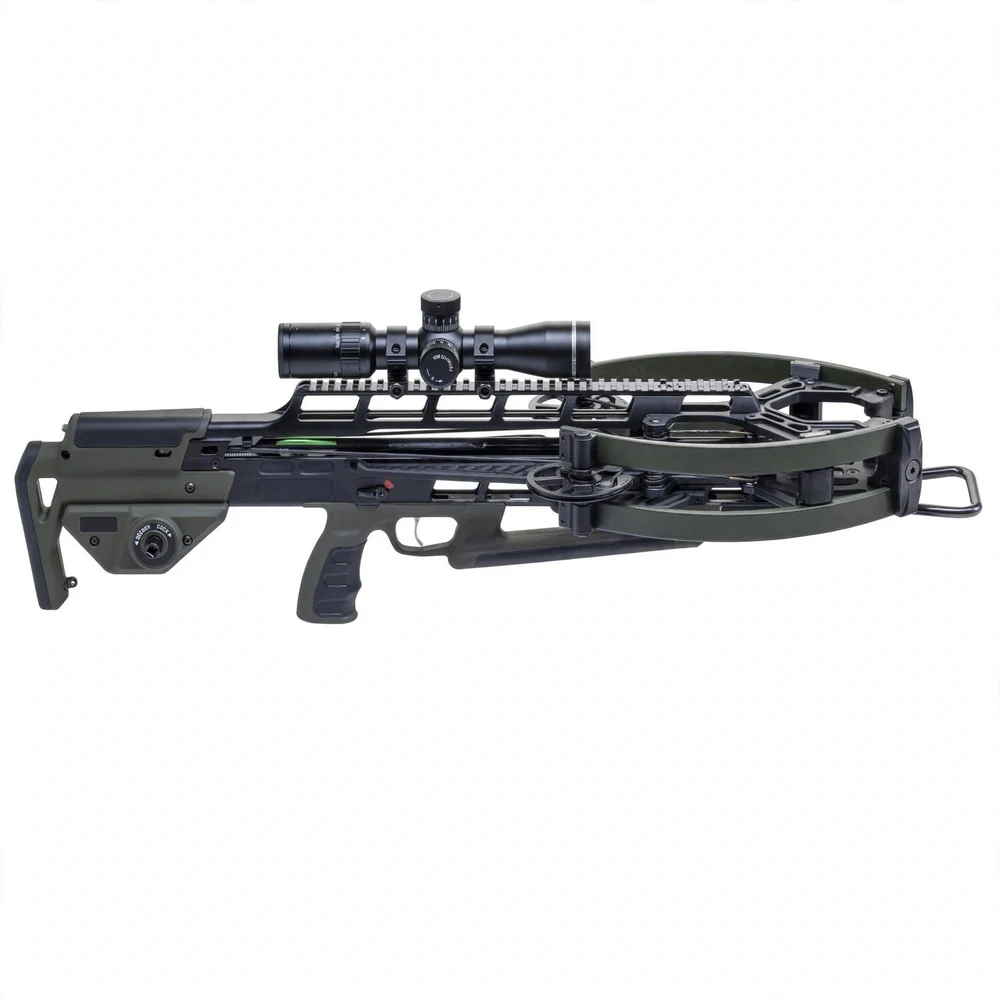
If your coyote hunting is open country calling, where a coyote may hang up at 50 to 60 yards and never come closer, the TX Ultra 29.5 is the premium pick. It is a forward draw bow, not a reverse draw bow, and it is the flattest shooting premium bow in this roundup: 460 fps advertised with a 410 grain arrow, 445 fps tested by Field and Stream 2026 with a 440 grain arrow, and 443 fps tested by Shooting Sports Retailer on March 6, 2026 with a 440 grain arrow. Field and Stream 2026 named it the best crossbow of 2026 overall in that test, with a 1.125 inch average 50 yard group across five three arrow groups, and a tested 195.6 ft-lb of energy with a 440 grain arrow, which I state as the Field and Stream tested figure and do not recalculate. Outdoor Life 2026, published June 29, 2026, reported 1.16 inch 50 yard groups in its text, tighter than the most accurate crossbow in its 2025 test, with 100 yard groups as small as 3.25 inches. The EVO-X Marksman Elite scope has dual illumination, red and green with adjustable brightness, and speed calibrated aim points to 100 yards, which is the strongest low light setup in this roundup. The ACUslide MAXX system gives silent cocking and safe de-cocking, and its tested cocking effort is 13.3 lbs, measured in a Bowhunter review published June 6, 2026. Do not use a 5 lb figure for this bow or for any ACUslide MAXX bow as a published fact, because no such figure has been verified.
The price needs the same care as the R10X Pro, because the headline figure is a sale price, not the MSRP. The EVO-X Elite Moss Green package lists at $2,299.99 on sale, against a MAP of $2,499.99, and the Vektra camo version lists at $2,599.99. I headline about $2,300 and I say plainly that it is a sale price, not the MSRP. The Vision HD package at $3,199.99 to $3,299.99 is a different package, so do not use that price as the base price. One conflict to flag: the Outdoor Life 2026 test table lists $2,550, a 2.5 inch group, 435 fps with a 440 grain arrow, and 9.5 lbs, which conflicts with the Outdoor Life text figure of 1.16 inches, the Field and Stream figures of 1.125 inches and 445 fps, and the 8.0 lbs bare weight. I use the Field and Stream figures as primary and flag the table as conflicting. The bow is 29.5 inches long, 6.5 inches wide when cocked, with a 13.5 inch power stroke, and at 8.0 lbs bare it is heavy for long carries. That weight and the premium price are the real cons. See our in-depth TenPoint reviews for the rest of the lineup.
Pros
- 1.125 inch tested 50 yard group, Field and Stream 2026, with the flattest premium trajectory here
- 445 fps tested with a 440 grain arrow, 195.6 ft-lb tested, Field and Stream 2026
- EVO-X Marksman Elite scope with dual red and green illumination for low light
- ACUslide MAXX silent cocking and safe de-cocking, 13.3 lbs tested effort
Cons
- About $2,300 is a sale price, MAP is $2,499.99 and Vektra is $2,599.99
- 8.0 lbs bare, heavy for long carries
- Vision HD package at $3,199.99 to $3,299.99 is easy to confuse with the base package
- Outdoor Life 2026 test table conflicts with the text and with Field and Stream, so check the source before you quote it
Bottom line: the best premium pick for open country coyote calling, because it pairs a 1.125 inch tested 50 yard group with the flattest trajectory and the best low light scope in this roundup.
Flattest Trajectory, Narrowest for a Blind: Ravin R470
Speed: 470 fps advertised, 472 fps tested | Tested 50-yd group: 1.5 in | Price: About $2,500, base black | Weight: 8.4 lbs | Width cocked: 4.3 in
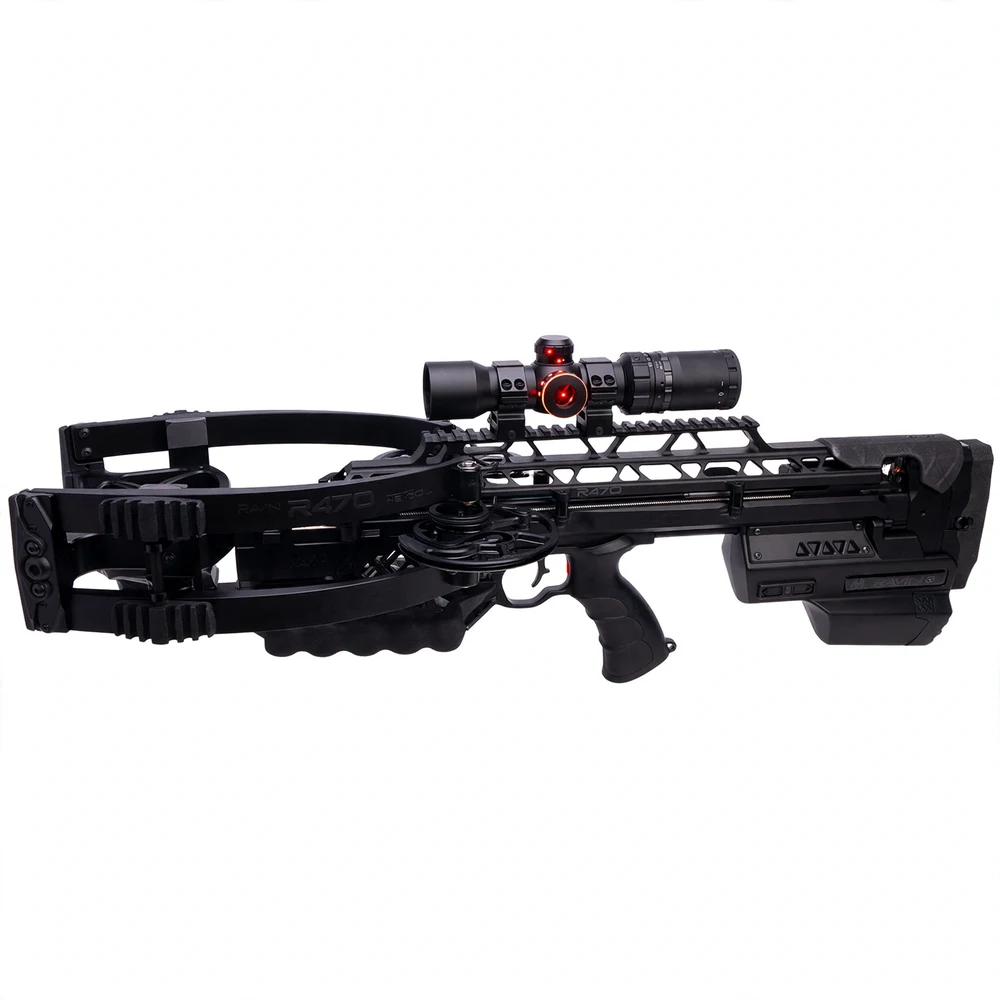
The R470 is the fastest bow in this roundup and the narrowest, and that combination makes it the pick for a calling setup in a blind or tight cover. It advertises 470 fps with a 400 grain arrow and 196 ft-lb of energy, and Field and Stream 2025, published October 7, 2025 and updated March 11, 2026, tested it at 472 fps and 198 ft-lb, calling it the fastest and hardest hitting crossbow in that test, with a 1.5 inch average 50 yard group across three three arrow groups. Other tests ran faster still, with one publication averaging 483.2 fps and another averaging 466.5 fps over 15 arrows on a Garmin chronograph, but I use the Field and Stream 472 fps figure as the headline tested speed and note the others as a range, because a single headline figure has to come from one test. At 4.3 inches wide when cocked and 26.75 inches long, with HexCoil cams, a 13 inch power stroke, and a 17 lb draw force on the VersaDrive cocking system, it is the easiest bow here to swing inside a blind, and its 100 yard illuminated 550 fps scope has reticle markers from 30 to 100 yards.
Now the warning that matters more than the speed, because it is the key coyote con for this bow. Field and Stream 2025 found that fixed three blade broadheads consistently landed 3 inches off the field point zero, while mechanical heads hit right with the field points. At 470 fps, a fixed blade can plane, so do not trust a field point group as a hunting group on this bow. Test the exact hunting broadhead at 50 yards and re-zero for it before you hunt, and read our complete broadhead guide before you choose a head. On price, the base black package lists at $2,499.99, the XK7 camo version at $2,699.99, and the R470E XK7 at $2,849.99, while Field and Stream lists $2,550. I headline about $2,500 for the base black package and name the camo and E variants separately. At 8.4 lbs it is also heavy, and the premium price is real. But if your coyote setup is a blind, a narrow window, and a coyote that may stop at 50 yards, the 4.3 inch cocked width and the flat 470 fps trajectory are hard to beat.
Pros
- Fastest bow here at 470 fps advertised, 472 fps tested, Field and Stream 2025
- Narrowest bow here at 4.3 inches when cocked, shortest at 26.75 inches
- 198 ft-lb tested, the hardest hitting bow in this roundup
- 100 yard illuminated scope with markers from 30 to 100 yards
Cons
- Picky about broadheads: fixed three blade heads landed 3 inches off the field point zero in the Field and Stream 2025 test
- About $2,500, and the camo and E variants cost about $200 to $350 more
- 8.4 lbs, heavy for a compact bow
- 1.5 inch tested 50 yard group is the widest tested group among the top three picks
Bottom line: the pick for a blind or tight cover coyote setup, because nothing else here is 4.3 inches wide when cocked with a 470 fps trajectory, provided you test your exact hunting broadhead at 50 yards first.
Best Value Accuracy Pick: TenPoint Turbo X
Speed: 415 fps advertised, 415 fps tested | Tested 50-yd group: 1.23 in | Price: About $1,300, RangeMaster 100 package | Weight: 6.8 lbs | Width cocked: 9.5 in
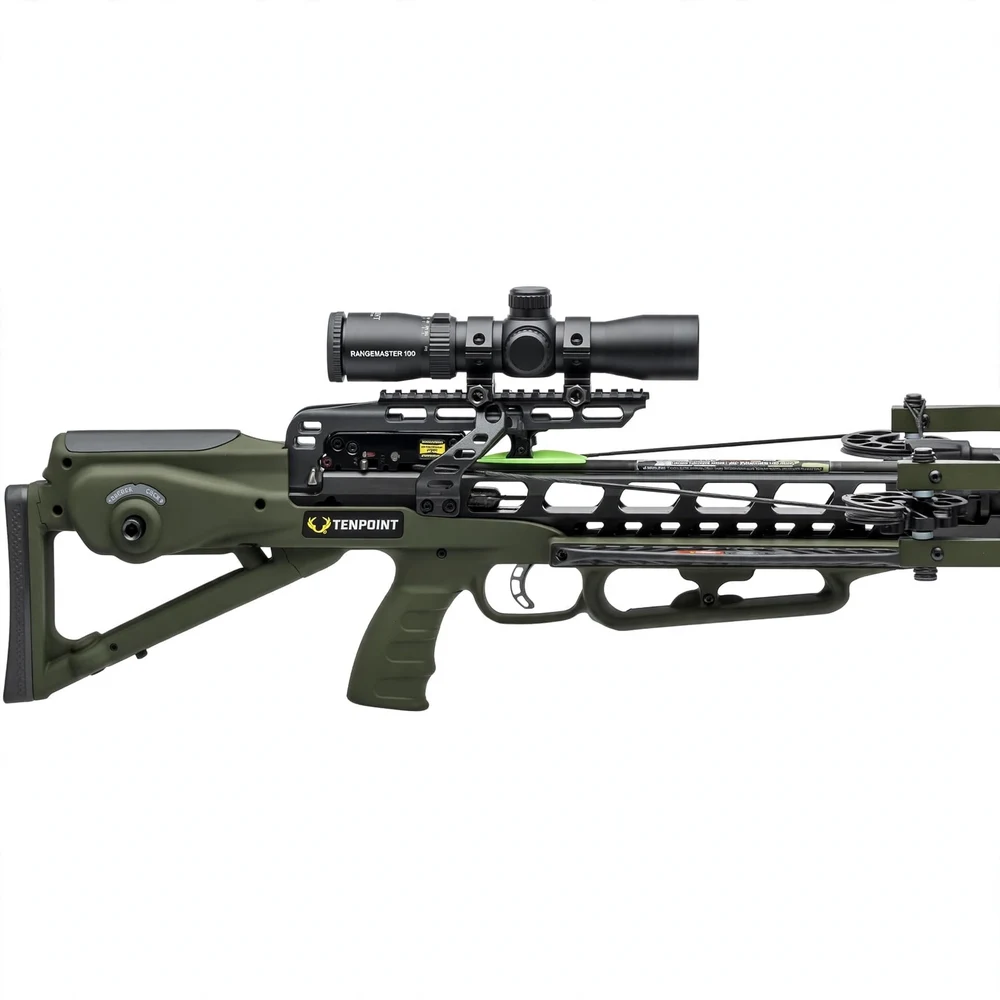
The Turbo X is the value story of this roundup, and it is the bow I would point a coyote hunter to if the premium picks are out of reach. Outdoor Life 2025 named it the most accurate crossbow tested in 2025, with a 1.23 inch group average from four three shot groups at 50 yards, and it cost $870 less than the second most accurate crossbow in that test and $1,200 less than the fastest. A separate field test called it the most accurate model the tester had ever shot. That is proven 50 yard accuracy for about half the price of the R10X Pro, and on a coyote the group matters more than the speed number. It advertises 415 fps and 157 ft-lb with a 410 grain Pro Elite 400 arrow, and the same retailer listing shows 154 ft-lb with a lighter arrow, so I flag both figures rather than settling on one. On tested speed, the Outdoor Life test table lists 415 fps with a 410 grain Pro Elite 400 arrow, matching the advertised figure, so 415 fps is both advertised and tested here. The RangeMaster 100 scope is a variable speed scope with an illuminated red and green reticle and aim points to 100 yards, which is good for low light, and the ACUslide system gives silent cocking and safe de-cocking after a sit. Note that it is ACUslide, not ACUslide MAXX, which is a different system on the dearer TenPoint bows.
The price is about $1,300 for the RangeMaster 100 package, at $1,299.99, and you must name the package, because the variants will catch you. The Vektra version lists at $1,399.99 to $1,400.99, and the Vision HD package at $1,999.99 is a different package entirely. The trigger is another variant trap: the base package lists a 3.5 lb trigger, while a review of the Turbo X Vision package lists a 2.5 lb S2 trigger, so I state the 3.5 lb figure for the base package and do not mix the two. The bow weighs 6.8 lbs, it is 33.25 inches long, and at 9.5 inches wide when cocked it is the widest among the top four picks here, so it is the least handy in a tight blind. That width and length are the real costs of the value price. If you hunt open ground or a roomy blind and want proven 50 yard accuracy without a premium price, this is the pick.
Pros
- 1.23 inch tested 50 yard group, most accurate crossbow in the Outdoor Life 2025 test
- About $1,300, about half the price of the premium picks, for proven accuracy
- RangeMaster 100 scope with illuminated red and green reticle, aim points to 100 yards
- ACUslide silent cocking and safe de-cocking, 6.8 lbs
Cons
- 9.5 inches wide when cocked, the widest among the top four picks, and 33.25 inches long
- Tested speed evidence is a single test table figure, not a full chronograph write-up
- Vision HD package at $1,999.99 is a different package, and the trigger figure differs by package
- Energy figures differ by arrow, 157 ft-lb with a 410 grain arrow and 154 ft-lb with a lighter arrow
Bottom line: the best value accuracy pick for coyote hunting, because a tested 1.23 inch group at 50 yards for about $1,300 is the best accuracy per dollar in this roundup.
Best Value Power Pick: Barnett Hyper Raptor T-REX
Speed: 440 fps advertised, 438 fps tested | Tested 50-yd group: No published group found | Price: About $1,200 | Weight: 8.2 lbs | Width cocked: 7.25 in
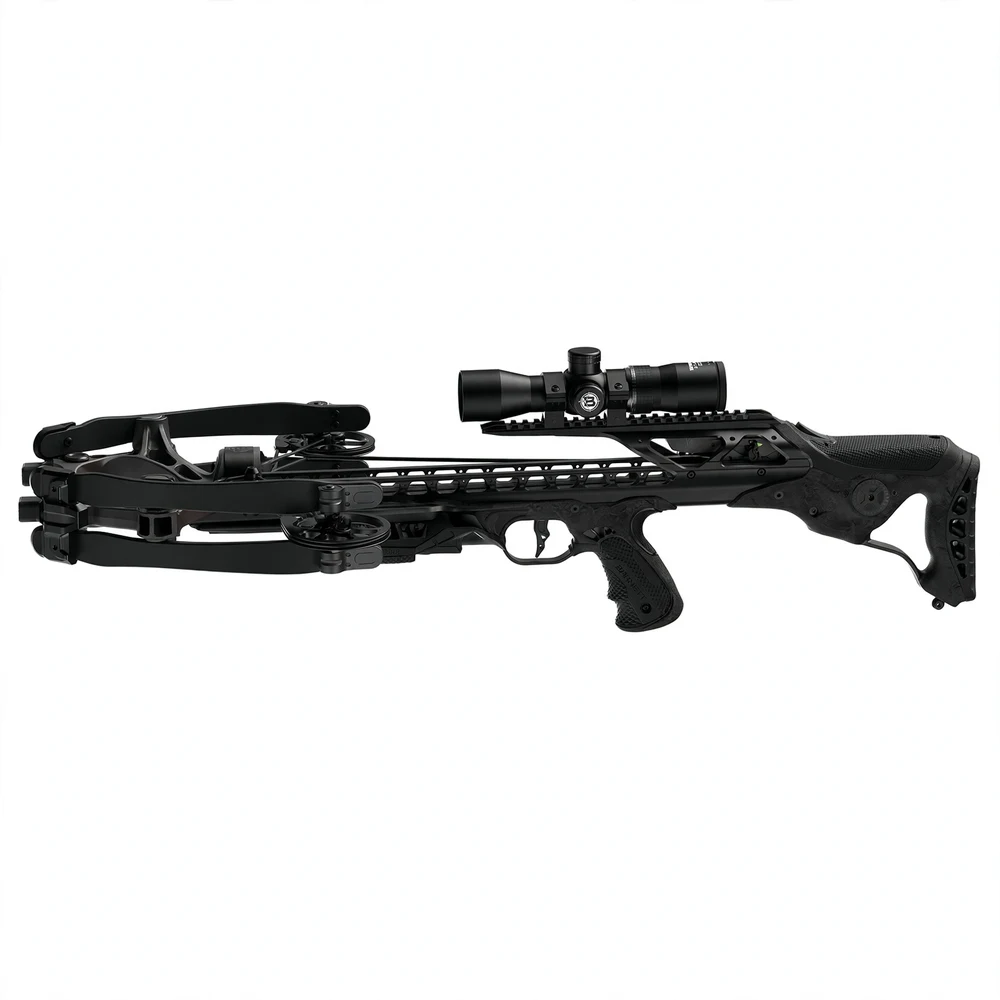
The T-REX is the speed bargain of this roundup. It advertises 440 fps and 163 ft-lb of energy, and Shooting Sports Retailer chronographed it at 438 fps with a 401 grain arrow on June 12, 2026, essentially matching the advertised figure, with about 430 fps verified in other coverage. That is near flagship speed for about half a flagship price, with an MSRP of $1,199.99, which I headline as about $1,200. It weighs 8.2 lbs, it is 7.25 inches wide when cocked and 32 inches long, with a 16 inch power stroke and a 220 lb draw weight, a planetary gear cocking and de-cocking system, a TriggerTech floating trigger, and a Speed-Dial Precision Scope. For a coyote hunter who wants a flat trajectory and does not want to pay $2,000 or more for it, the T-REX is the honest way to get there.
Two limits keep it from ranking higher, and I state both plainly. First, no published 50 yard group was found for this bow, so I cannot rank it on tested accuracy the way I rank the top four picks, and I will not invent a group. Second, the energy figures need care: the advertised 163 ft-lb comes with no arrow weight stated in the sources found, so I do not attach a weight to it, and the 171.08 ft-lb figure is a test publication calculation from the 438 fps test with a 401 grain arrow, not a Barnett figure, so I flag both rather than settling on one. Do not use a 423 fps tested figure for this bow, because it was not re-verified and is dropped. The HyperFlite small diameter arrows also limit broadhead and bolt choice against standard diameter shafts, so check your broadhead fit before you buy, and read our complete bolt guide if you change bolt weight, because a heavier bolt changes speed and point of impact. One more gap: scope illumination was not verified for this bow in the sources found, so I do not claim an illuminated reticle for it. See every Barnett bow we tested for the brand’s other bows.
Pros
- 438 fps tested with a 401 grain arrow, essentially matching the 440 fps advertised figure
- About $1,200, near flagship speed for about half a flagship price
- Planetary gear cocking and de-cocking system with a TriggerTech floating trigger
- 7.25 inches wide when cocked, narrow for this speed
Cons
- No published 50 yard group found, so tested accuracy cannot be ranked against the top four
- 8.2 lbs, heavy for a value bow
- HyperFlite small diameter arrows limit broadhead and bolt choice
- Advertised energy has no stated arrow weight, and scope illumination is unverified
Bottom line: the best value power pick for coyote hunting, because 438 fps tested for about $1,200 is real speed for the money, with the honest caveat that no tested 50 yard group exists to rank it on accuracy.
Best Budget Pick: TenPoint Titan X
Speed: 400 fps advertised, 400 fps tested | Tested 50-yd group: Sub 1 in at 40 yd only | Price: About $800, Moss Green | Weight: 7.3 lbs | Width cocked: 9.75 in
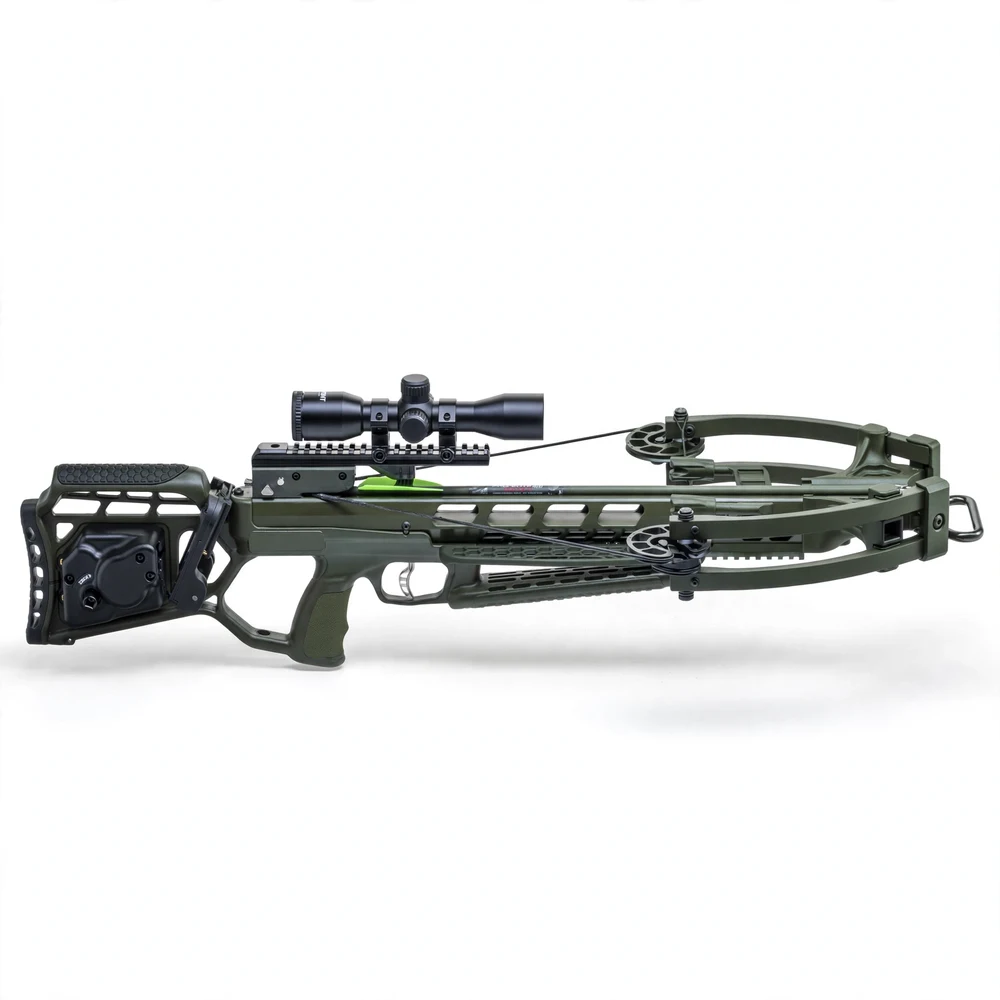
The Titan X is the budget pick, and it is a genuine one, not a consolation prize. It advertises 400 fps with a 410 grain arrow and 146 ft-lb of energy, and Outdoor Life 2026 tested it at 400 fps with a 410 grain arrow, naming it a Best Value and Most Accurate pick in that test. Another publication measured about 402 fps on a Garmin chronograph, with sub 1 inch groups at 40 yards. That 40 yard group is the limit of what I can say about its accuracy: no published 50 yard group average was found, so I do not present the 40 yard figure as a 50 yard figure. The price is about $800, at $799.99 for the Moss Green package, against an $849 MSRP stated in one review, and the Vektra camo version lists at $899.99. It weighs 7.3 lbs, it is 33 inches long with a 12.75 inch power stroke, and it has the ACUdraw De-Cock system for safe de-cocking with about 5 lbs of cocking effort. Note that it is ACUdraw De-Cock, not ACUslide, which is a different and dearer system. The Pro-View 400 lighted scope has aim points to 70 yards only, which is a real limit to state: it is good for low light inside 70 yards, and it does not give you 100 yard aim points like the dearer scopes here.
Two spec traps to avoid on this bow. First, the trigger: the manufacturer lists a 3.5 lb D1 trigger, while Outdoor Life 2026 tested the trigger at 4.4 lbs, so I state both figures, labelled listed and tested, and do not silently pick one. Second, do not mix the Titan X with the Titan 400, a different older model with different specs, even though some listings show similar prices. The Titan X is 7.3 lbs, 9.75 inches wide when cocked, with ACUdraw De-Cock, at about $800. The real cons are width and scope range: at 9.75 inches when cocked it is the widest bow in this roundup, and the 70 yard scope limits long range aiming. Only three arrows are included, so most hunters will want to buy more right away. The energy is the lowest in the roundup at 146 ft-lb advertised with a 410 grain arrow, and it is still far above coyote needs, so the real cons are width and scope range, not power. For a first time coyote hunter, or a budget buyer who still wants safe de-cocking and a tested 400 fps, this is the pick.
Pros
- 400 fps tested with a 410 grain arrow, matching the advertised figure, Outdoor Life 2026
- About $800, with safe de-cocking through ACUdraw De-Cock at about 5 lbs of effort
- Pro-View 400 lighted scope for low light inside 70 yards
- 7.3 lbs, the lightest TenPoint here
Cons
- Widest bow here at 9.75 inches when cocked
- Scope aim points reach only 70 yards, not 100 yards
- Only three arrows included, buy more before your first practice session
- Trigger is 3.5 lbs listed against 4.4 lbs tested, and no 50 yard group average was found
Bottom line: the best budget pick for coyote hunting, because a tested 400 fps with safe de-cocking for about $800 is the cheapest honest way into this roundup.
Kinetic Energy and Broadheads: What a Coyote Actually Needs
Here is the good news first: energy is not the problem in this roundup. No state agency energy minimum for coyote was found in this research, so I will not invent one. The published guidance that does exist sets the bar low. One arrow energy calculator table lists 25 ft-lb as the minimum recommended for coyotes, with 25 to 40 ft-lb as the optimal range, with a good broadhead and good shot placement. A general archery guide puts small predators in the same 25 to 40 ft-lb band, with about 65 ft-lb needed for large game. Every pick in this article produces 146 to 198 ft-lb advertised or tested at the muzzle, which clears the coyote guidance by a wide margin and clears the 65 ft-lb large game figure too. That is why this article does not rank on energy. It ranks on tested 50 yard groups, quiet cocking, low light scopes, width and weight for a calling setup, and price.
Broadhead choice matters more than energy here, and the guidance is specific. A fixed versus mechanical broadhead guide puts the generally accepted minimum for reliable mechanical broadhead performance at 65 ft-lb of energy at impact, with mechanical heads losing 10 to 15 percent of energy to blade deployment, and it cites a comparative study in which mechanical heads grouped tighter at 50 and 60 yards than fixed heads of similar weight. All six picks clear the 65 ft-lb mechanical threshold at the muzzle by a wide margin, so a mechanical head is a defensible choice for a thin skinned coyote at 40 to 60 yards, because of the tighter groups at distance. A fixed blade is the safer choice in brush, on a quartering angle, or if the shot may hit bone. Whichever you choose, test the exact hunting broadhead at 50 yards and re-zero for it, because a field point group is not a hunting broadhead group, and the R470 proves it: fixed three blade heads landed 3 inches off the field point zero in its test. A heavier bolt is generally quieter and retains momentum better, but if you change bolt weight, re-sight the bow, because speed and point of impact change with it. See our best crossbow broadheads guide for models, and our best crossbow bolts guide for bolt weight. I do not name a specific broadhead model as best for coyote, because no published test or manufacturer coyote rating verified one in this research. On shot placement, the standard archery practice is a broadside heart and lung shot, behind the shoulder. I do not recommend head or neck shots. Eastern coyotes run larger than western coyotes, and a called coyote is often moving, which is another reason tested accuracy matters more than speed.
Ethical Range: How Far Is Too Far for a Coyote
There is no single settled ethical range for a crossbow coyote shot, so here is the range of published guidance, labelled by source, and then my practical recommendation. In a 2023 test of two near 500 fps crossbows, the author wrote that he still does not think 500 fps crossbows are ethical 100 yard hunting tools, but that 70 yards is pretty reasonable if the bow is dialed in with the perfect arrow and broadhead combination, and that 50 yards is even better. Use 70 yards as the upper published bound, not as a recommendation. A field tester of a TenPoint model wrote that he has never considered an ethical hunting shot at over 50 yards, so that is what he prefers to test. Ravin staff at a manufacturer event described 50 yards as the ethical hunting range for a crossbow, while demonstrating 3 inch groups at 100 yards, which is a manufacturer event statement reported by a publisher, not a regulation. And a field report author who put three arrows inside a 3 inch group at 100 yards wrote that he would not likely take a shot at a game animal at that distance, because sound, animal reaction, and wind shifts can all spell disaster for an ethical shot at 100 yards.
My practical recommendation stays inside the conservative end: 40 to 50 yards is the practical ethical ceiling for most coyote hunters with a crossbow, with 60 yards only for a hunter who has verified sub 2 inch groups at 60 yards with the exact hunting broadhead, on a calm, broadside, unaware coyote, in good light or with a verified low light sight picture. Say it plainly: a coyote can move in the time a bolt takes to travel 60 yards, so a 100 yard group on paper is not a 100 yard hunting shot. No pick in this article is a 100 yard coyote bow, no matter what its scope is marked to.
Night Hunting Legality: Check Before You Hunt at Night
Night hunting legality varies sharply by state, by land type, by season, and by light and optics rules, and this section is a legal check only. I do not state any state rule as settled law in this article, because the secondary summaries found in this research are not primary state digests, and the variation between states is wide enough that a rule from one state can be the opposite of the rule in the next. Before any night hunt, check the current year hunting digest for your state and unit, check private against public land, check shooting hours, check light, thermal, and night vision rules, and check electronic call rules. A scope with an illuminated reticle is not the same as a legal night hunting setup, and an illuminated reticle does not make night hunting legal where hours or optics are restricted. A bill proposal is not law either, so do not rely on a proposed bill as permission. If the digest is unclear, call your state wildlife agency before you hunt, because the cost of guessing wrong is a citation and a lost season.
What You Give Up Against a Rifle
Be honest with yourself about this, because a crossbow is not a rifle replacement. A rifle in .223, the caliber most coyote guides recommend, offers a rapid follow up shot, a flat trajectory past 200 yards, and a much larger margin for a moving coyote. A crossbow offers one shot, a need to re-cock quietly, a 40 to 60 yard practical ceiling, and a bolt that drops fast past 60 yards. The crossbow wins only where rifles are restricted, in archery only areas, in suburban areas where a scope sighted crossbow may be legal where a centerfire rifle is not, and for hunters who want an archery season or an archery challenge hunt. If you hunt open country with long shots and no restrictions, a rifle is the better tool, and this article does not pretend otherwise. If you hunt where a rifle is restricted, or you want the archery challenge, then the ranking above is the right way to choose.
Why No 500 fps Flagship Is in This List
You may wonder why the fastest crossbows on the market are not here, and the answer is that 500 fps is overkill for a coyote, and the most famous 500 fps bow carries a recall you need to know about. The Ravin R500 is not a pick in this roundup. It was dropped because no published 50 yard group was found for it, because launch coverage noted difficulty finding broadheads rated for over 500 fps, and because it is subject to a March 2024 recall covering about 13,300 units in the United States plus 425 in Canada, for serial numbers R050 through R057, with a free repair available by calling 888-769-7287. Its price is also unsettled, at $2,649.99 on the manufacturer page against retailer listings near $3,100. The TenPoint Nitro 505, at about $3,000 with 505 fps advertised, was dropped for the same overkill reason, plus the highest price in the candidate set. A coyote does not need 500 fps, and a 500 fps bow does not make a 50 yard shot any more ethical. The only sourced coyote kill in this research belongs to a tester family using the R500, and that bow is not a pick here, so I do not transfer that anecdote to any pick in this article.
Quiet Cocking and Low Light Scopes
Two features decide whether a coyote setup works in the field, and neither one has a published number behind it, so I will not invent one. No published decibel figure was found for any of the six picks, so there is no noise ranking in this article. What I can say is that the built in crank cocking on the R10X Pro, the ACUslide MAXX on the TX Ultra 29.5, the ACUslide on the Turbo X, the ACUdraw De-Cock on the Titan X, the VersaDrive cocking on the R470, and the planetary gear system on the T-REX are all designed for quiet cocking and safe de-cocking, and a heavier bolt is generally quieter and retains momentum better. Do not rank these systems by loudness without a same day, same bolt test, because no such test was found. On scopes, illumination is verified for five picks and unverified for the T-REX: the R10X Pro has a 100 yard illuminated Speed Lock scope, the TX Ultra 29.5 has the dual illuminated EVO-X Marksman Elite, the R470 has a 100 yard illuminated 550 fps scope, the Turbo X has the RangeMaster 100 with illuminated red and green reticles, and the Titan X has the Pro-View 400 lighted scope to 70 yards only. The T-REX Speed-Dial Precision Scope has no verified illumination in the sources found, so I do not claim one for it. An illuminated reticle helps at dawn and dusk, and it does not replace a thermal or night vision setup where those are legal and the hunter chooses to use them. I do not recommend a specific thermal or night vision optic in this article, because no model was verified in this research.
Which Pick for Which Hunter
Buy the Ravin R10X Pro at about $1,850 if you want the tightest tested 50 yard group in this roundup and you hunt where a coyote may offer only one small window. Buy the TenPoint TX Ultra 29.5 at about $2,300 if you hunt open country, where a coyote may hang up at 50 to 60 yards, and you want the flattest premium trajectory with the best low light scope here. Buy the Ravin R470 at about $2,500 if you call from a blind or tight cover, where 4.3 inches of cocked width and a flat 470 fps trajectory matter most, and you will test your exact hunting broadhead at 50 yards first. Buy the TenPoint Turbo X at about $1,300 if you want proven 50 yard accuracy for about half the premium price, and you hunt open ground or a roomy blind where 9.5 inches of cocked width is no problem. Buy the Barnett Hyper Raptor T-REX at about $1,200 if you want near flagship speed for about half a flagship price, and you accept that no tested 50 yard group exists to rank it on accuracy. Buy the TenPoint Titan X at about $800 if this is your first coyote bow, or your budget is tight, and you still want a tested 400 fps with safe de-cocking. If you are still deciding, read our best crossbows roundup for the full price ladder, and our best hunting crossbow roundup, where the same 50 yard accuracy logic applies to a bigger animal.
Frequently Asked Questions
What is the best crossbow for coyote hunting?
The Ravin R10X Pro at about $1,850. It shot a 0.85 inch average 50 yard group in the Field and Stream 2026 test, the tightest tested group in this roundup, with 422.7 fps tested against 420 fps advertised. On a small, wary coyote, that group matters more than raw speed.
How much kinetic energy do you need for a coyote?
Published guidance sets the bar low. One energy calculator table lists 25 ft-lb as the minimum recommended for coyotes, with 25 to 40 ft-lb as the optimal range, and a general archery guide puts small predators in the same 25 to 40 ft-lb band. Every pick in this article produces 146 to 198 ft-lb advertised or tested at the muzzle, so energy is not the differentiator here. Tested accuracy at 50 yards is.
What is the ethical range for a coyote with a crossbow?
Published guidance puts 50 yards as the common ceiling, with 70 yards as the upper published bound from a 2023 test of near 500 fps crossbows, and 100 yards described as not ethical in that same test. My practical recommendation is 40 to 50 yards for most hunters, with 60 yards only for a hunter who has verified sub 2 inch groups at 60 yards with the exact hunting broadhead, on a calm, broadside, unaware coyote. A coyote can move in the time a bolt takes to travel 60 yards.
Is night hunting coyotes with a crossbow legal?
It depends on your state, your land type, your season, and the light and optics rules, and it varies sharply between states. This article does not state any state rule as settled law. Check the current year hunting digest for your state and unit, check private against public land, check shooting hours, and check light, thermal, and night vision rules before any night hunt. An illuminated reticle does not make night hunting legal where hours or optics are restricted.
Should I use fixed or mechanical broadheads for coyotes?
Both can work, and the choice depends on distance and cover. A comparative study cited in a fixed versus mechanical guide found mechanical heads grouped tighter at 50 and 60 yards than fixed heads of similar weight, and the same guide puts the minimum for reliable mechanical performance at 65 ft-lb of energy at impact, which every pick here clears at the muzzle by a wide margin. A fixed blade is the safer choice in brush, on a quartering angle, or if the shot may hit bone. Whichever you choose, test the exact hunting broadhead at 50 yards and re-zero for it, because the R470 test showed fixed three blade heads landing 3 inches off the field point zero.
Can you hunt coyotes with a crossbow at 100 yards?
No, not ethically, in my judgment and in the published guidance. A 2023 test of near 500 fps crossbows called 100 yards not ethical, a field report author who shot a 3 inch group at 100 yards wrote that he would not likely take a game shot at that distance, and a coyote can move in the time a bolt takes to travel that far. A 100 yard group on paper is not a 100 yard hunting shot. Keep coyote shots inside 40 to 50 yards in most cases.
Why is the Ravin R500 not in this list?
It was dropped for three reasons. No published 50 yard group was found for it, launch coverage noted difficulty finding broadheads rated for over 500 fps, and it is subject to a March 2024 recall covering about 13,300 units in the United States plus 425 in Canada, for serial numbers R050 through R057, with a free repair available by calling 888-769-7287. Its price is also unsettled, at $2,649.99 on the manufacturer page against retailer listings near $3,100. For a coyote, 500 fps is overkill.
What is the best budget crossbow for coyote hunting?
The TenPoint Titan X at about $800. It tested at 400 fps with a 410 grain arrow in the Outdoor Life 2026 test, matching its advertised figure, and it has the ACUdraw De-Cock system for safe de-cocking. Its limits are honest: it is 9.75 inches wide when cocked, the widest bow here, its scope aim points reach only 70 yards, and only three arrows are included.
Is a crossbow or a rifle better for coyotes?
A rifle is the better tool in open country with long shots and no restrictions, because it offers a rapid follow up shot, a flat trajectory past 200 yards, and a much larger margin for a moving coyote. A crossbow wins where rifles are restricted, in archery only areas, in suburban areas where a scope sighted crossbow may be legal where a centerfire rifle is not, and for hunters who want an archery season or an archery challenge hunt. A crossbow gives you one shot, a need to re-cock quietly, and a 40 to 60 yard practical ceiling.
Keep reading: our full crossbow roundup ranks the full price ladder, our best hunting crossbow roundup covers hunting picks across species, our field-proven hunting crossbow roundup uses the same 50 yard accuracy logic on a bigger animal, and our broadhead and bolt guides cover the broadhead and bolt choices that decide whether a 50 yard group holds up in the field.
Keep Learning
- Excalibur Rev X TD Review 2026: Takedown Recurve, Buy It for Takedown
- Best Easiest-to-Cock Crossbow
- Best Crossbow for Disabled Hunters
- Ravin R500 Review 2026: 500 fps Benchmark, Recall and All
- Best Crossbows 2026: Tested Picks for Every Budget
- Crossbow Reviews 2026: All Brands and Models in One Place