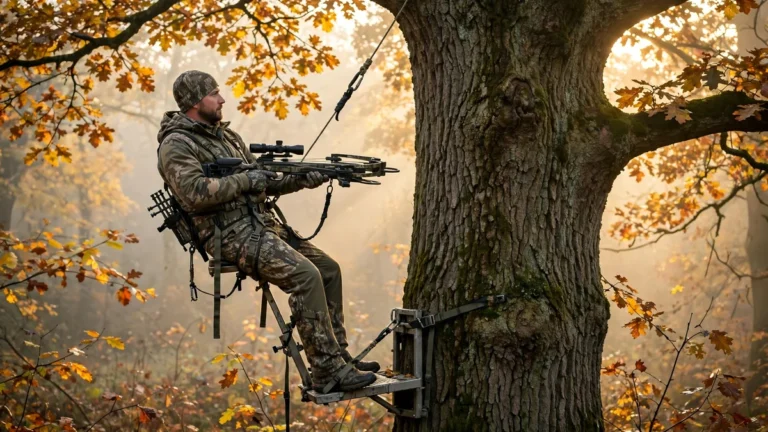
How to Cock a Crossbow Safely: Rope and Crank Methods
The Short Answer
To cock a crossbow, set the safety to fire, plant your foot in the stirrup, attach a rope cocker or crank centered on the string, and pull or crank until the string clicks into the trigger latch. Verify the string is seated, confirm the safety engaged, and remove the cocking aid before loading a bolt.
I am Nick, and I am in my first season of crossbow hunting. When I unboxed my first bow, cocking was the part that scared me most. You are pulling back a string with 150 to 200 pounds of force, and that string releases at over 300 feet per second. Now I can cock my bow in about 30 seconds without thinking twice, and I am going to teach you exactly what worked for me, including the mistakes that cost me a ruined string and one embarrassing afternoon at the range.
This guide covers every method: rope cockers, attachable cranks, integrated cranks like ACUdraw-style systems, and the truth about hand cocking. It also covers the part most guides rush through, which is how to safely uncock your bow at the end of the day. Read the safety section first. Everything else can wait.
Before You Cock: The Safety Rules That Scared Me Straight
THUMBS AND FINGERS STAY BELOW THE RAIL. When the string releases, it travels the rail at over 300 feet per second. Anything above the rail gets destroyed. This is the number one crossbow injury, and it happens to experienced shooters too. Drill this into your head before you touch anything else.
- Point the bow in a safe direction, always. Treat a cocked crossbow like a loaded firearm. When cocking, point it at the ground, away from your feet and everyone around you.
- Never dry fire. Firing without a bolt loaded can crack limbs, snap strings, and throw fragments at your face. It usually voids your warranty too. Confirm a bolt is seated before your finger touches the trigger.
- Set the safety to FIRE before you cock. If the safety is on safe while you cock, the string still latches but the automatic safety never engages. You end up holding a cocked bow on fire that looks safe. Check your manual for the exact wording, but the rule holds everywhere.
- Check the string is centered in the latch. After the click, look. An off-center string shoots off-center. If anything looks wrong, redo it. It takes 30 seconds. A ruined hunt takes all day.
- Wear safety glasses. A snapped string or broken hook moves faster than you can blink. I keep a pair in my pack, always.
For the full picture, read our crossbow safety guide before your first range session. Cocking is the most dangerous part of shooting, so it deserves the most respect.
What Gear Do You Need to Cock a Crossbow?
Most crossbows ship with at least a basic rope cocker in the box. If yours did not, or you want the easier options, here is what beginners actually need.
- Rope cocking aid. Rope, T-handles, two hooks. Cuts pulling force roughly in half, so a 160-pound bow feels like 80. Cheap, light, and fast. Shop a rope cocking device on Amazon, and get one with replaceable hooks. Hooks wear grooves into the string serving over time.
- Attachable crank. A small gearbox that mounts to the stock and reduces effort to about 5 to 10 pounds. Slower than a rope cocker, but it centers the string perfectly every time. My pick for smaller-framed shooters, older hunters, or bad shoulders.
- Integrated crank. Built into the bow, like ACUdraw or ACUslide-style systems. Standard on many premium bows, and they double as a safe decocking system. Still shopping? Read our guide on how to choose a crossbow and our best crossbow for beginners list. I wish someone had told me to prioritize the cocking system before I bought.
- Bow string wax. A dry string drags across the latch and frays. Wax it before it looks fuzzy.
- Rail lube. Two drops on the rail before a session. Never use petroleum jelly, it gums up the works.
- Grippy boots. Your foot anchors everything in the stirrup. Slippery soles slip, and a slipped foot lets the bow kick back into your shin.
The 2-Minute Pre-Cock Check
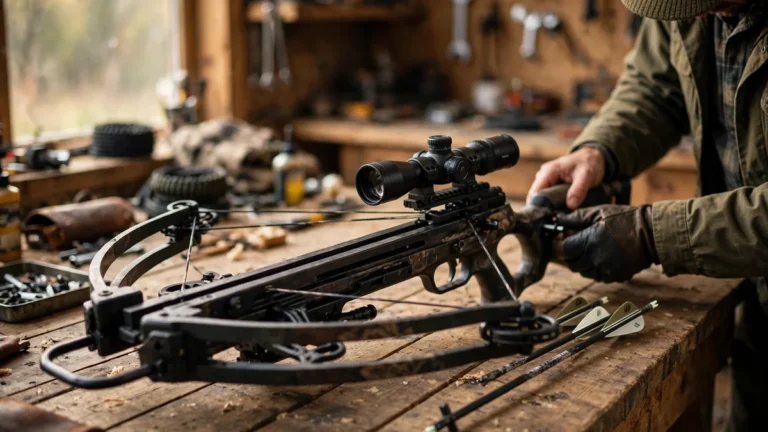
Before the first cock of the day, I run a quick inspection. Flex the limbs gently and look for cracks or splinters. Wiggle the riser and check that the limb and stirrup bolts are tight. Run your eyes along the string, especially the center serving where it meets the latch, and look for fraying or shiny worn spots. Check your bolts too: no cracked nocks, no bent shafts, field points tight. Two minutes now prevents a dangerous surprise later.
Which Cocking Method Is Right for Your Crossbow?
Your bow’s design and your own strength decide this, not preference. Ultra-narrow bows often require their proprietary crank system, and using a rope cocker on one can damage the string. Check your owner’s manual for approved cocking aids before you buy anything.
| Method | Effort Reduction | Best For | Drawbacks |
|---|---|---|---|
| Rope cocker | Cuts draw weight about 50 percent | Most beginners, field hunting, traditional wider bows | Requires even pulls; uneven pulls cock the string off-center |
| Attachable crank | About 5 to 10 pounds of effort | Heavy bows, smaller or younger shooters, shoulder issues | Slower, adds weight, must be removed before shooting |
| Integrated crank | About 5 pounds of effort | Narrow modern bows; safest and most consistent | Comes with the bow; nothing to attach, but adds cost |
| By hand (manual) | None | Older, lighter bows under 150 pounds | Shoulder injury risk; nearly impossible on modern bows |
If you are buying your first bow and want the easiest cocking experience, start with our best crossbows roundup and filter for models with an integrated crank.
How Do You Cock a Crossbow With a Rope Cocker?
This is the most common method, and the one I learned first. Follow these steps in order.
- Set the safety to FIRE. Confirm the switch position. Cocking with the safety on means the string latches but the automatic safety never engages, leaving a cocked bow on fire that looks safe.
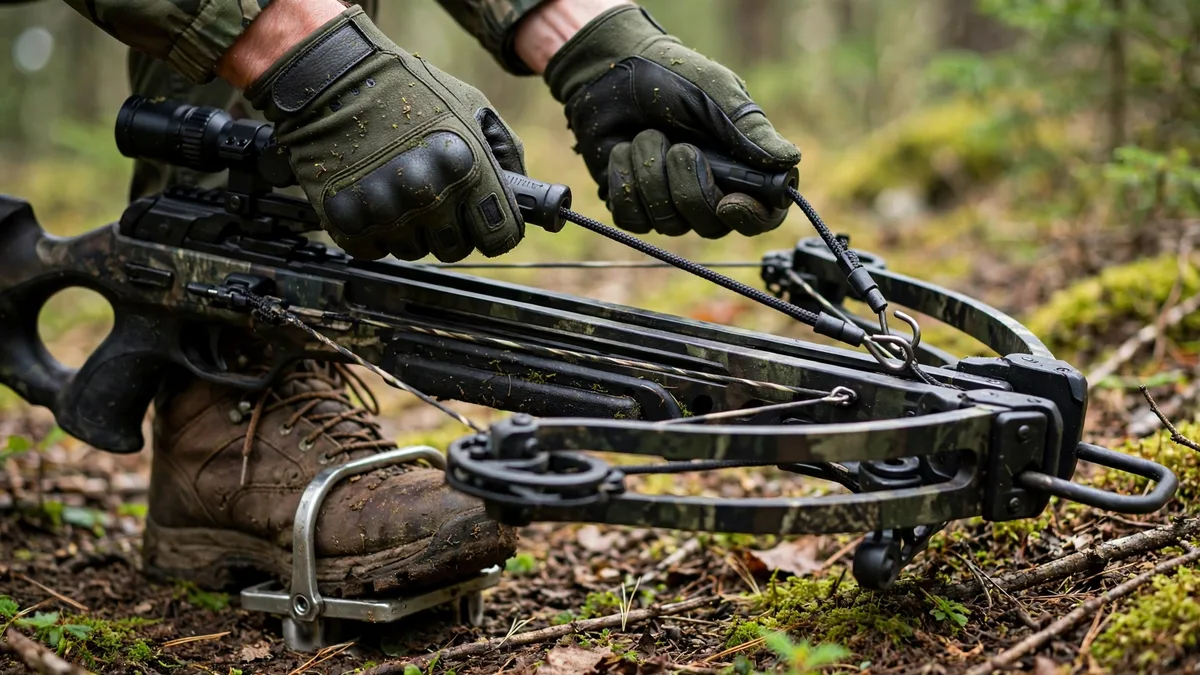
- Plant your foot deep in the stirrup. Stand the bow upright, nose down, and press your boot in until it bites. Keep the bow pointed at the ground, away from your feet.
- Hook the string, centered. Loop the rope behind the stock, slide the two hooks down to the string, and hook them on, one on each side of the rail. Center them on the colored serving mark. Hooks nearer one limb torque the string sideways.
- Grab the T-handles and stand up. Reach over the stock, take a handle in each hand, and get your balance before pulling. Jerking off-balance is how people get hurt.
- Pull both handles straight back, evenly. Drive with your legs and back like a deadlift, not just your arms. Smooth and steady. If one side leads, the string cants in the latch and accuracy dies. My first month, my groups drifted right, and it was my uneven pull, not the scope.
- Listen for the click, then ease off. The latch grabs the string with a metallic click. Relax your pull while keeping hold of the handles. If the string stays put, it is captured. If it slides forward, pull again, further.
- Verify the string is seated. Look at the trigger box. The string should sit flush against the back of the latch with no gap. A gap means a half-seated latch that can slip and dry fire. Recock if you see one.
- Confirm the safety is on safe. Most modern bows do this automatically. Look at the switch. Do not assume.
- Remove the rope cocker. Unhook the claws and get the rope completely clear of the bow.
- Load a bolt. Lift the bow horizontal, point it in a safe direction, and slide a bolt down the rail until the nock seats firmly against the string. Fingers below the rail the whole time.
Never hang your rope cocking device around your neck. If the string slips or the hooks let go under tension, a rope around your neck becomes a serious hazard. Stow it in your pack.
How Do You Cock a Crossbow With an Attachable Crank?
An attachable crank is a small winch that mounts to the stock, hooks to the string, and gears the effort down to almost nothing. Your manual will have the exact details for your model, so follow it. The universal rule is smooth and steady, never rushed.
- Mount the crank to the stock. Follow your manual for the mounting point and locking screw or pin. Confirm it is fully locked before applying force.
- Set the safety to FIRE, foot in the stirrup. Same stance and safety rule as the rope cocker.
- Release the spool and hook the string. Flip the anti-reverse lever to free the spool, pull both hooks out, and attach them to the string, each an equal distance from the rail. Centered, always.
- Engage the crank handle. Flip the anti-reverse pawl back to locked and attach the handle. Turning now winds the rope instead of free-spooling it.
- Crank smoothly until the click. Steady turns, not violent spins. Some systems click once, some twice as the string passes the anti-dry-fire catch. Do not rush the last inch. Spinning too fast can jump the string off the hooks, and every jump wears the serving.
- Confirm the safety is on safe, then back off the tension. Ease the handle back, unhook the hooks, and wind the rope into the crank.
- Remove the crank from the bow. A forgotten crank housing can interfere with the shot, and a loose handle becomes a projectile.
- Load a bolt, fingers below the rail.
Your manual will have the exact details for your model, so follow it. The universal rule is smooth and steady, never rushed.
How Do Integrated Cranks Work?
Integrated cranks live inside the bow. On ACUdraw-style systems, you flip out a folding handle, pull the sled hooks to the string, crank, and the system seats the string and sets the safety automatically. On ACUslide-style systems, the sled rides a track, and the same handle that cocks the bow also lets you silently decock it by cranking backward.
The steps match the attachable crank, minus the mounting. The two things that make integrated systems better for beginners: the pull is perfectly centered every time, so off-center strings basically disappear, and many of them decock, which solves the biggest headache of the day.
Can You Cock a Crossbow by Hand?
Technically, yes, on older bows with draw weights under about 150 pounds. Practically, you should not. Modern hunting crossbows run 150 to 200 pounds of draw weight, and hand cocking one is a shoulder injury waiting to happen, which is why picking a draw weight you can actually cock matters more than chasing the biggest number. Hand cocking also tends to pull unevenly, which loads one limb harder than the other.
If you try it with a light bow: foot deep in the stirrup, grip the string with both hands palms facing you, pull straight back along the rail, not upward. Upward pulls lever the bow against your foot and it can tip. My honest advice as a beginner: a rope cocker costs almost nothing and saves your shoulder. Use one.
Troubleshooting: What If Something Goes Wrong?
The string is not centered in the latch. This was my most common problem in month one. If the string sits closer to one side of the trigger box, you pulled unevenly. Let the string down and redo it, focusing on pulling both handles with identical force. A centered pull feels boring and symmetrical. That is the feeling you want.
It clicked, but the safety did not engage. You almost certainly cocked with the safety already on safe. The latch grabbed the string but the automatic safety never reset, leaving a cocked bow on fire that looks safe. Decock it properly, set the safety to fire, and recock. I now check the safety switch twice: once before cocking, once after.
The crank handle spins but the string is not moving. The anti-reverse pawl is not engaged, or you are spinning the wrong direction. Stop, check the lever position, and follow your manual’s direction. Do not force it.
The hooks keep slipping off the string. Inspect the hooks for rounded, shiny wear spots. Worn hooks jump off under tension, and every jump wears the serving faster. Replace them.
The rope cocker feels much harder than it used to. Wax your string and lube the rail. A dry string drags across the latch like sandpaper. If waxing does not fix it, inspect the serving for wear. A fuzzy serving is a serving asking for replacement.
How Do You Safely Uncock (Decock) a Crossbow?
Yes, and you must do it after every hunt. Never leave your bow cocked overnight. The limbs stay flexed under full tension, the string stretches, and you lose speed and accuracy. Here are your options, in order of preference.
Option 1: Shoot a discharge bolt into a target. This is the standard method. Keep a dedicated discharge arrow in your quiver, a tough arrow with a blunt tip, and at the end of the day fire it into a target or into soft ground pointed safely away from everything. It costs a few dollars per season and it is foolproof. I do this at the end of every hunt.
Option 2: Use a silent decocking system. If your bow has a decocking crank system, like ACUdraw De-Cock or an ACUslide-style track, you can back the string down under full control. Engage the system per your manual and reverse the crank slowly. This is the safest way to uncock, and it is silent, which matters when you are leaving the woods.
Option 3: Let the string down with a rope cocker. Some shooters hold the safety in the fire position and ease the string forward with the rope cocker. It works, but it is a two-handed balancing act, and if the hooks slip, the string jumps forward uncontrolled. I do not recommend it for beginners. Use a discharge bolt instead.
Never fire the bow empty to unload it. Dry firing to decock is the fastest way to destroy a crossbow and injure yourself. And never try to uncock by holding the string with your bare hands. The forces involved will win.
When you transport the bow home, uncock it and store it in a good crossbow case. Your string and limbs will last far longer.
What Is Dry Fire and Why Is Everyone Terrified of It?
Dry fire means releasing the string with no bolt loaded. A cocked crossbow stores all its energy in the limbs. Fire with a bolt and that energy transfers into the arrow. Fire without one and the energy has nowhere to go, so it tears the bow apart: cracked limbs, snapped strings, flying fragments, voided warranty. Anti-dry-fire mechanisms are a backup, not a permission slip. Bolt first, finger on the trigger second, every single time.
Mistakes I Made So You Do Not Have To
- Pulling the rope cocker unevenly for a month. My groups drifted right and I blamed the scope, the bolts, and the wind. It was my pull. Pull symmetrically or use a crank.
- Forgetting to remove the attachable crank before loading. I caught it before shooting, but a loose crank handle near the rail is a projectile waiting to happen.
- Cocking with the safety on. The string latched, the safety never engaged, and I held a cocked bow on fire that looked safe. Check the switch before AND after cocking.
- Leaving the bow cocked in the truck overnight once. The next range session my speed had dropped and the string had visibly stretched. De-cock after every hunt. No exceptions.
- Skipping string wax. My serving went fuzzy in six weeks of weekly shooting. A tube of wax costs almost nothing and takes two minutes.
- Resting a thumb on the rail “for just a second.” I did this exactly once, mid-cock, and the image of what would have happened ended the habit instantly. There are no safe seconds above the rail.
Once you can cock your bow confidently and consistently, the next skill is how to sight in a crossbow. A perfectly cocked string means nothing if the scope is not zeroed. And after each session, spend five minutes on care: wax the string, lube the rail, wipe it clean, and check the bolts every 50 to 100 shots. That is why some bows last a decade.
Frequently Asked Questions
Can you uncock a crossbow without firing it?
Yes. A silent decocking crank system lets you back the string down under control, which is the safest method. Without one, fire a discharge bolt into a target or soft ground at the end of the hunt. Never dry fire to unload, and never try to hold the string with your bare hands.
How hard is it to cock a crossbow?
With a rope cocker, a 160-pound bow feels like about 80 pounds of pull. With a crank, it takes only 5 to 10 pounds of effort regardless of draw weight. Without any aid, most adults cannot safely cock a modern hunting crossbow, and should not try.
Can I leave my crossbow cocked all day?
A full day in the stand cocked is normal and fine. Do not leave it cocked overnight: the limbs stay under tension, the string stretches, and you lose speed. I learned this after one night in the truck. De-cock after every hunt.
What happens if I dry fire a crossbow?
The stored energy has nowhere to go, so it can crack the limbs, snap the string, and throw fragments back at you. It usually voids the warranty. Anti-dry-fire safeties are a backup only. Always confirm a bolt is loaded before your finger touches the trigger.
Can I cock a crossbow with the safety on?
You should not. The string may still latch, but the automatic safety will not engage, leaving a cocked bow that looks safe but is actually on fire. Set the safety to fire before cocking, then confirm it clicked to safe after the string seats.
Why does my crossbow click but not fire?
The click means the string entered the latch, but it may be half-seated. Look for a gap between the string and the back of the latch. The other common cause is cocking with the safety on, which stops the trigger mechanism from resetting, as the inside look at the trigger and safety explains. Recock properly with the safety on fire.
Can I use a rope cocking aid on any crossbow?
Most traditional and wider-body crossbows accept a rope cocker, but some ultra-narrow modern bows require their proprietary integrated crank, and a rope aid can damage those systems. Always check your owner’s manual for approved cocking devices.
Can you cock a crossbow by hand?
Only on older, lighter bows under about 150 pounds of draw weight, and even then a rope cocker is safer. Modern hunting crossbows at 150 to 200 pounds cannot be cocked by hand safely. Hand cocking risks shoulder injury and pulls the string off-center.