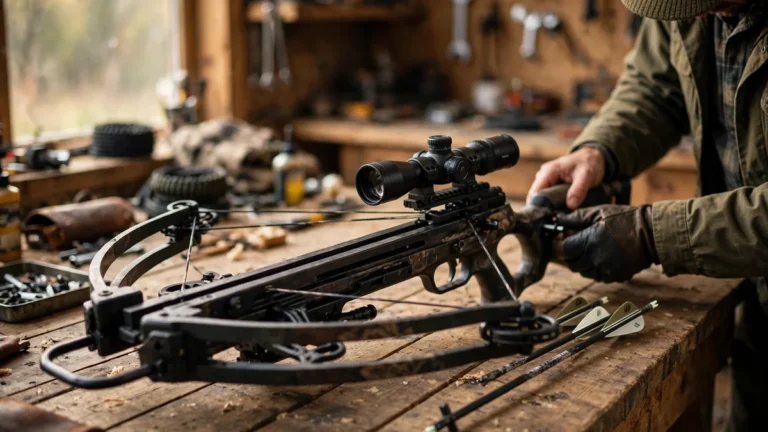
Crossbow Safety Guide: How to Handle Every Bow Safely
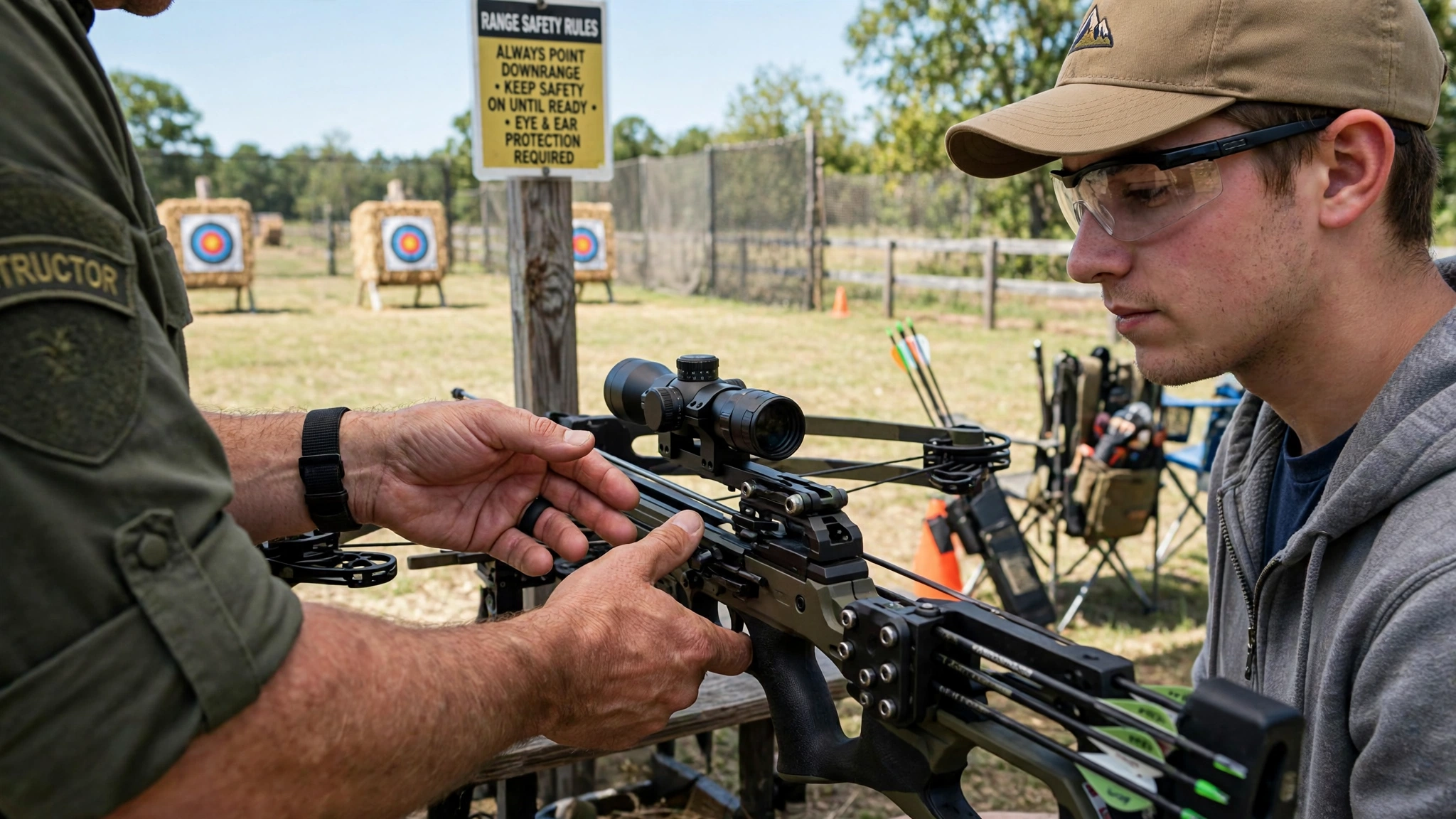
Here is the honest truth about my first day with a crossbow. I walked onto the range acting like I knew what I was doing, wrapped my front hand around the forend the way I would grip anything else, and David stopped me cold. He pointed at the rail and said, “Put your thumb there when the string goes, and you will not have that thumb anymore.” That got my attention, and it should get yours too. A crossbow is not a big slingshot. It holds 125 to 290 pounds of stored energy in its limbs, and when that string releases, it moves faster than you can blink.
This is the complete safety manual I wish someone had handed me before that day. It is everything David drilled into me, everything I learned the hard way on the range, and everything I now run through in my head before every single hunt. If you follow these rules, a crossbow is as safe as any hunting tool. If you skip them, it can hurt you in ways that do not heal well.
Safety Rules at a Glance
Read the full guide, but if you only remember one thing, remember this table. Tape it to your range bag.
| Rule | The short version |
|---|---|
| 1. Never dry-fire | Never release the string without a properly seated bolt. It can crack limbs and void your warranty instantly. |
| 2. Fingers below the rail | Keep every finger and thumb below the flight rail, never wrapped around the sides, when shooting, unless you are shooting the enclosed-barrel SWAT XP, which cages the bolt and keeps fingers clear by design. |
| 3. Cock correctly, every time | Use a cocking device, draw evenly, confirm the string clicks fully into the trigger sear. |
| 4. Decock safely | Shoot a bolt into a safe target or soft ground. Never decock by hand or with a rope cocking device. |
| 5. Treat it as loaded | Muzzle pointed in a safe direction at all times, finger off the trigger until you are ready to shoot. |
| 6. Treestand discipline | Cock on the ground, haul up unloaded with a rope, wear your harness. |
| 7. Broadhead respect | Handle razor-sharp broadheads with gloves, a wrench, and a dedicated case. |
| 8. Smart storage | Uncocked, unloaded, locked up, bolts stored separately, out of reach of kids. |
| 9. Legal transport | Cased and unloaded, and know your state’s transport rules before you drive. |
| 10. Supervise youth | Kids shoot only with a responsible adult, one-on-one, after a hunter safety course. |
Rule 1: Never Dry-Fire Your Crossbow
Dry-firing means releasing a cocked string without a bolt loaded. This is the number one way beginners destroy their bows, and David made it rule number one for a reason.
Here is what actually happens. When you fire a loaded crossbow, most of the stored energy transfers into the bolt. Without a bolt, all of that energy has nowhere to go, so it slams back through the limbs, string, cables, and trigger assembly as a shockwave. It can crack composite limbs instantly, derail the string, or shatter the cams. On many bows it immediately voids the warranty, and the manufacturer can require a professional inspection before the bow is ever fired again. I have seen the aftermath photos. They are not pretty, and the repair bill can exceed what a budget bow costs.
What to do if it happens anyway: Stop shooting immediately. Unload and uncock nothing by hand; carefully check the limbs for cracks, the string for fraying or separation, and the cams for damage. Do not fire the bow again until a qualified bow technician has inspected it. A dry-fired bow that “looks fine” can fail catastrophically on the next shot.
One related trap: using a bolt that is too light for your bow has a similar effect, because a featherweight bolt does not absorb enough energy either. Always shoot bolts that meet your manufacturer’s minimum weight. When you are choosing a crossbow, look for one with an anti-dry-fire mechanism, which blocks the trigger when no bolt is loaded. It is a backup, not a replacement for your own discipline, but it is a good one.
Rule 2: Keep Every Finger Below the Rail
This is the rule David scared me with on day one, and it deserves the emphasis. The string and cables on a crossbow travel with explosive speed along the rail, and anything in that path gets crushed or cut. Manufacturers state this plainly: fingers or thumbs placed on, in, or near the flight track, string, or cables can result in serious injury, including amputation.
The correct grip feels a little strange at first. Your front hand supports the bow from underneath the stock, well below the rail, with your thumb tucked down along the bottom. Never wrap your thumb or fingers around the sides of the forend where the cables sweep past. Before every shot, I do a conscious check: front hand low, thumb down, nothing near the rail. It took about two practice sessions before it became muscle memory. Now it feels automatic.
Rule 3: Cock Correctly, Every Single Time
Cocking is where most first-timer mistakes happen, and rushing is how you get hurt. The sequence David taught me never changes:
- Inspect first. Check the limbs for cracks, run your thumb along the string and cables feeling for frays, and flex each bolt to check for damage. A damaged bolt can shatter on release.
- Point it safely. Muzzle pointed downward at the ground, in a direction where nothing and nobody could be harmed.
- Use a cocking device. A rope sled or an integrated crank draws the string back evenly on both sides. Hand-cocking invites an uneven draw and a slip. My full walkthrough is in how to cock a crossbow.
- Listen for the click. Draw until the string seats fully into the trigger sear with a solid click. If the safety will not engage afterward, the bow is probably short-stroked (see below): re-engage your cocking device and pull the last bit until it clicks.
- Verify the safety. Look at the safety mechanism. Confirm it is engaged. Do not assume it engaged automatically, even though most modern bows do it.
About “short stroking”: This happens when you pull the string back far enough to engage the anti-dry-fire mechanism but not far enough to click into the trigger sear. The bow looks cocked, the safety will not engage, and the trigger is dead. Do not force anything. Re-engage your cocking device and pull the string back that final bit until you hear the click, then engage the safety. If you cannot re-engage the device safely, load a bolt and fire into a safe backstop. When in doubt, stop and get help from someone experienced.
Rule 4: Decock Safely, Never by Hand
This one surprised me when I started. With a vertical bow, you let the string down gently. With a crossbow, you absolutely do not try to hold back 150-plus pounds and ease it down by hand, and you never use your rope cocking device to let it down either. That is a fast route to a slip, a smashed hand, or an accidental discharge. Manufacturers are blunt about this: attempting to decock by hand or with a rope device puts you at risk of serious personal injury.
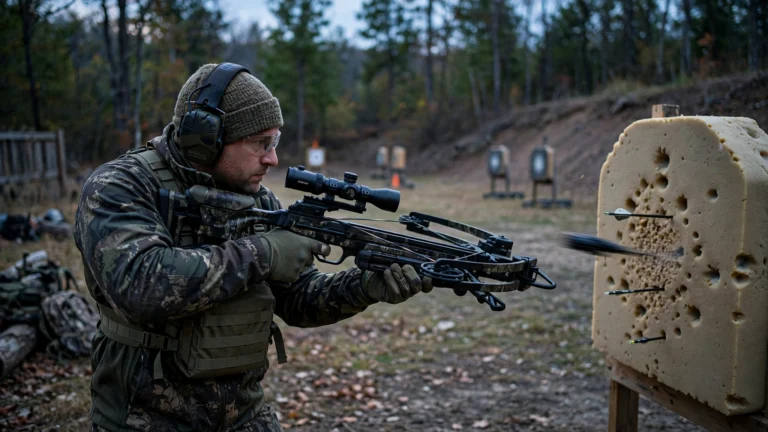
The safe method is simple: shoot the bow into a safe target. End of every practice session and every hunt, I fire a practice bolt into my target or into soft ground at a steep downward angle. Some bows have a dedicated decocking bolt or a built-in crank decocking feature, so check your manual. If your hunt ends and you are carrying the bow out, never walk out with it cocked. Discharge it first, then walk.
This is one reason a good crossbow-rated target matters. Never shoot into improvised backstops, fences, or hard surfaces. Bolts that hit hard edges or metal can ricochet, and a ricocheted bolt is as dangerous as a deliberate shot.
Rule 5: Treat Every Crossbow as Loaded
The four firearm rules apply to crossbows word for word, and the hunter education courses teach them exactly this way:
- Treat every crossbow as if it is loaded. Even one you just uncocked. Even one you watched someone else uncock.
- Always point the muzzle in a safe direction. For me, that is almost always at the ground, never swept across people, dogs, or toward the horizon where a house might sit.
- Keep your finger off the trigger until you are ready to shoot. Finger straight along the side of the stock. If you decide not to shoot, re-engage the safety immediately.
- Be sure of your target and what is beyond it. A bolt can miss, pass through, or deflect. Never shoot at movement or sound. Positively identify your target first.
The safety switch deserves its own warning. Yes, most modern crossbows engage the safety automatically when cocked. But it is a small mechanical device, and mechanical devices fail. David’s rule: your eyes confirm the safety is on before the bow gets pointed at anything but the ground. Every single time.
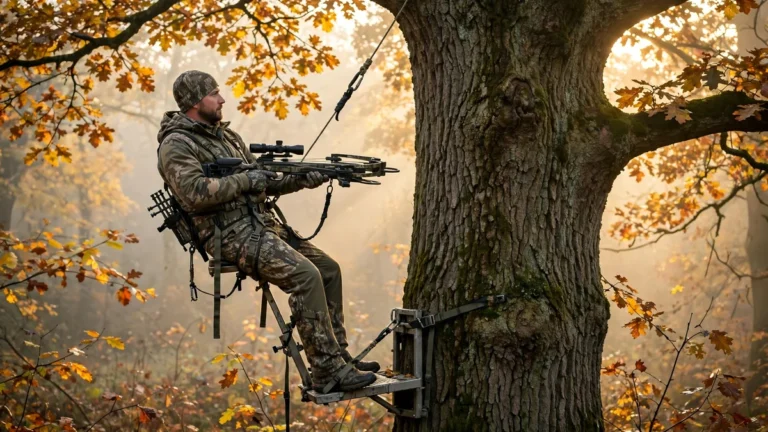
Rule 6: Treestand Handling (This One Saves Lives)
Here is a fact that stopped me in my tracks: treestand falls injure more hunters every year than weapons do. So treestand safety is really two disciplines at once, the bow and the stand. Here is the routine:
- Cock on the ground. Never climb with a cocked or loaded crossbow. Period.
- Unload for the lift. Remove the bolt and confirm the safety is on, then use a haul line to pull the bow up after you are seated and secured. Lower it the same way at the end.
- Wear a full-body harness. No exceptions, no “just this once.” Connect it from the moment your feet leave the ground until they are back on it.
- Keep your safety on while you wait. Only disengage it when you are on target and ready to take the shot. If the shot does not happen, the safety goes back on immediately.
- Clear your shooting lanes. A bolt that clips a branch deflects unpredictably. Trim before the season, not during the moment.
Rule 7: Handle Broadheads Like the Razors They Are
A broadhead is a razor blade with a job, and I treat every one like it wants to cut me. When I first screwed a fixed-blade broadhead onto a bolt, David watched me do it bare-handed and winced. Here is the routine he taught me instead:
- Wear gloves when attaching or removing broadheads, and use a broadhead wrench rather than your fingers. A small wrench costs almost nothing and saves stitches.
- Keep broadheads in a dedicated case or quiver cover until you are hunting. Never loose in a pocket, pack, or truck bed.
- When removing a bolt with a broadhead from a target, pull from behind the blades and keep the head pointed away from your body. For practice, use field points, not broadheads; your target will last longer and your fingers stay safer.
- Check that each broadhead spins true on the bolt before the season. A wobbling broadhead flies off course.
If you are still deciding between fixed and mechanical heads, my broadhead guide breaks down the tradeoffs. Whichever you choose, the handling rules above do not change.
Rule 8: Store Your Crossbow Like a Responsible Owner
An uncocked, unloaded crossbow in a locked space is a safe crossbow. Here is my storage routine:
- Always uncock it after the session. Never leave a crossbow cocked overnight or between hunts. Constant tension on the limbs and string accelerates wear and can permanently weaken them. End of the day, discharge into a safe backstop.
- Store bolts separately. The bow and the ammunition live in different places. If a curious kid finds one, it is useless without the other.
- Lock it up. A locked hard case or a locked cabinet, in a cool, dry place. This is about children, visitors, and theft, not just you.
- Wipe it down. A silicone cloth on metal parts prevents rust. While you are at it, wax the string every 50 shots or so and check screws for looseness, vibration backs them out over time.
A quality hard case does most of this work for you. If you are shopping for one, my crossbow case guide covers what actually protects the bow in transit and in storage.
Rule 9: Transport It Cased, Unloaded, and Legal
The transport rules are simple in spirit: uncocked, unloaded, and cased. But the legal details vary, and this is where beginners (including past me) get lazy. A few points:
- Transport the crossbow uncocked and unloaded, in a case. Never with a bolt loaded, never cocked in the vehicle.
- Crossbow transport laws vary by state and even by season. Some states treat a crossbow like a firearm for transport purposes; some have specific rules about loaded weapons in vehicles. Check your state’s current regulations before hunting season, not during it.
- When walking to your spot, the bow is uncocked until you are settled and ready. A slip on wet leaves with a cocked, loaded bow is the accident that did not have to happen.
Rule 10: Youth Supervision, No Shortcuts
This one matters to me because I think about the day I will take a kid out for the first time. A crossbow is easier to shoot accurately than a vertical bow, and that ease can fool adults into thinking it is easier to be safe with. It is not. My rules, borrowed from David and from every hunter education course I have read:
- One-on-one, arm’s length supervision. A new youth shooter handles a crossbow only with a responsible adult right beside them, coaching every step.
- Hunter safety course first. Most states require hunter education before a youth can hunt, and many set minimum ages for licenses and for hunting unsupervised. Take the course together before the season, and check your state’s specific age and supervision requirements.
- Right-sized equipment. A bow the kid can cock and hold comfortably, with a draw weight they can manage. Struggling with the equipment is where accidents start. My youth crossbow guide covers what to look for.
- The adult owns the cocking and loading. Early on, the adult cocks the bow, loads the bolt, and checks the safety. The young shooter focuses on one job: safe muzzle direction, finger discipline, and the shot.
- No showing off. Kids never handle the bow unsupervised, and nobody hands a cocked bow to anyone, kid or adult.
My Safety Checklist Before Every Hunt
I run this checklist the night before and again in the field. It takes five minutes and it is the best hunting habit I have.
The Night Before
- ☐ Limbs inspected for cracks or splinters
- ☐ String and cables checked for fraying; waxed if dry
- ☐ All bolts flexed and inspected: straight shafts, intact nocks, tight inserts
- ☐ Broadheads sharp, seated straight, stored in their case
- ☐ Scope or sight tight; screws checked (re-sight if anything was adjusted)
- ☐ Cocking device, haul line, harness, and safety glasses packed
- ☐ License, tags, and knowledge of the area’s regulations confirmed
In the Field
- ☐ Muzzle pointed in a safe direction from the moment the bow comes out
- ☐ Cocking device used, full click into the sear confirmed
- ☐ Safety visually verified as engaged before loading
- ☐ Bolt seated with an audible click; odd-colored vane down in the rail groove
- ☐ Front hand low, thumb tucked below the rail
- ☐ Safety disengaged only when on target and ready to shoot
- ☐ Target positively identified, with a safe backstop beyond it
- ☐ At day’s end: bow discharged into a safe backstop, uncocked for the walk out
Crossbow Safety FAQ
Can a crossbow go off by itself?
A properly maintained crossbow in good condition does not fire on its own, but mechanical safeties can fail and triggers can snag. That is exactly why the rules exist: keep it pointed in a safe direction, keep your finger off the trigger, and keep the safety engaged until you are ready to shoot. Treat every bow as if it could discharge at any moment, and an accidental discharge becomes a scare instead of a tragedy.
What happens if you dry-fire a crossbow?
The energy that would have gone into the bolt slams back through the bow instead. It can crack limbs instantly, derail the string, damage cams and the trigger assembly, and send debris back toward the shooter. Most manufacturers void the warranty on a dry-fired bow and require a professional inspection before it is fired again. Never dry-fire, not even once “to test it.”
How should I carry a crossbow in a treestand?
Do not carry it up with you. Cock on the ground, remove the bolt, confirm the safety is on, climb up and secure your harness first, then pull the bow up with a haul line. Lower it the same way at the end. Never climb with a cocked or loaded crossbow, and always wear a full-body harness, since falls injure more hunters than weapons do.
At what age can kids use a crossbow?
It depends on your state. Most states require hunter education and set minimum ages for licensing and for hunting without adult supervision, and the details change often. As a baseline, youth shooters should only handle a crossbow one-on-one with a responsible adult, after completing a hunter safety course, using equipment sized for them. Check your state’s current regulations before the season.
Is it safe to leave my crossbow cocked overnight?
No. Leaving a crossbow cocked for extended periods keeps constant stress on the limbs, string, and cables, accelerating wear and potentially weakening them permanently. Always discharge it into a safe backstop at the end of the day and store it uncocked.
Do I need safety glasses when shooting a crossbow?
Yes. Fragments from a damaged bolt, a snapping string, or debris kicked up from a target can be thrown back toward your face. Glasses are cheap insurance. Wear them when assembling, cocking, loading, and shooting.
What should I do if the safety will not engage after cocking?
Do not try to fire it. The bow is likely short-stroked: the string engaged the anti-dry-fire mechanism but did not click fully into the trigger sear. Re-engage your cocking device and pull the string back the final bit until you hear the solid click, then engage the safety. If you cannot do that safely, load a bolt and discharge into a safe backstop. If it still will not engage, unload and take the bow to a qualified technician.
Can I transport a cocked crossbow in my truck?
No. Transport it uncocked, unloaded, and in a case. A cocked bow bouncing around a vehicle is an accidental discharge waiting for a pothole, and many states specifically prohibit transporting loaded weapons. Check your state’s transport rules before the season.
The Bottom Line
A year ago I thought crossbow safety was common sense. Then David showed me how many ways “common sense” gets people hurt: the thumb creeping up the rail, the rushed cocking job, the bow left cocked in the truck overnight, the climb into the stand with a loaded bow. None of those people planned to have an accident. They just skipped a rule once.
The ten rules above are not a suggestion list. They are the habits that separate a hunter who comes home safe every season from a cautionary tale. Run the checklist, respect the stored energy in those limbs, and read your manufacturer’s manual cover to cover, because your specific bow has its own quirks. Do that, and you will enjoy this sport for a long, long time. I plan to.
If you are still picking your first bow, start with the best crossbows for beginners and how to choose a crossbow. And once you are shooting, keep learning: the habits in this guide pair directly with solid shooting fundamentals.