How to Uncock a Crossbow Safely: 5 Methods That Actually Work
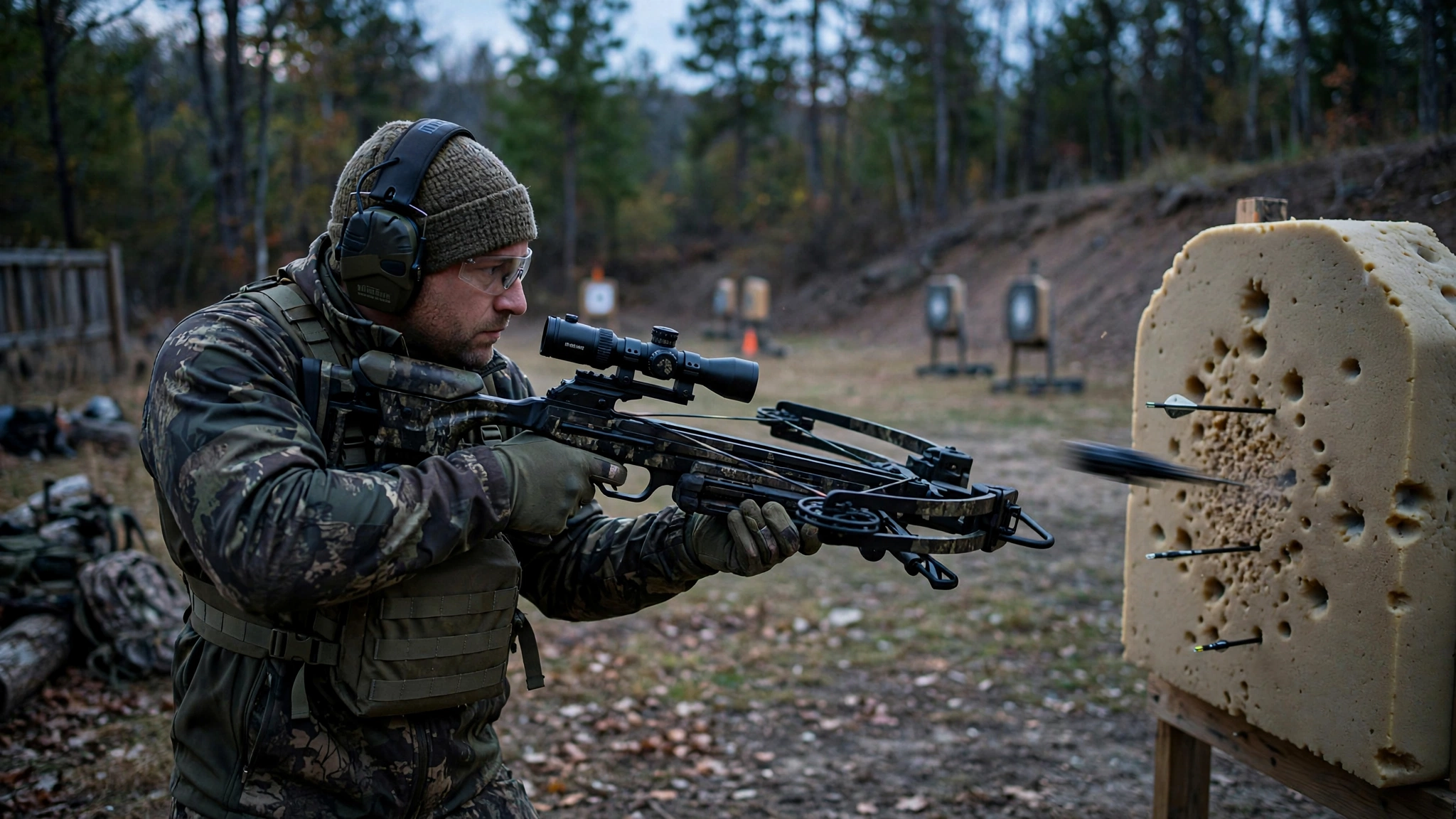
Safety first: Uncocking a crossbow means releasing stored energy, and every method below involves a loaded weapon pointed in a safe direction. Procedures are model-specific, so check your owner’s manual before trying anything in this guide. This article contains affiliate links. If you buy through them, I may earn a commission at no extra cost to you. Read my full affiliate disclosure.
The Short Answer
The safest way to uncock a crossbow is to shoot it into a proper crossbow target, or to fire a discharge bolt (also called a decocking bolt) into soft ground or a target at the end of your hunt. Never hand-release the string of a cocked compound crossbow, no matter what some corner of the internet tells you. Every safe method in this guide ends with the same step: check your owner’s manual first, because procedures are model-specific.
That is the whole lesson up front. A crossbow is not complicated, but it stores an enormous amount of energy, and letting that energy out the wrong way can end a hunt, a season, or worse.
Never Do This: Why Hand-Releasing Can Cost You Fingers
Here is why that advice is so bad. A modern hunting crossbow stores somewhere in the range of 150–290 pounds of draw weight in the limbs. When you pull the trigger, that energy releases in a fraction of a second. The string snaps forward at terrifying speed, and your fingers would be inches from it while you try to “ease it down.” You cannot physically hold back that force with your hands. What actually happens is the string rips forward through your grip, and the likely result is a severe laceration, a broken finger, or an amputation.
Think of it like this. You would not try to stop a car by pushing it. The physics are not on your side, and your fingers are the weak point in the system.
There is one narrow exception that is not really an exception. A few very low-powered recurve-style or youth crossbows have let-down procedures in their manuals, and those are completely different machines with a fraction of the energy. If your manual describes a manufacturer-approved let-down for your specific model, follow the manual exactly. Otherwise, the rule is simple: no hands on the string of a cocked bow, ever.
5 Safe Ways to Uncock a Crossbow
These are the five methods that are actually safe. Every one of them assumes you are pointing the bow in a safe direction with your fingers below the rail. And every one of them comes with the same instruction, because I cannot say it enough: check your owner’s manual first. Procedures are model-specific, and your manufacturer knows your bow better than I do.
Method 1: Shoot It Into a Target
This is the most common method and the one I use most often. When the hunt is over, point your crossbow at a proper crossbow target and fire a regular field-tipped practice bolt. The bow discharges exactly the way it was designed to, which is the gentlest possible way to release the energy.
A few practical notes from my own routine. Make sure you are shooting into a target rated for crossbow speeds, not a cheap archery bag, because a fast crossbow bolt will blow straight through an under-rated target. Keep the target at 20–30 yards with a solid backstop behind it. I keep a dedicated target at my truck for exactly this purpose on days I do not want to carry my bag target into the stand.
The only real downside is convenience. If you are deep in the woods at dark, hauling a target around is a pain. That is why the next methods exist.
As always: check your owner’s manual first.
Method 2: Fire a Discharge Bolt (Decocking Bolt)
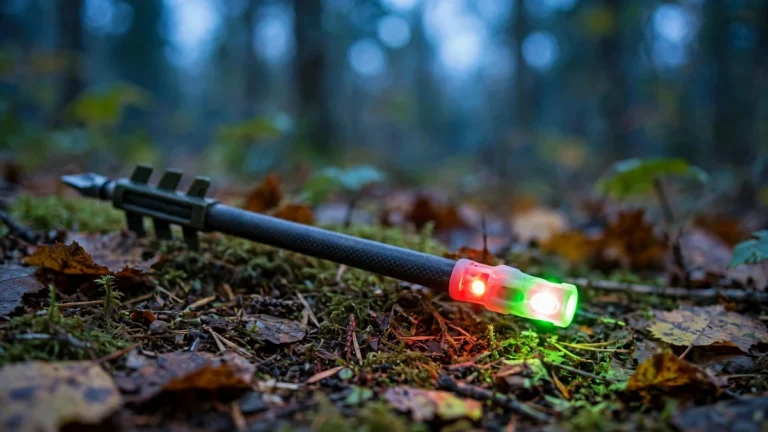
A discharge bolt, also called a decocking bolt or unloading bolt, is a short, specially made arrow with one job: letting you fire your crossbow safely when you do not have a target. You load it like a normal bolt, point the bow at soft ground or dirt, and fire. The bolt buries itself in the earth, the energy is spent, and your bow is uncocked.
This was the method that confused me the longest, because the names get used interchangeably. Here is the clean distinction I wish someone had given me on day one:
- Discharge bolt / decocking bolt: a short arrow you FIRE from the crossbow to unload it. It goes in the rail like a normal bolt.
- Defuser: a device you attach to or insert into the bow (method 3 below) that releases tension WITHOUT firing the bow.
They solve the same problem in completely different ways. A discharge bolt is simpler, cheaper, and works with almost any crossbow, which is why it is the standard end-of-day solution for most hunters.
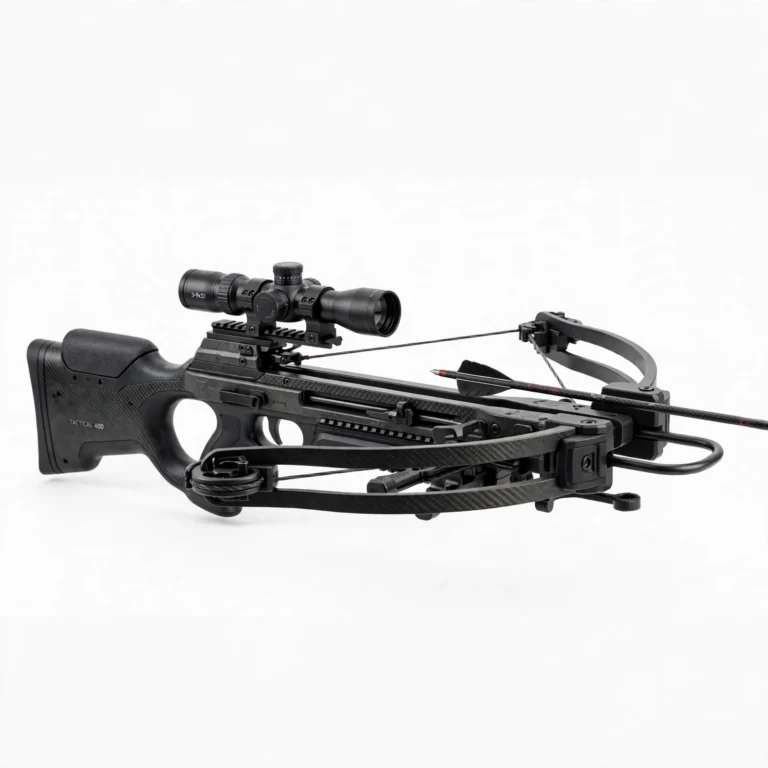
As always: check your owner’s manual first, and confirm your manual allows firing into soft ground with a discharge bolt.
Method 3: Use a Defuser (Decocking Device)
A defuser is a purpose-built device that releases the string tension without firing the bow at all. It captures the string and lets the energy down in a controlled way, so nothing gets fired and nothing snaps forward uncontrolled.
Defusers are the best option for hunters who dislike firing anything at the end of the day, or who hunt where discharging a bow near camp, a road, or other hunters is not welcome. They are quiet, there is no bolt to lose in the dirt, and there is no shot to explain to anyone nearby.
The trade-off is that defusers are more model-specific than discharge bolts. You need one that fits your bow’s string and rail design, and you need to learn the procedure at home first, in daylight, when nothing is on the line.
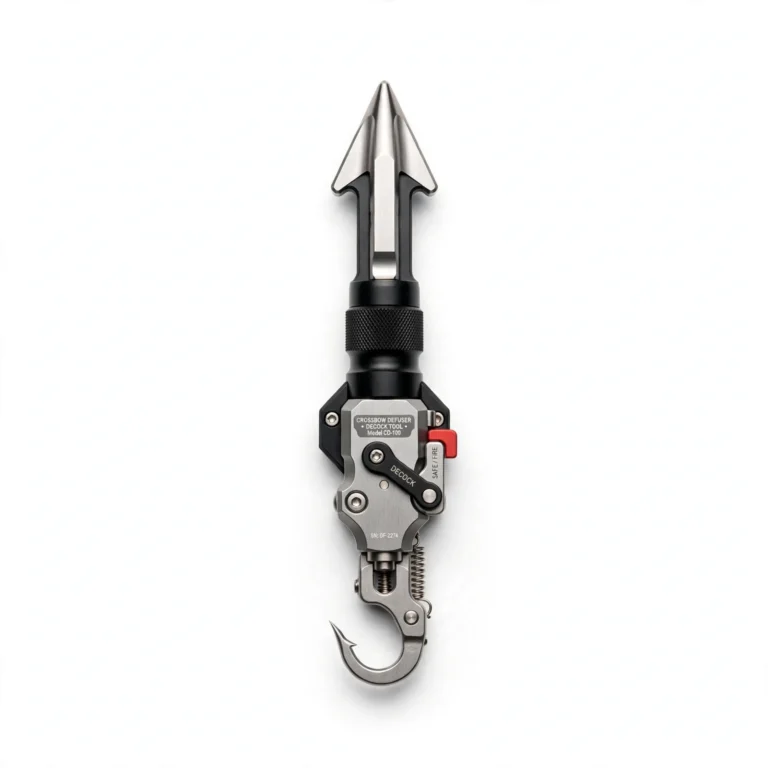
As always: check your owner’s manual first, and only use a defuser your bow’s manufacturer approves or that is designed for your model.
Method 4: Built-In Crank Let-Down (ACUslide and Similar Systems)
Some modern crossbows, most famously TenPoint’s ACUslide system, have a built-in crank cocking device that also works in reverse. You engage the crank and let the string down under full control, exactly the opposite of how you cocked it. This is the cleanest, quietest unloading method that exists, and if your bow has it, it is the one you should use.
Here is the catch, and it is an important one: this method only exists if your bow was built for it. A crank let-down is not a trick you can improvise on a bow that does not have the mechanism. Trying to “crank down” a standard rope cocker that was never designed for reverse operation is just the hand-release mistake with extra steps. I compare the different cocking devices in a separate guide if you are weighing your options.
If you are shopping for a bow and end-of-day unloading matters to you, a built-in let-down system is a genuinely good feature to prioritize. Read the TenPoint reviews for more on how these systems work in practice.
As always: check your owner’s manual first, even if your bow has a crank. The procedure is model-specific.
Method 5: Cocking Rope Let-Down (Manufacturer-Approved Only)
On some recurve-style crossbows, and on a small number of compound models where the manufacturer explicitly approves it, you can let the string down using your cocking rope. The procedure generally goes: hook the rope to the string, take the tension, release the trigger with the bow pointed in a safe direction, and lower the string forward in a controlled way.
I am putting this method last on purpose, because this is the one people misunderstand most dangerously. A cocking rope let-down is ONLY safe where your manufacturer approves it for your specific model. It is not a general technique, and it is not the hand-release idea dressed up.
If your manual does not describe this procedure, your bow does not have it. Full stop. Use one of the other four methods instead.
With this method, the manual is not a suggestion, it is the entire basis of safety. Check your owner’s manual first.
How Long Can a Crossbow Stay Cocked?
This is one of the most-asked questions in crossbow hunting, and the honest answer is: not long. Manufacturers publish maximum cocked times because leaving a bow cocked wears on the limbs, the string, and the cables. Here are the commonly cited limits, but treat them as maximums, not targets, and confirm against your own manual since specs can change:
| Brand | Maximum Cocked Time | What I Actually Do |
|---|---|---|
| Ravin | About 8 hours | Uncock the moment the hunt ends |
| TenPoint / Wicked Ridge | About 24 hours | Still uncock at the end of every day |
| CenterPoint and most others | Check your manual, typically 4–8 hours | Uncock at the end of every day |
Notice the pattern. Whatever the manual allows as a maximum, my rule is simpler: uncock at the end of every hunting day. The maximum is the point where damage becomes likely, not the point where everything is fine.
Leaving a bow cocked for hours causes limb fatigue, string stretch, and serving wear. Over time, that changes your point of impact, which means your carefully sighted-in bow quietly drifts off zero. It also stresses the trigger box and the safety mechanism. None of this is worth skipping a two-minute routine. For more on keeping your bow in spec, see my crossbow maintenance guide.
Can I Leave My Crossbow Cocked Overnight?
No. I am going to answer this one head-on, because it gets asked constantly and the answer should not be buried: do not leave your crossbow cocked overnight.
The reasons are straightforward. First, limb fatigue and string stretch. Limbs under tension all night lose power and consistency, and a stretched string shifts your point of impact. You will not notice it until you miss, and you will blame the shot instead of the real cause. Second, safety. A cocked crossbow is a loaded weapon. Leaving a loaded weapon unattended overnight, in a case, in a vehicle, or in camp, is never acceptable. Third, the manufacturer’s own limits. Overnight easily exceeds the safe cocked time for most bows.
Never leave a crossbow cocked in its case, either. Cases get jostled, zippers catch on triggers, and the whole point of a crossbow case is safe transport, which starts with an unloaded bow. My rule, again: the last thing I do at the end of every hunting day is unload the bow. It takes two minutes. It is non-negotiable.
What a Dry-Fire Actually Breaks
A dry-fire means firing a crossbow with no bolt loaded. This is the single most destructive thing you can do to a crossbow, and since every unloading method in this guide involves pulling the trigger, it is worth understanding what is at stake.
When you fire normally, the bolt absorbs the energy. With no bolt, all that stored energy has nowhere to go except back into the bow itself. Here is what it breaks:
- Limbs: cracked, splintered, or delaminated limbs. Sometimes visibly, sometimes not.
- Cams and axles: bent, cracked, or thrown out of timing on compound bows.
- String: snapped, frayed, or derailed from the cams.
- Cables: stretched or snapped, which throws off cam timing.
- Trigger box and safety: cracked housings and damaged sears, which can make the bow unsafe to cock afterward.
The scariest part is the last line: damage can be invisible. A limb can have internal delamination with no visible crack, and the next shot is the one that fails. If you dry-fire your crossbow, stop shooting it and take it to a pro shop or contact the manufacturer before you cock it again. This is also why the fingers-below-the-rail rule matters on every single shot, and why you never pull the trigger without a bolt (or a discharge bolt) seated.
My End-of-Day Treestand Routine
My first season, I climbed down from the stand with a cocked crossbow because I was tired and it was getting dark. That was stupid, and I know it now. A cocked bow going down a ladder is a disaster waiting for a slip. Here is my routine now, the same every time:
- Unload in the stand, before climbing down. I decide my method before dark, usually a discharge bolt into the soft ground below the stand or a shot into my truck target if I am close. The bow gets unloaded while I am still stable and calm.
- Safe direction, fingers below the rail, every time. The fingers-below-the-rail rule is not just for shooting. Your fingers stay below the rail during the entire unloading process, because the string is about to move fast.
- Confirm it is unloaded. I visually check the string is forward and the safety is on. Takes three seconds. I do it every time, because the one time you skip a check is the time it matters.
- Climb down with an unloaded bow. Only then do I attach my haul line and lower the bow, or climb down with it slung, unloaded and on safe.
- Case it unloaded. At the truck, the bow goes into the case unloaded. The case gets the bow, the quiver, and my discharge bolts for next time. Nothing cocked, ever.
Is it a little slower? Sure, maybe five minutes. But the hunt is over, the deer are gone, and the only thing that can go wrong in the next five minutes is me getting sloppy. Slow is fine. Slow is the whole point.
If you are new to all of this, start with my best crossbow for beginners guide and read the crossbow safety guide before your first hunt. The cocking guide is the companion piece to this one: learn both procedures at the range, in daylight, before you ever sit in a stand.
Frequently Asked Questions
What is the safest way to uncock a crossbow?
Fire it into a proper crossbow target, or fire a discharge (decocking) bolt into soft ground. Both release the stored energy the way the bow was designed to handle. If your bow has a built-in crank let-down, that is equally safe and quieter. Whichever method you use, check your owner’s manual first, because procedures are model-specific.
Can I uncock a crossbow by hand, holding the string?
No. Never hand-release a cocked compound crossbow. You are holding back 150–290 pounds of stored energy inches from your fingers, and the string will rip forward through your grip. The likely result is a severe laceration, a broken finger, or an amputation. This advice still circulates online and it is dangerous. Do not follow it.
What is the difference between a discharge bolt, a decocking bolt, and a defuser?
A discharge bolt and a decocking bolt are the same thing: a short arrow you fire from the crossbow to unload it. A defuser is a completely different product: a device that releases the string tension without firing the bow at all. The names get confused constantly, so remember: bolts get fired, defusers do not.
How long can I leave my crossbow cocked?
It depends on the brand. Ravin lists about 8 hours maximum, TenPoint lists about 24 hours, and most other brands fall in the 4–8 hour range. But treat those as absolute maximums, not targets. The practical rule is to uncock at the end of every hunting day, and never leave a crossbow cocked overnight or in its case. Confirm the exact limit in your owner’s manual.
Can I leave my crossbow cocked overnight?
No. Overnight exceeds the safe cocked time for most crossbows, causes limb fatigue and string stretch that shifts your point of impact, and leaves a loaded weapon unattended. Unload at the end of every hunting day.
What happens if I dry-fire my crossbow?
A dry-fire (firing with no bolt loaded) sends all the stored energy back into the bow. It can crack or splinter limbs, bend cams and axles, snap strings and cables, and damage the trigger box and safety. Some damage is invisible, so a dry-fired bow should be inspected by a pro shop or the manufacturer before you shoot it again.
Can I uncock my crossbow with a cocking rope?
Only if your manufacturer explicitly approves it for your specific model. Some recurve-style bows have an approved rope let-down procedure. It is not a general technique, and it is not safe to improvise on a bow that was never designed for it. If your manual does not describe the procedure, use a discharge bolt, a defuser, or a target instead.
Is it safe to uncock a crossbow from a treestand?
Yes, if you do it before climbing down. Unload in the stand using a discharge bolt into soft ground below or your planned method, keep the bow pointed in a safe direction with fingers below the rail, confirm the string is forward, and only then climb down. Climbing down with a cocked crossbow is one of the most dangerous mistakes a beginner can make.
The Bottom Line
Uncocking a crossbow is simple once you know the rules, and the rules are not complicated: never hand-release the string, use a method your manual approves, keep your fingers below the rail, keep the bow pointed in a safe direction, and unload at the end of every single hunting day. Two minutes at dusk buys you a bow that stays in spec and a hunt that ends the way it should, with everyone and everything intact.
I learned every bit of this the slow way, by being the beginner who had to ask. If you take one thing from this guide, take the treestand routine: unload before you climb down, confirm it, then move. Make it a habit on day one.
New to crossbows entirely? Start with my beginner buying guide, learn how to choose a crossbow, and keep the maintenance guide bookmarked. When you are ready to compare models, the best crossbows of 2026 roundup and the best crossbow for the money picks are where I would start. For a deeper look at the brands mentioned here, see my Ravin reviews and TenPoint reviews.
A final reminder: I am a beginner sharing what I have learned, not a gunsmith or a manufacturer engineer. Your owner’s manual is the final authority on every procedure in this guide. If anything here conflicts with your manual, your manual wins. This article contains affiliate links. Read my full affiliate disclosure.