Crossbow Maintenance Guide: Keep Your Bow Shooting Like New
As an affiliate, ProCrossbow may earn a commission if you buy through links on this page, including the product picks below. It costs you nothing extra and keeps our guides free.
The Short Answer
I will be honest with you: when I got my first crossbow, maintenance was the part I ignored completely. I shot it, wiped it with my sleeve, and threw it in a soft case. Six months later the string looked like a fuzzy pipe cleaner and my shots were landing three inches low for no reason I could figure out. That bow needed a new string, and it was my fault.
Here is the short answer I wish someone had handed me on day one. A crossbow stays healthy with two simple habits and one regular inspection. Wax the string every 50 to 75 shots, lube the rail every 50 to 100 shots, and run a 7-step check before every shooting session. That is genuinely most of it. The full guide below walks through all of it step by step, in the order I learned it.
The 7-Step Pre-Shoot Inspection
This is the habit that prevents almost every bad surprise. I do this before every session now, and it takes me about five minutes. Think of it like checking your tires before a road trip.
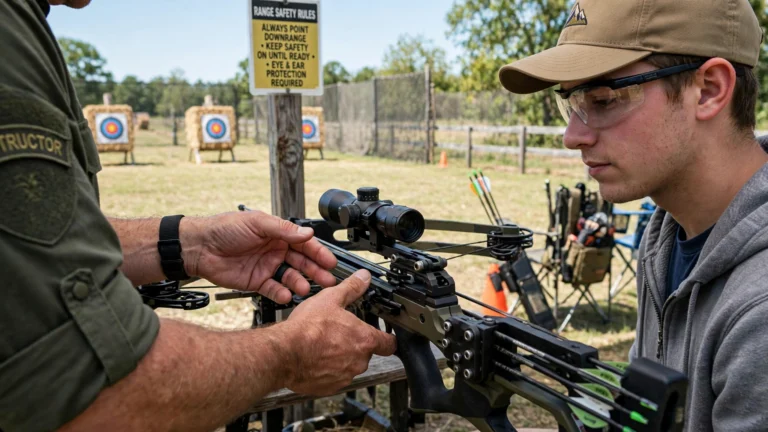
- Check the safety first. Before you touch anything else, confirm the safety is in the SAFE position. Everything else on this list is secondary to safe handling. If you are new to crossbow handling, our crossbow safety guide covers the full routine.
- Inspect the string and cables for fraying. Look closely at the full length of the string and both cables. Any broken strands, frayed fibers, or fuzzy spots mean the string is wearing out. A string that fails under full draw tension is dangerous, not just inconvenient.
- Check the center serving for separation. The serving is the tightly wrapped thread around the middle of the string where it rides the rail and latches into the trigger. If you see the strands spreading apart or the wrap looking loose and gappy, the serving is separating. Wax belongs on the exposed string fibers, not on the center serving of a compound bow, more on that below.
- Inspect your bolts for damage. Roll each crossbow bolt on a flat surface to check for bends, flex each one gently to listen for cracking sounds, and check that nocks and broadheads are tight. A damaged bolt fired from a crossbow can shatter, and that is a safety issue.
- Snug every fastener. Vibration loosens things. Check the screws holding your crossbow scope or sights, the quiver bracket, the foot stirrup, and the limb bolts. Do not overtighten, just confirm everything is snug.
- Look the limbs over. Run your eyes along both limbs for cracks, splinters, or delamination. Pay special attention near the limb tips. If you see any damage on a limb, do not shoot the bow. Take it to a pro shop.
- Check the rail and trigger box. The rail should be clean with a light, even coat of lube. The trigger box and string latch should be free of dirt, wax buildup, and debris. Blow or wipe out anything that does not belong there.
Nick’s lesson learned: I once found a frayed cable while inspecting before a practice session. My first instinct was “it will hold for one more round.” It will not. That is how strings snap mid-draw. If something looks worn, stop and deal with it. The practice session can wait.
Waxing and Rail Lube: The Two Habits That Matter Most
These two habits are what keep a crossbow shooting like it did on day one. The manuals from the major manufacturers all say the same thing with slightly different numbers, so here are the ranges:
| Task | Every X Shots | Product |
|---|---|---|
| Wax the string and cables | Every 50–75 shots | 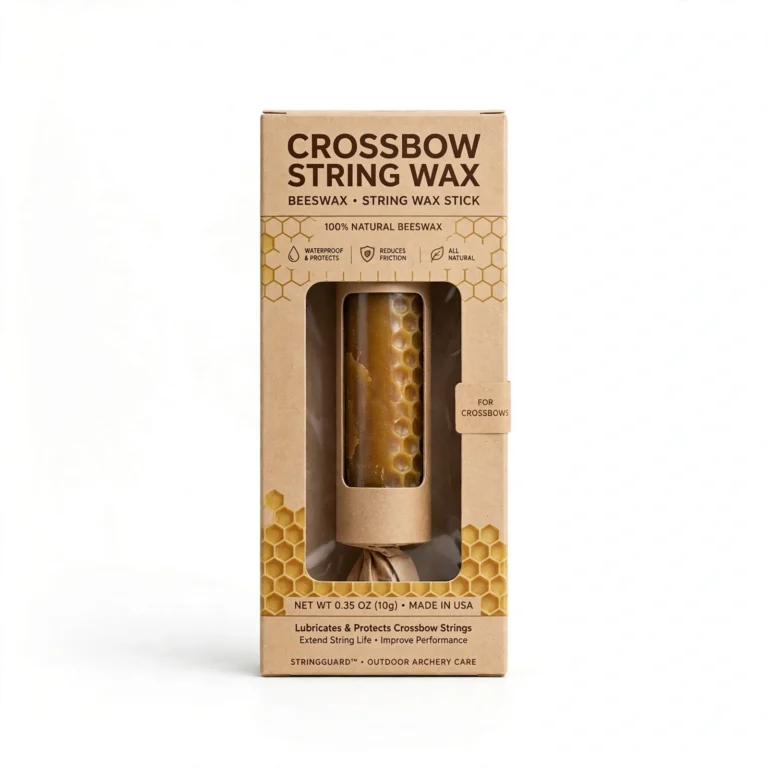 |
| Lube the flight rail | Every 50–100 shots | 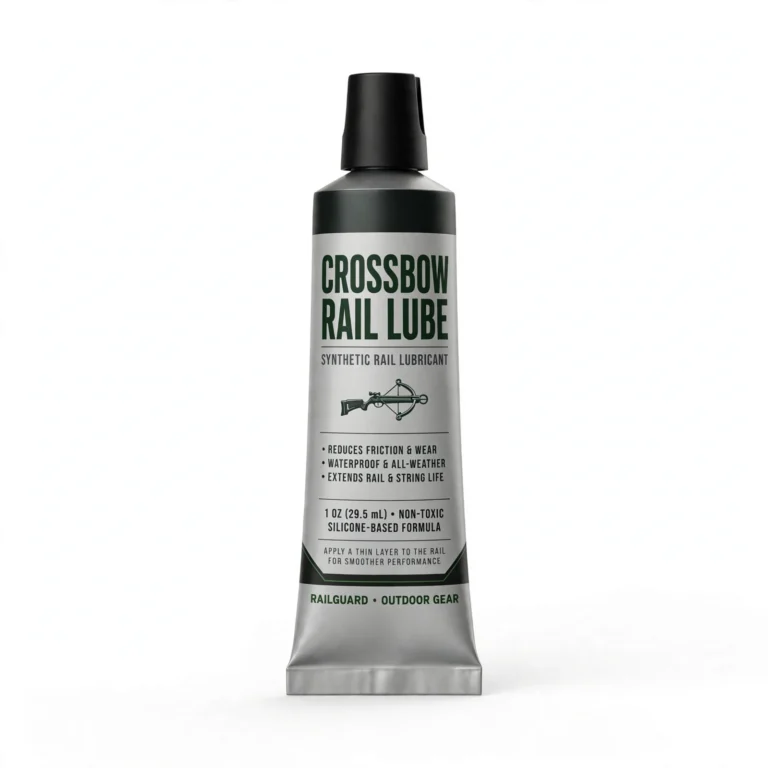 |
A note on the ranges: TenPoint’s manual calls for rail lube every 75 to 100 shots and waxing on the same schedule, while Wicked Ridge’s manual says 50 to 75 shots for both. When brands disagree, I go with the shorter interval. Waxing early never hurt a string; waxing late did.
Now the part that trips up almost every beginner, because it tripped me up: use beeswax-based string wax only. Petroleum-based products (petroleum jelly, Vaseline-type substances, regular candle wax) break down the synthetic fibers of modern bowstrings and servings. My old Horton owner’s manual was blunt about it: no petroleum jelly, and never apply wax to the center serving, barrel, or trigger area. Wax that migrates into the trigger mechanism builds up, gums the trigger, and can eventually stop the string from latching properly, which is easier to avoid once you know how the trigger, string and limbs work together. A light, purpose-made oil belongs in the trigger box, not wax.
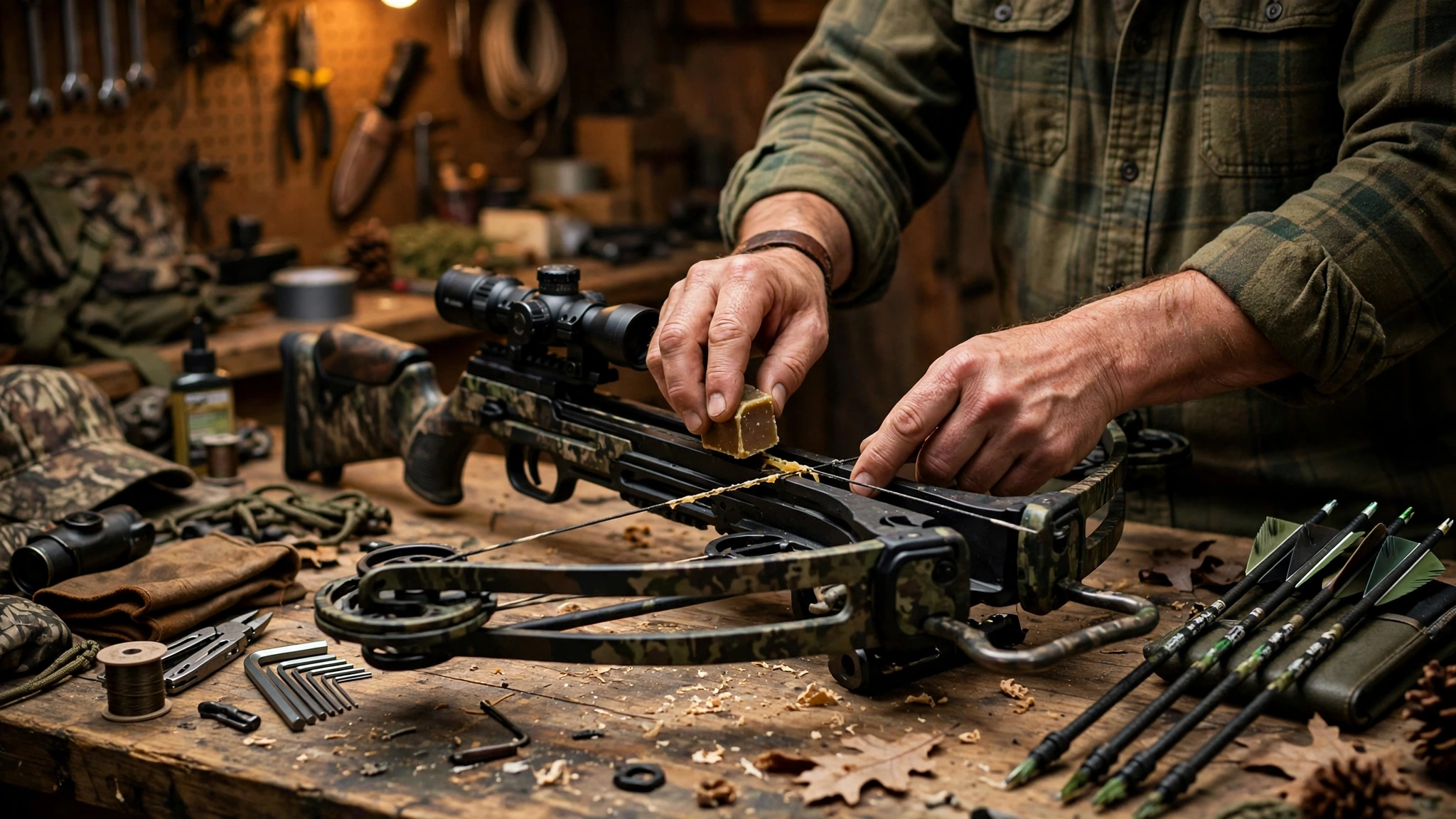
How to wax properly: rub the wax onto the exposed string and cable fibers (the sections not covered by serving), then rub it in with your fingers until the heat from friction melts it into the strands. The string should look conditioned and even, never white, dry, or fuzzy. And here is the phrase that finally made it click for me: wax is preventative, not restorative. Once a string is dry and frayed, no amount of wax brings it back. You are protecting healthy fibers, not healing dead ones.
For the rail: one small drop of rail lube on each side of the flight groove, spread the full length with your finger. A thin, even sheen is the goal. Too much lube breaks down the center serving and can fling onto your crossbow target and bolts. Less is more here.
My two product picks:
Check Beeswax String Wax Price
Why beeswax matters: beeswax-based formulas condition synthetic string fibers without breaking them down. Petroleum-based products degrade serving material, attract dirt, and create an abrasive paste in the rail and trigger box. The manual for my first bow explicitly banned petroleum jelly on the rail for exactly this reason. Buy the right wax once, and a stick lasts a whole season.
When to Replace Strings and Cables
Everything wears out eventually. TenPoint’s baseline, which I use as my rule of thumb: replace the string and cables every 2 years or 800 to 1,000 shots, whichever comes first. That is a baseline, not a guarantee. Heavy shooting, dusty conditions, or poor maintenance shorten it.
Change the string AND the cables as a set. Replacing just the string on stretched cables gives you a bow that is out of time and will eat your new string for breakfast. Learn from my wallet on this one.
Watch for these four visual warning signs that replacement time is coming:
- Fraying or broken strands. Any single broken strand anywhere on the string or cables means stop shooting and replace.
- Serving separation. The wrapped thread spreading apart at the center serving or at the ends. This is the most common one I see on neglected bows.
- Cable stretch and timing issues. If the cams look like they are leaning or one side seems to fire ahead of the other, the cables have stretched unevenly. One check the manuals mention: measure your axle-to-axle distance and compare it to the factory spec. A deviation of 3/16 inch or more is a red flag that the cables have stretched.
- Dry, discolored, or cracked fibers. A healthy string looks conditioned and consistent. One that looks white, brittle, or discolored is worn out, even if nothing has snapped yet.
CRITICAL: String replacement on a compound crossbow is NOT a DIY job. A compound crossbow needs a bow press to relax the limbs safely before the string can come off, and that press work belongs in a pro shop. I have watched the whole process at my local shop, and I still would not attempt it. Do not try this in your garage with improvised tools. The limbs on a compound bow are storing serious energy, and getting this wrong can injure you badly.
The one exception: tool-less recurve systems like Excalibur’s are designed to be strung and unstrung by the owner with a stringing aid, even in the field. If that kind of self-sufficiency appeals to you, read our Excalibur crossbow reviews to see how the recurve lineup is built. That difference alone is worth knowing about before you buy your next bow.
Seasonal Maintenance Calendar
After digging through several owner manuals and talking to guys who have been hunting with crossbows for decades, I noticed something: nobody lays out the whole year in one place. So here it is, the seasonal rhythm I now follow.
| Season | What To Do |
|---|---|
| Pre-season (4–6 weeks before opening day) | Full service: pro-shop check if your string is due for replacement, torque all fasteners to spec, fresh wax and rail lube, inspect bolts and broadheads, then re-confirm your zero on the range. A hunting crossbow should earn its trust on the range before it goes into the woods. |
| Mid-season (every hunt or practice session) | The 7-step pre-shoot inspection from above, every time. Top off wax and rail lube on the shot-count schedule. Wipe the rail clean after rainy or dusty hunts and re-lube. Check fasteners weekly during heavy use. |
| Post-season (right after your last hunt) | Deep clean: wipe down the whole bow, clean wax buildup off the rail with a lightly oiled rag, oil all metal fasteners to prevent corrosion, check the string one final time and note its age and shot count. Uncock your crossbow with a proper discharge bolt or target, never by dry-firing. |
| Winter storage (off-season months) | Store in a cool, dry place. Never store the bow cocked. Loosen nothing on a compound bow (TenPoint’s manual specifically says not to back off limb tension in the off-season). If you shoot a recurve, unstring it between seasons to relax the limbs. Store in a hard crossbow case for protection. |
Recurve vs Compound: Different Maintenance
This is the part nobody told me when I was choosing a crossbow, and it turns out to matter a lot for maintenance.
Compound crossbows (TenPoint, Ravin, Barnett, Wicked Ridge, CenterPoint) have cables, pulleys or cams, and tighter tolerances. The maintenance rules: wax the exposed string and cables every 50 to 75 shots, keep wax OFF the center serving, keep wax OFF the barrel and trigger area, lube the rail every 50 to 100 shots, and take string and cable replacement to a pro shop with a bow press. There is simply more going on, which means more to inspect.
Recurve crossbows (Excalibur) are mechanically simpler: no cables, no cams, just limbs and one string. And the rules actually flip in one important way. Excalibur’s manual tells you to apply their wax to the center serving every 30 to 40 shots, the exact opposite of the compound rule, because the recurve’s string serves differently and the serving itself needs that conditioning. You still keep wax off the rail itself, you lube the rail to cut friction, you oil the fasteners, and you unstring the bow between seasons to relax the limbs. And as I mentioned above, you can change the string yourself with a stringing aid. That is a real advantage of the recurve design.
If you are still deciding which style fits you, our crossbow vs compound bow comparison breaks down the broader differences, our guide to the compound bows worth your money at each budget covers the buying side, and our best crossbows roundup covers top picks of both types.
Troubleshooting: What’s Wrong With My Bow?
When something feels off, this table is where I start. Match your symptom, check the likely cause, and work the fix.
| Symptom | Likely Cause | Fix |
|---|---|---|
| Losing speed (bolts hitting low, less energy) | Dry string losing elasticity, dry rail adding friction, or a worn-out string past its shot life | Wax the string, lube the rail, and check the string’s age and shot count. If it is near 800 to 1,000 shots or two years, plan a replacement. |
| Serving separation (wrap spreading at center or ends) | Wax applied to the center serving of a compound bow, normal wear, or over-lubrication breaking the serving down | Stop waxing the center serving on a compound bow. If separation is minor and early, a pro shop can re-serve it. If advanced, replace the string. |
| Noisy shot (louder than usual, vibration) | Loose fasteners, dry rail, or a scope mount working loose | Run the full 7-step inspection, snug every fastener, and lube the rail. Persistent noise after that means a trip to the pro shop. |
| Stiff trigger (heavy or gritty pull) | Wax or petroleum gunk migrated into the trigger box, dirt and debris, or cold-weather thickening | Keep wax and petroleum products away from the trigger area. Clean the trigger box, apply only a light purpose-made oil, and see the cold-weather section below if you hunt in freezing temps. |
If your bolts are grouping badly even though the bow feels fine, the issue may be your zero rather than your maintenance. Walk through our how to sight in a crossbow guide before assuming something is broken.
Cold-Weather Trigger Care
I hunt whitetail in November, so I learned this one the hard way. Cold weather thickens lubricants and makes a gunky trigger box much worse. A trigger that felt fine in October can go stiff and gritty in December.
The rules for cold weather are simple. Keep the trigger box clean and dry, and use only a light oil in and around the trigger mechanism. Lightweight synthetic oils stay fluid in freezing temperatures and will not gum up the mechanism the way heavy grease or petroleum jelly will. TenPoint’s manual makes this exact point: light oils will not gum up or slow down the trigger in cold weather.
Before a cold-weather hunt, I wipe the rail, apply a fresh thin coat of rail lube, and put one drop of light oil on the moving parts of the trigger. I keep wax nowhere near the trigger box. If you hunt where mornings start well below freezing, consider a cocking device too, because cold stiffens everything, including your own hands and the draw cycle. For more on the realities of late-season hunting, check out our best crossbow for elk picks, which are built with cold, high-altitude hunts in mind.
Frequently Asked Questions
How often should I wax my crossbow string?
Every 50 to 75 shots is the range the major manuals agree on. TenPoint’s manual says waxing on the same schedule as rail lube, while Wicked Ridge’s manual says every 50 to 75 shots. I wax before every hunting trip too, if I have shot since the last waxing. If the string ever looks white, dry, or fuzzy, wax it immediately regardless of the shot count.
Can I use regular wax, candle wax, or petroleum jelly on my crossbow string?
No. Use a beeswax-based string wax made for bowstrings. Petroleum-based products break down the synthetic fibers of modern strings and servings, and petroleum jelly will build up in the trigger box and collect dirt. TenPoint’s own FAQ says to never use a Vaseline-like substance on the rail. My old Horton manual said the same thing about the string.
Can I replace the crossbow string myself?
It depends on the bow. On a compound crossbow, no, this is a pro-shop job that requires a bow press to safely relax the limbs. Attempting it without the right equipment is dangerous. On a tool-less recurve system like Excalibur, yes, you can change the string yourself in the field with a stringing aid. That is one of the recurve’s real advantages, and our Excalibur reviews go into more detail.
How do I know if my serving is worn out?
Look at the tightly wrapped thread at the center of the string and at the ends. If the strands are spreading apart, the wrap looks loose or gappy, or you can see the string fibers showing through underneath, the serving is separating. Minor early separation on a compound bow can sometimes be re-served at a pro shop, but advanced separation means the string needs replacing.
Why is my crossbow getting louder?
Almost always loose fasteners or a dry rail. Vibration from shooting loosens screws over time, especially on scope mounts and quiver brackets. Run the 7-step inspection, snug everything, and apply a fresh thin coat of rail lube. If the noise continues after that, have a pro shop look at it.
Should I unstring my crossbow during the off-season?
For a compound bow, no. TenPoint’s manual specifically recommends against loosening limb tension in the off-season. Just store it uncocked in a cool, dry place. For a recurve like an Excalibur, yes, unstring it between seasons to relax the limbs and extend their life. That is another reason recurve owners keep a stringing aid in their kit.
How should I store my crossbow in winter?
Uncocked, in a cool dry place, ideally in a hard crossbow case for protection. Do a post-season deep clean first: wipe it down, oil the metal fasteners against corrosion, and note your string’s age and shot count. Never store it cocked, and keep it away from excessive heat like a car trunk in summer or right next to a heater.
Can I over-lubricate my crossbow?
Yes, and beginners do it more than you would think. Too much rail lube breaks down the center serving and attracts dirt. Wax in the wrong places, especially the center serving of a compound bow or the trigger box, causes real problems. The manuals are unanimous here: thin, even coats, in the right places only. When in doubt, less is more. For the full testing approach behind our recommendations, see how we test.
The Bottom Line
Crossbow maintenance felt intimidating to me as a beginner because the manuals make it sound technical. It is not. Wax the string every 50 to 75 shots with beeswax-based wax, lube the rail every 50 to 100 shots with a proper rail lube, run the 7-step inspection before every session, and replace the string and cables every two years or 800 to 1,000 shots through a pro shop. Follow the seasonal calendar and you will never be surprised.
My bow shoots like it did on day one now, and honestly the whole routine takes less time than cleaning my rifle. If you are just getting started, pair this guide with our best crossbow for beginners roundup and our how to cock a crossbow guide, and you will have the complete beginner foundation. The bow will take care of you if you take care of it.
ProCrossbow is reader-supported. When you buy through links on this page, including the Amazon links for the wax and rail lube above, we may earn an affiliate commission at no extra cost to you. See our affiliate disclosure for details.