Best Crossbow Scope 2026: What to Buy and Why
Affiliate Disclosure: ProCrossbow is reader-supported. When you buy through links on this page, we may earn a commission at no extra cost to you. Our rankings can’t be bought. See how we research and test.
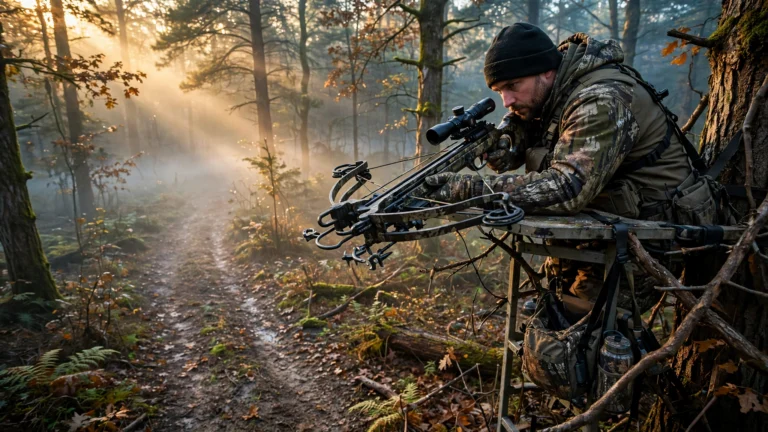
Your scope matters more than 20 extra fps. After eight seasons of deer hunting with a crossbow, I can tell you the clear, correctly matched optic is the difference between confidence and guessing at 40 yards. The bow that shoots 380 fps with a fuzzy package scope will get beat by the bow that shoots 340 with good glass and true holdovers. Here is what to buy and why, without the marketing fog.
The Short Answer
For most hunters, the scope that comes in the box is adequate to 40 yards. Upgrade when you want an illuminated reticle for low light, a speed-compensating reticle matched past 50 yards, or simply clearer glass. Spend roughly $100 to $200 on the upgrade; beyond that you are paying for rifle features a crossbow cannot use. If you are still picking the bow itself, start with our best crossbows of 2026 before spending a dime on glass.
The 6 Best Crossbow Scopes Compared
Every spec below comes from the manufacturer’s published data, verified this season. Prices move daily, so click through for the current number.
| Pick | Scope | Magnification | Speed range | Reticle / Illumination | Tube | Street price* |
|---|---|---|---|---|---|---|
| Best overall | Vortex Crossfire II 2-7×32 Crossbow | 2-7x | 275-450 fps | XBR-2 MOA, red/green | 30 mm | ~$190-200 |
| Best for most hunters | Hawke XB30 Pro 1-5×24 SR | 1-5x | 215-450 fps | XB30 Pro SR, red | 30 mm | ~$250 |
| Best for fast crossbows | TenPoint RangeMaster 100 | 2-7x | 380-505 fps | 100-yd dots/crosshairs/chevrons, red/green | 30 mm | ~$290-300 |
| Best for Ravin owners | Ravin 100-Yd Illuminated 450 Scope (R170) | 1.5-5x | 300-425 fps | Nine-dot 20-100 yd, red/green | 1 in | ~$370 |
| Best budget | TruGlo 4×32 Compact Crossbow | 4x fixed | Mid-speed bows | BDC/rangefinder, red/green | 1 in | Under $100 |
| Best rangefinding | Burris Oracle X | 2-7x | Any (calibrated by bolt) | Laser rangefinder, digital aim point | N/A | ~$1,000 |
*Street prices are typical US listings at time of writing and fluctuate. Check the live price before you buy.
Best Overall: Vortex Crossfire II 2-7×32 Crossbow Scope
Magnification: 2-7x | Price: ~$190-$200 | Speed Range: 275-450 fps
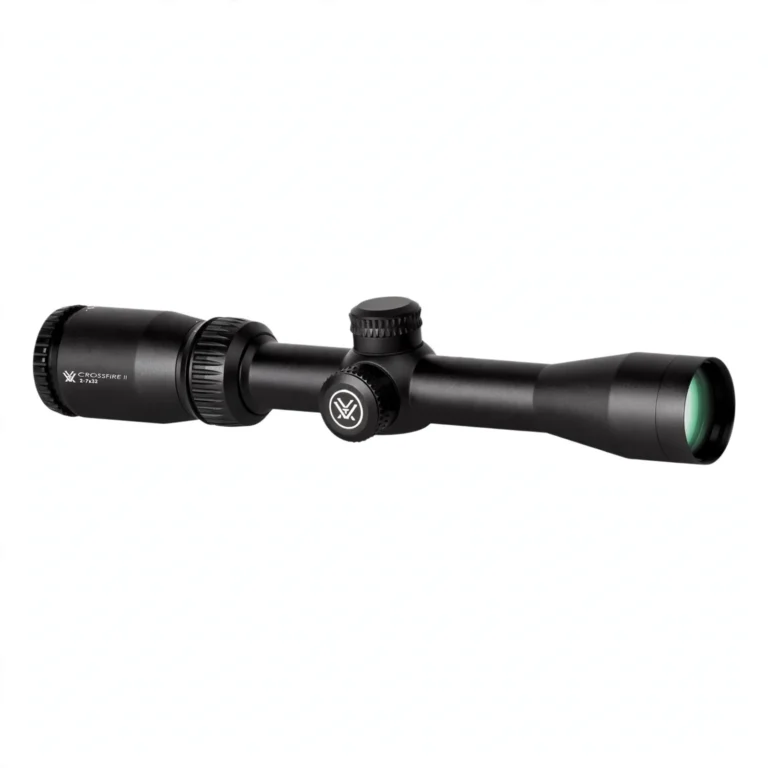
This is the easiest scope to recommend in the category. The XBR-2 reticle is purpose-built for crossbows, with holdover points out to 100 yards and a 40-yard zero, and the red/green illumination is exactly what you want in first and last light. What pushes it to the top for me is everything that comes in the box: 30 mm rings, flip caps, a neoprene cover and the battery, plus the VIP warranty, which covers the scope for life no matter what you do to it. Hunters keep these for years because there is no fine print to argue with.
- Magnification: 2-7x, 32 mm objective
- Reticle: XBR-2 (MOA), second focal plane; holdovers 20-100 yards
- Illumination: Red or green, dual illumination
- Tube: 30 mm, one-piece; capped 1/2 MOA turrets
- Speed matching: Set magnification ring per Vortex’s manual: 2x for 275 fps, 3x for 330, 4x for 380, 5x for 425, 6x for 450
- Eye relief: 2.7 in; parallax fixed at 75 yards
- Weight/length: 14.0 oz / 9.5 in
- In the box: 30 mm rings, flip caps, neoprene cover, lens cloth, CR2032 battery
- Warranty: VIP lifetime (Vortex)
Pros
- Everything needed to mount it is included, so the real cost is the sticker price.
- Lifetime warranty with no receipt games.
- Red or green illumination for low light.
- Usually under $200 on the street, down from $279.99 MSRP.
Cons
- Speed matching ties your magnification to your bow’s speed. A 380-fps bow shoots at 4x whether you like it or not.
- The speed range starts at 275 fps, so slow recurves and older bows can be outside it.
- Fixed 75-yard parallax is not ideal for close woods shots.
Who it is for: The hunter who wants one purchase, mounted and done, with a warranty that survives anything. This pairs well with any of the bows in our best crossbows roundup. Sight it in with our guide once and hunt all season.
Best for Most Hunters: Hawke XB30 Pro 1-5×24 SR
Magnification: 1-5x | Price: ~$250 | Speed Range: 215-450 fps
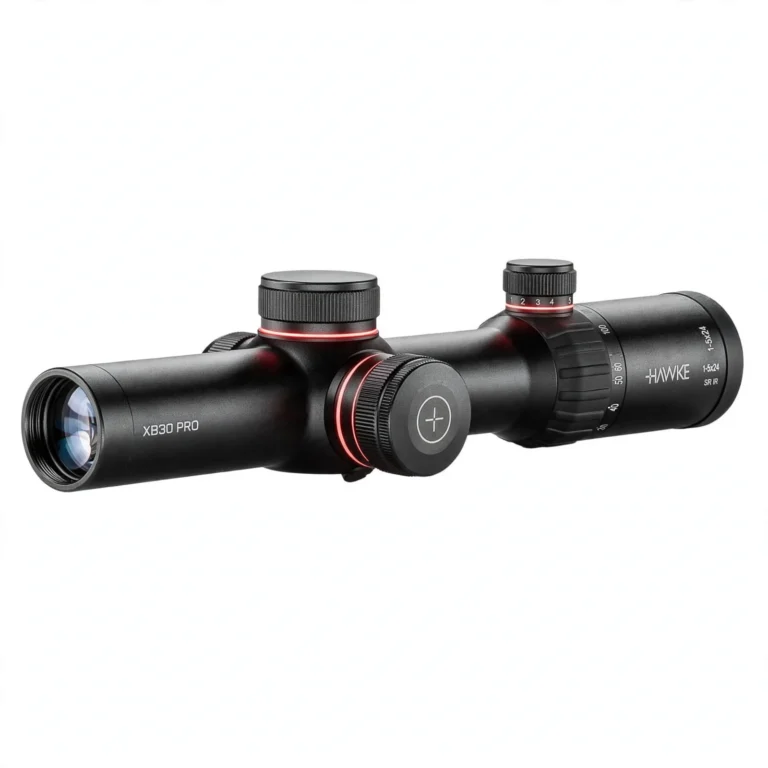
Nobody builds more crossbow optics than Hawke, and the XB30 Pro is the one I point friends to. The headline is the speed range: Hawke calibrates it from 215 to 450 fps, the widest published span of any conventional scope here, so it covers everything from a slow recurve to a modern speed bow. The 1x low end is the other reason I like it. At 1x you can keep both eyes open when a deer steps out at 15 yards, and 5x is plenty for careful shots at the edge of crossbow range.
- Magnification: 1-5x, 24 mm objective
- Reticle: XB30 Pro SR (second focal plane), glass etched, 10-yard aim points to 100 yards
- Illumination: Red, stepless rheostat
- Tube: 30 mm mono-tube; low-profile capped 1/2 MOA turrets, 210 MOA travel
- Speed matching: Speed selector ring, 215-450 fps
- Eye relief: 3 in; parallax fixed at 50 yards
- Weight/length: 16.5 oz / 10.1 in
- In the box: Metal flip-up lens covers, lens cloth, battery
- Warranty: Hawke No-Fault Lifetime
Pros
- Widest published speed range in its class: 215-450 fps.
- True 1x low end for close-cover hunting.
- Speed selector ring is independent of magnification, unlike some rivals.
- Metal flip-up covers included; lifetime no-fault warranty.
Cons
- The 24 mm objective gathers less light than 32 mm scopes in the last minutes of legal light.
- Red illumination only, no green option.
- Rings are not listed in the box, so budget for a set.
Who it is for: Hunters who work close cover and want the most flexible speed calibration on the market. A smart match for mid-priced bows like those in our best crossbow for the money guide.
Best for Fast Crossbows: TenPoint RangeMaster 100
Magnification: 2-7x | Price: ~$290-$300 | Speed Range: 380-505 fps
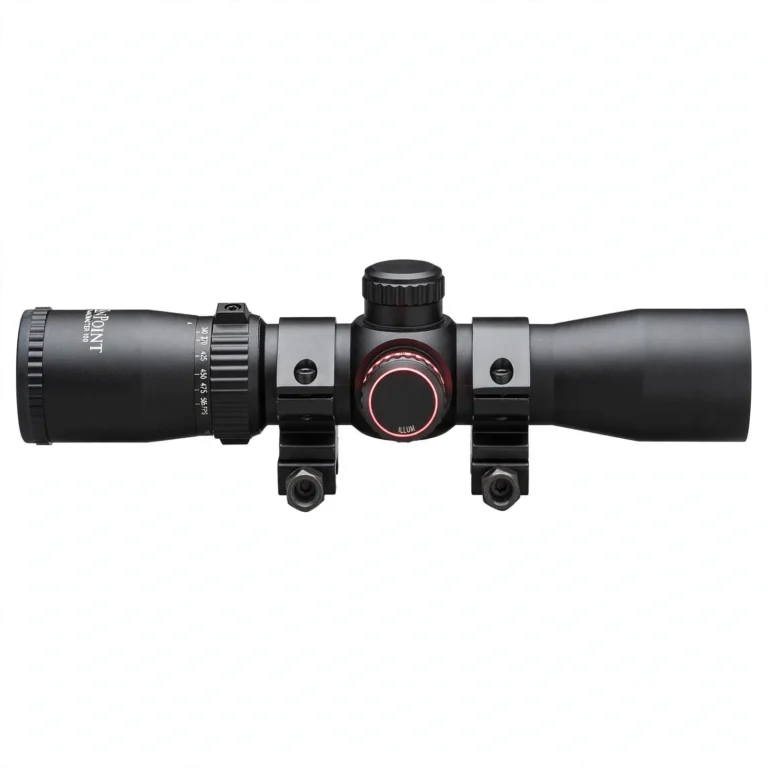
Most budget scopes top out around 425 to 450 fps. If your bow shoots faster than that, the yardage marks on a standard scope will be wrong and no speed ring will fix it. The RangeMaster 100 is built for the fastest bows on the market, calibrated from 380 to 505 fps, and TenPoint ships it on speed bows like the TRX 26. The 100-yard reticle uses three shapes so you can read aim points fast: dots at 20, 30 and 40 yards, crosshairs at 50, 60 and 70, chevrons at 80, 90 and 100. Calibration is a short two-step job: sight in at 20, fine-tune at 50.
- Magnification: 2-7x, 32 mm objective
- Reticle: Etched glass 100-yard reticle; illuminated dots 20-40 yd, crosshairs 50-70 yd, chevrons 80-100 yd
- Illumination: Red or green, infinite-position rheostat
- Tube: 30 mm; 1/2 MOA adjustments; parallax set at 50 yards
- Speed matching: Variable speed and arrow drop-compensation, 380-505 fps
- Eye relief: 3 in
- Weight/length: ~16 oz / 9.1 in (TenPoint does not publish an exact weight)
- In the box: Scope rings, flip-up caps
- Warranty: 5 years (TenPoint)
Pros
- Covers bows up to 505 fps, the highest top end of any conventional scope here.
- The three-shape 100-yard reticle is fast to read in the field.
- Rings and flip-up caps included.
Cons
- Not for bows under 380 fps; slower bows fall off its calibration range entirely.
- TenPoint does not publish the weight.
- 5-year warranty is shorter than the lifetime warranties above.
Who it is for: Owners of speed bows shooting 380 fps and up who want factory-calibrated aim points to 100 yards. If you shoot a TenPoint, also see our TenPoint reviews to match the optic to the bow.
Best for Ravin Owners: Ravin 100-Yard Illuminated 450 Scope (R170)
Magnification: 1.5-5x | Price: ~$370 | Speed Range: 300-425 fps
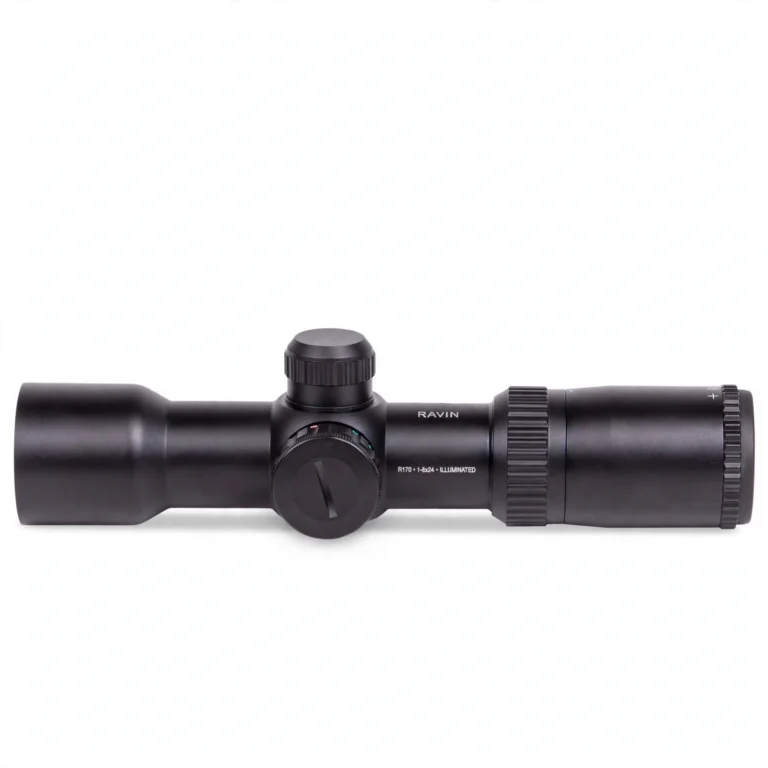
If you shoot a Ravin and want a spare or replacement optic from the same maker, this is the one. The R170 is the class of scope Ravin ships on its 420-fps bows, with nine illuminated dots covering 20 to 100 yards and an FPS-adjustable arrow drop setting. It is compact at 8.75 inches, fully coated lenses are fog and waterproof, and rings plus flip-up caps come in the box. Ravin also sells a newer Speed Lock version with a locking speed ring if dial creep worries you, but it costs roughly $100 more.
- Magnification: 1.5-5x, variable
- Reticle: Etched glass, nine aiming dots calibrated 20-100 yards
- Illumination: Red or green, rheostat controlled
- Speed matching: FPS adjustment; Ravin does not publish a numeric range on its own page, while retailer listings consistently cite 300-425 fps, so confirm against your bow’s speed
- Build: Aluminum body, fog and waterproof, shock and recoil proof
- Length: 8.75 in
- In the box: 7/8 in mounting rings, flip-up lens caps
Pros
- Made to match Ravin’s own bows, so fit and eye placement are sorted.
- Clear 20-100 yard nine-dot reticle with red or green illumination.
- Etched reticle stays visible even if the battery dies.
Cons
- Ravin publishes no speed range, magnification or weight on its own spec sheet, which makes comparing it harder than it should be.
- Costs more than the Hawke and Vortex while giving up less on paper.
- Best value only if you shoot a Ravin.
Who it is for: Ravin owners who want a factory-matched spare or upgrade. Read our Ravin crossbow reviews to see which bows this scope was built for.
Best Budget: TruGlo 4×32 Compact Crossbow Scope
Magnification: 4x fixed | Price: Under $100 | Speed Range: Mid-speed bows
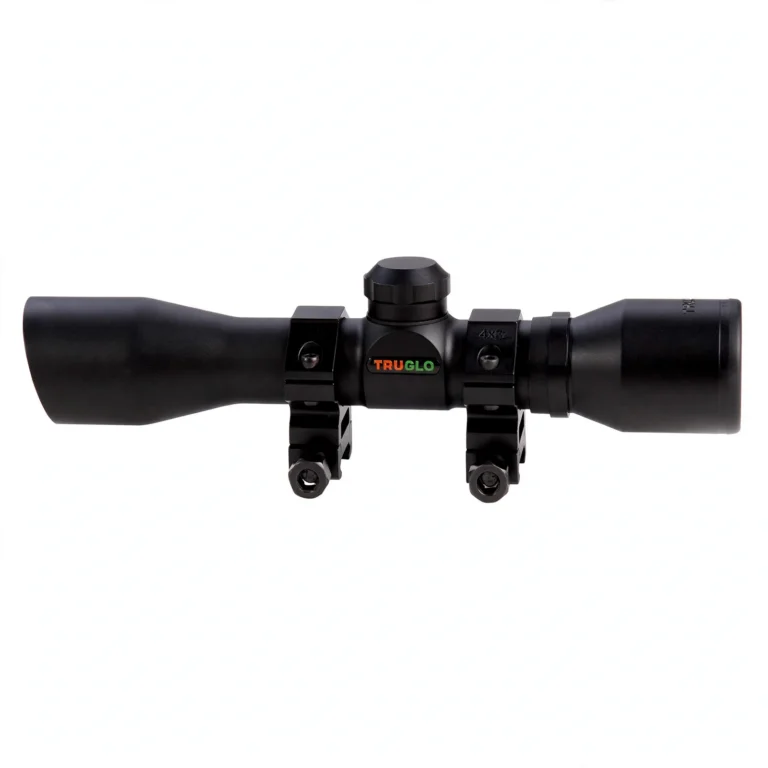
Sometimes the upgrade budget is whatever is left after the bow, the bolts and the license. The TruGlo 4×32 Compact is the classic under-$100 scope, and it is simple in the best way: fixed 4x magnification, so there is nothing to set wrong, with a BDC/rangefinder reticle and dual-color illumination for low light. It will not match a speed-compensating scope past 40 yards, but for woods hunting inside 40 it gets the job done.
Fixed power takes away the most common mistake: there is no speed ring to set wrong and no zoom ring to bump in the stand, so the sight picture is the same every time you shoulder the bow. That matters for a beginner, or for a second bow that does not get shot every week. The reticle works with or without illumination, so a dead battery does not end the hunt, and the red/green rheostat helps in the last minutes of light, when a black reticle fades against a dark treeline.
The honest limit is the BDC reticle. Its holdover marks are generic, not calibrated to your bow speed or bolt weight, so treat them as a starting point. Put it on paper at 20, 30 and 40 yards before opening day and learn where your bolts actually land. Past 40 the gaps grow, and that is where a speed-compensating scope earns its price. The glass is serviceable rather than premium and runs a little dimmer at last light, and up close in thick cover the fixed 4x view feels tight, with no way to dial down for a wider picture.
Build quality is fair for the money: a one-piece aluminum tube, nitrogen-filled, fog proof, water-resistant and shock-resistant, with Weaver rings in the box, so there is no extra mount to buy. If the bow, the bolts and the license ate your budget, this scope gets you hunting now instead of next season, and the savings buy practice bolts and range time, which will do more for your accuracy than fancier glass. Upgrade later and it still earns its keep as a backup or a loaner.
- Magnification: 4x fixed, 32 mm objective
- Reticle: BDC/rangefinder reticle, works with or without illumination
- Illumination: Dual-color red/green, rheostat-controlled brightness
- Eye relief: 4 in
- Build: One-piece aircraft-grade aluminum, nitrogen-filled fog proof, water-resistant and shock-resistant
- In the box: Weaver-style rings, CR2032 battery, lens caps
Pros
- Usually under $100, often far under.
- Fixed 4x means no speed calibration to get wrong.
- Reticle works lit or unlit, so a dead battery does not end the hunt.
- Generous 4-inch eye relief; Weaver rings and battery included.
- One-piece aluminum tube, nitrogen-filled and fog proof.
Cons
- No speed compensation, so holdovers are approximate past 40 yards.
- Fixed power cannot dial down for close shots or up for precision.
- Glass clarity is a step below the scopes above; expect dimmer last light.
- BDC marks are generic, so you must verify them on paper at 20, 30 and 40 yards.
Bottom line: If you hunt inside 40 yards and the budget is tight, this is the scope to buy: simple, tough enough, and honest about what it is. Verify the holdovers on paper first, and it will do the job. If that is you, read our beginner’s guide and spend the savings on practice bolts.
Best Rangefinding: Burris Oracle X
Magnification: 2-7x | Price: ~$1,000 | Speed Range: Any (calibrated by bolt)
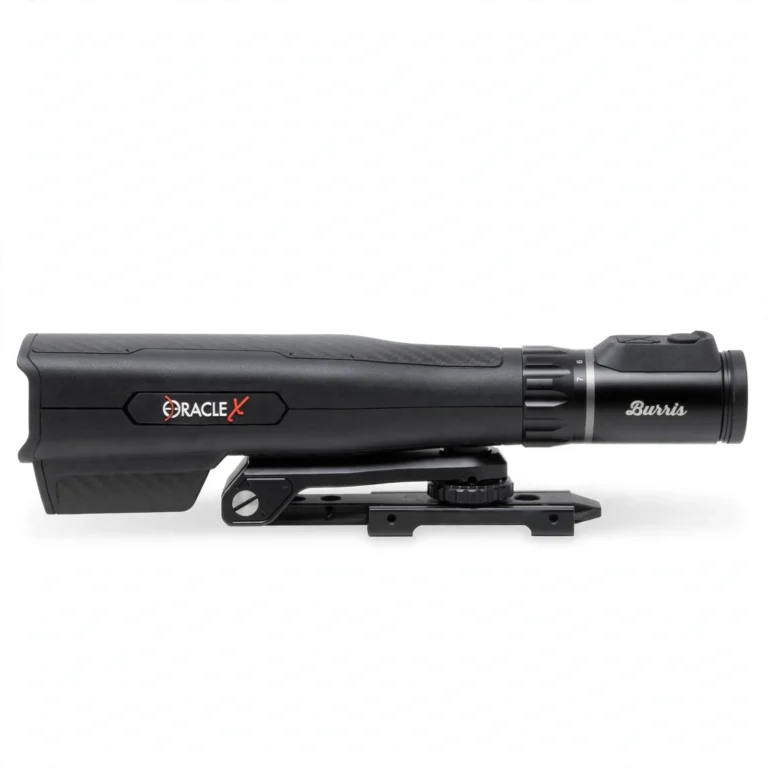
Misjudging distance is the most common reason for a bad crossbow shot, because bolts drop fast past 40 yards. The Oracle X removes the guesswork: press the wireless remote and the built-in laser rangefinder measures the distance, factors in your angle from the tree stand, and lights up the exact aiming point for your bolt. It works at any point in the 2-7x zoom, stores two bolt profiles, and the Burris Forever Warranty covers it with no questions asked. The trade-offs are real: it is heavy at nearly 2 pounds, setup takes real calibration time, and you will feel the price.
- Magnification: 2-7x, first focal plane; aiming point stays accurate through the zoom range
- Rangefinder: Built-in laser, 500 yards on reflective targets / 200 yards on deer; 5-yard minimum
- Aiming solution: Automatic trajectory compensation, angle compensation (inclinometer), electronic level, auto/manual brightness
- Bolt profiles: Two programmable (AS1/AS2) for different bolts and broadheads
- Activation: Wireless remote or range button on the scope
- Weight/length: 30.8 oz / 11.9 in
- Battery: 1x CR123 (scope) + 1x CR2032 (remote); 3,000+ activations
- Warranty: Burris Forever Warranty
Pros
- Ranging and aiming become one step; no separate rangefinder fumble at the moment of truth.
- Angle compensation for treestand shots and two bolt profiles for broadhead swaps.
- Lifetime warranty and a serious electronics package.
Cons
- Heavy: 30.8 oz is roughly double a conventional scope, and you feel it on a long sit.
- Setup and trajectory truing take real range time; it is not a mount-and-hunt optic.
- About $1,000, and batteries and electronics add something that can fail.
Who it is for: Hunters who take shots at unpredictable distances, especially from stands, and want the range problem solved. Pair it with a serious hunting setup like those in our best hunting crossbow guide. Check your state’s regulations first, since electronic optics rules vary.
What Actually Matters in a Crossbow Scope
Scopes come in three flavors. Fixed-power scopes like the TruGlo are dead simple: one magnification, fewer things to get wrong. Variable scopes let you dial the view up or down but cost more and add moving parts. Red-dot and reflex sights give fast close-range aiming with no magnification, but they have no holdovers, so past 30 yards you are guessing. Most hunters end up with a variable scope and never look back.
Speed-compensating reticle
Crossbow scopes use multi-line or multi-dot reticles calibrated to your bow’s speed, typically adjustable from 300 to 450+ fps. Set the speed ring to your actual chronographed speed, verify at 30, 40 and 50 yards, and the holdovers just work. This single feature matters more than magnification.
Illumination
An illuminated center dot or reticle earns its keep in the first and last 20 minutes of legal light, when big bucks move. Red and green options both work; pick the one your eyes see best. It is the most worthwhile upgrade over a basic package scope.
Glass clarity over magnification
3x to 4x fixed or low-range variable magnification is plenty for crossbow ranges. Clear glass at 3x beats fuzzy glass at 6x every time. Do not pay for 9x you will never use.
Durability
Crossbows recoil forward, which destroys cheap rifle scopes not rated for it. Buy scopes built for crossbows or airguns with reverse-recoil ratings. Our crossbow safety guide covers why a failed optic is more than an inconvenience.
When to Upgrade Your Package Scope
- You hunt low light often and want illumination.
- Your holdovers do not match past 40 yards and the speed ring cannot fix it.
- The glass is dim or the eye relief is unforgiving.
- You shoot past 50 yards regularly and want finer aim points.
If none of these apply, spend the money on bolts and broadheads instead. New hunters should read how to choose a crossbow before buying any optic, and women and young shooters will get more from a well-fitted bow in our women’s guide or youth guide than from premium glass on the wrong bow.
How to Set Up Any Crossbow Scope
- Mount and level it. Snug rings, level reticle, proper eye relief. Most accuracy complaints are mounting complaints. If you have never done it, cock your bow safely first and work on a stable bench.
- Zero at 20 yards with the top reticle line or dot. Follow our sight-in guide step by step.
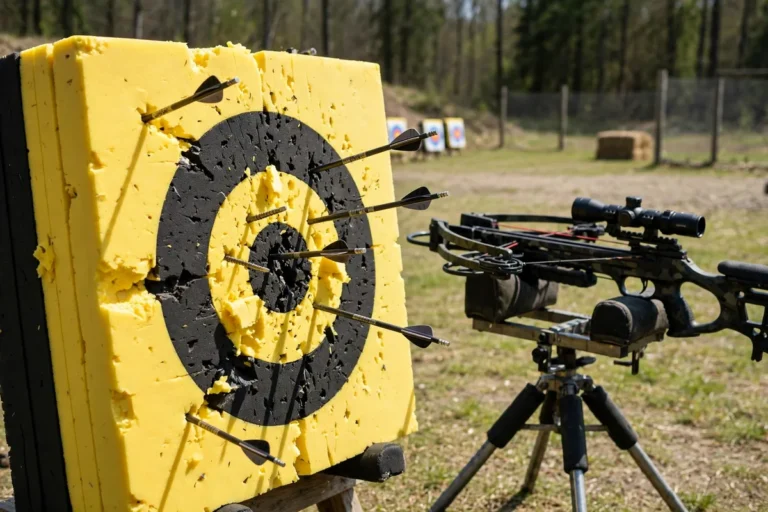
- Set the speed ring to your bow’s actual speed, then verify the 30, 40 and 50-yard marks on targets. Adjust until all three are true.
- Confirm in field conditions. Shoot from your stand height and in low light before the season. Surprises belong on the range.
Going after bigger game? The same setup steps apply, but the distances matter more; see our best crossbow for elk guide. If you are coming from vertical archery, our crossbow vs compound bow comparison explains what changes about aiming. And if you are choosing between the top brands, our under $500 and under $300 roundups keep the bow budget honest.
Frequently Asked Questions
What is the best crossbow scope for most hunters?
A variable 2-7x or 1-5x crossbow scope with a speed-calibrated reticle and illumination, like the Vortex Crossfire II or Hawke XB30 Pro above. It covers realistic hunting ranges, works in low light, and the speed ring keeps the holdovers honest for your bow.
Can I put a rifle scope on a crossbow?
Only if it is rated for reverse recoil. Crossbows recoil forward, and standard rifle scopes can shake apart internally under that impulse. Use scopes built for crossbows to be safe, and never trust a budget rifle scope on a speed bow.
What does the speed ring on a crossbow scope do?
It scales the reticle’s holdover marks to match your bow’s arrow speed. Set it to your chronographed fps, then verify each distance on targets. It is not set-and-forget until you confirm it, because the box speed is often measured with a lighter arrow than you hunt with.
Is an illuminated reticle worth it?
For dawn and dusk hunters, yes. It is the single most useful upgrade over a basic package scope, and the reason many hunters upgrade at all. Red and green both work; choose whichever your eyes pick up fastest against dark timber.
What magnification do I need on a crossbow scope?
Very little. Fixed 4x or a 1-5x / 2-7x variable covers every realistic crossbow shot. Higher magnification narrows the field of view and makes finding a close deer harder, so more power is not more useful here.
Why do my holdovers stop matching past 50 yards?
Three usual causes: the speed ring is set to the box fps instead of your real speed with a hunting arrow, the scope’s speed range does not cover your bow, or the bow’s speed has dropped from string stretch and wear. Chronograph the bow, set the real number, and re-verify at each distance.
Are rangefinding scopes like the Burris Oracle X legal for hunting?
Usually yes, but electronic optic rules vary by state, and some states restrict illuminated or electronic sights during certain seasons. Check your state regulations before buying any electronic scope, and verify before every season since rules change.
Should I upgrade the scope on a budget crossbow?
If the package scope holds zero and has clear glass to 40 yards, hunt with it and spend the money on bolts, broadheads and practice. Upgrade when you want illumination, true holdovers past 50 yards, or clearer low-light glass. See our best crossbow for the money guide for bows worth upgrading.