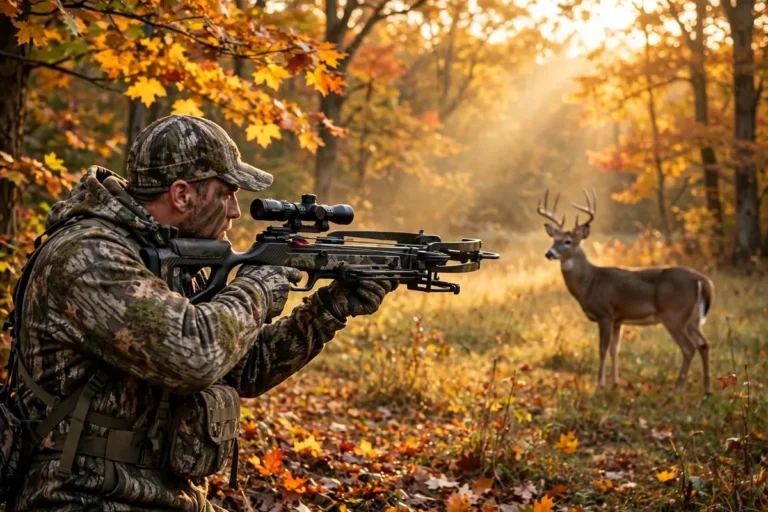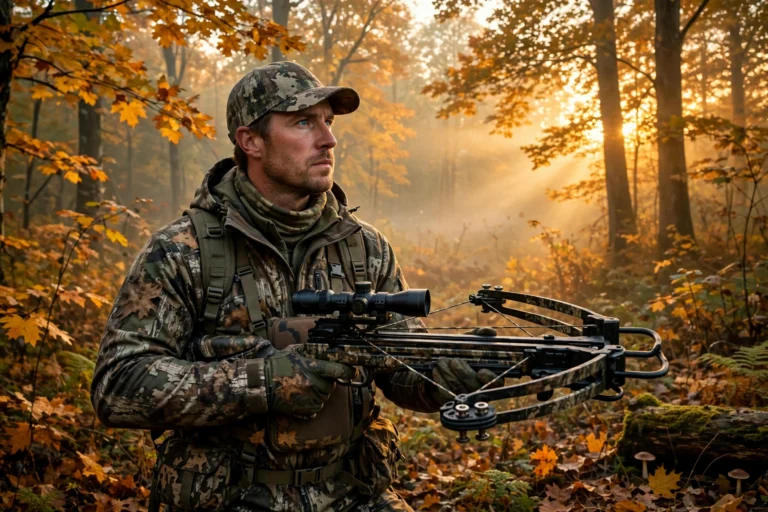
Best Crossbow for Beginners: 5 Picks to Start Hunting Right
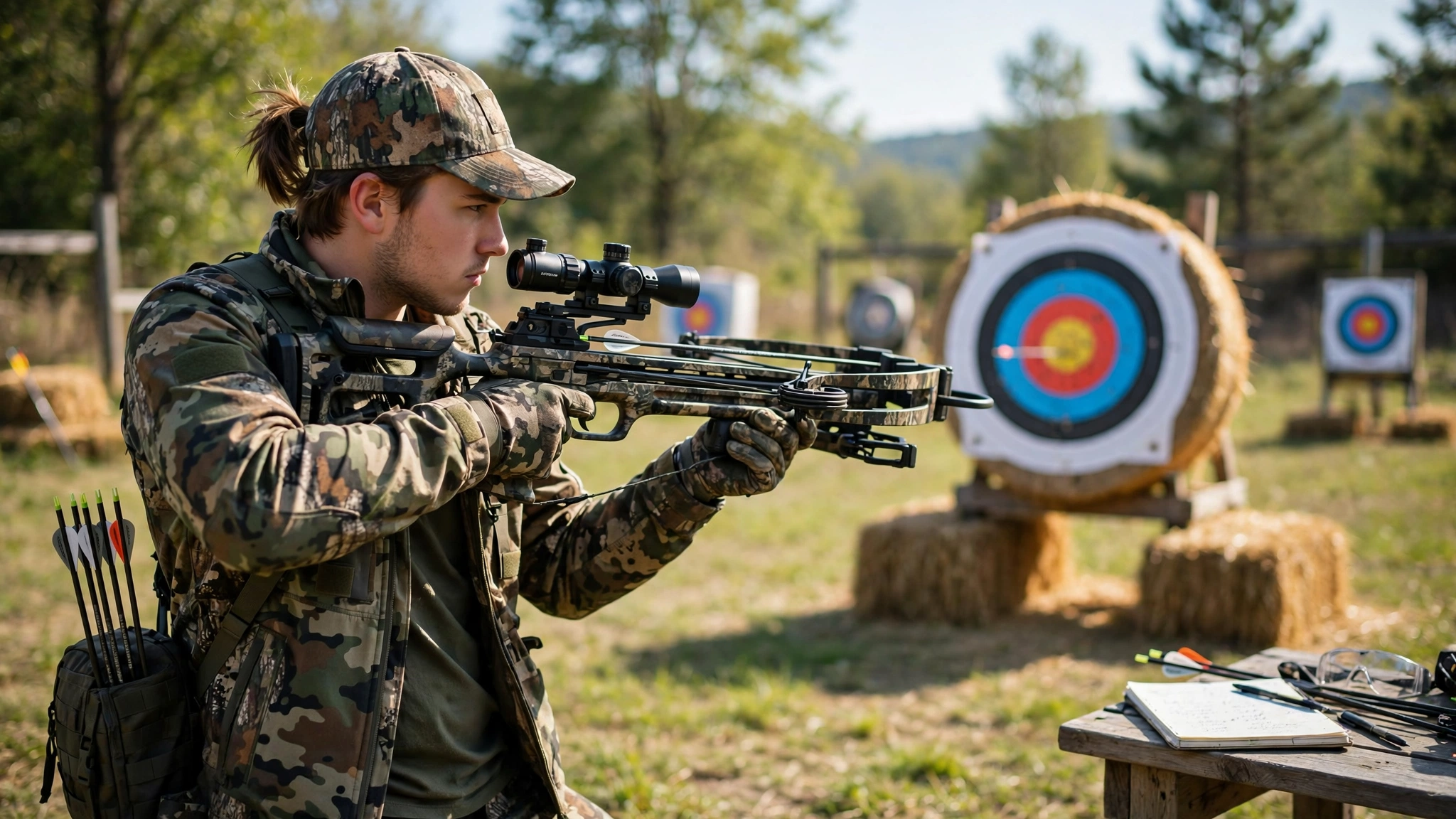
I bought my first crossbow last season with zero experience and learned most of this the hard way. This guide is everything I wish someone had told me before I handed over my credit card: the easiest bows to start with, what actually matters, and the mistakes that cost me money.
If you are shopping on a tighter budget, our Bear crossbow reviews cover the most affordable hunting-ready options.The Short Answer
The best crossbow for a beginner is one that is easy and safe to cock, ships as a complete ready-to-hunt package, and does not punish small mistakes. The TenPoint Titan X is the easiest option overall, following the Titan M1 that came before it, the Wicked Ridge Commander 400 is the best value, and the Barnett Whitetail Hunter II is the proven budget-friendly classic. A complete beginner setup costs about $330 to $800.
Best Crossbows for Beginners: Quick Picks
| Crossbow | Why It Fits a Beginner | Speed | Weight | Price Range |
|---|---|---|---|---|
| TenPoint Titan X | Easiest cocking, safest de-cocking | 400 fps | 7.3 lbs | ~$800 |
| Wicked Ridge Commander 400 | Crank included, simple, proven | 400 fps | 7.3 lbs | ~$600 |
| Barnett Whitetail Hunter II | Light, simple, huge owner community | 350 fps | 6.4 lbs | ~$340 |
| CenterPoint Wrath 430X | Silent crank, compact, lots of power | 430 fps | 9 lbs | ~$510 |
| Killer Instinct Boss 405 | Cheapest legitimate starter kit | 405 fps | 6.7 lbs | ~$330 |
What Should a Beginner Actually Look For?
When I started, I thought the only spec that mattered was speed. It is not even close. Here is what actually determines whether your first month with a crossbow is fun or frustrating.
1. Easy, safe cocking
This is the number one beginner priority, and it is the one most first-time buyers underestimate. A crank cocking device drops the cocking effort to about 5 pounds and draws the string back perfectly centered every time, which also makes your groups tighter. Rope cockers work, but they demand real strength and good technique: you have to pull the handles evenly and the string must seat centered or your bolts will drift. When I bought my first bow, nobody warned me how much of crossbow hunting is cocking, and cocking again, and cocking again. If you hunt from a stand, you may cock that bow five times in a morning. Choose the easy system. Our full walkthrough is at how to cock a crossbow, and it covers the mistakes I made on day one.
2. Safe de-cocking
At the end of a hunt, you have a loaded bow that needs to be unloaded. Some bows with crank systems let you silently crank the string back down to rest. Bows without that system usually require you to fire a practice bolt or discharge arrow into a target to unload, and that is fine once you know the procedure, but you need to plan for it. Either way, read the de-cocking procedure for YOUR bow before the first hunt, not after. Our crossbow safety guide covers this in detail.
3. A complete package
Scope, bolts, quiver, and a cocking aid included in the box. Buying these separately easily costs $200 or more, and beginners almost always buy the wrong bolts the first time. Every pick on this page is a ready-to-hunt package.
4. Weight you can carry
You will carry your crossbow far more than you will shoot it. Anything under 8 pounds feels manageable on a long walk to the stand. The Barnett Whitetail Hunter II, at 6.4 pounds, is the easiest bow here to lug around all day.
5. Anti-dry-fire protection
Dry-firing, or firing the bow with no bolt loaded, can destroy limbs, strings, and cables in one shot, and it can hurt you. Modern bows include anti-dry-fire systems that stop the trigger from releasing without a bolt, but you should still treat every shot with the discipline the system assumes.
The Best Beginner Crossbows in Detail
Easiest Cocking: TenPoint Titan X
Speed: 400 fps | Price: ~$800 | Weight: 7.3 lbs
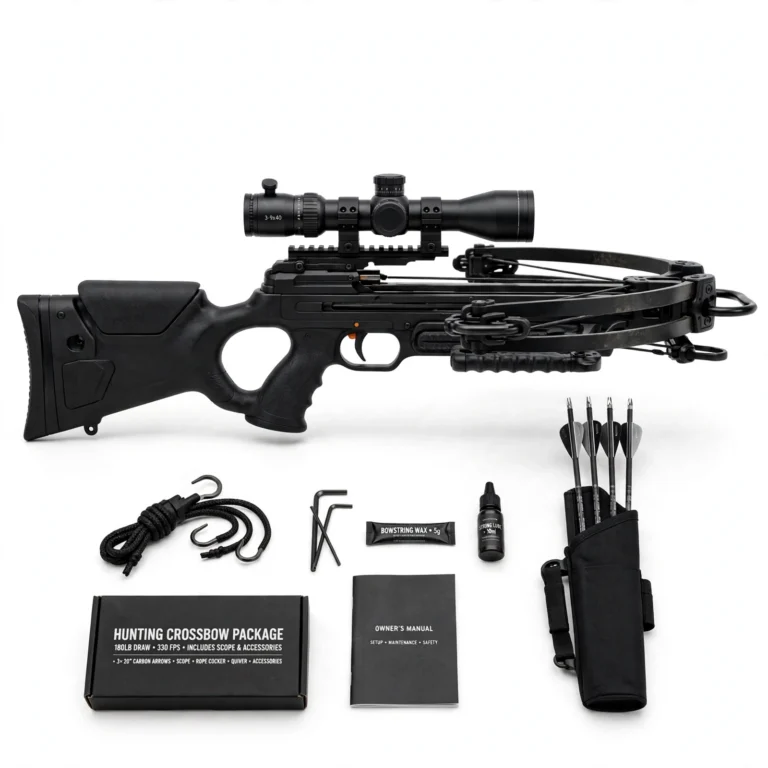
If your budget allows, this is the beginner bow I would hand to a friend, no hesitation. The ACUslide cocking system drops the effort to about 5 pounds, so anyone can cock it, and it de-cocks silently with the same crank. Those are the two hardest things about being new to crossbows, and the Titan X solves both on day one. TenPoint lists 400 fps, and independent 2026 testing showed some of the tightest 50-yard groups in the field, so you are not trading accuracy for ease.
The package teaches good habits instead of bad ones. The crank forces a slow, centered draw, so you never learn the sloppy rope-cocking technique I had to unlearn years later. At 7.3 pounds it carries well for a full-featured package, the D1 trigger breaks clean at 3.5 pounds, and the whole setup feels like a bow that costs twice the price.
The honest tradeoffs are money and a little weight. At ~$800 it costs more than twice the budget picks, and it is heavier than the lightest starter bows. But you literally cannot outgrow it: this is a bow you will still be hunting with in ten years, which makes the price look very different spread over a decade of seasons.
Pros
- Easiest cocking of any bow here, about 5 lbs of effort
- Silent, safe de-cocking with no discharge shot needed
- Top-tier accuracy with excellent 3.5-lb trigger
- Crank teaches proper centered draw from day one
- A bow you will never outgrow
Cons
- Highest price on this list at ~$800
- Heavier than the lightest starter bows at 7.3 lbs
- 9.75-inch cocked width is wide for tight blinds
Bottom line: The best beginner crossbow for anyone who can stretch the budget. It removes every hard part of learning, shoots as accurately as bows costing twice as much, and you will never need to upgrade.
Best Beginner Value: Wicked Ridge Commander 400
Speed: 400 fps | Price: ~$600 | Weight: 7.3 lbs
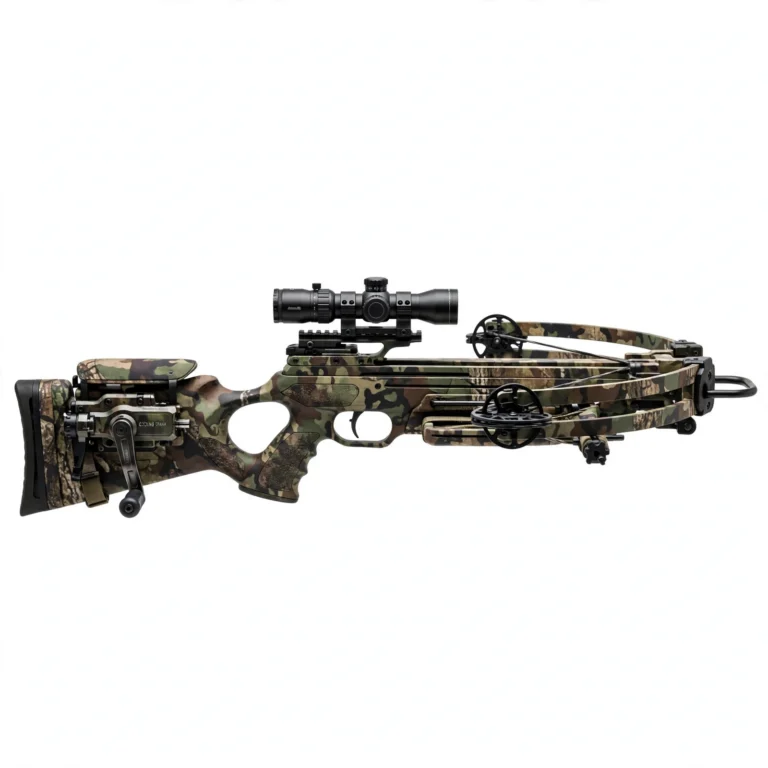
This is the sweet spot, and honestly the pick I would make if I were buying my first bow today. Wicked Ridge is TenPoint’s value line, and the Commander 400 shares the same easy-cranking DNA: a built-in ACUdraw crank that drops the 190-pound draw weight to about 5 pounds of effort. The official specs list 400 fps, 7.3 pounds of weight, and a dry-fire inhibitor standard, which is real hunting performance, not a starter-toy number.
It ships as a ready-to-hunt package with a lighted scope, quiver, and three bolts, and it was pre-sighted at 20 yards from the factory on the one my friend bought, which is a genuinely nice touch for a first-timer who has never sighted a bow. The 3.5-pound D1 trigger is the same crisp unit TenPoint puts in its premium bows, so you are learning on a good trigger from the start.
Against the Titan X above, you give up the silent crank de-cocking and a little refinement, and the 11-inch cocked width is wider than ideal for tight ground blinds. But at around $200 less, it delivers 90 percent of the beginner-friendliness for real money, and that $200 buys a lot of bolts, broadheads, and range time.
Pros
- Built-in ACUdraw crank: 5 lbs of effort, centered draw every time
- Complete ready-to-hunt package out of the box
- 400 fps is legitimate deer-hunting speed
- Crisp 3.5-lb D1 trigger, same as premium TenPoints
- Dry-fire inhibitor and auto safety included
Cons
- No crank de-cocking, you discharge to unload
- 11-inch cocked width is wide for tight blinds
- Fit and finish a step below the Titan X
Bottom line: The smart-money beginner bow. You get TenPoint engineering, crank cocking, and 400 fps for about $600, and the only meaningful thing you give up versus the Titan X is silent de-cocking.
Best Lightweight Starter: Barnett Whitetail Hunter II
Speed: 350 fps | Price: ~$340 | Weight: 6.4 lbs
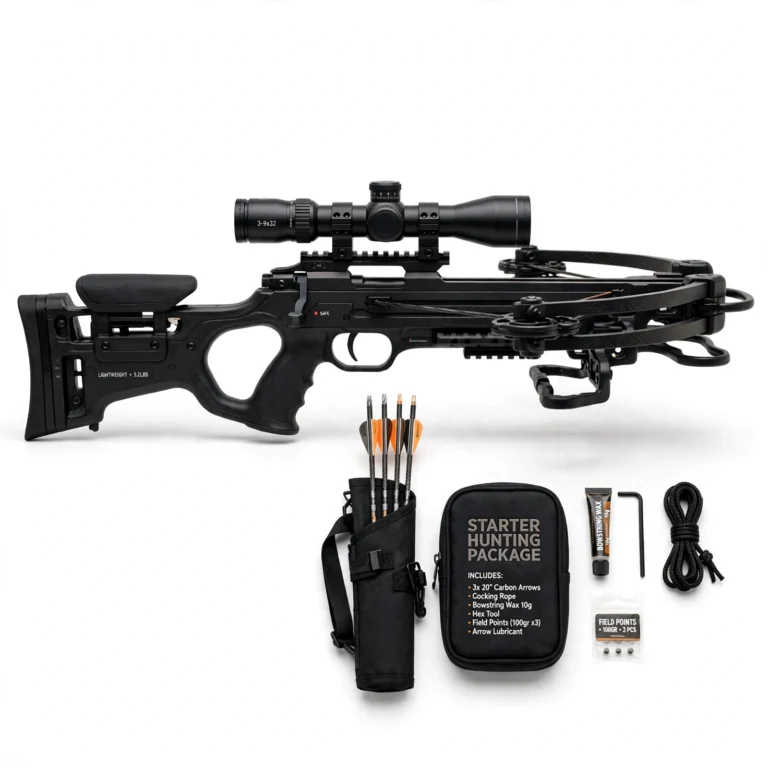
Thousands of hunters started here, including plenty of the guys I now take advice from. Barnett lists 350 fps, a 6.4-pound weight, and a 150-pound draw weight producing 103 foot-pounds of kinetic energy. That speed is plenty for deer inside 40 yards, which is where beginners should be shooting anyway, and the TriggerTech trigger is genuinely crisp for a bow at this price, not the mushy unit you expect under $400.
The 150-pound draw weight is the lightest on this list, which means rope cocking is realistic here even if you are not strong. This is the only bow here that a smaller-framed shooter can cock with a rope on day one without a crank. The owner community is huge, so nearly every question you will ever have about setup, tuning, or troubleshooting is already answered somewhere online.
The 4×32 scope is basic but honest, and the fit and finish will not impress anyone coming from a premium bow. Buy a crank accessory later if your shoulders complain; Barnett designed this platform to accept one. For $330 to $400, you are getting a proven deer killer with the easiest learning curve of any rope-cocked bow I know.
Pros
- Lightest bow on this list at 6.4 lbs, easy to carry all day
- Lightest draw weight (150 lbs), rope-cockable without a crank
- Crisp TriggerTech trigger, rare at this price
- 350 fps and 103 ft-lbs is plenty for deer inside 40 yards
- Huge owner community for troubleshooting help
Cons
- Basic 4×32 package scope
- Fit and finish is budget-grade
- No crank included, accessory costs extra
- 350 fps limits range compared to faster bows
Bottom line: The people’s starter bow for good reason: light, easy to cock, accurate enough for real hunting, and cheap enough that you are not afraid to learn on it. The best sub-$400 way to start.
Best Compact Power: CenterPoint Wrath 430X
Speed: 430 fps | Price: ~$510 | Weight: 9 lbs
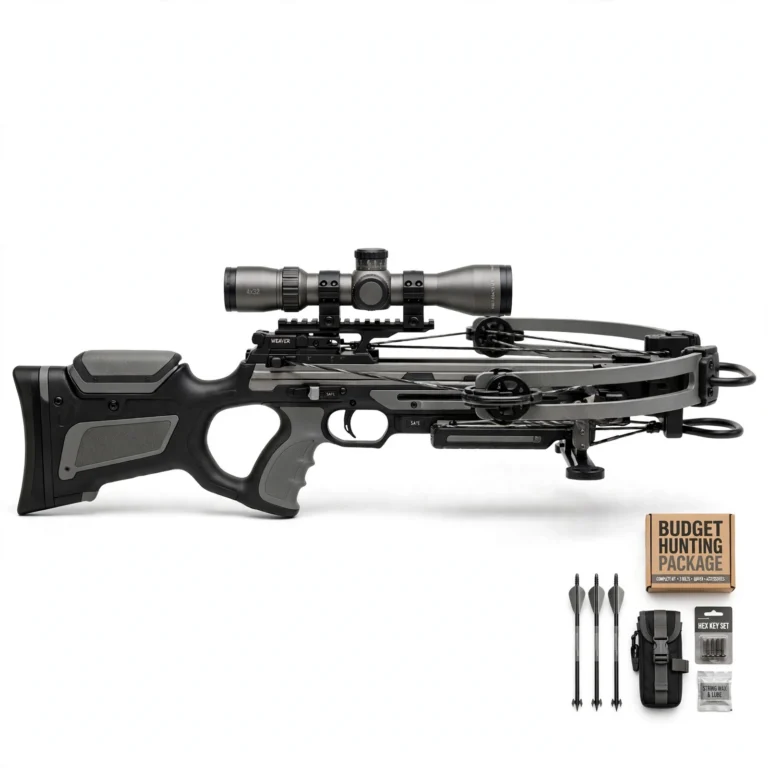
The Wrath 430X is the speed demon of the starter class. CenterPoint lists up to 430 fps with 164 foot-pounds of energy, packed into a compact reverse-draw frame that is only 9 inches wide when cocked. The package includes a silent cranking device, illuminated scope, quiver, and three bolts, so you are range-ready out of the box. The folding stock and narrow profile make it the most maneuverable bow here in a treestand or ground blind, which is where beginners actually hunt, and hunting with a crossbow from a stand or blind is where that maneuverability pays off.
That speed comes with real tradeoffs a beginner needs to understand. At around 9 pounds it is the heaviest bow on this list, and you will feel every ounce on a long hike to the stand. There is no de-cocking system, so to unload you must shoot the bow, which means carrying a discharge target or planning your last shot. Faster bows are also less forgiving of form errors, so your practice matters more here.
If the speed tempts you, be honest about the weight and the discharge routine. This bow is for the beginner who is comfortable handling a full-size setup and wants maximum power per dollar. It is a lot of bow for just over $500, as long as you respect what that speed demands from you.
Pros
- Fastest bow on this list at up to 430 fps
- Very compact 9-inch cocked width, great in stands and blinds
- Silent crank included, illuminated scope in the box
- 164 ft-lbs of energy handles any North American big game
- Folding stock for transport and storage
Cons
- Heaviest bow here at around 9 lbs
- No de-cocking system, must discharge to unload
- Speed magnifies form errors for new shooters
- Louder than the slower bows on this list
Bottom line: Maximum speed per dollar for the beginner who can handle the weight and the discharge routine. If you want power above all else and hunt mostly from stands, this is your bow.
Cheapest Starter: Killer Instinct Boss 405
Speed: 405 fps | Price: ~$330 | Weight: 6.7 lbs
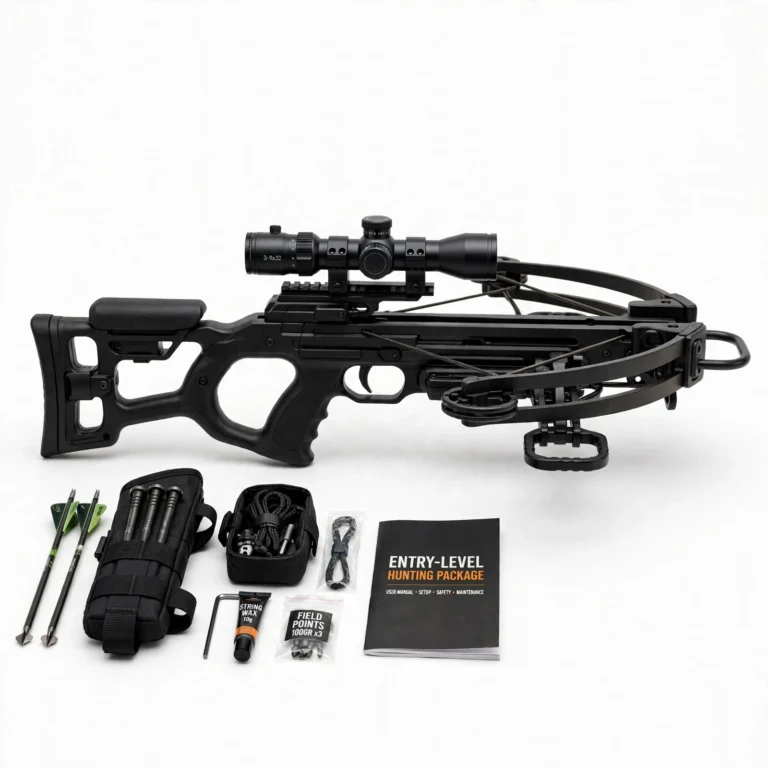
A legitimate 405-fps hunting package for less than a tank of gas and dinner. Killer Instinct lists 405 fps, 134 foot-pounds of energy, a 220-pound draw weight, and 6.7 pounds of weight, with an AR-style adjustable stock that fits a range of body sizes. The package includes a 4×32 illuminated scope, rope cocker, string suppressors, quiver, and three bolts. Now the honesty part: the 220-pound draw weight with a rope cocker is genuinely hard work, and the finish and accessories are cruder than everything above. It kills deer, but you will feel the difference in fit and finish.
Beginner notes: This was my temptation purchase. If you go this route, budget for a crank cocking accessory sooner rather than later: cocking 220 pounds with a rope, evenly and centered, every single time, is a skill I wish I had learned on an easier bow. Do not go cheaper than this. Bows under $150 are toys with poor accuracy and questionable safety, not hunting tools.
Pros
- Lowest price for a real hunting-capable package
- Adjustable stock fits different body sizes
- Full package: scope, rope cocker, suppressors, quiver, bolts
Cons
- 220-lb draw weight is tough with the included rope cocker
- Cruder fit and finish than the mid-range picks
Who it is for: the beginner who needs the absolute lowest entry cost and is willing to work harder for every shot.
What I Got Wrong When I Started: Beginner Mistakes to Avoid
Most guides list generic mistakes. These are the ones that actually happened to me.
- I chased speed first. I almost bought the fastest bow I could afford because 430 fps sounds better than 350. Then I learned that 350 fps kills a deer cleanly inside 40 yards, that extra speed means extra draw weight to cock, more vibration, and more noise, and that none of my first-season shots were past 30 yards anyway. Speed is a fun spec; ease of use is what fills your freezer.
- I ignored cocking effort until I was in the woods. Rope cocking in my backyard felt fine. Rope cocking the third time in a cold November stand, with gloves on and a deer somewhere out there, was a different story. If I could redo my first purchase, I would have started with a crank.
- I dry-fired a practice session in my head, nearly in real life. I got distracted while loading, shouldered the bow, and nearly touched the trigger with no bolt loaded. Anti-dry-fire systems help, but the discipline is yours. Always confirm a bolt is seated before the safety comes off. Always.
- I budgeted for the bow and forgot everything else. My first-month spending after the bow: extra bolts, a proper crossbow target (regular archery targets get destroyed), string wax, rail lube, and broadheads. Budget $100 to $150 for accessories on top of the package price.
- I skipped string maintenance. Nobody told me crossbow strings need waxing every 10 shots or so, and that rail lube matters. A $10 stick of wax protects a $600 bow. Learn the habit on day one.
- I skipped the manual. Read the cocking and de-cocking procedure for YOUR specific bow before the first hunt. Every bow is different, and guessing at the end of a dark November day is how accidents happen.
- I ignored my state’s laws until the week before season. Crossbow regulations vary by state and even by season: some states restrict crossbows to firearms season, some have minimum draw weights. Check before you buy. If you are still deciding between platforms, our how to choose a crossbow guide walks through the full decision.
What You Do NOT Need as a Beginner
Beginners overspend in predictable ways. Skip all of this until your second or third season.
- Ultra-high speed (430+ fps obsession). Sounds exciting, creates more recoil, more noise, harder cocking, and faster string wear. 350 fps is a proven deer killer.
- Bows under $150. These have poor accuracy, weak components, and sometimes missing safety features. They are not hunting tools.
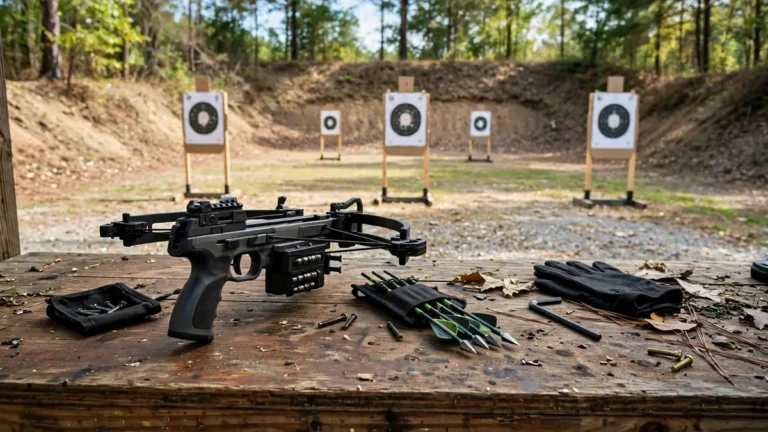
- Pistol crossbows for hunting. Mini pistol crossbows are fun backyard target toys, but they lack the energy for deer. Our best pistol crossbow guide lays out their honest limits.
- Premium bolts right away. Practice with affordable bolts that match your bow’s specs, then upgrade your hunting bolts later. Our best crossbow bolts guide explains what to match.
- Tactical accessories. Bipods, extra rails, and fancy cases can wait. Spend that money on bolts and range time.
Your First 30 Days With a New Crossbow
Week 1: Assemble the bow, read the manual cover to cover, and practice cocking and de-cocking dry with no bolt loaded until it feels boring. Learn where your fingers go. They stay below the rail, every time.
Week 2: Sight in at 20 yards. Take it slow and follow the process in our how to sight in a crossbow guide.
Week 3: Stretch to 30 and 40 yards, and practice from the positions you will actually hunt from: seated, in a stand, leaning on a rest. Bench groups are not hunting groups.
Week 4: You are hunt-ready. Keep practicing once a week through the season, because skills fade faster than you think. And keep the safety habits from week one: they are what make the other weeks possible.
Frequently Asked Questions
What is the best crossbow for a beginner?
The TenPoint Titan X is the easiest overall thanks to its 5-pound-effort crank cocking and silent de-cocking, while the Wicked Ridge Commander 400 gives you most of that ease at around $600. On a tighter budget, the Barnett Whitetail Hunter II is the proven classic at around $340, and when the older STR is worth buying used covers the case for the cheaper original. Pick based on your budget and your strength, not on speed.
How hard is it to cock a crossbow?
With a crank cocking device, about 5 pounds of effort: anyone can do it. With a rope cocker, you pull roughly half the bow’s draw weight with each hand, so a 150-pound bow feels like 75 pounds per pull and a 220-pound bow feels like 110. Rope cocking a heavy bow, evenly and centered, is a genuine skill. That is why crank-equipped bows top this list.
How much should a beginner spend on a first crossbow?
About $330 to $600 gets you fully hunt-capable package. The $600 Wicked Ridge Commander 400 is the sweet spot. Budget another $100 to $150 for accessories: extra bolts, a crossbow-rated target, string wax, and rail lube. Going below $150 means poor accuracy and weak safety features.
Is a crossbow hard to learn?
No. Most beginners shoot accurately within an hour. If you can shoulder a rifle and look through a scope, you can shoot a crossbow. Cocking safely and consistently is the main skill to learn, which is why an easy-cocking bow matters more than a fast one.
Is 350 fps enough for deer hunting?
Yes. At 350 fps with proper broadheads, a crossbow carries plenty of energy for clean kills on whitetail inside 40 yards, which is where the vast majority of beginner shots happen. Faster bows add range on paper, but shot placement matters far more than speed.
Can I de-cock a crossbow without firing it?
On bows with crank de-cocking systems like the Titan X, yes: you silently crank the string back down. On most starter bows, you unload by firing a practice bolt or discharge arrow into a target. Learn your specific bow’s procedure from the manual before your first hunt, and never dry-fire.
Do I need a license to hunt with a crossbow?
Usually a standard hunting license covers you, but crossbow-specific rules vary by state and season. Some states restrict crossbows to certain seasons or set minimum draw weights. Always check your state’s current regulations before buying or hunting.
What should a beginner NOT buy?
Skip bows under $150, skip the race for maximum speed, and skip buying premium bolts and tactical accessories on day one. Buy a complete package from an established brand, spend the savings on bolts and range time, and upgrade once you know what kind of hunter you are.