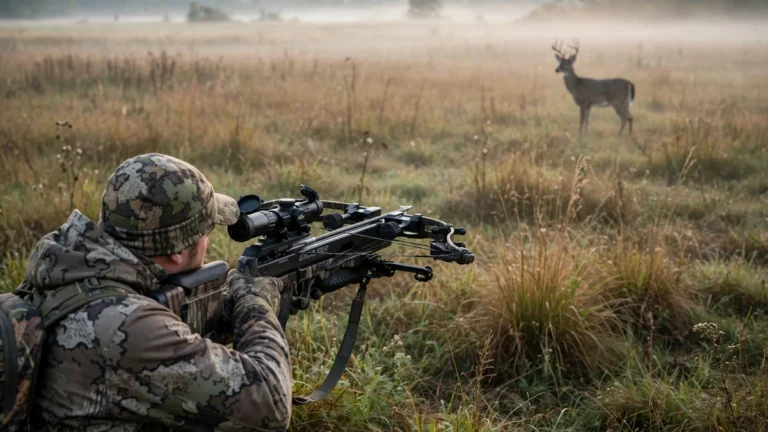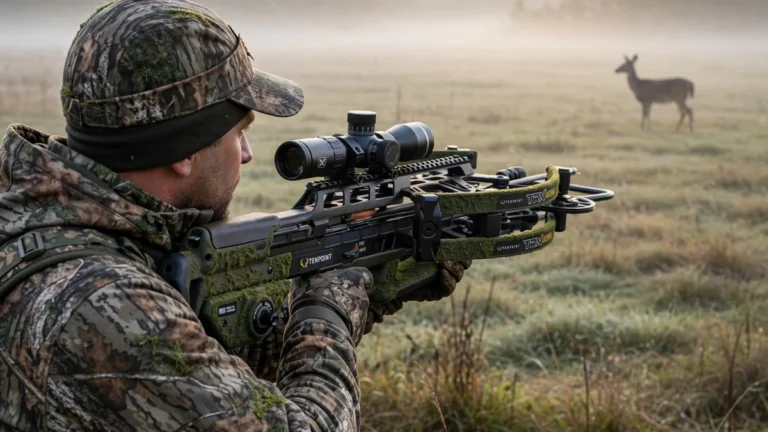
Best Crossbow Bipod 2026: 6 Shooting Rests Compared
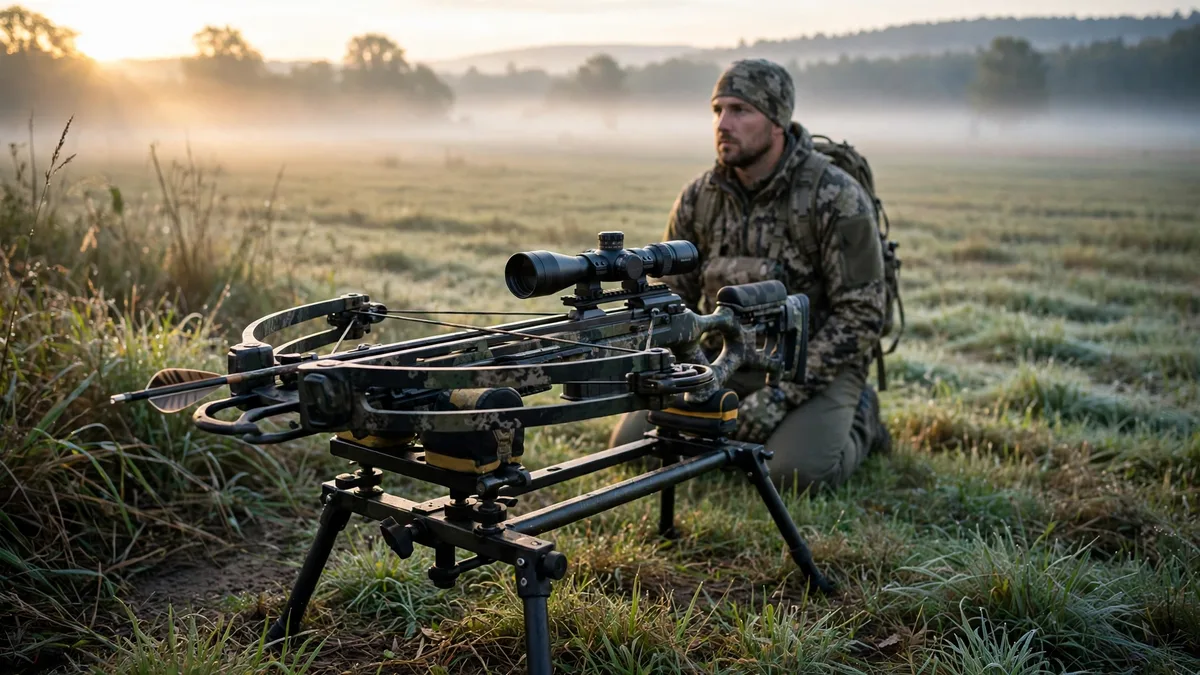
The keyword says bipod, but most hunters searching for a crossbow bipod actually need a shooting rest: a bipod, a tripod, or a monopod that holds the bow steady for the shot. This guide covers all three, led by bipods, and it starts with the safety point that matters more than any feature. The rest’s yoke must clear the string’s travel, or it is dangerous.
The Short Answer
If you want one rest for most hunting, buy the BOG DeathGrip Aluminum Tripod at about $200. It clamps the bow, holds it hands-free, and adjusts from 7 to 59 inches, which covers sitting, kneeling, and standing. If you want a true bipod that attaches to the bow, buy the Swagger Stalker QD42 at about $130. It is light, quick-detach, and made for crossbows. If you want the cheapest good option, the BOG Havoc Bipod at about $50 is hard to beat.
Read the safety warning first. A rest designed for rifles can put its yoke in the string path. On a crossbow, the string travels forward across the front of the bow when you shoot, and anything in that path can be struck, broken, or thrown. Every pick in this guide is verified crossbow-compatible. Rifle-only bipods must not be used on crossbows, and I do not recommend any rifle-only bipod here. That includes Harris M-Lok style bipods, which are built for rifles and are not designed for crossbow string clearance.
Comparison Table
| Rest | Type | Price | Height | Weight | Best For |
|---|---|---|---|---|---|
| BOG DeathGrip Aluminum Tripod | Tripod, clamp | ~$200 | 7-59 in | 8.5 lbs | Best Overall |
| Swagger Stalker QD42 | Bipod, QD | ~$130 | 14-42 in | 15 oz | Best Quick-Detach Bipod |
| Primos Trigger Stick Gen3 Tall Monopod | Monopod, trigger | ~$85 | 35-65 in | 2 lbs | Best Mobile |
| BOG Havoc Bipod | Bipod, twist lock | ~$50 | 20-40 in | Under 1.5 lbs | Best Budget Bipod |
| TenPoint Axis Tripod | Tripod, clamp | ~$200 | 25-40 in | 4 lbs | Best New Crossbow-Specific |
| Vanguard Quest T62U | Tripod, bipod, monopod | ~$80 | 27.5-62 in | 2.2 lbs | Best 3-in-1 |
Best Overall: BOG DeathGrip Aluminum Tripod
Type: Tripod, clamp | Price: ~$200 | Height: 7-59 in
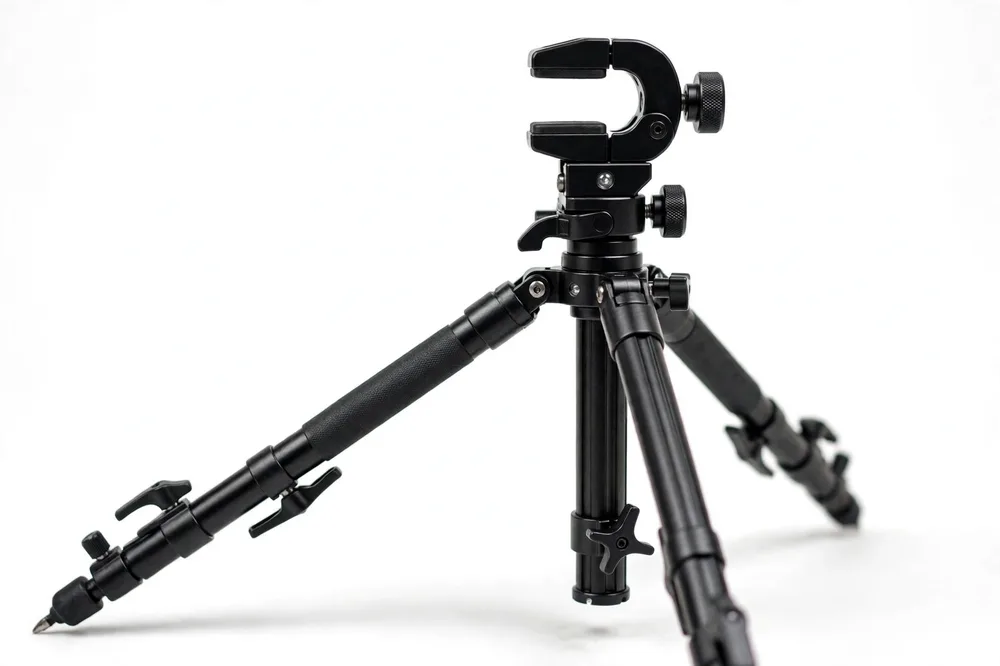
The DeathGrip is the rest I reach for when I want the bow held steady and my hands free. It is a tripod with a clamp head that grips the bow and holds it in place, so you can glass, call, or simply wait without holding the full weight of the bow. The clamp is rated for crossbows up to 40 lbs, which covers every hunting crossbow on the market, and the clamp design keeps the bow clear of the string path when it is set up correctly.
The height range is the other reason this tripod leads the list. Seven to 59 inches covers sitting in a ground blind, kneeling behind cover, and standing for a shot. Most tripods cover one or two of those positions. This one covers all three, which means you can use the same rest for turkey in spring, deer in fall, and target practice in summer without buying a second rest.
The price varies by finish and retailer, and you should know that before you buy. Street prices run about $130 to $280. The gunmetal grey version has been on sale for about $130, while the black version has sold for about $280 at some retailers. I am using about $200 as the headline price because it sits in the middle of that range, but check the current price for the finish you want. The tripod is the same. The finish is not worth paying double for.
The cons are weight and bulk. At 8.5 lbs, the DeathGrip is heavy to carry on a long walk, and it is bulky to pack. It is a ground blind and fixed-position rest, not a spot-and-stalk rest. If you hunt on the move, the Primos monopod or the Swagger bipod will serve you better. But if you hunt from a blind or a fixed stand, and you want the steadiest rest you can buy, the DeathGrip is the pick.
Set it up carefully the first time. Clamp the bow, check that the yoke and clamp are clear of the string path, dry-fire check with an unloaded bow by watching the string travel, and only then load a bolt. That check takes two minutes and it is the most important thing in this article.
Pros
- Clamp head holds the bow hands-free
- 7-59 in height range covers sitting, kneeling, and standing
- Clamp rated for crossbows up to 40 lbs
- Very steady, the best rest for long waits
Cons
- 8.5 lbs, heavy to carry far
- Bulky to pack for spot-and-stalk hunting
- Price varies widely by finish and retailer, $130-$280
- Overkill for short, mobile hunts
Bottom line: the steadiest, most versatile rest here. Buy it for ground blinds and fixed stands, and check string clearance before every hunt.
Best Quick-Detach Bipod: Swagger Stalker QD42
Type: Bipod, quick-detach | Price: ~$130 | Height: 14-42 in
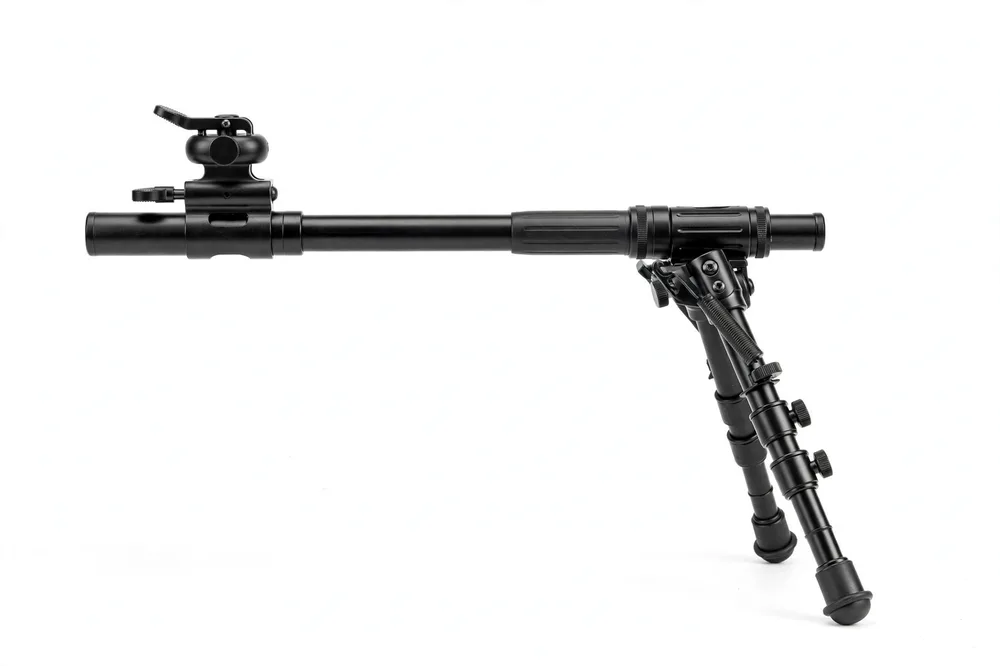
The Swagger Stalker QD42 is the best true bipod on this list, and it is the one I would buy if I want a bipod that attaches to the bow and goes with me. At 15 ounces, it is light enough that you forget it is there until you need it. The height range is 14 to 42 inches, which covers prone, sitting, and kneeling positions, and the Flex Ready Technology lets the legs flex and adapt to uneven ground.
The quick-detach mount is the feature that matters. It attaches to a Picatinny rail or a sling swivel stud, and it comes off in seconds when you do not want it. That matters in a treestand, where a bipod can snag on branches or get in the way when you are climbing. It also matters when you want to shoot offhand. You can detach the bipod, take the shot, and reattach it later without tools.
The price is about $130 at MSRP, $129.99 to be exact, and some retailers have sold it for about $97 when in stock. Check the current price, and be aware that stock comes and goes. At either price, it is good value for a bipod this light and this well made.
The cons are the limits of any bipod. It does not hold the bow hands-free the way a clamp tripod does, and it does not adjust as tall as a tripod or a monopod. For a treestand, that is usually fine, because you are shooting from a seated position. For standing shots in open country, you will want a taller rest. The legs are also lighter duty than a tripod, so do not expect it to hold up to rough handling in the same way.
For treestand hunters who want a bipod that attaches, detaches fast, and stays out of the way, the QD42 is the right buy. It is crossbow-compatible, light, and well designed for the job.
Pros
- 15 oz, very light for a bipod
- Quick-detach Picatinny or sling swivel mount
- Flex Ready Technology adapts to uneven ground
- 14-42 in range covers prone, sitting, and kneeling
Cons
- Does not hold the bow hands-free like a clamp tripod
- Not tall enough for most standing shots
- Lighter duty than a full tripod
- Stock can be inconsistent at some retailers
Bottom line: the best true bipod here. Light, quick-detach, and made for crossbows. A strong pick for treestands.
Best Mobile: Primos Trigger Stick Gen3 Tall Monopod
Type: Monopod, trigger-release | Price: ~$85 | Height: 35-65 in
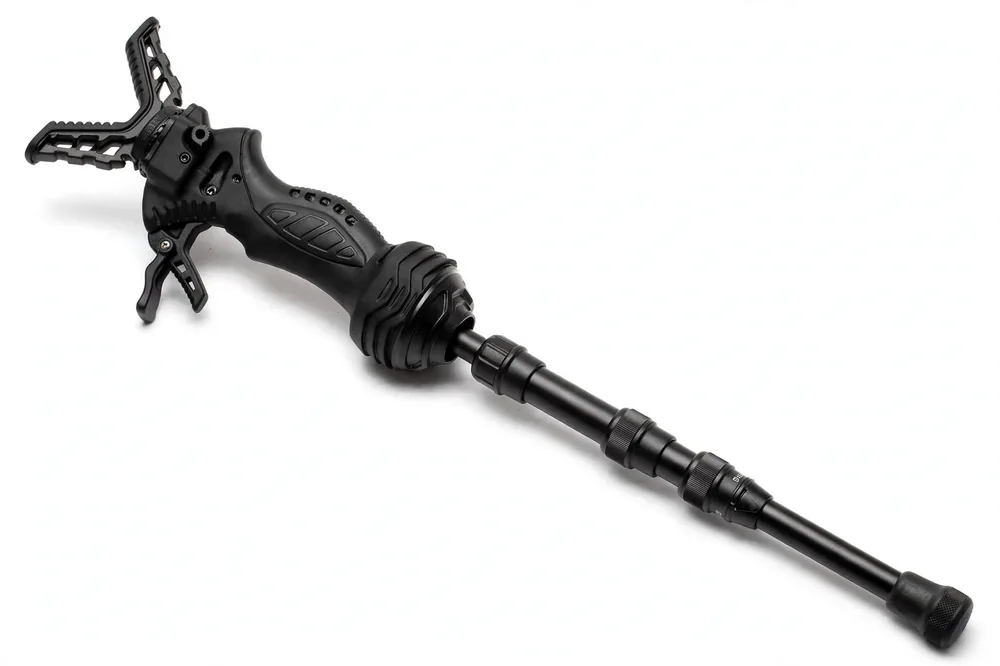
The Primos Trigger Stick Gen3 Tall Monopod is the rest I would carry if I am hunting on foot and I want one stick that does the job without slowing me down. At 2 lbs, it is light enough to carry all day, and the trigger-release height adjustment lets you change height with one hand. Squeeze the trigger, slide to the height you need, release, and it locks. That is fast, quiet, and it works with gloves on.
The height range is 35 to 65 inches, which is tall enough for standing shots and low enough for kneeling. A crossbow yoke is available for this monopod, and you should buy the crossbow yoke version or the crossbow yoke accessory. The standard rifle yoke is not the same thing, and the crossbow yoke is what keeps the bow clear of the string path. Do not use a rifle yoke on a crossbow.
The price is about $85, MSRP $85.99. Note that the tall tripod variant of the Trigger Stick Gen3 runs about $150, which is a different product. I am pricing the tall monopod here, not the tripod. If you see a $150 price, you are looking at the tripod version.
The cons are the limits of a monopod. One leg is less steady than two or three, especially in wind or for long shots. A monopod helps a lot compared to shooting offhand, but it does not hold the bow hands-free, and it does not give you the rock-solid platform of a tripod. For mobile hunting, that trade-off is worth it. For a fixed ground blind, a tripod is steadier.
I would buy this monopod for spot-and-stalk hunting, still hunting, and any hunt where I am walking a lot and shooting from different positions. It is fast, light, and simple, and the trigger adjustment is genuinely useful in the field.
Pros
- Trigger-release one-handed height adjustment
- 2 lbs, light enough to carry all day
- 35-65 in range covers kneeling and standing
- Crossbow yoke available
Cons
- Less steady than a bipod or tripod
- Does not hold the bow hands-free
- Must buy the crossbow yoke, not the rifle yoke
- Tall tripod variant costs about $150, easy to confuse
Bottom line: the best mobile rest here. Light, fast to adjust, and made for hunters on foot.
Best Budget Bipod: BOG Havoc Bipod
Type: Bipod, twist lock | Price: ~$50 | Height: 20-40 in
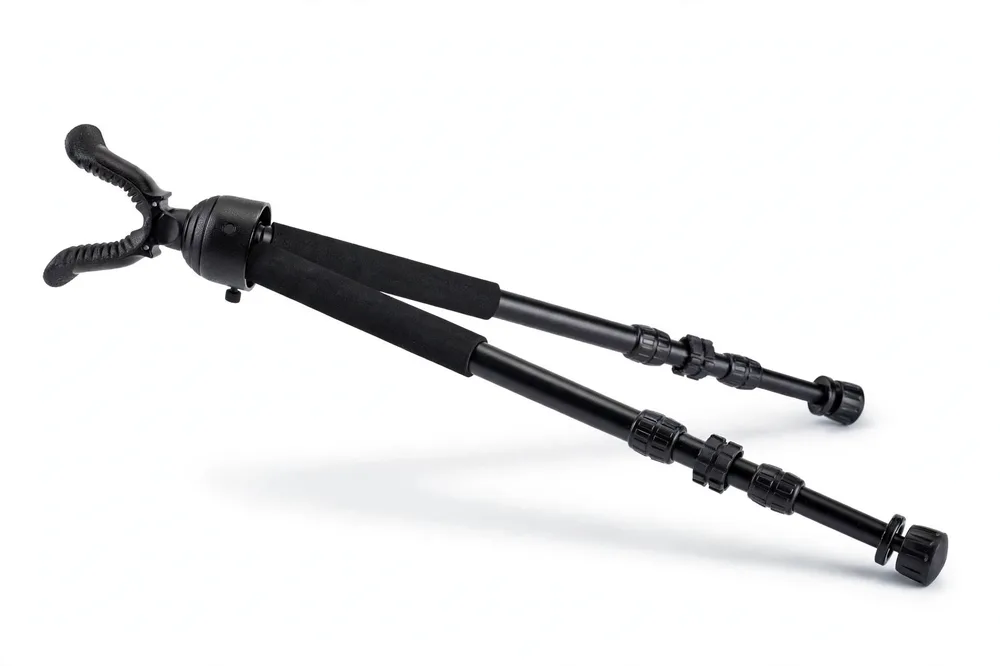
The BOG Havoc Bipod is proof that a good crossbow rest does not have to cost $100 or more. At about $50, MSRP $49.99 and $50.99 at KY Gun Co, it is the cheapest rest on this list, and it is a genuine bipod that works. The height range is 20 to 40 inches, which covers sitting and kneeling, and the twist locks are simple and reliable. Under 1.5 lbs, it is light enough to carry without noticing it.
What I like about the Havoc is that it does the basics well. The legs extend smoothly, the locks hold, and the yoke holds the bow steady for the shot. It does not have the quick-detach mount of the Swagger or the clamp head of the DeathGrip, but for a hunter who wants a simple bipod that attaches and works, it is enough.
The cons are what you would expect at $50. The twist locks are slower to adjust than a trigger release, and the legs are lighter duty than the Swagger. The height range is narrower, and it does not go as low or as high as the more expensive options. For most hunting inside 40 yards from a seated position, none of that matters much.
I would buy the Havoc if I am on a budget, if I am buying my first rest and I am not sure what I need yet, or if I want a spare rest for a second bow. It is also a good choice for a young hunter or a new hunter who does not want to spend $130 on a bipod before they know how they hunt.
Check string clearance when you mount it, the same as with any rest. The Havoc is crossbow-compatible, but every rest needs that check with your specific bow. Mount it, check the string path with the bow unloaded, and only then load a bolt.
Pros
- About $50, the cheapest rest on this list
- Under 1.5 lbs, very light
- Simple twist locks, reliable and easy to use
- 20-40 in range covers sitting and kneeling
Cons
- Twist locks are slower than a trigger release
- Lighter duty legs than the Swagger QD42
- Narrower height range than pricier options
- No quick-detach mount
Bottom line: the best budget bipod for crossbows. Simple, light, and about $50.
Best New Crossbow-Specific: TenPoint Axis Tripod
Type: Tripod, clamp | Price: ~$200 | Height: 25-40 in
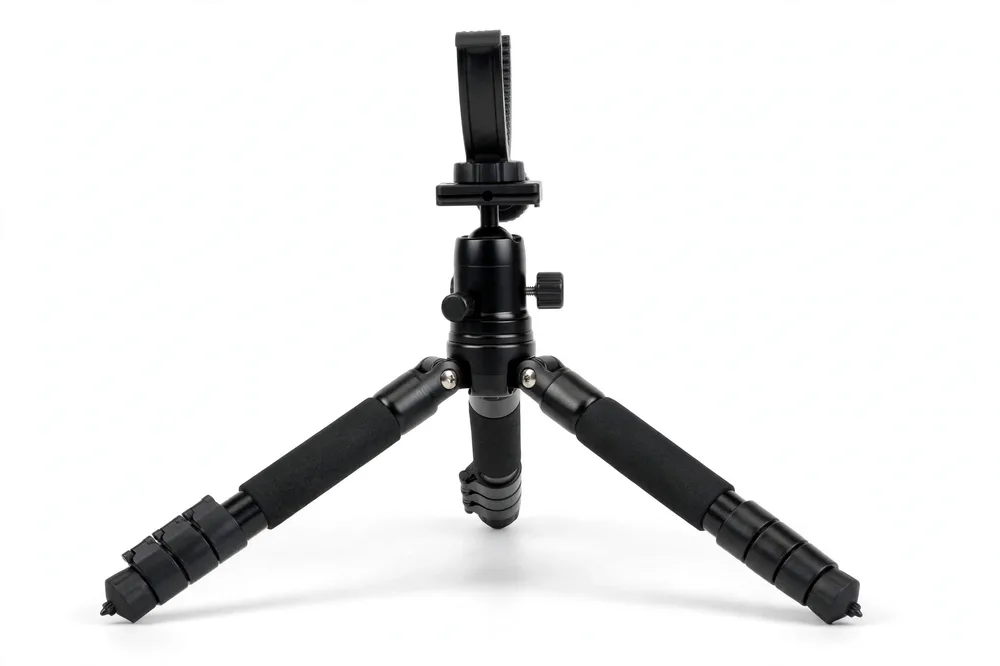
The TenPoint Axis Tripod is the newest rest on this list, and it is the only one designed specifically for crossbows from the start. That matters, because a rest designed for crossbows does not have the string-clearance problem that rifle rests have. The Axis is built for ground blinds, with a clamp-on design for crossbows and firearms, and a height range of 25 to 40 inches that is tuned for seated shooting.
At 4 lbs, the Axis is less than half the weight of the BOG DeathGrip, which makes it much easier to carry to a blind. The clamp-on design holds the bow securely, and the tripod is stable enough for the kind of shots you take from a blind: seated, at known distances, with time to aim. The height range is narrower than the DeathGrip, but for a ground blind, 25 to 40 inches is the range you actually use.
The price is about $200, $189.99 at Pyramyd in stock and $199.99 at Midway. I am using about $200 as the headline price. It is not a budget rest, but it is fairly priced for a crossbow-specific tripod from TenPoint.
The cons are the narrower height range and the newer design. It does not go as low as the DeathGrip for prone shooting, and it does not go as high for standing shots. It is a ground blind rest, and it is honest about that. The design is also newer, so there is less long-term field history than the DeathGrip or the Primos Trigger Stick. That is not a reason to avoid it, but it is worth knowing.
I would buy the Axis if I hunt mostly from a ground blind and I want a rest that was designed for my crossbow, not adapted from a rifle rest. The weight saving over the DeathGrip is real, and the crossbow-specific design gives me confidence on string clearance.
Pros
- Designed specifically for crossbows, no rifle-rest compromise
- 4 lbs, less than half the weight of the DeathGrip
- Clamp-on design holds the bow securely
- Built for ground blinds, the most common crossbow setup
Cons
- 25-40 in range is narrower than the DeathGrip
- Not tall enough for most standing shots
- Newer design, less long-term field history
- About $200, not a budget option
Bottom line: the best crossbow-specific tripod here. Buy it for ground blinds if you want a rest built for your bow.
Best 3-in-1: Vanguard Quest T62U
Type: Tripod, bipod, and monopod | Price: ~$80 | Height: 27.5-62 in
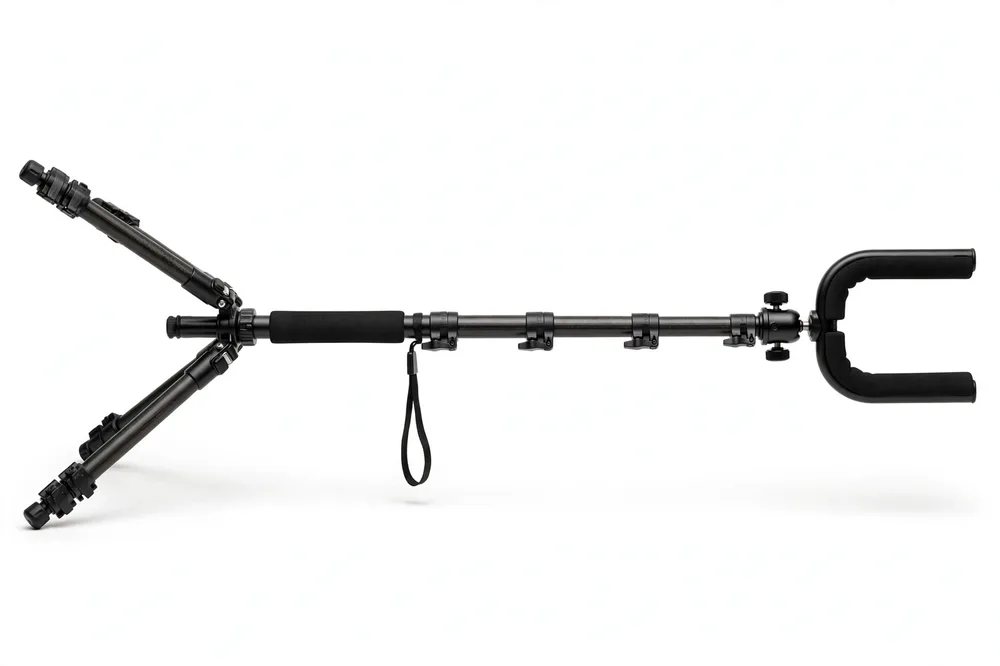
The Vanguard Quest T62U is the most versatile rest on this list, because it is three rests in one. It works as a tripod, a bipod, and a monopod, with a U-shaped yoke that cradles the bow. The height range is 27.5 to 62 inches, which covers sitting, kneeling, and standing, and at 2.2 lbs it is light enough to carry all day.
What I like about the T62U is that it lets you experiment. If you are not sure whether you need a bipod, a tripod, or a monopod, this rest lets you try all three for about $80. The U-shaped yoke is simple and it works, and the rest converts between modes without tools. For a hunter who hunts different positions in different seasons, that flexibility is valuable.
The price is $79.99, but there is a stock note. It is sold out on Vanguard’s own site, so check other retailers. The price at other retailers may vary, and you should verify availability before you count on this rest. I am using about $80 as the headline price based on the published price.
The cons are the compromises of a 3-in-1 design. It is not as steady as a dedicated tripod in tripod mode, not as light as a dedicated bipod in bipod mode, and not as simple as a dedicated monopod in monopod mode. It does three jobs well, but it does not do any one job as well as a dedicated rest. The U-shaped yoke also needs the same string-clearance check as any rest, and you should verify it with your specific bow.
I would buy the T62U if I want one rest that covers everything, if I hunt in different positions, or if I am buying my first rest and I want to learn what works for me. If you already know you need a tripod for a ground blind, buy the DeathGrip or the Axis instead.
Pros
- Tripod, bipod, and monopod in one rest
- 27.5-62 in range covers sitting, kneeling, and standing
- 2.2 lbs, light enough to carry all day
- About $80, good value for three rests
Cons
- Not as steady as a dedicated tripod
- Not as light as a dedicated bipod
- Sold out on Vanguard’s own site, check other retailers
- U-shaped yoke needs a string-clearance check
Bottom line: the most versatile rest here. Buy it if you want one rest that does everything, and check stock at other retailers.
Bipod vs Tripod vs Monopod by Hunting Position
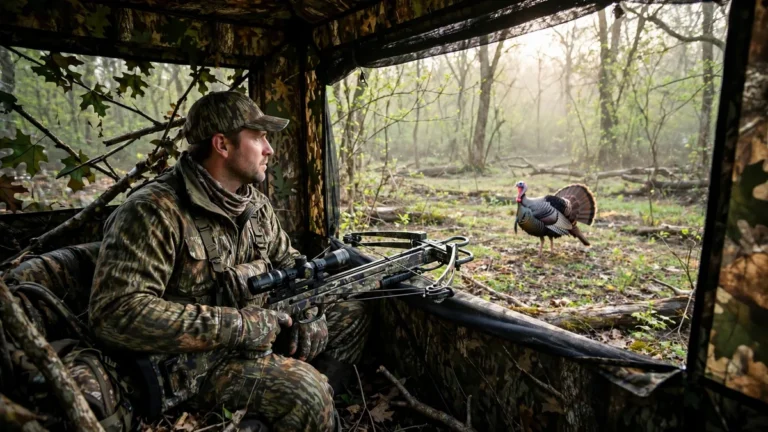
The right rest depends on where you hunt. In a ground blind, a tripod is the best choice. You are seated, you have time, and you want the bow held steady and hands-free. The BOG DeathGrip and the TenPoint Axis are both built for this. The DeathGrip covers more heights, and the Axis is lighter and crossbow-specific.
In a treestand, a bipod is the best choice. You are seated, space is tight, and you want a rest that attaches to the bow and stays out of the way when you climb. The Swagger QD42 is the pick here, with the BOG Havoc as the budget option. For more on treestand hunting, see our tips for hunting from a treestand.
For spot-and-stalk hunting, a monopod is the best choice. You are walking, shooting from different positions, and you need a rest that is light and fast to adjust. The Primos Trigger Stick Gen3 Tall Monopod is the pick here. The Vanguard T62U is the flexible option if you hunt different positions in different seasons.
Clamp vs Yoke Mounting
There are two ways a rest holds your bow: a clamp or a yoke. A clamp grips the bow and holds it in place, hands-free. The BOG DeathGrip and the TenPoint Axis use clamps. A yoke cradles the bow from below, and you hold the bow in the yoke. The Swagger, Primos, BOG Havoc, and Vanguard use yokes.
Clamps are steadier and they free your hands, which matters on a long wait in a blind. Yokes are lighter, simpler, and faster to get on and off the bow. Neither is better in every situation. Choose a clamp for fixed positions and long waits, and a yoke for mobile hunting and treestands. Either way, check that the clamp or yoke is clear of the string path before you shoot.
String-Clearance Safety Checklist
This is the most important section in this article, and I am repeating it here because it matters that much. A rest designed for rifles can put its yoke in the string path. On a crossbow, the string travels forward across the front of the bow when you shoot. Anything in that path can be struck, broken, or thrown, and it can injure you or damage the bow.
Use this checklist every time you set up a rest with a crossbow. First, mount the rest and the bow with the bow unloaded. Second, look at the string path from the side and from above. The yoke, clamp, and legs must be clear of the string’s travel from cocked to fired position. Third, check the manufacturer’s guidance for your bow and your rest. If either one says the combination is not compatible, do not use it. Fourth, if you are unsure, ask a pro shop or the manufacturer before you shoot.
Every pick in this guide is verified crossbow-compatible, but verification is about the product, not about your specific setup. Your bow, your rest, and your mounting position together determine clearance. Check it yourself, every time, with the bow unloaded.
Height Range Guide
Height range matters more than most buyers expect, because a rest that does not reach your shooting position is a rest you will not use. For a ground blind, you need 25 to 40 inches for seated shooting, and more if you shoot from a chair. For a treestand, you need 14 to 42 inches for seated shooting from a stand. For prone shooting, you need 7 to 14 inches. For standing shots, you need 40 to 65 inches.
Check the height range against the positions you actually shoot from, not the positions you imagine. If you hunt from a ground blind, the TenPoint Axis at 25 to 40 inches is enough. If you hunt from a treestand and a ground blind, the BOG DeathGrip at 7 to 59 inches covers both. If you hunt on foot, the Primos monopod at 35 to 65 inches covers standing and kneeling.
Frequently Asked Questions
What is the best bipod for a crossbow?
The Swagger Stalker QD42 at about $130 is the best true bipod for a crossbow. It is light at 15 oz, quick-detach, and made for crossbows. If you want the steadiest rest overall, the BOG DeathGrip tripod at about $200 is the better pick, and the BOG Havoc at about $50 is the best budget bipod.
Can I use a rifle bipod on a crossbow?
No, not unless it is verified crossbow-compatible. A rest designed for rifles can put its yoke in the string path, which is dangerous. The string travels forward when you shoot, and anything in that path can be struck or thrown. Use only rests verified for crossbows, and check string clearance with your specific bow before you shoot.
What is the difference between a bipod and a tripod for crossbows?
A bipod has two legs and attaches to the bow, while a tripod has three legs and usually stands on its own with a clamp or yoke. A bipod is lighter and better for treestands and mobile hunting. A tripod is steadier and better for ground blinds and long waits, because it can hold the bow hands-free.
How tall should my rest be for a ground blind?
For a ground blind, you need about 25 to 40 inches for seated shooting. The TenPoint Axis Tripod at 25 to 40 inches is built for this, and the BOG DeathGrip at 7 to 59 inches covers seated, kneeling, and standing from a blind.
How tall should my rest be for a treestand?
For a treestand, you need about 14 to 42 inches for seated shooting. The Swagger QD42 at 14 to 42 inches is the right range, and the BOG Havoc at 20 to 40 inches also works. A tripod is usually too bulky for a treestand.
Will a clamp damage my crossbow?
A clamp made for crossbows should not damage your bow when used correctly. The BOG DeathGrip clamp is rated for crossbows up to 40 lbs, and the TenPoint Axis clamp is designed for crossbows. Follow the manufacturer’s instructions, do not overtighten, and check that the clamp is clear of the string path.
Is the Swagger QD42 good for treestands?
Yes. The QD42 is a strong pick for treestands because it is light at 15 oz, it detaches quickly for climbing, and the 14 to 42 inch range covers seated shooting from a stand. The Flex Ready legs adapt to uneven footing in the stand.
What is the best budget crossbow rest?
The BOG Havoc Bipod at about $50 is the best budget crossbow rest. It is light, simple, and crossbow-compatible. The Vanguard Quest T62U at about $80 is the best budget 3-in-1 option if you want tripod, bipod, and monopod modes in one rest.
Do I need a rest for turkey hunting?
You do not need a rest for turkey hunting, but it helps a lot. Turkey hunting often means long waits in a ground blind, and a tripod like the BOG DeathGrip or the TenPoint Axis holds the bow steady and hands-free while you wait. For more on turkey hunting, see our guide to the best turkey crossbows, and our guide on sighting in your crossbow.
A steady rest helps in any blind. See our best blind-friendly crossbow picks for narrow bows that fit a blind, and our top hog crossbow picks for setups that pair well with a tripod.