Crossbow Treestand Tips: Width, Haul Lines & Shot Angles
As an affiliate, ProCrossbow may earn a commission if you buy through links on this page, including the product picks below. It costs you nothing extra and keeps our guides free.
The Short Answer
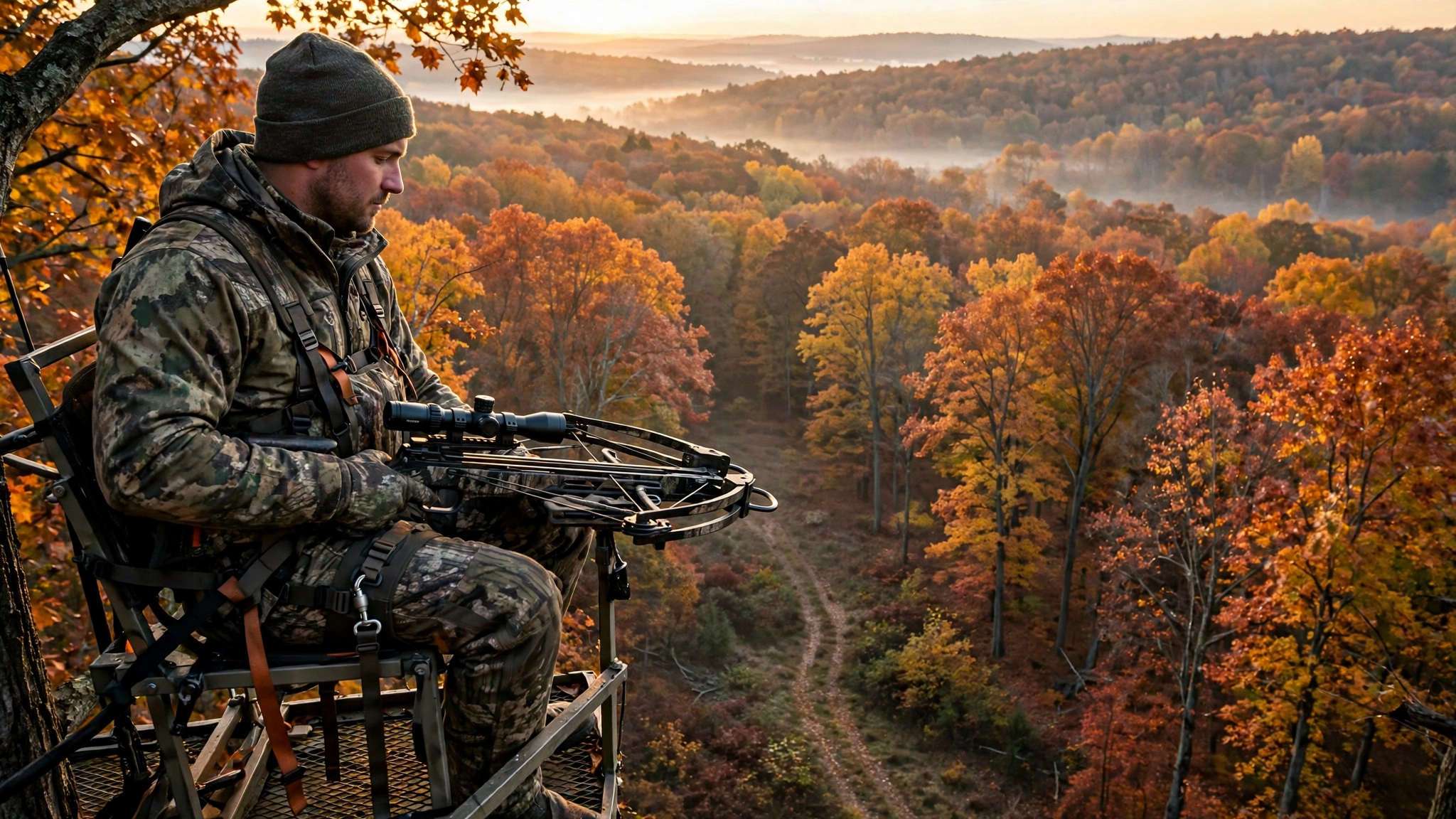
My first season up a tree, I made nearly every mistake on this page: I cocked my bow on the platform at dawn and spooked the woods, I left the quiver on the bow so the whole rig felt like a seesaw on my lap, and I aimed dead-on at a buck on a steep angle and shot right over his back.
Here is the short answer. A crossbow is an excellent treestand weapon because you can shoot it seated with very little movement, but it is wide, front-heavy, and loud at the wrong moment, so the stand routine has to respect all three. Never climb with a crossbow on your person. Haul it up unloaded with a pull-up rope after you are strapped into your harness. Plan for the bow’s post-shot width, not its cocked width. Aim slightly low on angled shots, practice from elevation, and take the quiver off in the stand and tie it to the tree.
Safety First: The Non-Negotiable Rules
Everything in this article sits on top of five rules that do not bend. Treestand accidents, not broadheads, are what end seasons and worse. The full version lives in our crossbow safety guide, but here is the stand-specific version I run through in my head every single sit.
- Wear a full-body harness, every sit, every time. Clip into the tree with a tether the moment your feet leave the ground and do not unclip until you are back on the ground. The harness must be rated for your weight plus your gear. Falls kill more hunters than any other cause, and a harness is the cheapest life insurance in this sport.
- Never climb with a crossbow, cocked or not. This one is absolute. No crossbow on your shoulder, no bow tied to your pack while you climb. Your hands and feet belong on the ladder or climbing sticks, period. The bow goes up on a haul line after you are secured, and it comes down on the line before you descend. I explain the exact routine below.
- The bow on the haul line is always unloaded. No bolt in the rail, safety on, cocked or uncocked as your setup allows but never loaded. A dropped or swinging loaded bow is a nightmare scenario. The bolt goes in only after the bow is in your hands in the stand, pointed in a safe direction.
- Muzzle discipline never relaxes. Treat the front of the crossbow like a loaded firearm’s muzzle at all times. Never point it at yourself, your hunting partner, or anything you are not willing to shoot. When the bow hangs on a hook, make sure the rail points outward, away from the tree and away from you.
- Inspect the stand and tree every time you use them. Straps rot, cables rust, and steps loosen. If you hunt a stand someone else hung, or a stand you hung last season, check every connection before trusting it with your weight. Hunt with a buddy when you can, and always tell someone where your stand is.
David’s rule I learned the hard way: I once watched a buddy climb with his crossbow slung across his back “just for the ladder.” It swung, clanked a rung, and the string clipped a branch. Nothing fired, but it could have. The haul line costs you two minutes. A shortcut costs you everything.
Will Your Crossbow Fit Your Stand? Width vs Platform, With Real Numbers
Here is the geometry problem nobody talks about before you buy a stand or a bow. A crossbow is at its narrowest when it is cocked. The moment you shoot, the limbs snap forward and the bow gets wider, right where you are sitting. If you plan your stand choice around the cocked width, you are planning for the wrong number.
Below are real manufacturer and dealer-published widths for current bows. The cocked number is the marketing width. The uncocked number is the width your bow becomes the instant you take a shot.
| Bow (manufacturer or dealer spec) | Cocked Width | Uncocked (Post-Shot) Width |
|---|---|---|
| TenPoint Titan X (manufacturer spec) | 9.75 in | 13 in |
| Mission Sub-1 XR (manufacturer spec) | 9.1 in | 12.5 in |
| Mission Sub-1 (manufacturer spec) | 10.7 in | 13.8 in |
| Bear Impact CDXV (manufacturer spec) | 8.1 in | 12.1 in |
| Scorpyd Deathstalker 420 (dealer tech sheet) | 9.5 in | 16.5 in |
| Ravin R500 (manufacturer-verified) | 3.6 in | 7.5 in |
Now compare those numbers to the stand you actually sit in. A typical hang-on stand platform runs roughly 18 by 24 inches to 24 by 36 inches, and a ladder stand platform is wider but often boxed in by the shooting rail and ladder rails. Even the widest bow above has room on paper, but the real issue is the swing: when you pivot to a deer quartering behind your left shoulder, the limb tips sweep a circle. At 13 to 16 inches wide, the limbs will find the shooting rail, the tree trunk, the pull-up rope, or your own knee at the worst possible moment. A limb tip clipping anything mid-shot changes the bolt’s flight, and a branch in the string path is dangerous.
Three practical takeaways from the numbers:
- Pick the stand around the uncocked width. The 9.75-inch cocked Titan X is a 13-inch bow the moment it matters. The Deathstalker 420 jumps from 9.5 to 16.5 inches. Buy platform width for the post-shot number, and when you trim shooting lanes, clear arm’s-length clearance in the swing arc, not just in front of you.
- Narrow-front-end bows are stand bows. Look at the Ravin R500 at 3.6 inches cocked. A narrow cocked profile means less swing to manage when you rotate in a tight stand. This is one of the reasons narrow designs score so well in our best hunting crossbow roundup for treestand hunters specifically.
- Facing direction is a width decision. Set your stand so your expected shooting lanes fall within a comfortable arc in front of you, ideally 90 to 120 degrees. A full 360-degree pivot while shouldering a crossbow is nearly impossible without the limbs or stock hitting the tree. Face the trail, not the sunrise.
If you are still choosing a bow and you know treestands are your main hunting style, this is worth factoring into the purchase. Our how to choose a crossbow guide covers front-end width as a selection criterion, and the best crossbows roundup lists cocked and uncocked widths so you can compare before you buy.
Should You Cock Before You Climb? Cocking Noise in the Stand
First light is the quietest hour of the day, and deer hear everything, so it pays to know what the deer around you are saying before you shift in your seat. How you cock your crossbow in a stand is a noise problem before it is a strength problem.
A rope cocker demands body leverage. You hook the string, brace the foot stirrup, and haul upward with your whole back, usually standing, with the clicks of the trigger latch and the rope pulleys carrying through still air. I have done it seated in a stand. It is awkward, it takes two tries more often than I admit, and it is loud at the exact moment every deer within 80 yards is on high alert. A silent-crank design is a different experience: seated, minimal movement, a few pounds of cranking effort, almost no metallic clicks. The difference at dawn is real.
My routine, eight seasons in:
- Cock on the ground before climbing whenever you can. The ground is stable, you can brace properly, and any noise happens well before legal shooting light. Haul the bow up cocked (still unloaded, bolt in the quiver, safety on) and you start the sit silent. This is my default, and it eliminates the worst noise event of the morning.
- If you must cock in the stand, use a crank and stay seated. Silent-crank systems let you cock and de-cock with about 5 pounds of effort and almost no movement. If your bow has one, practice the seated motion at home first. If you are a rope-cocker user, at minimum rehearse the seated technique so it is not your first try in the dark. Our how to cock a crossbow guide walks through both methods, and the best crossbow cocking device roundup compares rope cockers against crank systems on exactly this noise and effort question.
- End of the day: de-cock before you haul down. A cocked bow going down a haul line is asking for trouble. De-cock it in the stand (crank systems make this easy), unload, then run the haul routine in reverse. Our how to uncock a crossbow guide covers the safe methods.
The dawn noise audit: before the season, sit in your stand at home with the bow and run the full sequence, cocking, shouldering, aiming at a target. Have a buddy stand 50 yards away and tell you what he hears. Whatever carries, fix it now: tape the stirrup, pad the quiver mount, swap to a crank. The deer will not give you a second audition.
The Haul-Line Procedure, Step by Step
This is the procedure the safety section refers to, end to end. It looks long written out. In practice it is a two-minute routine you will internalize within a week.
Hauling up at the start of the hunt
- Secure yourself first. Climb up, attach your harness tether to the tree, and get seated. The haul line hangs from the stand on a loop, rope coiled and clipped, before you ever leave the ground. Your hands are free because nothing is on your back.
- Prepare the bow on the ground. Confirm the bow is unloaded, no bolt in the rail. Safety on. Cock it now if that is your routine, or leave it uncocked if you prefer to cock in the stand. Quiver stays on for the haul only if you tie the bow snug, though many hunters hoist the quiver separately. I tie mine separately now, fewer swinging parts.
- Attach the rope to the stock, not the string or the stirrup. Loop the haul line around the buttstock or through the sling swivel and cinch it tight. The bow hangs nose-down, limbs at the bottom, so if anything snags on the way up it snags the butt, not the business end.
- Haul slowly and watch it the whole way. Pull hand over hand, keeping the bow clear of branches. If it catches, stop, lower it a few inches, and swing it around the obstacle. Never yank.
- Secure the bow before you let go of the rope. Bring it over the platform, set it across your lap or on a hanger hook, and confirm it is stable before you unclip. Only now, with the rail pointed in a safe direction, does a bolt go in.
Lowering at the end of the hunt
- Unload and de-cock in the stand. Remove the bolt first, then de-cock. This is the end-of-day routine our how to uncock a crossbow guide was written for. Do not lower a cocked bow.
- Re-attach the haul line to the stock, nose-down. Same attachment point as the morning, cinched tight.
- Lower it all the way to the ground before you unclip your harness. Watch it down. Once it is on the ground, then and only then unclip the rope, unclip your tether, and climb down with both hands free.
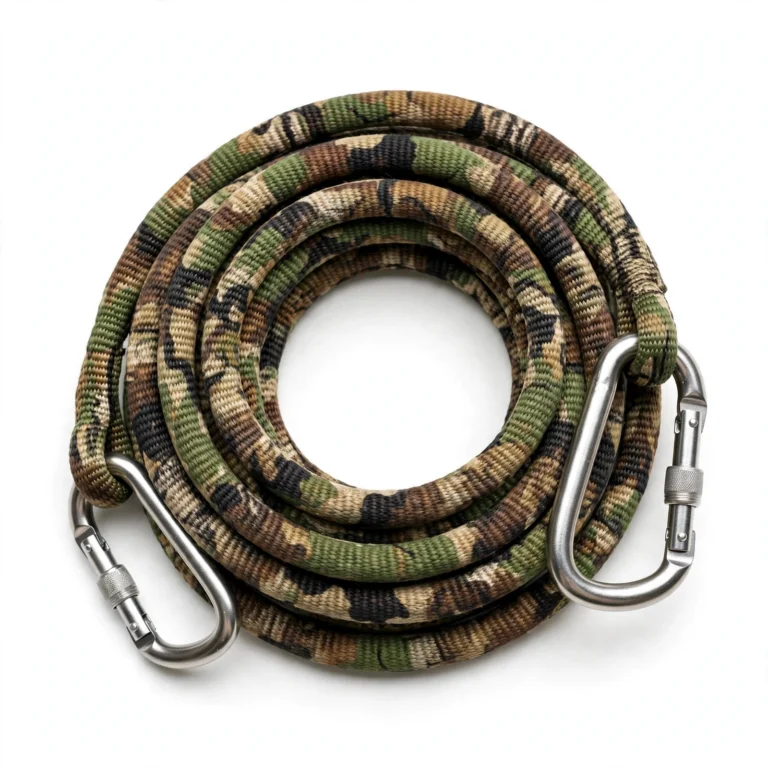
One piece of gear makes this whole routine smoother: a dedicated treestand pull-up rope with a hook or loop that stays with the stand. I keep one coiled on every stand I hunt so I am never improvising with paracord in the dark.
A crossbow sling is the companion piece for the walk in and out, but note the division of labor: the sling is for ground carry, the haul line is for everything vertical. Never substitute one for the other.
How to Sit With Your Bow: Balance, the Rail, and the Quiver
Crossbows are front-heavy. Set one on your lap and it wants to rotate nose-down, slowly and constantly. Fighting that for three hours is exhausting and sloppy, so the stand setup has to do the work instead of your forearms.
- Rest the forend on the shooting rail. This is the single best balance fix. The rail carries the front weight, your hands just steer. If your stand has no shooting rail, rest the forend on your knee or on a padded shooting stick jammed against the platform. Never lean the bow nose-down against the tree and walk away from it; the rotation will walk it right off the platform.
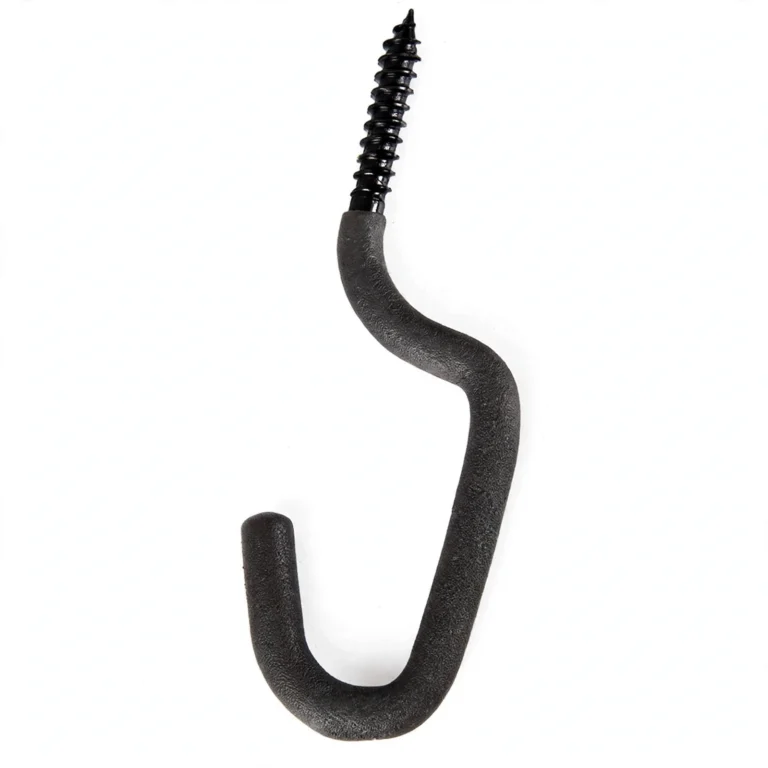
- Hang the bow when you are not holding it. A screw-in bow hanger or a strap-on hook on the tree at shoulder height keeps the bow off your lap, oriented safely, and ready to grab. Confirm the rail points outward, away from you and the tree, before you let go.
- Take the quiver OFF in the stand. A loaded quiver adds weight exactly where you do not want it, catches on branches when you swing, and rattles. Unclip it once you are settled and tie it to the stand or a tree hook where the bolts stay within arm’s reach for a second shot. Our best crossbow quiver guide covers quick-detach designs that make this a one-hand motion.
- Keep fingers and lanyards clear of the string path. When the bow is shouldered, your forehand grip stays behind the string’s travel line, and any glove lanyard or jacket drawstring gets tucked away. The string does not care what it hits on the way forward.
Why You Aim Low: The Physics of Shooting Downhill
This is the section that would have saved my buck in season one, and it is the most misunderstood fact in treestand hunting. Gravity only pulls the bolt down over the horizontal distance to the target, not the line-of-sight distance you see through the scope. From 20 feet up, a deer at 30 yards of line-of-sight distance is maybe 28 yards of horizontal distance. Your scope’s 30-yard hold assumes 30 yards of gravity drop. You get less drop than the scope expects. The bolt hits high.
The steeper the angle and the closer the deer, the bigger the effect. That is why the classic treestand miss is a clean shot over the back at what looked like an easy 25 yards. And it is why the standard advice is aim slightly low on the vitals from elevation, or equivalently, hold your 20-yard dot on a 30-yard deer when the angle is steep.
There is no formula that replaces practice, because the exact correction depends on your stand height, your bow’s speed, and the angle. What works:
- Practice from elevation before the season. Set a target at measured distances from your actual stand height and shoot it. Learn what your 20, 30, and 40-yard holds actually do from 18 feet up. A session or two of this teaches you more than any chart. If your rig is not grouping from the stand the way it groups from the bench, tune a crossbow first and sight it in second, then practice elevated.
- Range the horizontal distance, not the slope distance. An angle-compensating rangefinder computes the true horizontal range for you and is worth its weight for a treestand hunter. Our best rangefinder for crossbow guide explains angle compensation in plain terms and which models do it well. Minimum range matters too, since deer get close under a stand.
- Know your effective range from the stand and respect it. Crossbow shots happen at 20 to 40 yards in real woods. The angle math gets worse, not better, at longer distances, and a crossbow scope zeroed on flat ground needs its holds confirmed from elevation before it is a real zero. If you are a newer hunter, our best crossbow for beginners roundup pairs forgiving bows with the practice advice that makes the stand routine click.
The Straight-Down Exception: What Happens Directly Under Your Stand
Here is the honest nuance the aim-low advice needs. At very steep, near-vertical angles, the physics flips: with almost no horizontal distance, gravity barely acts on the bolt during its short flight, but the geometry of your line of sight changes too, and shots taken nearly straight down tend to hit low, not high. More importantly, the shot itself becomes a problem: the vital zone collapses to a tiny target, the spine sits directly over the vitals, and the margin between a clean kill and a gut shot shrinks to inches.
My rule, and the rule I teach: do not take the straight-down shot. Let the deer walk past the tree to a shootable angle, even if it costs you the encounter. A crossbow’s effective range and your angle practice are built for broadside and quartering shots, not for dropping a bolt down a chimney.
Stand height factors in here. Fifteen to 22 feet is the sweet spot most hunter-education courses teach: high enough that your scent cone passes over deer and your movement is harder to catch, low enough that shot angles stay workable. Higher than that and every shot gets steeper, the straight-down dead zone under you gets bigger, and the angle correction gets harder to judge.
Scent, Cover, and Noise: You Are Closer Than a Rifle Hunter
A crossbow’s realistic hunting range is under 40 yards, closer than a rifle hunter ever sits. That changes the cover game in three ways.
Wind matters more. At 25 yards, a deer will smell you if the wind is wrong, stand or no stand. Set your stand downwind of the trail, always, and treat a marginal wind as a reason to hunt a different stand that day.
Noise discipline is worst at dawn. The discharge of a modern crossbow is loud, and there is no silencer for it. That is fine for the shot itself, but every other noise is on you: the cocking clicks, the quiver rattle, the bolt clinking, boots on the platform. Walk your stand before the season and hunt down every rattle the way I described in the noise audit above.
Trim lanes for the crossbow, not the rifle. The arm’s-length twig rule: if you can reach a branch from your shooting position, remove it, because the bow’s limbs sweep wider than your hands do. And trim for the uncocked swing, not just the lane in front of you. A twig caught in the string path at the shot is one of the few things that can make a crossbow genuinely dangerous to the shooter.
Your bolts deserve the same pre-season honesty. Practice with the exact crossbow bolts and crossbow broadheads you will hunt with, from elevation, because point of impact shifts between field points and broadheads at crossbow speeds.
Frequently Asked Questions
Should I cock my crossbow before climbing into the treestand?
Yes, cocking on the ground before you climb is the quietest and safest option. Haul the bow up cocked but unloaded, with the safety on, then load the bolt only after the bow is secured in the stand. If you must cock in the stand, a silent crank system lets you do it seated with minimal movement.
Can I leave my crossbow cocked all day in the stand?
For a typical morning or evening sit of a few hours, yes, that is standard practice. But constant full-draw tension wears strings, cables, and limbs faster, so never leave a bow cocked overnight or between hunts. Uncock it at the end of every day using one of the safe methods in our how to uncock a crossbow guide.
How high should my treestand be for crossbow hunting?
Fifteen to 22 feet is the proven range. That height puts your scent cone over approaching deer and keeps your movement hard to spot, while keeping shot angles workable. Go much higher and the angles get steep fast: your straight-down dead zone grows and the aim-low correction gets harder to judge.
Should I take the quiver off my crossbow in the stand?
Yes. Unclip the quiver once you are settled and tie or hang it on the stand within arm’s reach. A loaded quiver makes the bow heavier on one side, catches on branches when you swing, and rattles. Keeping it on the stand also keeps follow-up bolts reachable for a second shot.
Do I need an angle-compensating rangefinder for treestand hunting?
It is one of the best upgrades a treestand crossbow hunter can buy. Gravity acts over horizontal distance only, so a deer at 30 yards of line-of-sight from 20 feet up is a shorter shot than your scope thinks. An angle-compensating rangefinder computes the true horizontal range for you, which takes the guesswork out of hold selection. See our best rangefinder for crossbow guide for how it works and which models do it well.
What do I do if a deer walks directly under my stand?
Wait. A near-vertical shot is the hardest shot in treestand hunting: the vital zone collapses, the spine sits over the vitals, and near-vertical shots tend to hit low rather than following the normal aim-low rule. Let the deer walk past the tree to a broadside or quartering angle. Passing on a bad shot is always the right call.
Can I shoot a crossbow accurately from a seated position?
Yes, and it is one of the crossbow’s biggest treestand advantages. You can shoulder, aim, and shoot seated with very little movement, which is exactly what you want when a deer is close, and the same seated control carries over to shooting from a saddle. Rest the forend on the shooting rail or your knee, keep your forehand behind the string’s travel path, and practice the seated shot from your actual stand height before the season.
What is the end-of-day routine for getting my crossbow down?
Unload first, then de-cock in the stand, then haul down. Remove the bolt, de-cock the bow, attach the haul line to the stock with the bow nose-down, and lower it all the way to the ground before you unclip your harness. Never lower a cocked bow, and never climb down with the bow on your person.
The Bottom Line
Treestand hunting with a crossbow rewards routine. The hunters who struggle up there are not struggling with the bow, they are struggling with the logistics: the noise at dawn, the balance on the lap, the angle math, the climb with their hands full. Every one of those has a procedure, and every procedure on this page is one I use myself.
Cock on the ground. Haul the bow up unloaded on a pull-up rope after your harness is clipped. Plan the stand around the bow’s post-shot width, not its cocked width. Rest the forend, hang the bow, take the quiver off and tie it to the stand. Aim slightly low on angled shots, pass on the straight-down shot, and practice all of it from elevation before the season. Do that, and the stand becomes what it should be: the quietest, most comfortable way to hunt with a crossbow.
If you are still building your setup, start with our best hunting crossbow roundup for stand-friendly picks, pair it with an angle-compensating rangefinder, and run the pre-season tune-up in our how to tune a crossbow guide so your stand practice is measuring a bow that is actually ready.
ProCrossbow is reader-supported. When you buy through links on this page, including the Amazon links for the pull-up rope and bow hanger above, we may earn an affiliate commission at no extra cost to you. See our affiliate disclosure page for details.