Best Crossbow for Elk Hunting 2026: Power for the West

Disclosure: As an Amazon Associate, ProCrossbow earns from qualifying purchases made through links in this article. Prices and specs below were checked on manufacturer websites and are accurate as of November 2026, but they can change.
Let me be straight with you: I am a whitetail hunter with eight seasons behind a crossbow, and elk country is newer ground for me. When my colleague Nick started preparing for his first elk hunt, he kept asking me which crossbow he should carry into the Rockies. That question sent me down a rabbit hole, and I came out the other side convinced that elk deserve their own buying guide. A whitetail bow and an elk bow are not the same thing, and picking the wrong one can cost you an animal.
An elk is a different class of animal than a whitetail. A mature bull can weigh 700 pounds or more, with heavy ribs, thick muscle, and a shoulder structure that will stop a light bolt cold. Shots also tend to be longer. Out west you are often shooting across meadows and drainages at 40 to 50 yards, not through a 20-yard food-plot lane. That means you need serious kinetic energy, a heavy bolt that carries that energy downrange, and a bow that is light and quiet enough to carry up a mountain all day. Here is everything I learned, and the five crossbows I would trust with an elk tag.
What an Elk Crossbow Actually Needs
Before the picks, you need to understand the numbers, because elk hunting is where they stop being trivia and start being ethics.
Kinetic energy, explained simply
Kinetic energy (KE) is the punch your bolt carries into the animal, measured in foot-pounds. The formula is simple: bolt weight in grains, times speed in feet per second squared, divided by 450,240. So a 400-grain bolt flying at 440 fps carries (400 x 440 x 440) / 450,240, which works out to about 172 foot-pounds of energy at the muzzle.
Here is the part that matters. A whitetail can be cleanly taken with roughly 27 to 40 foot-pounds of energy at the target. An elk needs about 65 foot-pounds at the target, roughly double, because of the bigger body and heavier bone. And energy bleeds off in flight: a bolt loses roughly a quarter of its muzzle energy by 50 yards. So if you want 65 foot-pounds arriving at an elk at 50 yards, you need a bow putting out well over 100 foot-pounds at the muzzle. Every bow on this list clears that bar with room to spare, and I list the manufacturer-verified KE for each one so you can compare honestly. If you want the deeper dive on hunting setups, my general guide to the best hunting crossbow covers the whitetail side of the equation.
Bolt weight: go heavy, 425+ grains
Speed gets the headlines, but weight does the killing. A heavier bolt penetrates deeper, drifts less in the wind, and makes the bow quieter at the shot. For elk, I recommend a finished bolt (shaft plus broadhead) of at least 425 grains, and 440 to 450 grains is even better. The speed numbers on every crossbow box are measured with lighter test arrows, so your real-world speed with an elk-ready bolt will run 10 to 20 fps slower than the advertised number. That is fine. A 440-grain bolt at 420 fps hits harder and penetrates better than a 350-grain bolt at 460 fps. See my picks for the best crossbow bolts for specific heavy-bolt options.
Broadheads: fixed blades for heavy bone
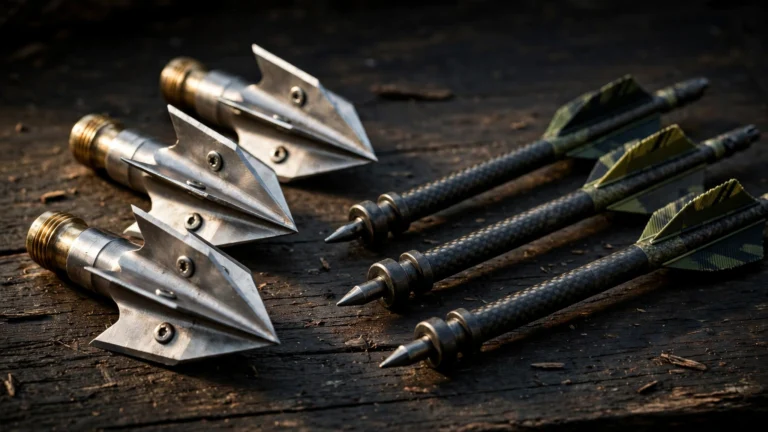
On elk, I favor fixed-blade broadheads. Mechanicals can work on deer, but an elk shoulder is a different proposition, and a fixed blade has no moving parts to fail when it meets heavy bone. Pair a 125-grain fixed blade with a heavy shaft and you get a finished bolt with serious front-of-center weight that drives deep. Full breakdown in my best crossbow broadheads guide.
Quiet, packable, and de-cockable
Western hunting is mostly spot-and-stalk or still-hunting through timber, not sitting in a box blind. That changes the bow requirements. Weight matters when you are climbing at 9,000 feet, so a 6.75-pound bow beats an 8.5-pound bow at the end of a long day. A narrow cocked width helps you thread through lodgepole pines. Quiet cocking matters when a herd is bedded 80 yards away. And safe de-cocking matters because you will be cocking and de-cocking that bow many times over a week-long hunt, and firing a bolt into the dirt every evening to unload is a bad habit. I give real weight to bows with built-in silent cocking and safe de-cocking systems. My crossbow safety guide covers de-cocking practice in detail.
The 5 Best Crossbows for Elk Hunting at a Glance
| Crossbow | Speed | Kinetic Energy | Weight | Price | Best For |
|---|---|---|---|---|---|
| TenPoint TX Ultra 29.5 | 460 fps | 193 ft-lbs | 8 lbs | ~$2,300 | Best overall |
| Ravin R29X | 450 fps | 180 ft-lbs | 6.75 lbs | ~$2,350 | Lightest power for the mountains |
| Barnett Hyper Raptor BCX | 425 fps | 152 ft-lbs | 6.9 lbs | ~$1,200 | Best value |
| Excalibur Hybrid X | 435 fps | Not published | 8.3 lbs | ~$2,200 | Backcountry reliability |
| Ravin R10X Pro | 420 fps | 156 ft-lbs | 7.95 lbs | ~$1,850 | Best mid-range fit |
Best Overall: TenPoint TX Ultra 29.5
Speed: 460 fps advertised | Price: ~$2,300 | Weight: 8 lbs
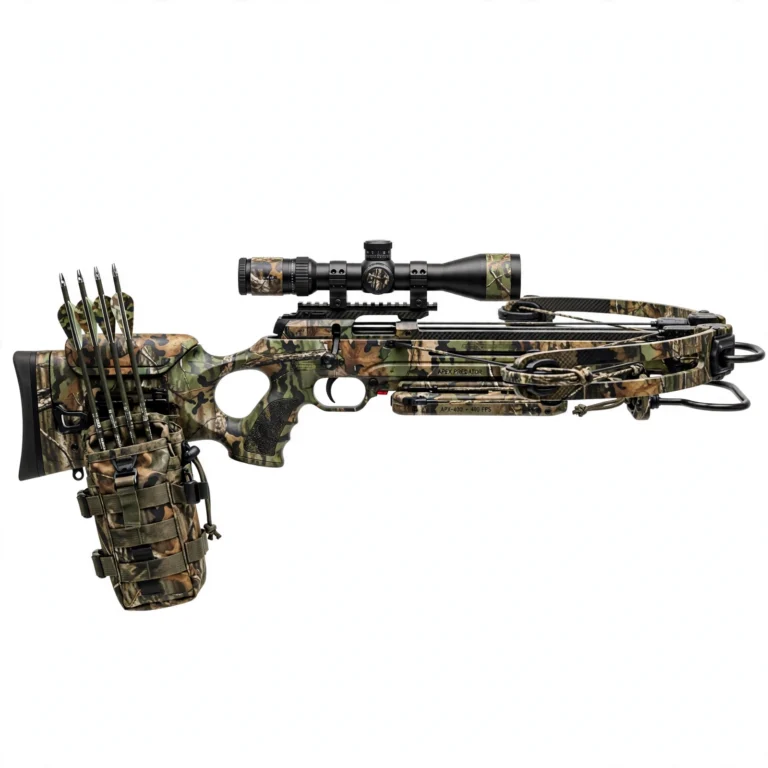
Speed: 460 fps (410-grain arrow) / 440 fps (440-grain arrow) | KE: 193 ft-lbs / 189 ft-lbs | Weight: 8 lbs | Length: 29.5 in | Width: 6.5 in cocked | Cocking: ACUslide MAXX (silent cocking and safe de-cocking) | Price: ~$2,300
This is the bow I would hand Nick for his elk hunt if budget were no object. TenPoint lists the TX Ultra 29.5 at 460 fps with a 410-grain arrow, and here is the detail most roundups skip: with the included 440-grain ACU-X arrows, it still delivers 440 fps and 189 foot-pounds of energy. That is the number that matters for elk, because you will be shooting heavy bolts. Independent range testing has clocked 443 fps with a 440-grain arrow, so the advertised figures hold up.
Why it wins for elk: the energy margin. At 189 foot-pounds at the muzzle, you still have roughly 140 foot-pounds arriving at 50 yards, more than double what an elk requires. The Twin-Riser design keeps it just 6.5 inches wide when cocked, which is genuinely narrow for threading through timber, and TenPoint claims 3-inch groups at 100 yards. I will never take a 100-yard shot at an elk, but accuracy at that distance means total confidence at 50. The ACUslide MAXX gives you silent cocking and, just as important for a week in the mountains, safe de-cocking without firing a shot. The TriggerTech trigger breaks clean at 3 pounds.
Pros
- Highest verified kinetic energy in this roundup (193 ft-lbs), the biggest elk margin
- Silent cocking and safe de-cocking built in, ideal for multi-day western hunts
- Compact 29.5-inch length and 6.5-inch cocked width for timber hunting
- Comes ready to hunt: scope, arrows, quiver, and string stops included
Cons
- Premium price, the most expensive pick here
- At 8 pounds it is not the lightest mountain bow
- 350-pound draw weight means you are fully dependent on the crank system, no hand-cocking option
Who it is for: the hunter who wants the maximum ethical margin on a big bull and hunts where shots can stretch to 50 yards across open country.
Best Lightweight: Ravin R29X
Speed: 450 fps advertised | Price: ~$2,350 | Weight: 6.75 lbs
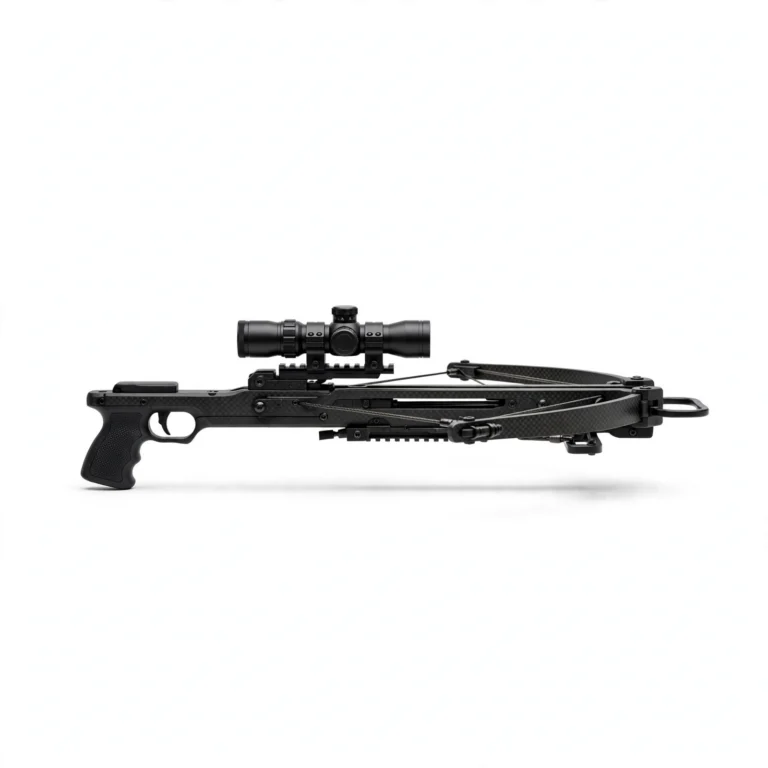
Speed: 450 fps | KE: 180 ft-lbs | Weight: 6.75 lbs | Length: 29 in | Cocking: Integrated silent cocking | Price: ~$2,350
If your elk hunt involves serious boot leather, the R29X deserves a hard look. At 6.75 pounds it is the lightest bow in this roundup by a clear margin, and it still throws 450 fps with 180 foot-pounds of energy. That combination, light carry weight plus heavy hitting power, is exactly what spot-and-stalk elk hunting demands. The bullpup-style layout keeps it to 29 inches overall, and the HeliCoil cam system is known for rifle-like accuracy, which matters when the only shot you get all week is at 47 yards with your heart pounding.
The integrated silent cocking system is a real asset around elk. You can cock quietly at the truck in the dark, and the 12-pound cocking effort through the crank is easy on the shoulders over a long week. The main tradeoff is the price, which sits in premium territory, and Ravin bows are precision instruments that reward proper maintenance, so budget for string and cable service on schedule.
Pros
- Lightest bow here at 6.75 lbs, a genuine advantage on mountain hunts
- 450 fps and 180 ft-lbs of KE, second-highest energy in the roundup
- Compact 29-inch bullpup design, easy to maneuver in timber
- Integrated silent cocking with light 12-lb crank effort
Cons
- Premium pricing
- Compact bullpup ergonomics feel different from a traditional stock, try before you buy
- Needs disciplined string and cable maintenance
Who it is for: the mobile hunter covering miles of elk country on foot who refuses to give up power to save weight.
Best Value: Barnett Hyper Raptor BCX
Speed: 425 fps advertised | Price: ~$1,200 | Weight: 6.9 lbs
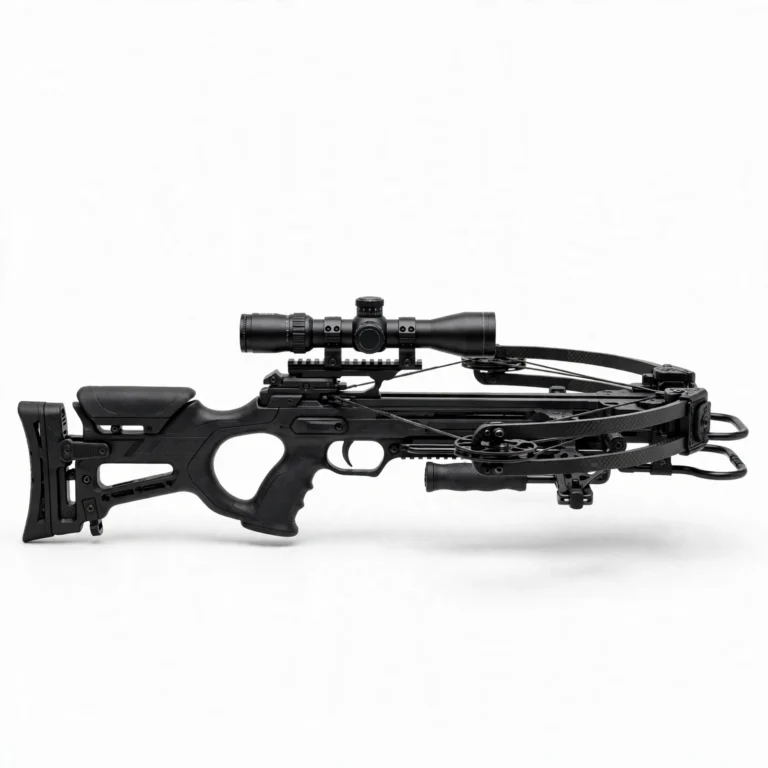
Speed: 425 fps | KE: 152 ft-lbs | Weight: 6.9 lbs | Axle to axle: 7.25 in cocked | Cocking: Integrated crank with de-cocking | Price: ~$1,200
This is the pick that surprised me most during research. The Hyper Raptor BCX delivers 425 fps and 152 foot-pounds of energy, comfortably above the elk threshold, at roughly a third of the price of the premium bows. It weighs just 6.9 pounds, making it the second-lightest bow here, and it ships with Barnett’s small-diameter HyperFlite arrows, which penetrate deeper than standard-diameter shafts thanks to higher front-of-center weight. That is a meaningful design choice for elk, not a marketing line.
The included 2-7x36mm illuminated scope is a genuine step up from the basic 4×32 scopes on most budget packages, and the TriggerTech frictionless trigger is a $200-grade component Barnett includes standard. The HALO riser system keeps the shot cycle smooth and quiet. The tradeoff at this price is refinement: fit and finish are not at the TenPoint or Ravin level, and you should plan to upgrade the factory arrows to heavier shafts for elk (see the bolt section below). But for the money, the energy numbers do not lie.
Pros
- Outstanding price-to-power ratio: 425 fps and 152 ft-lbs for ~$1,200
- Light 6.9-lb frame and narrow 7.25-inch cocked width
- HyperFlite small-diameter arrows included, built for penetration
- TriggerTech trigger and quality illuminated scope in the package
Cons
- Fit and finish a step below the premium brands
- Factory arrows are good but you will want heavier bolts for elk, an extra purchase
- Louder shot cycle than the premium bows
Who it is for: the hunter who wants legitimate elk-capable energy without spending two grand, and does not mind upgrading bolts.
Best Backcountry Reliability: Excalibur Hybrid X
Speed: 435 fps advertised | Price: ~$2,200 | Weight: 8.3 lbs
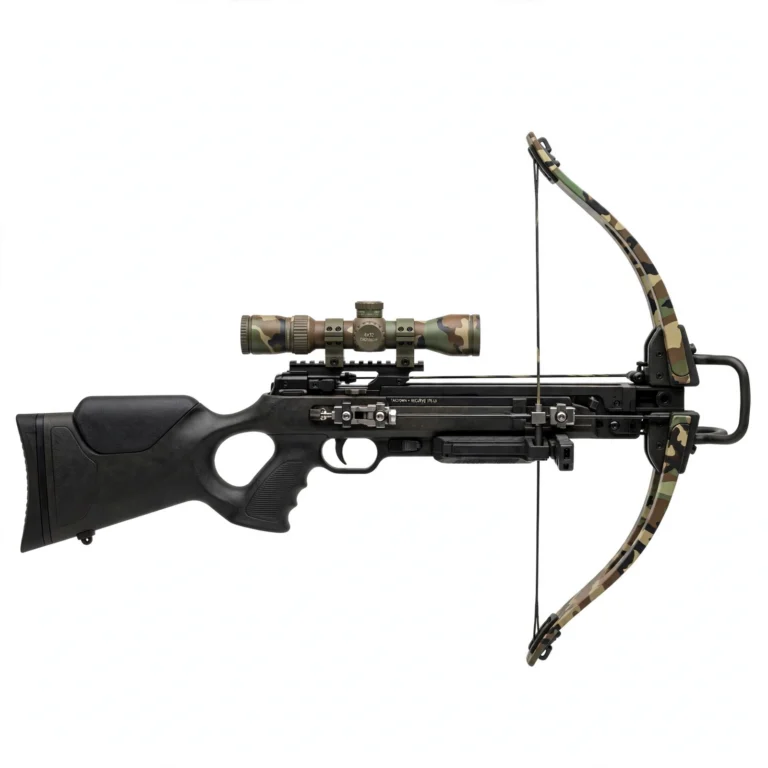
Speed: 435 fps | KE: Not published by manufacturer | Weight: 8.3 lbs bare / 10.3 lbs with accessories | Length: 29.6 in | Width: 10.8 in tip-to-tip cocked | Cocking: ChargerX integrated crank, 14-lb effort | Price: from ~$2,199.99
The Hybrid X is Excalibur’s newest platform, and it is the interesting outsider in this roundup. It pairs recurve limbs with shielded cams in a reverse-draw layout to hit 435 fps, the fastest Excalibur has ever built, while keeping the brand’s signature virtue: you can service it yourself in the field. On a backcountry elk hunt, days from the nearest pro shop, that matters more than most people realize. A broken string on a compound crossbow can end your hunt. On this bow, it is a field repair.
The ChargerX integrated crank cocks and de-cocks with just 14 pounds of effort, and the 29.6-inch length keeps it handy. The honest caveats: Excalibur does not publish kinetic energy figures, so I cannot give you a verified number the way I can for the others. At 435 fps with a heavy bolt, the physics put it comfortably in elk territory, but I am not going to invent a number. It is also the heaviest bow here at over 10 pounds fully accessorized, and the 10.8-inch cocked width is wider than the compounds. This is the bow you pick for reliability and self-sufficiency, not for ultralight packing.
Pros
- Field-serviceable design, you can change a string in camp
- 435 fps from a recurve-based platform, fastest Excalibur ever
- ChargerX crank with easy 14-lb effort and safe de-cocking
- Simple, rugged construction with fewer failure points
Cons
- Heaviest pick here once accessorized
- Wider cocked profile than the compound bows
- No published KE figure to compare directly
Who it is for: the backcountry hunter who values field repairability above all else and hunts far from help.
Best Mid-Range Fit: Ravin R10X Pro
Speed: 420 fps advertised | Price: ~$1,850 | Weight: 7.95 lbs
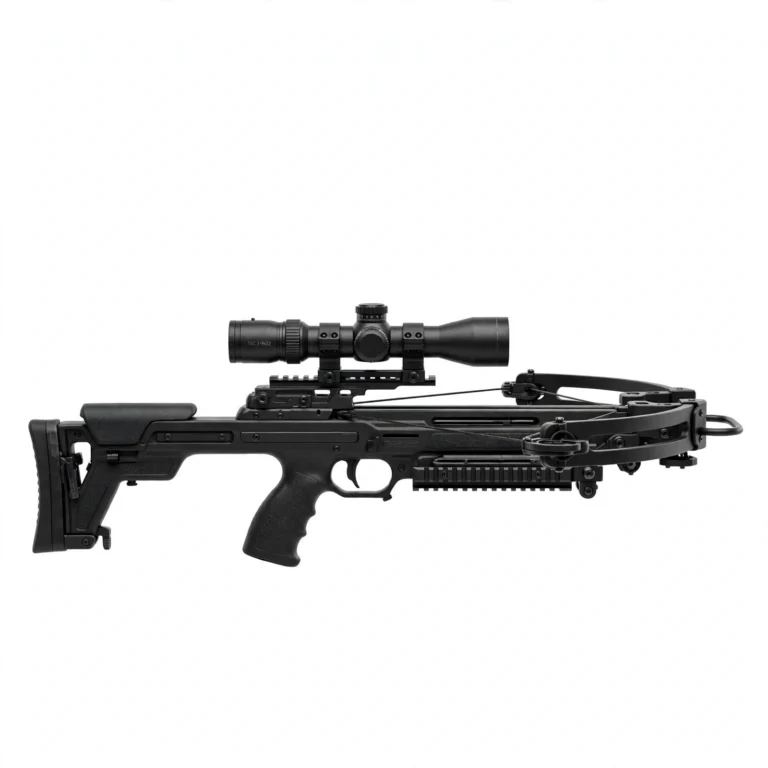
Speed: 420 fps | KE: 156 ft-lbs | Weight: 7.95 lbs | Length: 32.5 in | Cocking: Silent cocking, 12-lb effort | Price: ~$1,850
The R10X Pro sits in the sweet spot between the budget Barnett and the premium flagships. At 420 fps with 156 foot-pounds of energy, it clears the elk bar with a solid margin, and it brings Ravin’s accuracy pedigree at a price $500 below the R29X. What sets it apart for elk hunting specifically is the adjustable stock: you can tune length of pull and cheek weld to fit you in heavy late-season clothing, which is exactly what you will be wearing on a September or October elk hunt. A bow that fits poorly in a puffy jacket is a bow you will shoot poorly.
Silent cocking comes standard, the full-length scope rail adds stability, and the Frictionless Flight System reduces string wear over a long season. At 7.95 pounds and 32.5 inches it is neither the lightest nor the most compact, so mountain hunters counting ounces may prefer the R29X. But for the hunter who wants premium accuracy and adjustability without the flagship price, this is the value play in Ravin’s line.
Pros
- Adjustable stock for proper fit in heavy hunting clothing
- 156 ft-lbs of KE, a comfortable margin above elk requirements
- Silent cocking and full-length rail for stability
- Strong accuracy reputation at a mid-range price
Cons
- Heavier and longer than the R29X
- 420 fps is the slowest in this roundup, though still plenty for elk
- Premium accessories and strings add to long-term cost
Who it is for: the hunter who wants Ravin accuracy and a truly adjustable fit at a saner price than the flagships.
Pairing Your Bow With the Right Bolt and Broadhead
The bow is only half the system. For elk, build your bolt around weight and toughness:
- Total bolt weight: 425 grains minimum, 440 to 450 grains ideal. Weigh your finished bolt on a grain scale, shaft plus insert plus broadhead, and trust the scale, not the box.
- Shaft: a stiff, heavy carbon shaft. Small-diameter shafts penetrate better and drift less in mountain wind.
- Broadhead: a 125-grain fixed blade. It adds front-of-center weight for penetration and has no blades to fail on heavy bone.
- Practice like you hunt: sight in with the exact bolt and broadhead you will hunt with, not field points. Broadheads fly differently, and elk do not give second chances. My guide on how to sight in a crossbow walks through the process step by step.
One more thing Nick and I worked through: verify your scope holds true at 40 and 50 yards with the heavy setup, since most factory scopes are calibrated for lighter arrows. If your reticle has multiple aim points, confirm each one at the range. A good crossbow scope with speed calibration makes this much easier.
Elk Crossbow FAQs
Is a crossbow legal for elk hunting?
It depends entirely on where you hunt. Some states allow crossbows during archery season, others restrict them to firearm seasons or to hunters with disabilities, and western states tend to have the tightest crossbow rules. Where crossbows are legal for elk, they are fully capable of the job. Always check your specific state’s current regulations with the state fish and game agency before planning a hunt, and never rely on a blog post for legal advice.
How much kinetic energy do I need for elk?
Plan on roughly 65 foot-pounds of energy arriving at the target. Because a bolt loses about a quarter of its energy by 50 yards, that means you want well over 100 foot-pounds at the muzzle. Every bow in this roundup produces 150 foot-pounds or more at the muzzle, which is why they all qualify.
What bolt weight should I use for elk?
A finished bolt of at least 425 grains, including the broadhead. Heavier bolts penetrate deeper, buck wind better, and quiet the bow. The advertised speed on the box is measured with a lighter test arrow, so expect your real-world speed to run 10 to 20 fps slower with an elk-ready bolt. That tradeoff is worth it.
Fixed-blade or mechanical broadheads for elk?
Fixed blade. An elk’s heavy ribs and shoulder demand a broadhead with no moving parts to fail. A 125-grain fixed blade on a heavy shaft gives you the penetration and front-of-center weight that elk require.
How far can you ethically shoot an elk with a crossbow?
Keep it to 50 yards maximum, and 40 yards is a wiser limit for most hunters. Beyond that, bolt drop, wind drift, and the animal’s reaction time to the shot sound all stack against a clean kill, no matter how fast the bow. Practice at the distances you will actually shoot.
Do I need a 400+ fps crossbow for elk?
Not strictly, but it helps. What you truly need is 65+ foot-pounds at the target with a heavy bolt. A 400 fps bow shooting a 450-grain bolt produces about 160 foot-pounds at the muzzle, which is plenty. That said, every bow I recommend here shoots 420 fps or faster, because the extra speed flattens trajectory at 40 to 50 yards, where elk shots happen.
What is the best crossbow for a first elk hunt?
For a first-timer, I would point to the Ravin R10X Pro or the Barnett Hyper Raptor BCX. Both deliver elk-capable energy without flagship pricing, and both are manageable to shoot well. Spend the savings on quality bolts, a fixed-blade broadhead, and range time. The bow matters less than the practice behind it.
Elk hunting with a crossbow is absolutely doable, but it asks more of your equipment than whitetail hunting does. Pick a bow with real energy margin, feed it a heavy bolt with a fixed-blade head, keep your shots inside 50 yards, and put in the range time. Do that, and you will walk into elk country with confidence. If you are still narrowing down the right bow overall, start with my best crossbows roundup and my guide on how to choose a crossbow, then come back here to elk-proof your setup.
As an Amazon Associate, ProCrossbow earns from qualifying purchases. Thanks for supporting the site, it keeps the reviews honest and the range time funded.