Best Crossbow Cocking Device 2026: Rope vs Crank vs Built-In Compared
Disclosure: This article contains affiliate links. If you buy through them, we may earn a commission at no extra cost to you. It helps keep our reviews independent and honest. See our affiliate disclosure for details.
The Short Answer
Here is the decision rule I wish someone had given me when I started, because nobody states it plainly. If your crossbow draws under about 175 pounds, a rope cocker is all you need: cheap, light, and plenty strong. If your bow pulls 200 pounds or more, or your shoulders, back, or wrists complain after a long range session, buy a crank. And if you are buying a new crossbow right now, stop shopping for cocking devices separately: choose a bow with a built-in cocking system, because that one decision solves the problem forever.
I have cocked thousands of crossbows over eight seasons of deer hunting with ropes, portable cranks, and built-in systems from four brands. Below: which device fits your bow, which ones can safely let the bow down without shooting, how to keep a rope cocker from becoming a finger injury, and the field habit that has saved two of my hunts.
Rope vs Crank vs Built-In: The Decision Rule
Every cocking device falls into three families. Learn the three families and you cannot make a bad choice.
Rope cockers: the simple workhorse
A rope cocker cuts cocking effort by roughly 50 percent (advertised): on a 150-pound bow you pull about 75 pounds with both arms, a firm but manageable pull. Rope cockers weigh a few ounces, cost very little, and fit nearly any crossbow. Their weakness is physics: on a 200-pound bow you are still pulling around 100 pounds. Our guide on how to cock a crossbow covers the technique, because bad rope form is the number one cause of off-center strings and wandering points of impact.
Portable cranks: the shoulder saver
A portable crank clamps onto your bow and uses gear reduction to do the heavy pulling, typically cutting effort by 90 percent or more (advertised): a 200-pound bow feels like 12 to 20 pounds at the handle. Cranks are slower, heavier, and usually noisier than ropes. A rope makes a short zip that deer can hear in a quiet ground blind; silent-gear cranks (the Killer Instinct DSC, TenPoint ACUdraw Silent and ACUslide, Ravin Versa-Draw) eliminate pawl clicks, leaving a low whir or near silence. If you hunt from a blind or re-cock for a second shot, a silent system is a genuine advantage.
Built-in systems: buy the bow, get the solution
TenPoint’s ACUdraw and ACUslide, fitted to the discontinued Vengent S440 as well as the flagships, Ravin’s Versa-Draw, and Excalibur’s Charger X live inside the stock of the bow. Advertised effort runs from about 5 pounds (TenPoint) to 12 to 16 pounds (Ravin, Excalibur). Nothing to carry, nothing to forget at the truck, and several of them de-cock too. If you are shopping new, read our roundup of the best crossbows of 2026 and treat the built-in cocking system as one of your top three buying criteria.
Whatever you choose, learn it on the range before you trust it on a deer, and read our crossbow safety guide first. Every one of these tools holds back the full draw weight of your bow.
Quick Comparison Table
| Device | Type | Effort Reduction | De-cocks? | Fits | Price Class | Best For |
|---|---|---|---|---|---|---|
| TenPoint ACUrope | Retractable rope cocker | ~50% (advertised) | No | Most crossbows | Mid-range | Hunters who hate dangling ropes |
| Barnett Rope Cocking Device | Rope cocker | ~50% (advertised) | No | Standard-draw crossbows (exclusions apply) | Budget | Budget bows under 175 lbs |
| Killer Instinct DSC Compact Narrow LD Sled Crank | Portable sled crank | 90%+ (advertised) | Yes (let-down models) | Killer Instinct X-CAM and let-down models only | Mid-range | Silent cranking on Killer Instinct bows |
| TenPoint ACUdraw | Built-in crank (factory accessory available) | ~5 lbs effort (advertised) | No | TenPoint and Wicked Ridge bows | Premium (usually included) | Max leverage on any TenPoint |
| TenPoint ACUslide | Built-in cocking and de-cocking system | ~5 lbs effort (advertised) | Yes, silent and safe | Newer TenPoint and Wicked Ridge models | Premium (included on equipped models) | Best all-around built-in system |
| Excalibur Charger X / Charger Lite | Integrated crank / add-on crank | ~14-16 lbs effort (advertised) | Yes (Charger X) | Excalibur models (Charger Lite fits most post-2008) | Premium / Mid-range | Heavy recurve bows |
| CenterPoint AXCCRANK Power Draw | Portable crank | Up to 70% (advertised) | No | CenterPoint bows with MIL-SPEC buffer tube (exclusions apply) | Budget | CenterPoint owners on a budget |
| Ravin Versa-Draw | Fully integrated handle crank | ~12 lbs effort (advertised) | Yes | Ravin bows (built in) | Premium (included) | Ravin owners: the system you already have |
| Excalibur Charger EXT | Add-on crank | ~12 lbs effort (advertised) | Yes, safe and silent | TwinStrike, Micro, and Bulldog series; Stryker Katana | Premium | Safe de-cocking on Micro and Bulldog bows |
Best Retractable Rope Cocker: TenPoint ACUrope
Effort Reduction: 50% | Price: ~$60 | Type: Rope cocker
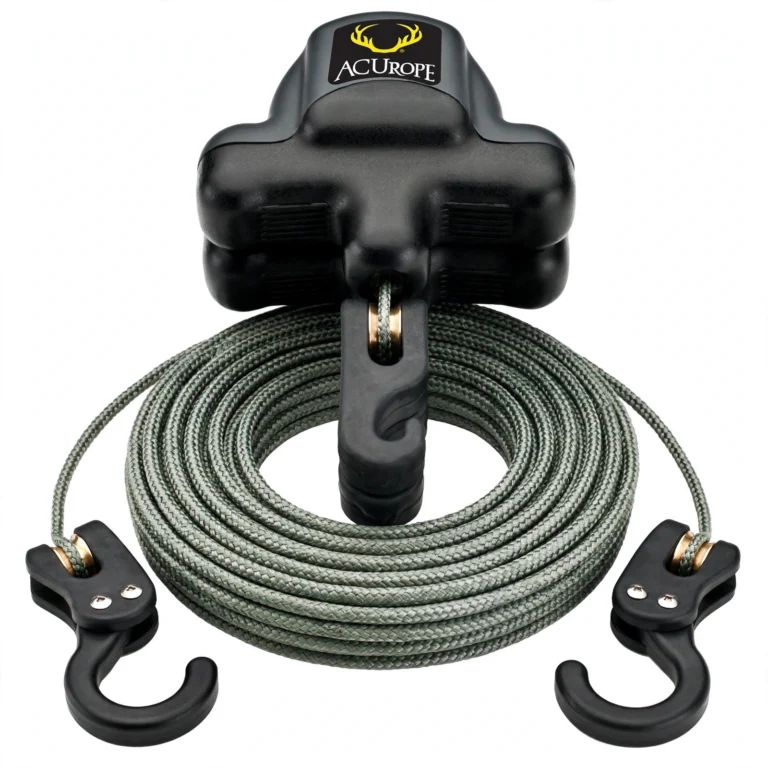
The ACUrope is the rope cocker I reach for when I hunt with a bow that has no built-in system. It cuts the pull in half like every rope cocker, then solves the one thing I hate about rope cockers: the mess. After you cock the bow, the cord winds itself back inside one of the grips, and the grips click together into a package the size of a remote control. No rope around your neck, no tangle in the pack, nothing snagging on branches.
Four seasons of carrying it, and the retraction spring has never failed. It fits most bows I have tried, including budget bows whose factory rope was fraying after one season. If your bow pulls 175 pounds or less, this is the best rope cocker money can buy. It does not de-cock, and it does not change the physics of a 200-pound bow, so pair it with the right bow.
Pros
- Cord retracts fully: no dangling, tangling, or snagging
- Universal fit on most crossbows
- Heat and abrasion resistant Spectra cord
Cons
- Still real pulling effort (50%, not 90% reduction)
- Costs several times more than a basic rope cocker
Compatibility note: Fits most crossbows sold today. Test-fit on your exact stock before season. See TenPoint crossbow reviews for the models it pairs with.
Check Price on AmazonBest Budget Rope Cocker: Barnett Rope Cocking Device
Effort Reduction: 50% | Price: ~$25 | Type: Rope cocker
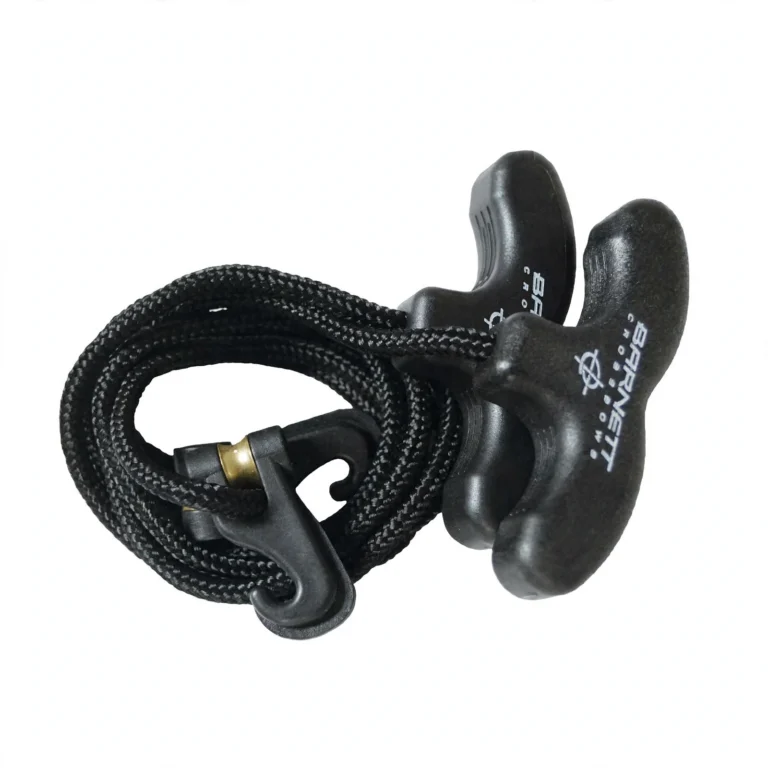
This is the rope cocker I hand to beginners, and the reason is simple math. For the price of a box of crossbow bolts you get a real 50 percent effort reduction, which turns a 150-pound draw into something a new shooter can actually manage. The rope is adjustable so it fits different heights and stock shapes, and the ridged handles do not slip in cold or sweaty hands, a small detail that matters a lot at 6 a.m. in November.
A centered string is a straight bolt, and that is the real value here beyond the effort savings. On a compatible sub-175-pound bow this cocks the string dead center every time, which is something new shooters struggle with when they try to muscle the string by hand. I have watched beginners go from scattered groups to tight ones just by switching to consistent rope cocking.
The catch is compatibility, and it is a hard stop, not a suggestion. This device does NOT work on Barnett’s reverse-draw bows or Hyper RAPTOR models, and it is built around standard-draw stock shapes. Check the current fit chart against your exact model before buying, because a rope cocker that does not fit your bow is a paperweight.
Pros
- About 50 percent effort reduction for very little money
- Adjustable rope fits different heights and stocks
- Textured non-slip handles work with gloves
- Centers the string for straighter, more consistent shots
- Light at about 0.35 lbs, easy to carry
Cons
- NOT compatible with reverse-draw or Hyper RAPTOR models
- Built for standard-draw stock shapes only
- Still real work on bows over 175 lbs
- No de-cocking function
Bottom line: The best dollars-per-value accessory a Barnett owner can buy, as long as your bow is on the fit chart. It makes cocking easier and your groups tighter, which is exactly what a beginner needs.
Check Price on AmazonBest Silent Crank: Killer Instinct DSC Compact Narrow LD Sled Crank
Effort Reduction: 90% | Price: ~$138 | Type: Crank cocker
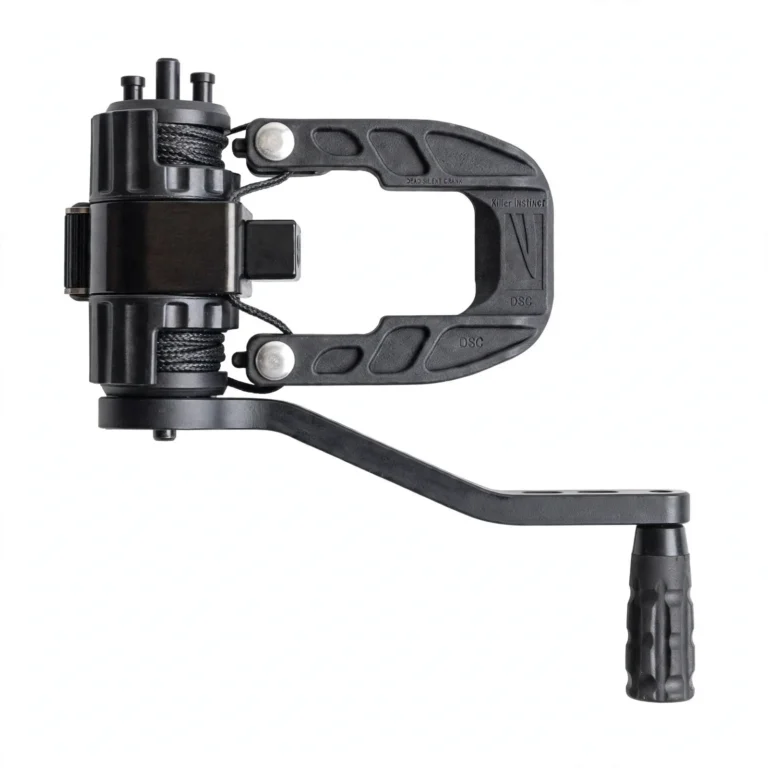
Of every portable crank in this guide, this one has most changed how I hunt. Sixteen ounces, tool-free attach in seconds, and near-silent cranking, so I can re-cock in the stand or blind without a second thought. The sled keeps the string centered, which shows up as tighter groups past 40 yards.
The letters that matter are “LD”: let-down. On compatible models with the let-down trigger box, this crank safely lowers the string without firing, so the end-of-hunt ritual becomes a quiet crank of the handle instead of a search for a safe discharge spot. Our full Killer Instinct crossbow reviews detail which models accept it.
Pros
- 16 oz aluminum: light enough to live in your pack
- Near-silent cranking for stand and blind use
- De-cocks on let-down models (LD)
Cons
- Killer Instinct bows only, zero cross-brand fit
- Model-year specific compatibility: check before buying
Compatibility note: Killer Instinct only: let-down trigger box models, all X-CAM models, Boss and Burner, and aluminum-barrel models from 2019 onward. Wide composite-barrel models before 2025, Lethal, Fiery, Bone Collector 405, Fierce 405, Hero, Swat, Ripper 415, KL series, and pre-2018 models are excluded.
Check Price on AmazonBest Built-In Crank for Sheer Cocking Power: TenPoint ACUdraw
Effort Reduction: 94% | Price: ~$300 | Type: Crank cocker
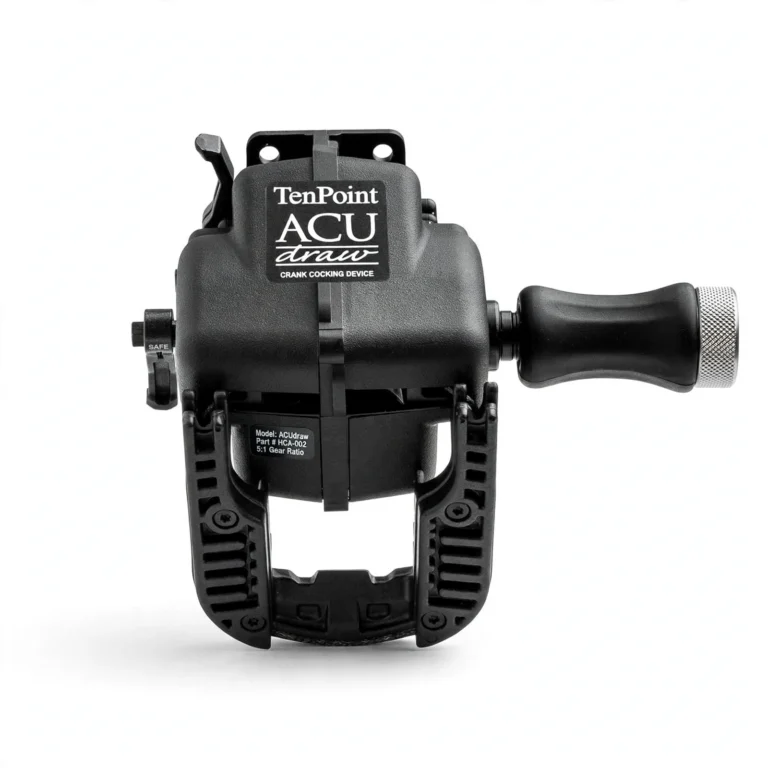
The ACUdraw made me stop worrying about draw weight entirely. Five pounds of cranking effort is door-knob force: a young shooter can do it, and a hunter with two bad shoulders can do it. My wife could not comfortably pull a 150-pound rope cocker; she cocked my TenPoint with the ACUdraw on her first try. If draw weight is the thing standing between you and crossbow hunting, this removes it completely.
Consistency is the quiet benefit. The crank draws the string identically every single time, which means your point of impact does not wander the way it can with uneven hand cocking. It can even be drill-powered at 4.2 volts or more, which sounds like a gimmick until you are cocking for the tenth time at the range and your arm is thanking you.
Two honest caveats. It cocks only, with no de-cocking, so you still discharge a practice bolt at the end of the hunt. And it is TenPoint and Wicked Ridge only, which is the price of a system this integrated. That is why its quieter sibling, the ACUslide, gets its own section in this guide.
Pros
- Reduces any draw weight to about 5 lbs of effort
- Perfectly centered string every time for consistent accuracy
- Can be drill-powered for effortless range sessions
- Built into the stock on many models, always there
- Opens crossbow hunting to youth, smaller, and injured shooters
Cons
- Cocking only, no de-cocking function
- TenPoint and Wicked Ridge bows only
- Adds cost and mechanical complexity vs a rope
- Slower than a rope cocker for quick follow-up shots
Bottom line: If you shoot a TenPoint or Wicked Ridge and struggle with draw weight, the ACUdraw is not a luxury, it is the difference between hunting and not hunting. Just remember you will still need a discharge plan at day’s end.
Check Price on AmazonBest Cocking Plus Silent De-Cocking System: TenPoint ACUslide
Effort Reduction: 95% | Price: included with bow | Type: Integrated crank system
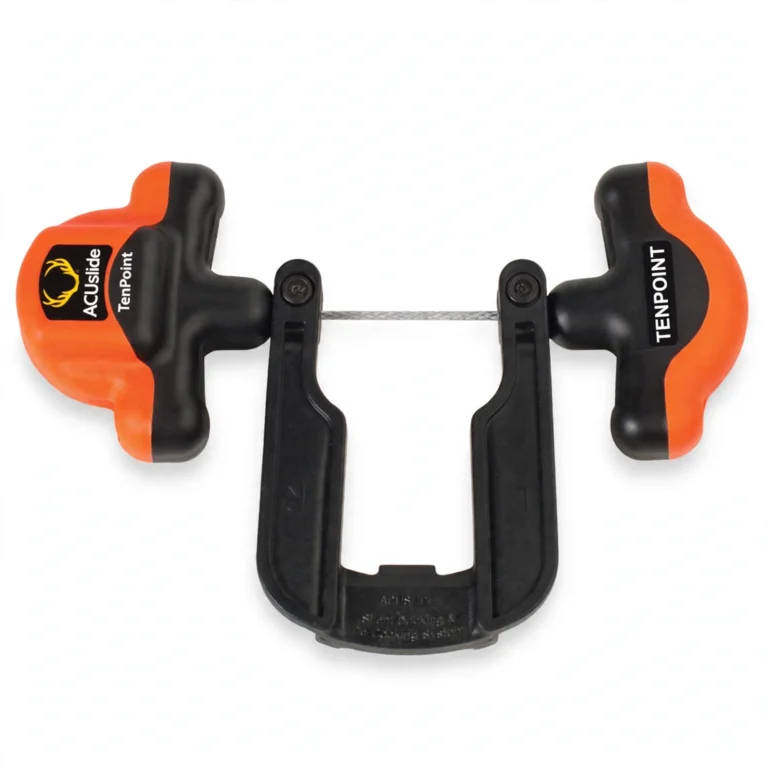
If I could keep only one cocking device in this guide, it would be the ACUslide. Everything the ACUdraw does at 5 pounds of effort, plus silent, safe, controlled de-cocking. The Auto-Brake Gear System is the key: take your hand off the handle at any point and it simply stops. No freewheeling handle, no runaway string. I have watched a buddy flinch through a de-cock on an old pawl-style system. There is no flinching with the ACUslide.
It changes the end of every hunt: no shot taken, back the handle out, lower the string quietly, and walk out with an uncocked bow. No discharge bolt, no extra noise at last light. The XTEND handle telescopes longer for more leverage and stores inside the buttstock. If you are buying a new TenPoint or Wicked Ridge, make the ACUslide a requirement, not an option.
Pros
- 5 lbs of effort plus fully silent, safe de-cocking
- Auto-Brake: release the handle mid-stroke with zero drama
- No locking pawl, so cocking is truly silent
- Heavy-duty strap built for thousands of cycles
Cons
- Only on equipped TenPoint and Wicked Ridge models
- Premium feature baked into the bow’s price
- Cannot be retrofitted onto older bows easily
Compatibility note: Factory-installed on TenPoint models with TEC-X stocks and standard on many recent TenPoint and Wicked Ridge flagships. Not a portable add-on. Confirm the exact model ships with it before buying.
Check Price on AmazonBest Integrated Recurve Crank: Excalibur Charger X and Charger Lite
Effort Reduction: 88% | Price: included with bow (Charger X) / ~$207 (Charger Lite) | Type: Integrated crank
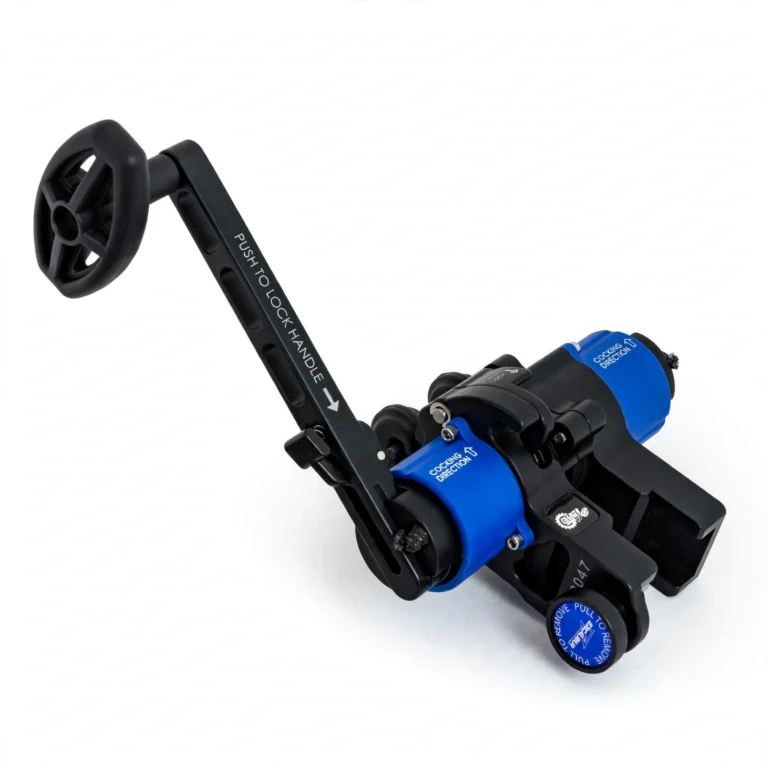
Excalibur builds recurves, and recurve limbs stack draw weight that would make a rope cocker a cruel joke. The Charger X is the answer: a crank integrated into the stock that turns a 413-pound RevX into 16 pounds of handle effort. My favorite detail is the two-way bearing: turn one way to cock, back the other to de-cock, and let go at any point without the handle freewheeling.
Own an older Excalibur without the integrated system? The Charger Lite is the add-on version: fits most Excalibur models made after 2008 and drops effort to as little as 12 pounds. It does not de-cock like the integrated Charger X, so plan your end-of-hunt routine accordingly. See our Excalibur crossbow reviews for which current models carry the integrated version.
Pros
- Tames 400-pound-class draws to 14-16 lbs of effort
- Charger X cocks and de-cocks with no freewheeling
- Charger Lite fits most Excalibur bows made after 2008
Cons
- Excalibur bows only
- Charger Lite is an add-on: noisier, and no de-cock
Compatibility note: Charger X is factory-installed on equipped models (RevX, Hybrid X, and others). Charger Lite retrofits most Excalibur models made after 2008.
Check Price on AmazonBest Crank for CenterPoint Bows: CenterPoint AXCCRANK Power Draw
Effort Reduction: 95% | Price: ~$85 | Type: Crank cocker
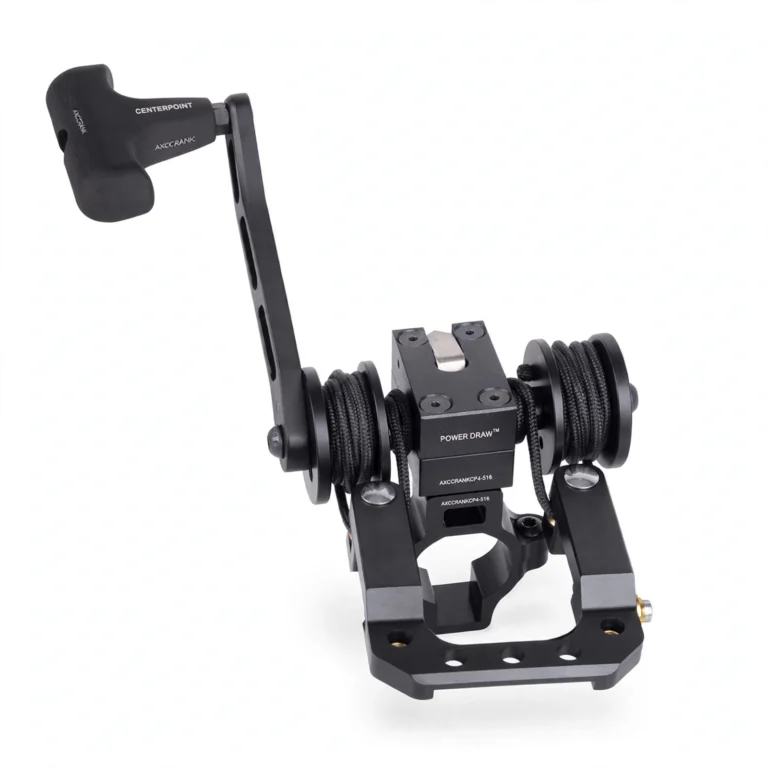
CenterPoint makes some of the best budget bows in the business, and the Power Draw is the crank built for them. It mounts to the MIL-SPEC buffer tube, attaches and removes in the field without tools, and the handle sets for either hand. A 70 percent reduction turns a 185-pound Sniper into roughly a 55-pound pull at the handle. Paired with a best crossbow for the money setup, this is the cheapest honest path to crank-level comfort.
CenterPoint does compatibility right: an explicit exclusion list. The Power Draw is NOT for the C0001, C0002, C0006, C0007, C0009, and C0016, the CP400 (AXCV200TPK and AXCV200TPKSC), or the Specialist XL370 (AXCSP185CK and AXCSP185BK). It does not de-cock, so budget a discharge bolt into your end-of-hunt plan. Our CenterPoint crossbow reviews detail which budget models pair best with it.
Pros
- Up to 70% effort reduction at a budget price
- Tool-free on and off in the field
- Ambidextrous handle placement
Cons
- CenterPoint bows only, several models excluded
- Cannot de-cock the bow
Compatibility note: Fits most CenterPoint bows with a MIL-SPEC buffer tube (Amped 425, Sniper Elite 385, and others). Explicitly excluded: C0001, C0002, C0006, C0007, C0009, C0016, CP400, and Specialist XL370.
Check Price on AmazonBest Fully Integrated Handle Crank: Ravin Versa-Draw
Effort Reduction: 85% | Price: included with bow | Type: Integrated crank system
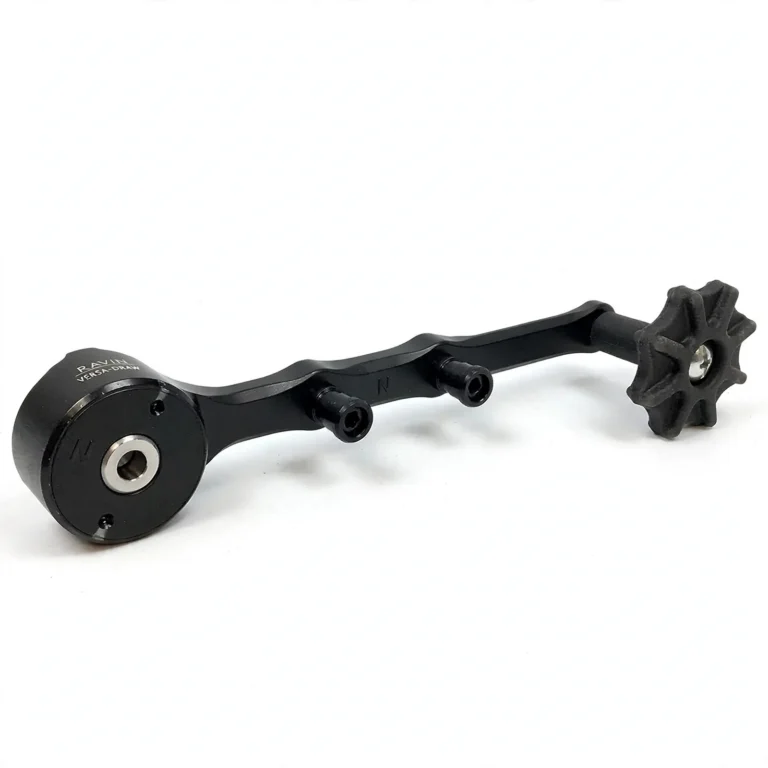
The honest truth about the Versa-Draw: you do not shop for it. It comes built into every current Ravin bow, and it is one of the main reasons Ravin owners never think about cocking devices. Twelve pounds of effort, a one-way bearing that makes the draw silent, and the ability to cock and un-cock with the same handle. It clasps the string at dead center every time, which is a big part of why Ravin bows shoot the way they do. I have covered the lineup in our Ravin crossbow reviews.
Why include it in a cocking-device roundup? Because it is the standard your portable crank is competing with. When a crank advertises 90 percent effort reduction, the Versa-Draw is what “effortless” feels like as a complete system: silent, centered, and able to let the bow down without firing.
Pros
- 12 lbs of effort, built in: nothing to carry or lose
- Silent draw via one-way bearing
- Cocks and un-cocks with one mechanism
Cons
- Ravin bows only, not a purchasable accessory
- Premium bows carry premium prices
Compatibility note: Factory-integrated on current Ravin lines (R8, R10X, R18, R26X, R29X, R5X). Not sold separately.
Check Price on AmazonBest Detachable Crank with Safe De-Cocking: Excalibur Charger EXT
Effort Reduction: ~12 lbs effort (advertised) | Price: ~$250 | Type: Add-on crank
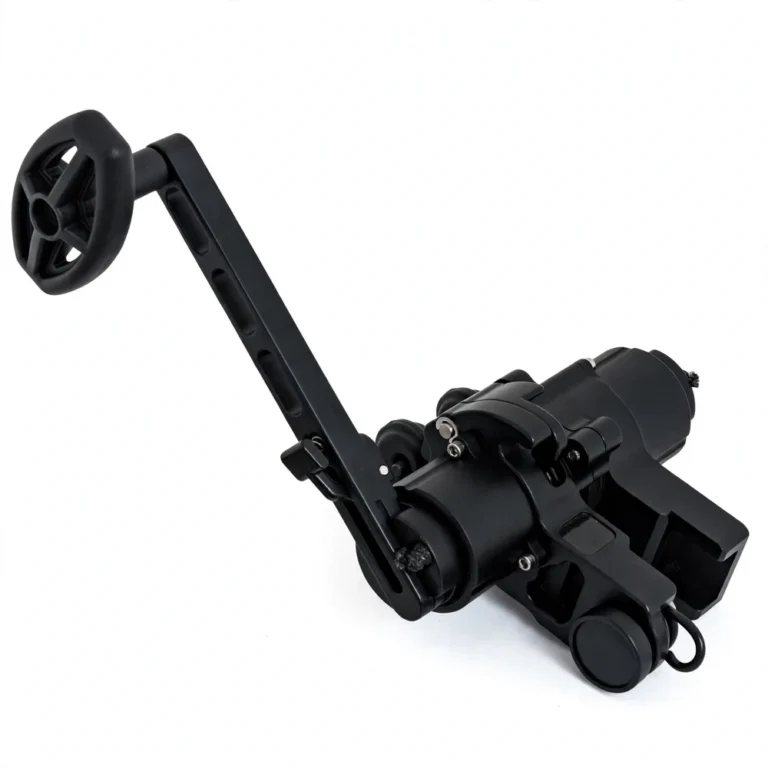
I have spent enough seasons cocking heavy recurves by hand to know what 12 pounds of effort feels like at the end of a long day in the stand. The Charger EXT is the crank I hand to friends who own a Micro or a Bulldog and are tired of the rope. It cuts the draw down to about 12 pounds, it keeps the string centered so the bow shoots the same every time, and it lets you de-cock in silence when the hunt ends without a shot. That last part is the reason it exists. A rope cannot let a bow down. The Charger Lite cannot either. The EXT can, and it does it quietly, with a Fail-Safe Strap backing up the mechanism so nothing slips.
What I like most is that it comes off. The EXT detaches in seconds, so the bow stays light and clean in the stand and the crank rides in a pocket or pack until you need it. The handle is ambidextrous and removable, the cable retracts on a spring so nothing dangles, and the whole unit is built from high-strength aluminum. It feels like a tool made to be used hard and put away wet, not a gadget. It fits the TwinStrike, Micro, and Bulldog lines and the Stryker Katana, and some older Excaliburs can be retrofitted, though you should check with Excalibur first, because the rope runs short on longer bows like the Matrix 405 and 380.
The honest trade-offs: it costs real money, about $250 on Amazon against a $289.99 list price, and the Charger Lite does the basic cocking job for about $50 less. If you never need to de-cock, the Lite is the better buy. The EXT is also an add-on, so it adds a step to your routine and one more thing to keep track of in the dark, where a built-in system like the Charger X or the Versa-Draw simply disappears into the stock. And it only fits Excalibur bows, so it is useless the day you switch brands. For a Micro or Bulldog owner who hunts cold mornings and ends most days without a shot, though, the quiet de-cock alone is worth the money, because firing a bolt into the ground just to unload the bow is a worse habit than carrying one more accessory.
Pros
- Draw effort down to about 12 lbs, string stays centered
- Safe, silent de-cocking with the Fail-Safe Strap, no shot needed to unload
- Detaches in seconds; ambidextrous removable handle; spring-loaded retractable cable
- Fits TwinStrike, Micro, and Bulldog series and the Stryker Katana
- High-strength aluminum build
Cons
- About $250, roughly $50 more than the Charger Lite
- Excalibur bows only
- Add-on means one more piece to carry and fit, unlike built-in systems
- Rope runs short on longer older bows like the Matrix 405 and 380
Compatibility note: Fits TwinStrike, Micro, and Bulldog series crossbows and the Stryker Katana. Some previous models can be retrofitted, but check with Excalibur first: the rope is short on longer models like the Matrix 405 and 380.
Bottom line: If you hunt with a Micro or a Bulldog and you want to let the bow down in silence at the end of the day, the EXT is the crank to buy. If you only need help cocking, save the money and get the Charger Lite.
Check Price on AmazonWill It Fit My Bow? (Compatibility)
The most common cocking-device mistake is buying the wrong device for your bow. The full matrix is in the table above; here is what else to know.
Two rules of thumb. Rope cockers are the only near-universal option: every crank is brand specific, because cranks mate with stock and trigger box geometry. And model years matter more than model names, so check the current fit chart against your exact model and year. While you are in fit-check mode, give your setup a once-over with our crossbow maintenance guide.
Rope Care: Inspect Before Every Season
A rope cocker is the simplest tool in archery and the one most likely to hurt you when neglected. That cord holds half your bow’s draw weight through your fingers. On a 200-pound bow, a frayed rope is a finger injury waiting to happen: if the cord lets go mid-pull, your hand travels straight into the string and rail.
My routine: before every season, run the full cord through my fingers and look at every inch. Check the hooks for cracks or bent tips, and check where the cord meets the handles, because fraying starts there. One frayed strand means replacement, full stop. As preventive maintenance I replace cords every one to two seasons, sooner if the bow lives in a hot truck. Never oil a rope cocker cord: oil attracts grit, and grit saws through fibers from the inside.
De-cocking: Which Devices Can Let Down?
Every hunt ends one of two ways: you shoot, or you walk out with a cocked bow. De-cocking capability deserves its own buying criterion. The scorecard for this guide:
- TenPoint ACUslide: yes. Silent, safe, controlled de-cocking with the Auto-Brake system.
- Ravin Versa-Draw: yes. Cocks and un-cocks the bow.
- Excalibur Charger X: yes. Two-way bearing, no freewheeling.
- Killer Instinct DSC LD sled crank: yes, on let-down models.
- TenPoint ACUdraw: no. Cocking only.
- ACUrope, Barnett rope cocker, CenterPoint AXCCRANK: no. Cocking only.
If your device cannot de-cock, discharge a practice bolt into a target at the end of the hunt. Never dry-fire to let a bow down, and never hand-let-down a rope-cocked bow. Read our full how to uncock a crossbow guide and our crossbow safety guide before building your end-of-hunt routine.
Frequently Asked Questions
Should I get a rope cocker or a crank for my crossbow?
Rope cocker under about 175 pounds of draw weight: cheap, light, and all you need. Crank at 200 pounds or more, or whenever your shoulders, back, or wrists tell you to. Buying new? Choose a bow with a built-in cocking system and skip the decision entirely.
Will a rope cocker fit any crossbow?
Quality rope cockers fit most standard-draw crossbows. Exceptions: reverse-draw bows and some brand-specific models (Barnett excludes its reverse-draw bows and Hyper RAPTOR models). Cranks are the opposite: every one in this guide is brand specific, so check the fit chart against your exact model and year.
Can I de-cock my crossbow with a crank cocking device?
Only with devices designed for it: the TenPoint ACUslide, Ravin Versa-Draw, Excalibur Charger X, and Killer Instinct DSC LD sled crank. Rope cockers, the ACUdraw, and most portable cranks are cocking-only. Never hand-let-down a rope-cocked bow: discharge a practice bolt into a target instead.
How often should I replace my rope cocker?
Inspect the full cord before every season. Replace immediately at the first sign of fraying, stiffness, or flat spots, and as preventive maintenance every one to two seasons.
Which cocking device is best for a beginner?
Start with a rope cocker on a crossbow for beginners. It teaches correct cocking form, costs little, and beginner bows pull light enough that a rope is plenty. After learning to cock, read how to sight in a crossbow, since consistent cocking is what keeps the zero stable.
Do crank cocking devices hurt accuracy?
The opposite, usually. A crank or sled draws the string at dead center with identical force every time, the biggest factor in shot-to-shot consistency. An off-center rope pull is the usual suspect when groups open up for no reason. Switching from sloppy rope technique to a crank often tightens groups.
Can I leave a crank on the bow while hunting?
Built-in systems (ACUdraw, ACUslide, Versa-Draw, Charger X) stay in the bow by design. Portable cranks like the DSC sled crank attach and detach quickly, and many hunters remove them after cocking to keep the bow light, then reattach for the next shot. Decide at the range, not at the stand.
How much easier is a crank than a rope cocker?
A rope cocker cuts effort by about half; a crank cuts it by 90 percent or more (both figures advertised). On a 200-pound bow, that is roughly 100 pounds versus 12 to 16 pounds. The ACUdraw and ACUslide advertise about 5 pounds of effort, the lightest cocking in the industry.
The Bottom Line
Nobody else writes a cocking device roundup, which is strange, because the device you cock your bow with decides whether you enjoy the bow. My final word:
On a sub-175-pound bow, the TenPoint ACUrope is the rope cocker I actually carry: the retracting cord ends the tangled mess. On a budget, the Barnett rope cocker does the same job for a fraction of the price, fit exclusions checked.
At 200 pounds or more, or when your body is done pulling rope, the Killer Instinct DSC Compact Narrow LD sled crank is the best portable crank I have used: silent, 16 ounces, and it de-cocks on let-down models. CenterPoint owners get the AXCCRANK Power Draw as the budget crank with a refreshingly honest fit chart.
Buying new, buy the system, not the accessory. The TenPoint ACUslide is the best cocking device in crossbows: 5 pounds of effort, silent cocking, and the only truly safe controlled de-cocking I have trusted at full draw. The Ravin Versa-Draw and Excalibur Charger X are the same idea for their own brands, and both are excellent.
Keep a spare rope cocker in your pack. They weigh nothing, cost nothing, and have saved two of my hunts when a primary device failed or got left at the truck. The device you cannot lose is the one that does you no good. Pack the spare.
Affiliate note: The product links above are affiliate links, which means we may earn a commission if you buy through them, at no extra cost to you. We only recommend gear we would hunt with ourselves, and commissions keep this site’s reviews independent. Full details in our affiliate disclosure.