Scorpyd Crossbow Reviews 2026: Deathstalker Lineup Tested
Affiliate Disclosure: ProCrossbow.com is reader-supported. When you buy through links on this page, we may earn a commission at no extra cost to you. Our rankings can’t be bought. See how we research and test.
Scorpyd is the speed shop of the crossbow world. The company builds reverse-draw crossbows in Tiffin, Iowa, holds patents on the design, and has a single-minded philosophy: get more speed out of every inch of power stroke. I have shot Scorpyd bows for years and respect what they do. But this brand also carries real baggage you will not find on the spec sheet, including a recalled flagship and a discontinued speed king. This is my honest, model-by-model review of the current Scorpyd lineup, with speeds normalized to a 400-grain arrow so you can compare apples to apples.
The Short Answer
Scorpyd Crossbows permanently ceased all business operations effective May 18, 2026, so these bows are no longer made or supported by the brand. The prices below are current street prices, since the brand no longer lists prices.
If you want one sentence: Scorpyd makes some of the fastest, hardest-hitting crossbows money can buy, with premium prices to match. The reverse-draw layout (limbs pointing backward toward the shooter) gives every model a longer power stroke than a conventional bow of the same length, which means more speed at less peak draw weight. The trade is money and upkeep: you are paying $1,500 to $2,000-plus for a bow that demands disciplined arrow selection and string care. Here is how the current lineup shakes out.
- Best overall: Tremor XP. 460 fps advertised with a 400-grain arrow, under 200 lbs of draw weight. The fastest Scorpyd you can legally hunt with in states that cap draw weight.
- Best lightweight hunter: Deathstalker LT. 6.0 lbs, roughly 399 fps on a 400-grain arrow, the easiest Scorpyd to carry all day.
- Best value in the line: Deathstalker 380. About 368 fps on a 400-grain arrow, 130-lb draw, the cheapest way into a real Scorpyd.
- Best for smaller-framed hunters: Deathstalker 360. About 349 fps, only 115-lb draw, genuinely easy to cock.
- Skip: Nemesis (recalled) and Aculeus (discontinued). Details below, because you will still see both for sale.
One housekeeping rule for this whole article: Scorpyd advertises most of its Deathstalker speeds with 370 or 375-grain arrows. I normalized every figure below to a 400-grain arrow using kinetic energy equivalence, so the numbers are comparable. Advertised speeds are labeled as advertised. For the broader premium-speed picture, compare these against our best crossbows guide and the best hunting crossbow guide.
About the Nemesis Recall and the Aculeus: What You Need to Know First
The Nemesis was Scorpyd’s 480 fps flagship. It was recalled by Scorpyd over premature serving wear, and the model is discontinued. Serving failure at those energy levels affects the string, the cables, and ultimately safety. Scorpyd pulled it, and that was the right call. You may still see used Nemesis bows listed online. My advice is simple: do not buy one.
The Aculeus 460 (460 fps) is discontinued too. Scorpyd’s European importer lists it as a “model archive” bow, no longer manufactured. You will find lingering new-old-stock at dealers, sometimes discounted. That is the only form I would consider: a genuinely new bow with the limited-lifetime warranty intact, registered to you as the original purchaser. Avoid used Aculeus bows with no warranty coverage, and avoid paying flagship money for one. The Tremor XP below is its spiritual successor and the one Scorpyd actually stands behind today.
Several ranking roundups still present the Nemesis and Aculeus as current models, and some treat the old Orion Extreme line as if it is still in production. It is not. The current Scorpyd lineup is the Tremor XP plus the four Deathstalker models, and that is what this review covers.
How Scorpyd Reverse-Draw Works, and Why It Matters
On a conventional crossbow, the limbs point forward, away from you. On a Scorpyd reverse-draw bow, the limbs curve back toward the shooter. This matters because it lengthens the power stroke, the distance the string travels from cocked to rest. A longer power stroke means the limbs push the arrow for more distance, which generates more speed at the same draw weight, or the same speed at less draw weight. That is the entire Scorpyd thesis, and it is genuinely good engineering.
The practical payoff shows up in two places. First, balance: the limb mass sits closer to the shooter’s hands, so the bow feels lighter and less nose-heavy than the scale says. Second, the Tremor XP’s sub-200-lb draw weight: Scorpyd hits 460 fps without crossing the 200-lb draw threshold, which keeps you legal in states like New York that regulate hunting crossbows by draw weight. Always confirm your own state’s rules before the season. Scorpyd also backs the bows with a limited lifetime warranty to the original purchaser, which is meaningful at these prices, but note the qualifier: original purchaser only. Warranty does not transfer on a used bow.
If the speed-per-pound math excites you but the price stings, our best crossbow for the money guide shows what fast bows cost from the mainstream brands, and the Ravin reviews and TenPoint reviews cover Scorpyd’s premium competition head to head.
2026 Scorpyd Lineup: Quick Comparison
| Model | Speed (400-gr normalized) | Draw Weight | Weight | Best For |
|---|---|---|---|---|
| Tremor XP | 460 fps (advertised, 400-gr) | Under 200 lbs | Not published | Premium speed, hunting-legal draw |
| Deathstalker LT | ~399 fps | Not published | 6.0 lbs | Lightest Scorpyd, all-day carry |
| Deathstalker 420 | ~405 fps | 150 lbs | 6.2 lbs | Maximum Deathstalker speed |
| Deathstalker 380 | ~368 fps | 130 lbs | 6.2 lbs | Value entry into the line |
| Deathstalker 360 | ~349 fps | 115 lbs | 6.2 lbs | Easiest to cock, smaller hunters |
Speeds are manufacturer advertised; Deathstalker figures are normalized to a 400-grain arrow from advertised speeds with 370 or 375-grain arrows. Tremor XP is advertised directly with a 400-grain arrow. Street prices are dealer-listed only and move with sales, so check the current price before you decide.
Best Lightweight: Scorpyd Deathstalker LT
Speed: ~399 fps | Price: ~$1,500 | Weight: 6.0 lbs
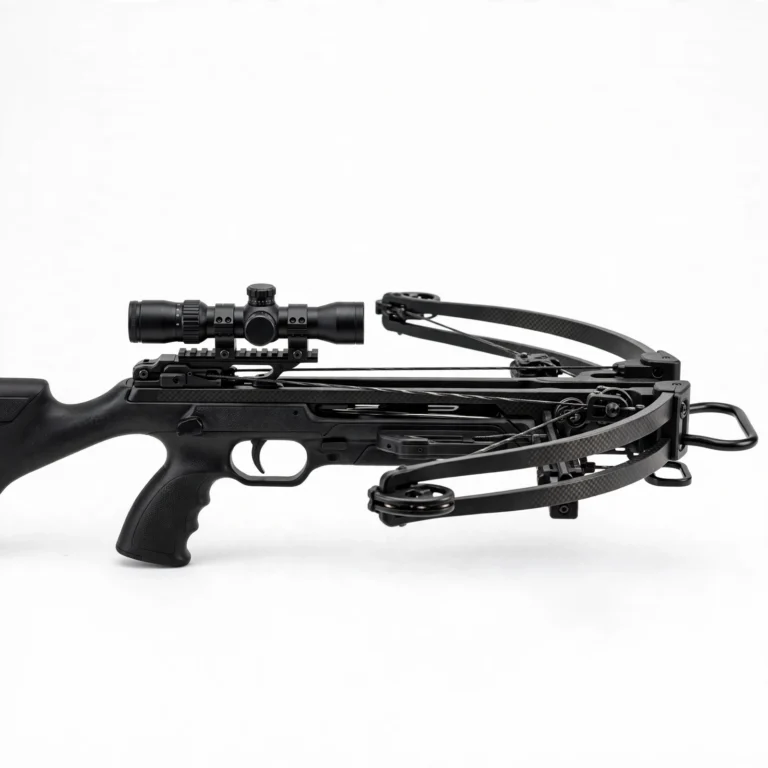
The LT is the lightest Scorpyd at an even 6.0 lbs, and on a still-hunt or a spot-and-stalk, that is the whole argument. A one-piece carbon riser and rail keeps the weight down without sacrificing rigidity, and the reverse-draw balance makes it feel even lighter in the hands than the scale says. The 415 fps advertised figure is with a 370-grain arrow; normalized to 400 grains you are looking at roughly 399 fps, still legitimately fast and still over 140 ft-lbs of energy. That is more than enough for whitetails at any sane distance and adequate for elk inside 50 yards.
At 9.8 inches cocked, the LT is also the treestand-friendly pick of the line. Remember that the bow widens after the shot, so the 16.25-inch uncocked width is your clearance number in the stand, but you are starting from a genuinely narrow shooting platform. See our treestand tips for working a narrow bow in a tight stand.
My complaints are familiar for this brand. Scorpyd does not publish the draw weight on the LT, and the LT sits close enough in price to the Tremor XP that the flagship becomes tempting: for a few hundred more typical dollars you get 60 more fps and a published 400-grain figure. If you carry your bow more than you shoot it, buy the LT. If you mostly hunt from a stand, price the Tremor XP first.
Pros
- 6.0 lbs: lightest bow Scorpyd makes, superb for carry hunts
- ~399 fps normalized, still a fast bow by any standard
- One-piece carbon riser and rail
- Narrow 9.8-in cocked width suits treestands
Cons
- Draw weight unpublished
- Price sits close to the Tremor XP, which is faster
- Same high-speed maintenance demands as the rest of the line
Buy it if: you still-hunt, spot-and-stalk, or cover miles on foot and weight is your top priority. Skip it if: you hunt mostly from a stand and can step up to the Tremor XP’s speed. Compare lightweight options in our best hunting crossbow guide.
Best Deathstalker: Scorpyd Deathstalker 420
Speed: ~405 fps | Price: ~$1,740 | Weight: 6.2 lbs
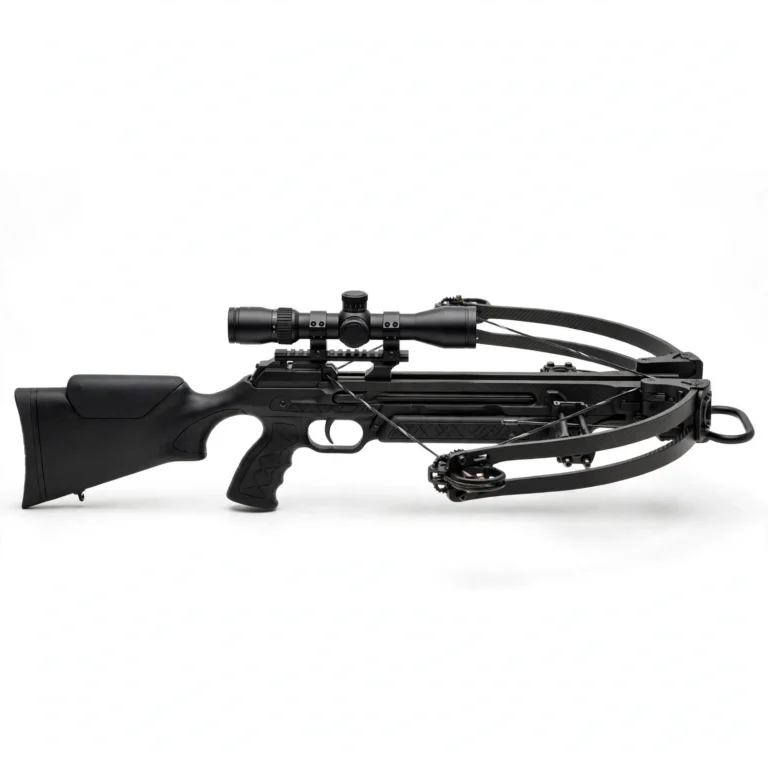
The 420 is the speed leader of the Deathstalker family and the model Scorpyd dealers most often recommend as the balanced hunter pick. 420 fps on a 370-grain arrow normalizes to about 405 fps on 400 grains, roughly 146 ft-lbs of energy, in a 6.2-lb package with a 9.5-inch cocked width. The 17.25-inch power stroke is what makes it work: that long reverse-draw stroke delivers the speed a conventional bow would need more peak weight to achieve.
The 150-lb draw is right at the boundary where I draw a line. A strong hunter can rope-cock this bow, but a short sled cocker or a crank will make your life better, especially at the end of a long cold sit. Our cocking device guide covers which systems fit high-performance bows, and our cocking guide walks through centering the string every time. An off-center string on a 400-fps bow is an accuracy killer and a safety issue, so read our safety guide too.
One thing the 420 demands is the right arrows: 20-inch minimum, matched to the bow, because light arrows on a fast bow are how you get serving wear and voided warranties. Our bolt guide explains the weight discipline these speeds require. If you want a lighter carry bow, look at the LT; if you want maximum speed, look at the Tremor XP. The 420 sits squarely in the middle, and middle is a good place to be.
Pros
- ~405 fps normalized at only 150-lb draw: efficient reverse-draw engineering
- 6.2 lbs and 9.5-in cocked width: light and narrow
- Long 17.25-in power stroke for smooth energy delivery
- Dealer-recommended balanced hunter pick of the family
Cons
- 150-lb draw is rope-cockable but a crank is strongly advised
- Strict arrow discipline required; cheap bolts are dangerous at this speed
- Price overlaps the bottom of the Tremor XP band
Buy it if: you want Deathstalker speed with a manageable 150-lb draw and you plan to hunt mostly from a stand or blind. Skip it if: you need the lightest carry weight (get the LT) or the absolute fastest Scorpyd (get the Tremor XP).
Best Value: Scorpyd Deathstalker 380
Speed: ~368 fps | Price: ~$900 | Weight: 6.2 lbs
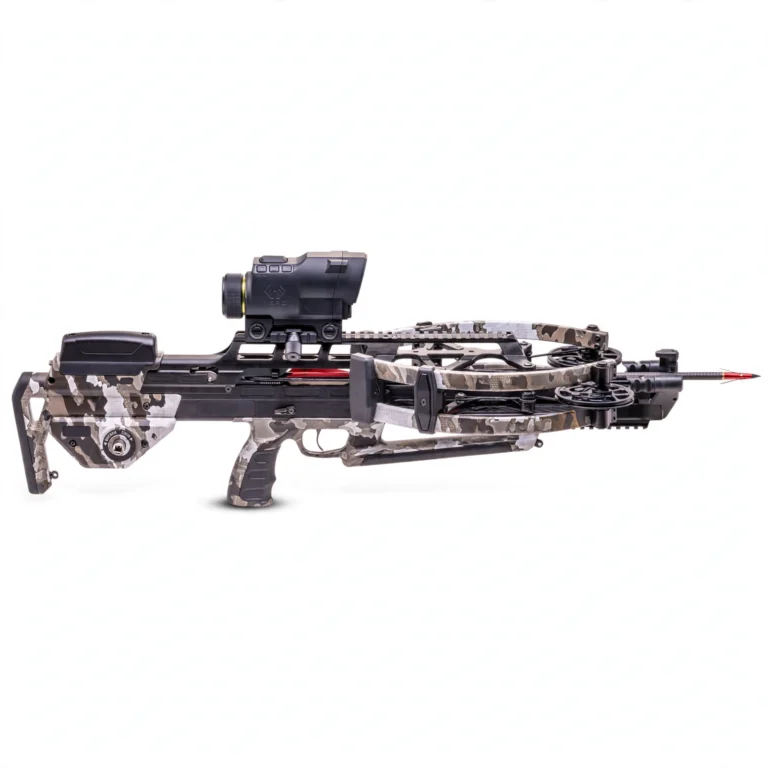
The 380 is the cheapest way into a genuine Scorpyd, and I mean that as a compliment, not a warning. You get the same reverse-draw geometry, the same build philosophy, and a normalized speed of about 368 fps on a 400-grain arrow. That is roughly 120 ft-lbs of energy, comfortably above the threshold for clean whitetail kills. The 130-lb draw is the friendliest cocking effort in the lineup, and the 6.2-lb weight keeps it easy to carry.
Here is the honest trade. At the 380’s typical street price, you are in flagship territory for several excellent conventional crossbows from mainstream brands. Read our best crossbow for the money guide before you buy, and if the budget is firm, our best crossbows under $500 guide shows what far less money buys. Nobody should buy the 380 because it is cheap; Scorpyd is never cheap. Buy it because you want reverse-draw balance and Scorpyd build quality at the lowest price the brand offers, with speeds that are still serious.
For a newer hunter stepping up to this tier, pair the bow with a quality quiver, arrows from our bolt guide, and a season of practice using our sight-in guide. If you are still deciding whether a crossbow is the right tool at all, our crossbow vs compound bow comparison lays out the trade-offs honestly.
Pros
- Lowest-priced current Scorpyd with real performance
- ~368 fps normalized, plenty for whitetails
- 130-lb draw: easiest Deathstalker to cock
- Same reverse-draw balance and build quality as the flagships
Cons
- Still premium money; competes with flagships from other brands
- Same maintenance discipline as the faster models
- Advertised speed uses a 375-grain arrow, lighter than many hunters shoot
Buy it if: you want in on Scorpyd quality at the lowest entry price and 368 fps is all the speed you need. Skip it if: your budget is the real driver, in which case the value guides above will serve you better.
Who Is the Scorpyd Brand For, and Who Should Skip It?
Scorpyd is for the hunter who has owned crossbows before and knows exactly what they are paying for: maximum speed per pound of draw, premium build quality, and a company that warranties the bow for life to the original owner. It is for the speed enthusiast who chronographs their arrows, weighs their bolts, and waxes the string without being reminded. The Tremor XP owner is someone who wants 460 fps and understands the upkeep that speed demands.
Scorpyd is not for the first-time buyer. A beginner is better served by a mid-priced bow with a forgiving package and lower maintenance demands: start with our beginners guide and come back to Scorpyd on your second bow. It is not for the budget hunter either: these bows start around $1,500 street and climb past $2,000, plus the crank you will want. And it is not for the hunter who wants to buy once and ignore maintenance. High-speed reverse-draw bows are thoroughbreds: fast, rewarding, and demanding. Compare them with the workhorses in our best crossbows guide and the Excalibur reviews to see both philosophies side by side.
Frequently Asked Questions
Are Scorpyd crossbows good?
Yes, with caveats. Scorpyd’s reverse-draw design is genuinely innovative and produces some of the best speed-per-pound-of-draw figures in the industry. Build quality is premium, the limited lifetime warranty to the original purchaser is strong, and the current lineup (Tremor XP plus four Deathstalker models) is solid. The caveats are price, maintenance demands at these energy levels, and some unpublished specs. If you are an experienced hunter who maintains gear religiously, Scorpyd is excellent. If you want a low-fuss first bow, look elsewhere.
What happened to the Scorpyd Nemesis?
The Nemesis, Scorpyd’s 480 fps flagship, was recalled by Scorpyd over premature serving wear and is discontinued. Serving failure at 480 fps energy levels is a safety issue, not a cosmetic one, and Scorpyd was right to pull it. You may still find used Nemesis bows for sale online. I recommend against buying one: parts support is gone, the warranty does not transfer to a second owner, and the model was recalled for a reason.
What happened to the Scorpyd Aculeus 460?
The Aculeus 460 was discontinued and is listed by Scorpyd’s European importer as a “model archive” bow, no longer manufactured. The Tremor XP is its successor: 460 fps with a 400-grain arrow and a sub-200-lb draw. Dealer new-old-stock Aculeus bows still exist at discounts, and a genuinely new one with the original-purchaser warranty intact can be a fair deal. Avoid used Aculeus bows, and do not pay flagship money for a discontinued model.
Why does the sub-200-lb draw weight on the Tremor XP matter?
Several states regulate hunting crossbows by draw weight, with New York the commonly cited example of a jurisdiction that restricts heavier draws. The Tremor XP’s 460 fps at under 200 lbs of draw means it stays legal in those states while delivering flagship speed. That combination, premium speed plus hunting-legal draw weight, is the Tremor XP’s single biggest selling point. Always verify your own state’s current regulations before the season, as rules change.
What arrow weight should I shoot in a Scorpyd?
Shoot what the manufacturer specifies and never go lighter. Scorpyd advertises Deathstalker speeds with 370 or 375-grain arrows and the Tremor XP with a 400-grain arrow; those are the reference weights, not the minimums. At these speeds, light or mismatched arrows accelerate serving wear, cost you accuracy, and can damage the bow. Use 20-inch minimum arrows matched to the bow and retire any arrow that has taken a hard hit. Our crossbow bolts guide covers weight and straightness standards in detail.
Do I need a crank to cock a Scorpyd?
It depends on the model. The Deathstalker 360 (115 lbs) and 380 (130 lbs) are comfortable with a rope cocker or short sled for most adults. The Deathstalker 420 (150 lbs) is rope-cockable but most hunters will be happier with a crank, especially late in a cold sit. The Tremor XP (under 200 lbs) really wants the optional ACUdraw Pro: quieter, easier, and safer in a treestand. Off-center cocking on a 400-plus fps bow destroys accuracy, so if you cannot cock it perfectly centered every time, get the crank.
Are Scorpyd crossbows worth the price compared to Ravin or TenPoint?
It depends on what you value. Scorpyd leads on speed per pound of draw thanks to the reverse-draw geometry, and the Tremor XP’s sub-200-lb legal-draw angle has no direct equivalent. Ravin and TenPoint offer broader dealer networks, more accessory ecosystems, and in some cases more published specs. Our Ravin reviews and TenPoint reviews compare the premium competition model by model. Shop all three on features and feel, not just the fps number.
What is Scorpyd’s warranty?
Scorpyd offers a limited lifetime warranty to the original purchaser. That is a strong warranty at these prices, but the qualifier matters: it covers the original purchaser only and does not transfer if you buy used. Register your bow and keep your receipt. It is also one more reason to avoid used Nemesis or Aculeus bows: no warranty transfer, no coverage.
The Bottom Line
Scorpyd earns its reputation honestly. The reverse-draw design is real engineering, the speed figures are achieved at draw weights other flagships need more of, and the Tremor XP’s combination of 460 fps with a 400-grain arrow and a sub-200-lb draw is genuinely unmatched in the current market. The brand also owns its mistakes: it recalled the Nemesis instead of patching it and discontinued the Aculeus instead of selling it forever. I respect that.
My buying advice is simple. If you want the fastest legal-draw bow Scorpyd makes, get the Tremor XP and budget for the ACUdraw Pro crank. If you want the lightest carry, get the Deathstalker LT. If you want the most speed in the Deathstalker family, get the 420. If you want the cheapest way in, get the 380. If you need the easiest cocking, get the 360. Commit to the maintenance these energy levels demand, shoot the right arrows, and you will own one of the fastest bows in the woods. Cross-shop everything in our best crossbows guide, tune your pick with our tuning guide, and go hunt.