TenPoint Titan M1 Review

TenPoint Titan M1 Review
The TenPoint Titan M1 is a narrow, light, honest whitetail crossbow that you can no longer buy new. It launched in 2019 as a mid price TenPoint with premium parts, a 370 fps advertised speed, and a crank cocking system that takes the effort down to 5 pounds. Then TenPoint replaced it with the Titan De-Cock, the Titan 400, and the Titan X, and the M1 quietly left the lineup. What remains is a used market bow, and that changes how you should judge it. This review leads with that fact, gives you the tested speed next to the advertised speed with the arrow weights stated, corrects the spec errors in our old article, and answers the only question that matters for a buyer in 2026: is a used Titan M1 worth your money, or should you buy a new Titan X instead?
The Short Answer
The TenPoint Titan M1 is discontinued. You cannot buy it new from TenPoint, there is no current manufacturer page for it, and no current new bow price exists. What you can buy is a used bow, a remaining dealer stock bow, or a certified pre-owned bow. The last listed new price was about $700, and the launch price in 2019 was about $800 with a rope cocker, or about $900 with the crank cocking device fitted.
As a bow, the M1 is genuinely good at the job it was built for. It weighs 6.4 pounds without accessories, measures 9 inches wide when cocked, and is 32.5 inches long without the foot stirrup. That narrow, light package is easy to carry, easy to swing in a treestand, and easy to hold steady. Its advertised speed is 370 fps, but that figure needs the light 370 grain arrow. With the hunting weight arrows that come in the box, two published instrumented tests measured about 333 to 337 fps, with about 110 to 112 ft-lb of kinetic energy. That is far more energy than a whitetail needs, and it is the honest speed to plan your hunt around, not 370 fps.
The M1 has two real weaknesses, and both matter more now than they did in 2019. First, it cannot be safely de-cocked. There is no de-cocking system on this bow, so at the end of a sit you must discharge it by shooting. Second, the included scope is calibrated for a fixed 350 fps, which does not match the bow, so your aim points will be off unless you swap the scope or learn the holdover. Neither weakness is a deal breaker on a cheap used bow, but both are fixed on the current Titan X, which sells new for about $800.
That sets the buying rule for the whole review. A used Titan M1 only makes sense well below the price of a new Titan X. If a used M1 is priced anywhere near $700, buy the new Titan X instead. It is faster, it de-cocks safely, and it comes with a current warranty and dealer support. If you find a clean used M1 with the crank cocking device fitted, a fresh string, and a price well under $800, it is a proven, narrow, light TenPoint that will kill deer cleanly at normal hunting ranges. If you are new to crossbows, read our guide for new hunters starting out guide first, and if you want the wider market before you decide, start with our guide to the top tested bows guide.
Best Budget Used TenPoint: Titan M1
Speed: 370 fps advertised | Price: Discontinued, last listed new at about $700 | Width cocked: 9 in
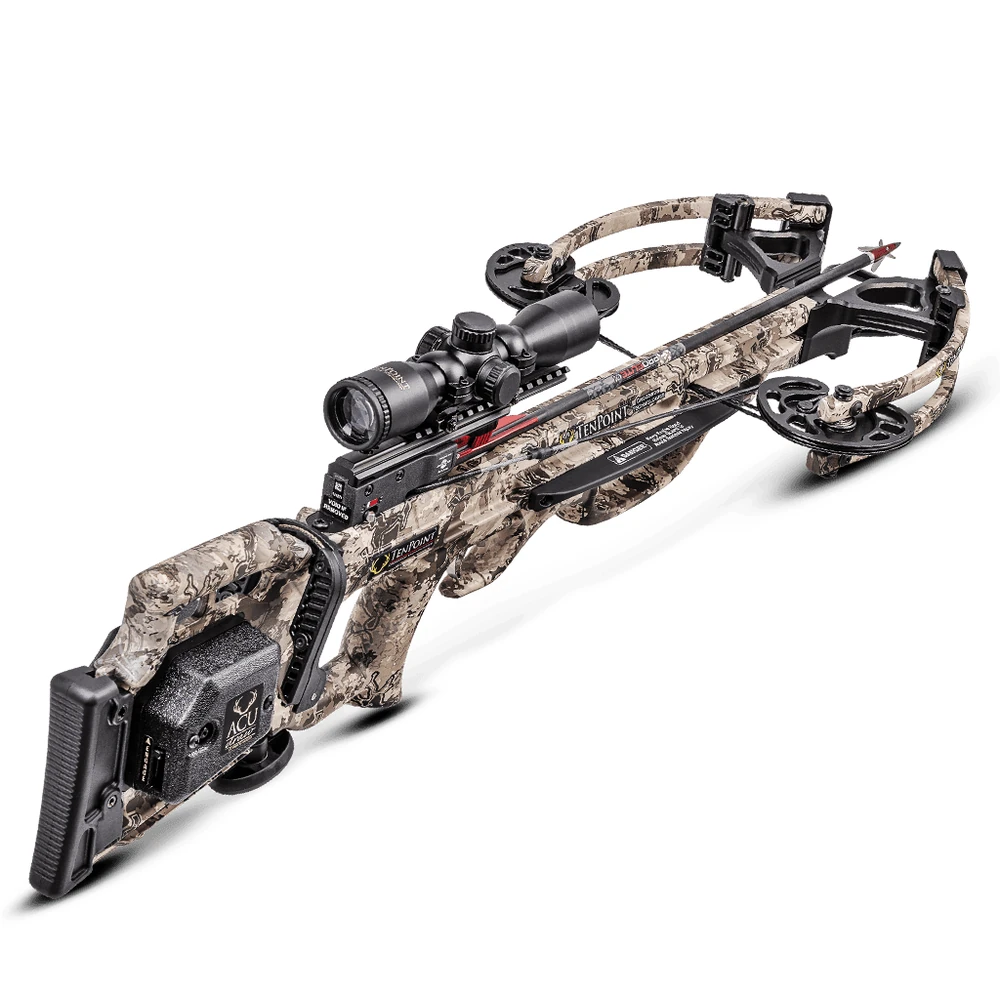
I have spent enough time with TenPoint bows to know what the Titan line is for. It is the working TenPoint, not the flagship. The M1 was the Titan of its day: premium cams and trigger, a good scope, a proper safety set, and a price a working hunter could reach. It was never the fastest bow TenPoint made, and it was never meant to be. It was meant to be narrow, light, safe, and accurate enough for whitetail at the ranges most of us actually shoot, and on those terms it delivers. The problem is not the bow. The problem is that the bow is discontinued, the advertised speed flatters it, and our old article on this site got several specs wrong. This review fixes all of that, so you can judge a used M1 on true numbers.
The M1 is a forward draw compound crossbow, made in the USA, with VX-5 inverted cams, short 11 inch limbs set at a steep angle, and a Fusion S stock. The stock is a glass fiber composite with a 13.5 inch length of pull and a two position adjustable buttplate, and the weight sits toward the shooter, so the bow does not feel nose heavy. The finish is TrueTimber Viper camouflage. It is a 2019 bow, and it looks like one in the best way: no gimmicks, no battery dependent optics, just a narrow compound bow with a crank and a scope.
Titan M1 Specifications
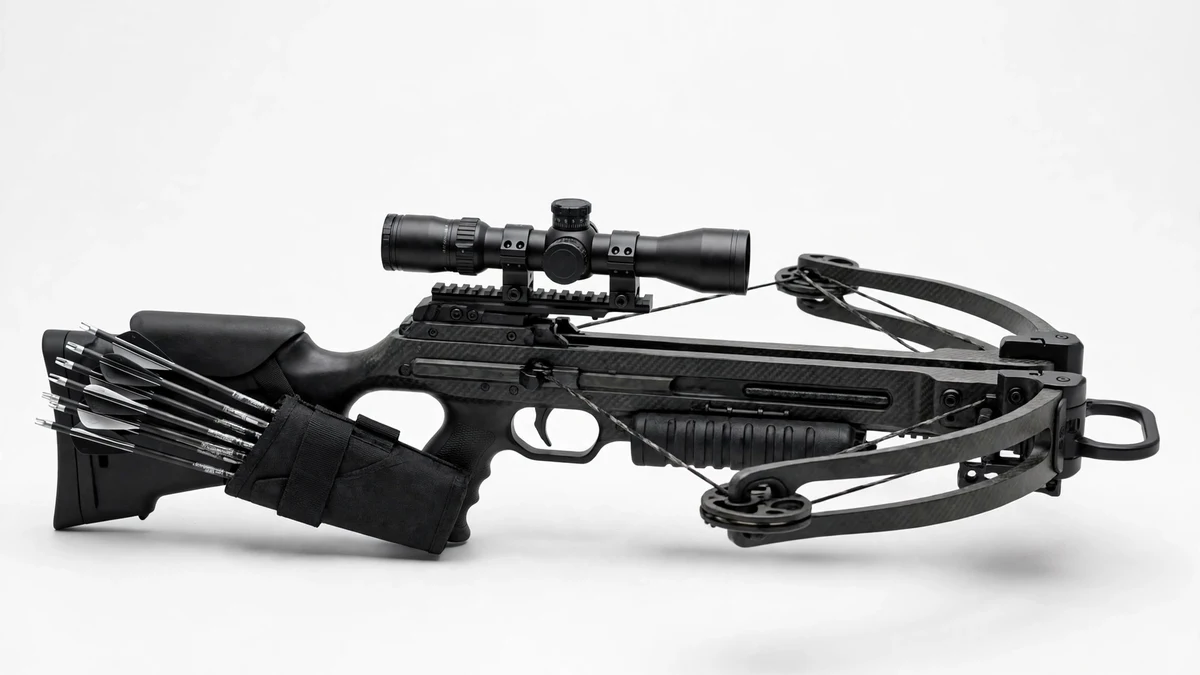
| Spec | Titan M1 |
|---|---|
| Speed, advertised | 370 fps with a 370 grain Pro Lite arrow; 360 fps with a 410 grain Pro Elite arrow |
| Speed, tested | 332 fps average with a 448.5 grain arrow; 336.8 fps average with 447 grain arrows, 310.2 fps at 50 yards |
| Kinetic energy, advertised | 113 ft-lb with the 370 grain arrow (115 ft-lb appears in some listings, see the note below) |
| Kinetic energy, tested | 110 ft-lb with the 448.5 grain arrow; 112 ft-lb at the muzzle and 94.8 ft-lb at 50 yards with 447 grain arrows |
| Draw weight | 180 lb |
| Power stroke | 14 in |
| Weight | 6.4 lb without accessories |
| Length | 32.5 in without foot stirrup |
| Width, cocked | 9 in |
| Width, uncocked | 14 in (one launch era test lists 14.25 in) |
| Trigger | T5 single stage, ambidextrous; 3.5 lb claimed, just under 5 lb measured |
| Cocking system | Plain ACUdraw integrated crank, 5 lb effort, OR Rope-Sled, about 90 lb pull |
| Safe de-cocking | None, the bow must be discharged by shooting |
| Cams | VX-5 inverted cams |
| Limbs | Short TPX 11 in limbs, steep angle |
| Stock | Fusion S stock, glass fiber composite, 13.5 in length of pull, two position adjustable buttplate |
| Scope | TenPoint 3x Pro-View 3, lighted, 7/8 in fixed dovetail mount, aim points 20, 30, 40 plus 50 and 60 yards, 5 red and 5 green settings, calibrated for a fixed 350 fps |
| Quiver | 3 arrow Instant Detach quiver, ambidextrous side mount bracket |
| Arrows in box | Three 20 in Pro Elite 400 carbon arrows with 100 grain practice points |
| Nock type | Alpha Nock, pre-installed on the package arrows |
| Safety | Automatic safety, Dry-Fire Inhibitor, safety wings, trigger safety |
| Finish | TrueTimber Viper camouflage |
| Replacement string | HCA-11619-S, about $41 |
| Status | Discontinued, pre-owned and remaining stock only |
| Price | No current new bow price. Last listed new about $700. Launch about $800 with Rope-Sled, about $900 with ACUdraw |
Three figures in that table need a note, because sources disagree and I will not smooth the disagreement away. First, kinetic energy: 113 ft-lb is the primary advertised figure, because two sources agree on it, including the launch era test. A second advertised figure of 115 ft-lb appears in other listings. Use 113 ft-lb, and know that 115 ft-lb is out there. Second, uncocked width: most listings say 14 inches, while one launch era test lists 14.25 inches. The difference is a quarter inch and does not change anything about the bow. Third, trigger pull: the claimed pull is 3.5 pounds, but an independent measurement with a trigger scale came in just under 5 pounds. I give both figures, labelled claimed and tested, because that is the honest way to report a trigger. Our site does the same for the Titan X, listed at 3.5 pounds against a tested 4.4 pounds.
Our old article on this bow got four specs wrong, and this review corrects them. Draw weight is 180 pounds, not 175. Power stroke is 14 inches, not 13. The package arrows are 20 inches, not 22. And the 100 grain figure is the practice point weight, not the weight of a complete arrow. A complete package arrow with its point weighs about 447 to 448.5 grains, as measured in both instrumented tests. That last correction matters, because arrow weight is what turns the advertised 370 fps into the tested 333 to 337 fps.
Speed: 370 fps Advertised, About 333 to 337 fps Tested
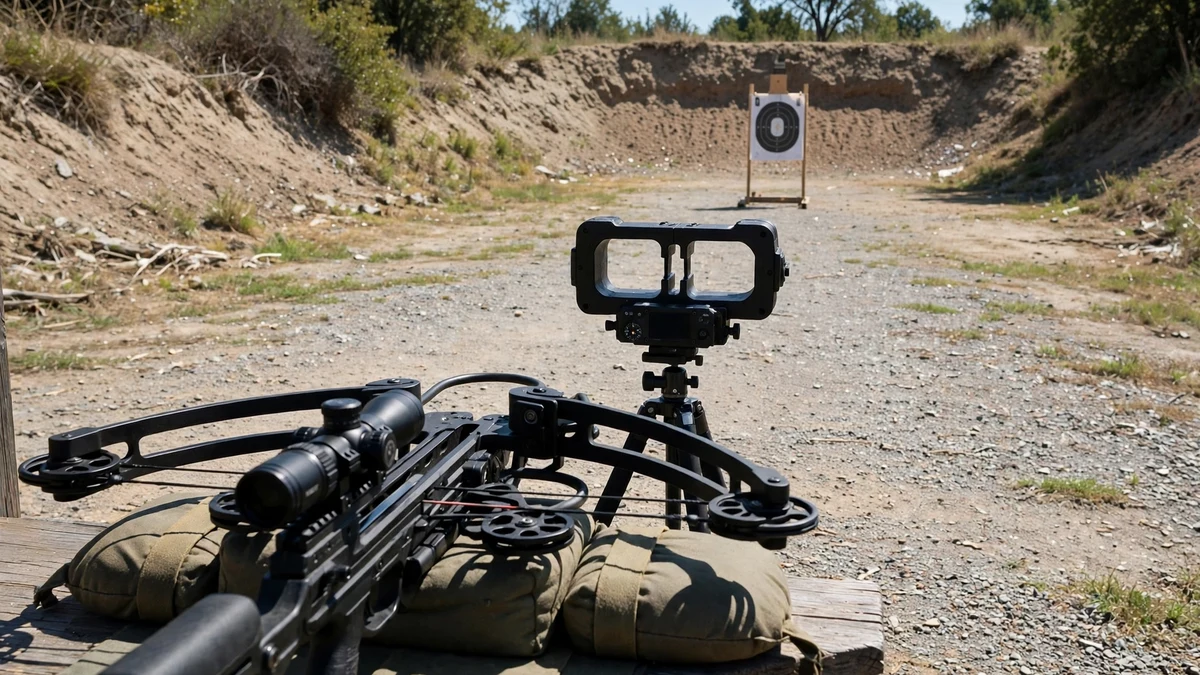
Speed is where most Titan M1 pages mislead you, and it is where this review earns its keep. The advertised figure is 370 fps, and it is a real figure, but only with a 370 grain Pro Lite arrow. With a 410 grain Pro Elite arrow the advertised figure drops to 360 fps. With the arrows that actually come in the box, which weigh about 447 to 448.5 grains complete with points, the bow is slower still.
Two published instrumented tests measured it, and they agree closely, which is rare enough to trust. One test put the bow on a chronograph with the supplied 20 inch Pro Elite 400 arrows and 100 grain field tips, weighed the complete arrow at 448.5 grains on a digital scale, and recorded a 332 fps average with 110 ft-lb of energy. The other test ran a 5 shot string through radar with 447 grain package arrows and recorded a 336.8 fps average at the muzzle, 310.2 fps at 50 yards, 112 ft-lb at the muzzle, and 94.8 ft-lb at 50 yards. Two different testers, two different years, two different chronographs, and the answer is the same: about 333 to 337 fps with hunting weight arrows.
Plan your hunt around 333 to 337 fps, not 370 fps. The gap is about 35 fps, and it matters for two reasons. First, your scope aim points and your holdover depend on the real speed, not the box speed. Second, the advertised figure sets a false expectation. A buyer who expects 370 fps with hunting arrows will feel short changed. A buyer who knows the bow shoots about 335 fps with a 447 grain arrow will find a bow that does exactly what it promises at the ranges that matter.
The energy story is better than the speed story. Even at the tested speed, the M1 makes about 110 to 112 ft-lb at the muzzle and still holds about 95 ft-lb at 50 yards. Whitetail needs far less than that. The commonly cited energy bands put whitetail in the 25 to 41 ft-lb range, so the M1 clears the requirement by a wide margin at any normal hunting distance. This is not a bow that struggles to kill deer. It is a bow whose advertised speed is a light arrow figure, and whose real speed is still plenty.
Accuracy is the other half of the speed question, and here the tests are qualitative, not measured. Neither published test reports a measured group size, so I will not invent one. What both tests report is repeatable point of impact from a bench rest out to 40 yards, and clean hits on small aiming dots at 20, 30, and 40 yards from a tripod. That is enough to call the M1 accurate at hunting ranges, and not enough to claim a group size. If a used M1 you are considering shoots true at 20, 30, and 40 yards with the arrows in the box, it is doing what the bow is supposed to do.
What Comes in the Box
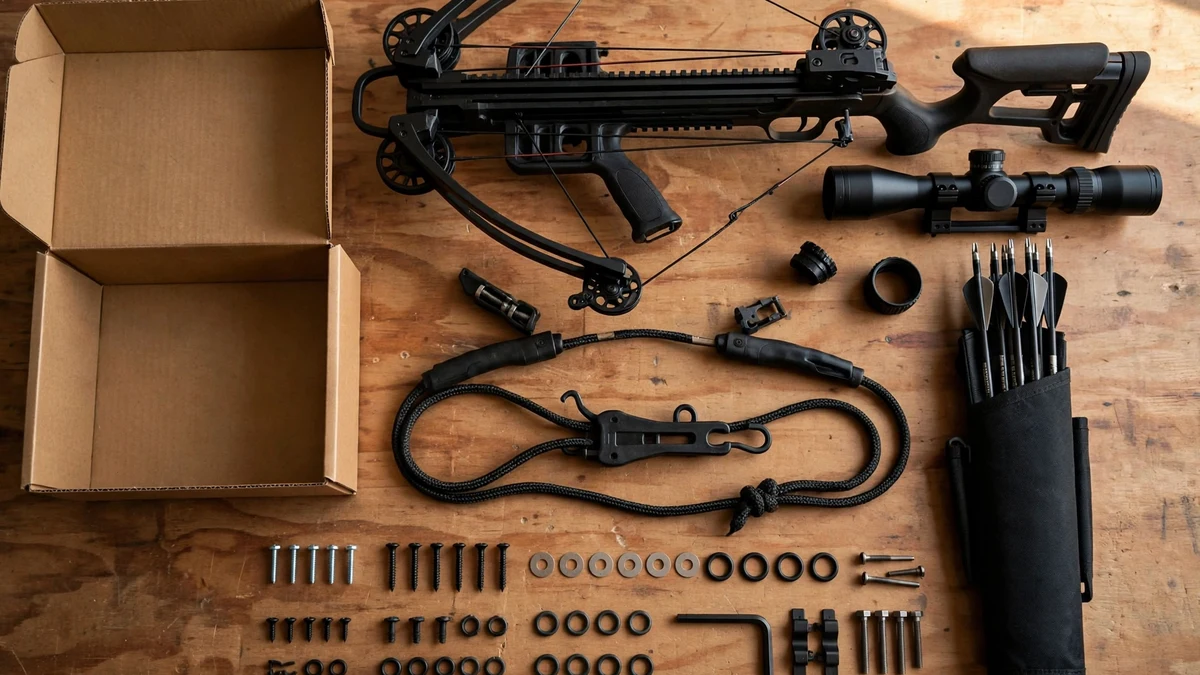
The Titan M1 shipped as a complete package, and knowing the package list is how you check a used bow for missing parts. In the box: the M1 crossbow, the 3x Pro-View 3 scope pre-mounted and bore-sighted, your choice of cocking device (plain ACUdraw crank or Rope-Sled, depending on the package), a 3 arrow Instant Detach quiver with an ambidextrous side mount bracket, and three 20 inch Pro Elite 400 carbon arrows with 100 grain practice points and Alpha Nocks pre-installed.
Check every item when you buy used. The quiver and its bracket are the parts most often missing or swapped, and the bracket on this bow is short, which is a known annoyance covered below. The arrows matter too: the package arrows are 20 inch Pro Elite 400s, and a used bow sold with different arrows may not shoot to the same point of impact. If the seller cannot tell you which cocking device is fitted, treat that as a warning sign, because the cocking device is the single most important difference between M1 packages. Read our guide to replacement arrows guide if you need to replace the arrows, and our guide to hunting broadheads guide before you hunt with them.
Cocking: Plain ACUdraw or Rope-Sled, and Nothing Else
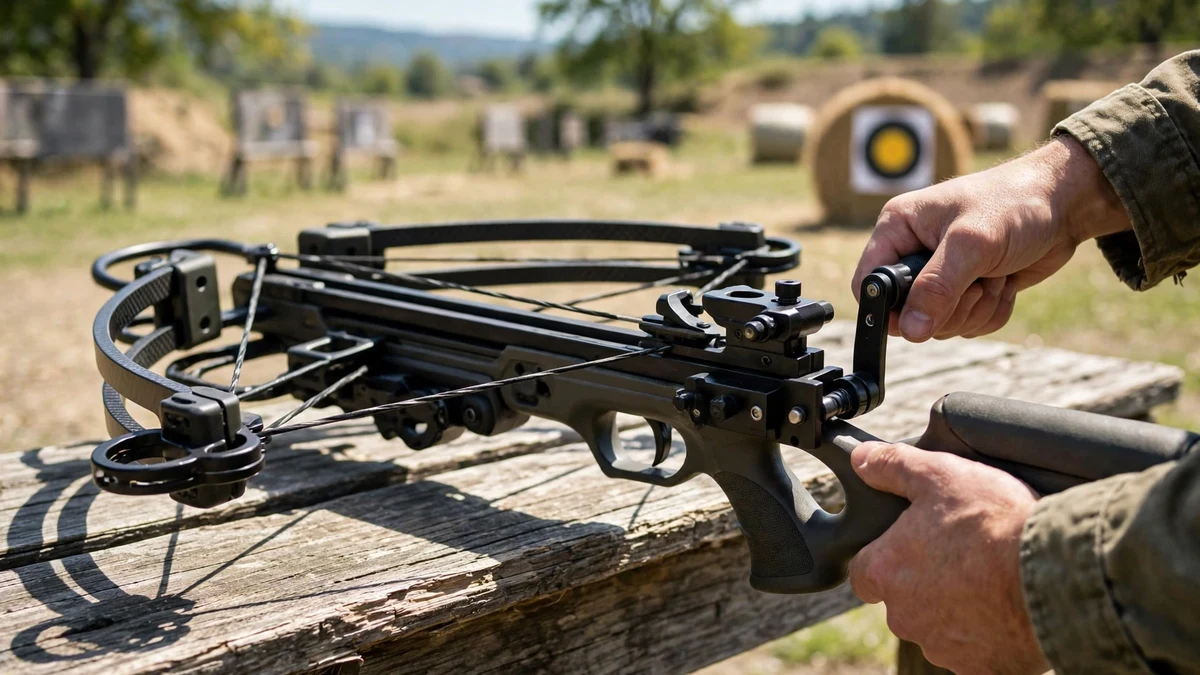
This is the correction our old article got most wrong, so I will state it plainly. The Titan M1 shipped with the plain ACUdraw integrated crank cocking device OR a Rope-Sled, depending on the package. It did not ship with the ACUdraw Pro. It did not ship with ACUdraw De-Cock. It did not ship with ACUslide. The old article’s passage claiming an ACUdraw Pro that reduces draw weight by 50 percent is wrong on the device and wrong on the figure, and it is deleted entirely in this rewrite.
Here is the correct distinction. The plain ACUdraw is an integrated crank. You turn the handle stored in the stock, and the crank does the work. Cocking effort drops to 5 pounds. That is the whole point of the crank: a hunter with limited strength, a younger hunter, or a smaller framed hunter can cock a 180 pound bow with 5 pounds of effort. The Rope-Sled is the rope cocker option. It halves the draw weight, so the pull is about 90 pounds, which is the 50 percent figure. That 50 percent belongs to the rope, not to the crank, and the old article mixed the two devices together.
Which one should you want on a used M1? The ACUdraw crank, every time, unless the price difference is large. Five pounds of effort against about 90 pounds is not a close call, and it is the difference between cocking the bow comfortably in a stand and wrestling with it. One launch era test notes that the ACUdraw gear pawl is audible while you crank, so cock the bow before you walk to your stand, not once you are settled in it. That is a small habit to learn, and it costs nothing.
The foot stirrup deserves a warning of its own. One published test found it too narrow to fit a boot through, with only the boot tip fitting. That needs care when you cock the bow, because a slipping foot on a 180 pound draw is how accidents happen. Test the stirrup with the boots you hunt in before you buy, and read our guide to cocking safely guide and our safety basics every hunter should know before your first hunt with any used bow. If you want the wider market on cocking systems, our guide to cocking devices compared guide covers the options.
No Safe De-Cocking: The Biggest Buying Consideration
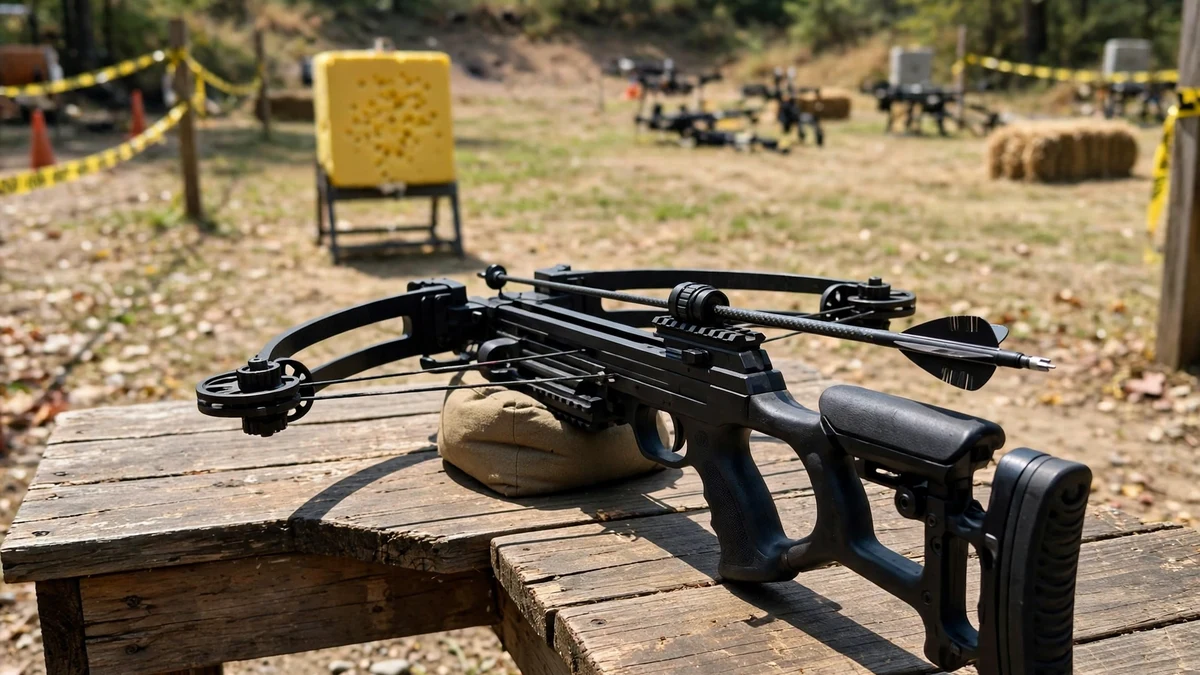
The Titan M1 has no safe de-cocking system. There is no crank reverse, no de-cock button, no silent let down. Once the bow is cocked, the only way to unload it is to shoot it. Safe de-cocking arrived with the successor Titan De-Cock in December 2021, and it is standard on the current Titan X in its De-Cock versions. The M1 predates all of that.
Flag this as a real buying consideration, not a footnote. At the end of a sit, you must either shoot the bow into a safe target or carry it cocked out of the woods, and neither is ideal. Most M1 owners carry a discharge target or a practice arrow for the end of the hunt, and that works, but it is a chore the Titan X owner does not have. If you hunt from a treestand and climb down in the dark, think hard about whether you want a bow you cannot de-cock. If you hunt from a ground blind with a discharge target at hand, it matters less.
This is also a safety question, and it is where the M1’s safety set earns its praise. The bow has an automatic safety, a Dry-Fire Inhibitor, safety wings, and a trigger safety. The safety engages automatically when you cock the bow, and the Dry-Fire Inhibitor stops you firing without an arrow loaded. Those are good features, and they are part of why the M1 has a strong reputation for safety. But no safety feature changes the de-cocking fact. A used M1 buyer should go in with eyes open, and should budget for a discharge target if they do not already own one.
Trigger: Claimed 3.5 Pounds, Measured Just Under 5
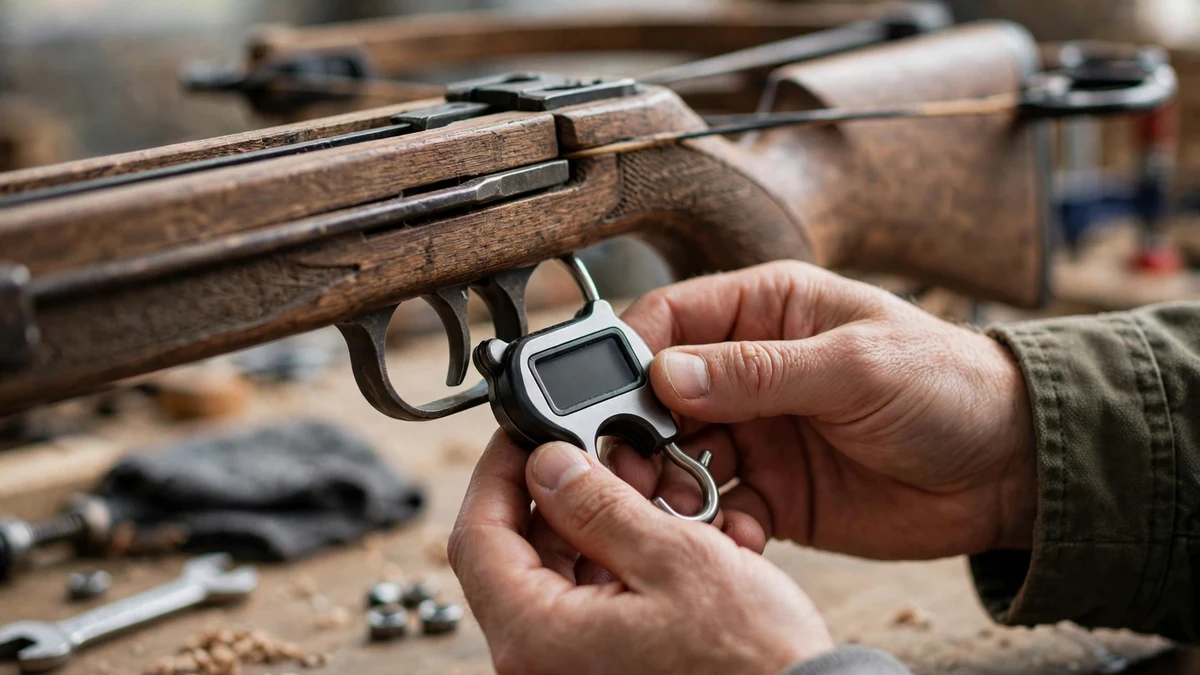
The M1 uses the TenPoint T5 single stage trigger, ambidextrous, with a claimed pull of 3.5 pounds. An independent measurement with a trigger scale came in just under 5 pounds, and that test’s spec box lists 5 pounds. I give both figures because neither can be dismissed. The claimed figure comes from the launch era test, which describes a smooth, clean break. The measured figure comes from a later instrumented test, which is the harder evidence.
In practice, a trigger just under 5 pounds is still a usable hunting trigger. It is heavier than the claimed 3.5 pounds, and you will feel the difference if you shoot a bow with a true 3.5 pound trigger back to back, but it is not a gritty or unpredictable trigger. The T5 is a proven TenPoint design, and the M1’s trigger is one of the reasons the bow has a reputation for accuracy. If you test a used M1, dry fire is never allowed, so judge the trigger on a live shot at a target, and check that the break is clean and consistent from shot to shot. A trigger that feels different every time is a sign the bow needs a shop visit.
Scope: Good Glass, Wrong Calibration
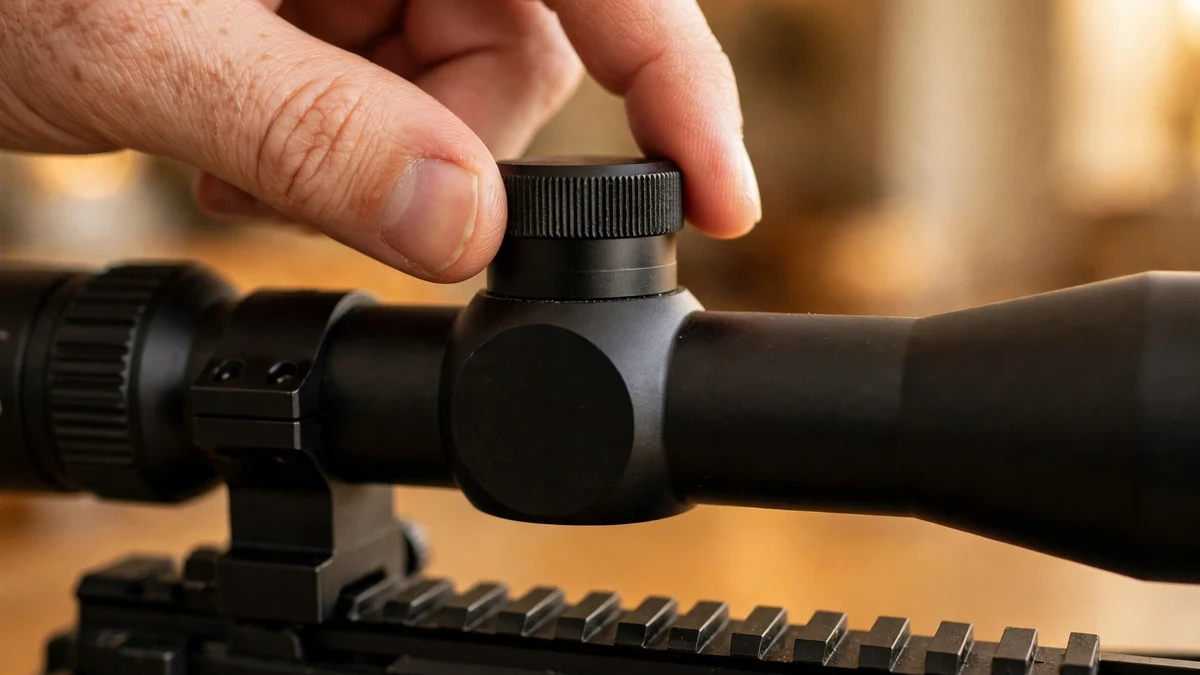
The included scope is the TenPoint 3x Pro-View 3, lighted, on a machined aluminum 7/8 inch fixed dovetail mount. It has aim points for 20, 30, and 40 yards, plus extra aim points for 50 and 60 yards, and 5 red and 5 green illumination settings. That is a capable hunting scope, and it is pre-mounted and bore-sighted from the factory, so zeroing at 20 yards takes only a few shots.
The problem is calibration. The Pro-View 3 is calibrated for a fixed 350 fps, and the M1 does not shoot 350 fps with any arrow you will actually hunt with. It shoots 370 fps advertised with a light arrow, or about 333 to 337 fps tested with hunting arrows. Either way, 350 fps is not the bow’s speed, so the aim points will not match the trajectory exactly. One published tester swapped the scope for a speed calibrated model for exactly this reason. That is the honest fix: if you buy a used M1 and the aim points do not line up at 30 and 40 yards, the scope is not broken, it is calibrated for a different speed.
Before you replace it, test it. Zero at 20 yards, then shoot at 30 and 40 yards and record where the bolts actually land against each aim point. If the error is small and consistent, you can learn the holdover and hunt with the included scope. If the error is large, a speed calibrated scope is the right upgrade, and our guide to picking a scope guide covers the options. Either way, do not trust the aim points on faith. Verify them on a target, with the arrows and broadheads you will hunt with.
Handling, Noise, and the Small Annoyances
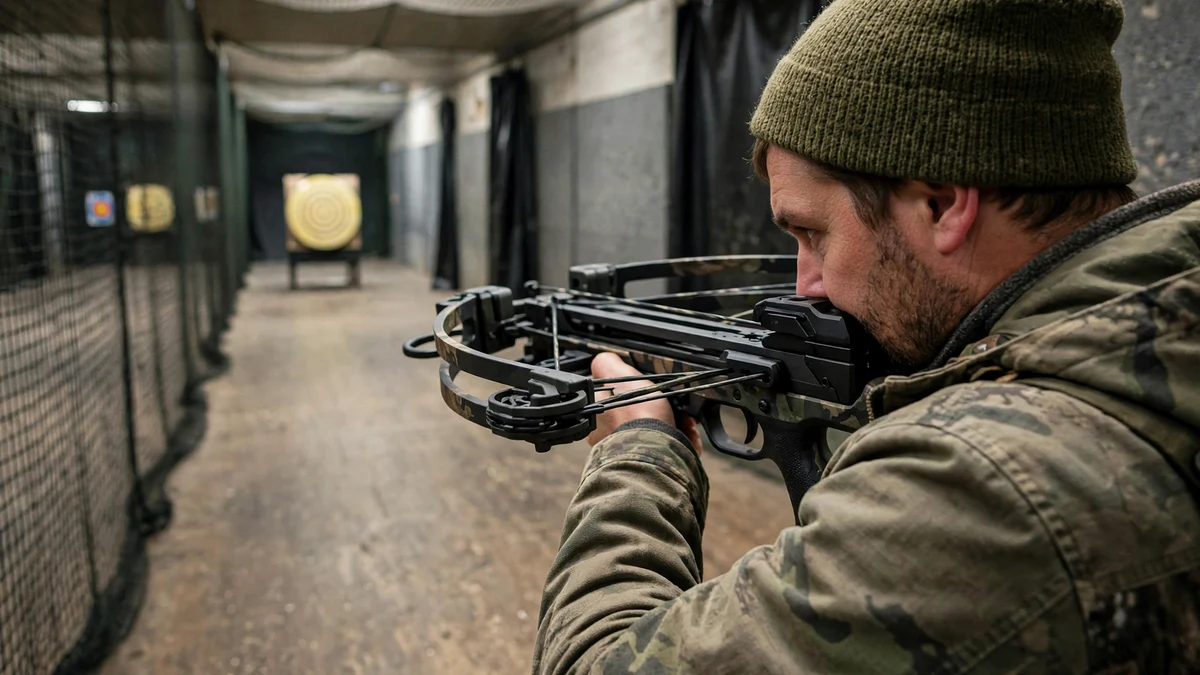
The M1 handles well, and that is the main reason owners like it. At 6.4 pounds and 32.5 inches long, with a 9 inch cocked width, it is easy to carry through woods, easy to swing in a treestand, and easy to hold steady. One published test shot it from a climbing stand with no shooting rail and had no trouble maneuvering it. The Fusion S stock shifts the weight toward the shooter, so the bow does not feel nose heavy, and the 13.5 inch length of pull fits most adult hunters. The TrueTimber Viper camouflage finish held up well against scratches in testing.
Noise is the recurring complaint, and it needs a fair hearing. Testers call the bow reasonably quiet for its speed, and owners list noise as a complaint theme. Both can be true. The M1 is not a loud bow by crossbow standards, but it is not a quiet one either, and a deer inside 30 yards will hear the shot. No string dampening system is included as standard equipment. An optional String Dampening System can quiet the bow further, and it is worth considering if you hunt close cover where deer are inside 25 yards. There is no published decibel figure for the M1, so I will not invent one.
The small annoyances are small, but they are real, and a used buyer should know them before paying. The foot stirrup is too narrow for a full boot, as noted above. The quiver bracket is too short, so mounted parallel the quiver sits ahead of the stirrup; one tester mounted it perpendicular instead, which solved the problem. The ACUdraw gear pawl is audible while cocking, so cock before you head to the stand. None of these is a reason to reject a good used M1. All of them are reasons to inspect the bow in person and to test it with your boots, your quiver, and your arrows before you hand over money.
What Owners Say

Owner feedback on the M1 is mostly positive, with a small dissatisfied minority. One large retailer listing aggregates 520 owner reviews at a 4.5 star average, with 428 five star reviews, 65 four star, 11 three star, 3 two star, and 13 one star. The review text behind that aggregate was not available, so I use only the numbers, not invented quotes. A 4.5 star average across 520 reviews is a strong result for any crossbow, and it matches the tone of the published tests.
The praise themes are consistent across sources. Owners and testers praise the accuracy, the narrow cocked width, the light weight and balance, the safety features, the value at launch pricing, and the easy ACUdraw cocking. The complaint themes are consistent too: noise on the shot, the narrow foot stirrup, the short quiver bracket, the scope calibrated to 350 fps rather than the bow’s speed, the audible ACUdraw gear pawl, and string wear over time. String wear is a normal consumable cost, not a defect, and the replacement string is part HCA-11619-S, about $41. When you buy used, string age is one of the first things to check, and a fresh string is cheap insurance.
One caution about owner feedback: a low quality problems page circulates claims about this bow, including string breakage and a vague speed problem, with no attributed owners and no measurements behind them, and its complaint that the bow is heavy contradicts the verified 6.4 pound weight. I do not repeat those claims as facts. The themes I list above come from the stronger sources, and they are the ones a buyer should actually weigh.
Titan M1 vs Titan X: The Comparison That Decides the Purchase
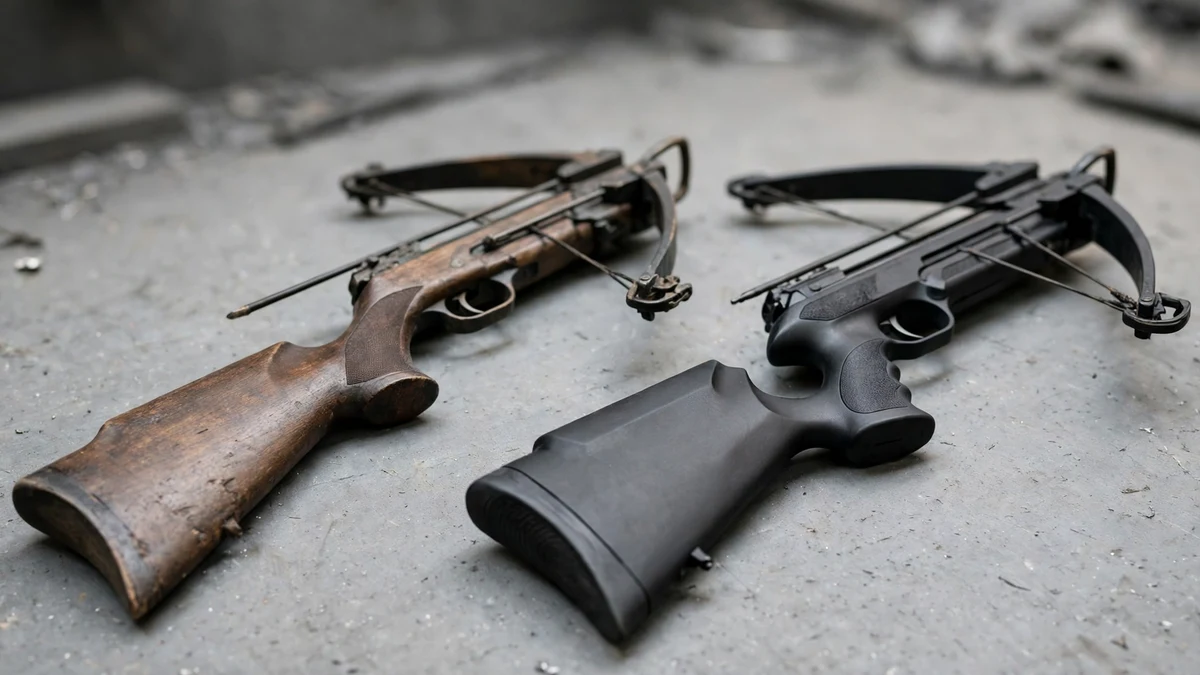
This is the commercial heart of the review, because no buyer in 2026 chooses a used M1 in a vacuum. The choice is a used M1 against a new Titan X at about $800, and the numbers decide it.
| Titan M1 (older) | Titan X (newer) | |
|---|---|---|
| Speed, advertised | 370 fps with a 370 grain arrow | 400 fps advertised |
| Speed, tested | 332 to 337 fps with 447 to 448.5 grain arrows | 400 fps tested with a 410 grain arrow |
| Weight | 6.4 lb, 0.9 lb lighter | 7.3 lb |
| Trigger | T5, 3.5 lb claimed vs just under 5 lb measured | 3.5 lb listed vs 4.4 lb tested |
| Cocking | Plain ACUdraw, 5 lb effort, or Rope-Sled. No de-cocking | 5 lb effort. De-Cock versions have ACUdraw De-Cock with safe de-cocking |
| Width, cocked | 9 in | Not verified, no figure stated |
| Price | Discontinued. Last listed new about $700, launch about $800 | About $800 new |
| Status | Pre-owned and remaining stock only | Current model |
The Titan X is 30 fps faster on the advertised figure and about 63 to 68 fps faster in tested terms with hunting arrows. That is a real gap, not a rounding error. It also adds safe de-cocking, a current warranty, and current dealer support. The M1 answers with 0.9 pounds less weight and a narrower, lighter feel in the hand, plus a proven record and a lower price when bought used. On speed, de-cocking, warranty, and support, the Titan X wins. On weight and feel, the M1 wins. On price, the M1 only wins if it is well below $800.
That is the buying rule, stated once more so it cannot be missed. Choose a used M1 only if the price is well below the Titan X’s about $800. If the used M1 is priced near $700, buy the new Titan X instead. You get a faster bow, safe de-cocking, a current warranty, and a bow you can take to a dealer for service. A used M1 at a price near $700 is not a bargain. It is a discontinued bow at a current bow price. Read our guide to the TenPoint lineup, ranked hub for the full Titan lineup, and our best crossbows under 1000 dollars guide if your budget sits in this range.
Other Comparisons: Titan De-Cock, Titan 400, and Wicked Ridge M370
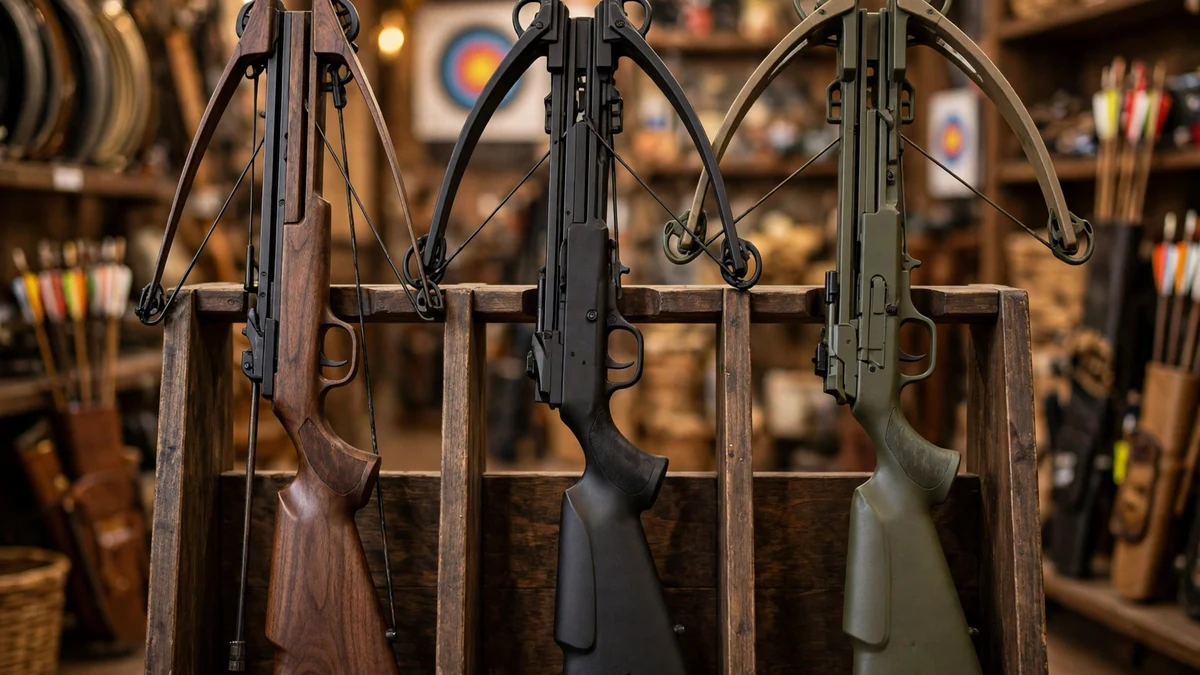
The Titan X is not the only alternative. Three more bows frame the M1’s place in the market, and each one teaches a different lesson about what the M1 is and is not.
Titan De-Cock: the M1 with its two biggest weaknesses fixed
The Titan De-Cock launched in December 2021 as the direct successor in the Titan line. It keeps the M1’s 32.5 inch length, 6.4 pound weight, and 14 inch power stroke, but it shoots 380 fps, 10 fps faster, uses a D1 two stage zero creep trigger with a consistent crisp 3.5 pound pull, and adds the ACUdraw De-Cock or ACUdraw 50 SLED De-Cock system with safe de-cocking at 5 pounds of effort. The finish changes to Vektra camouflage. The price was $1,099.99 with ACUdraw De-Cock.
Think of the De-Cock as the M1 with its two biggest weaknesses fixed: speed and de-cocking. The price is higher, about $300 more than the M1’s launch price, and that premium buys exactly those two fixes plus a newer trigger. If you find a used Titan De-Cock at a price close to a used M1, the De-Cock is the better buy. If the De-Cock costs far more, the M1’s lower price is its argument.
Titan 400: the current answer at the M1’s launch price
The Titan 400 is the current model answer to the M1 at the same price point the M1 launched at. It shoots 400 fps, uses ACUdraw Silent cocking at 5 pounds, carries the T5 trigger at 3.5 pounds, and ships with the Pro-View 400 scope in Vektra camouflage. It weighs 6 pounds and is 33 inches long, with a width of 13 inches uncocked and 9.75 inches cocked. It was listed at $799.99 at one dealer, out of stock, and $899.95 at another, also out of stock.
The Titan 400 gives you 30 fps more speed than the M1 and silent cocking, at the price the M1 launched at. That is a strong argument for buying current, and it is the same argument as the Titan X comparison in a different shape. A used M1 has to be well below $800 to beat a current Titan at $800.
Wicked Ridge M370: the same speed class, lighter and longer
The Wicked Ridge M370 is the closest like for like alternative from TenPoint’s value line. It matches the M1 at 370 fps and 180 pounds of draw, with 118 ft-lb of energy against the M1’s 113 to 115 ft-lb, a 13.8 inch power stroke, 5.8 pounds of weight, 35 inches of length, and a width of 9.5 inches cocked and 14 inches uncocked. It is 0.6 pounds lighter than the M1 and 2.5 inches longer.
The M370 is the same speed class, lighter, and longer. The M1 is narrower when cocked and carries the TenPoint badge and the T5 trigger. If you hunt from a tight treestand where cocked width matters most, the M1’s 9 inch width is the better fit. If you walk long distances and weight matters most, the M370’s 5.8 pounds is the better fit. Both are honest budget bows, and neither is a speed demon. If you are shopping this price class, our guide to bows that punch above their price guide will help you compare them against the wider market.
Buying a Used Titan M1: Price Logic and Checklist

No verified used price range exists for the Titan M1. Multiple searches returned no usable M1 specific used price, and I will not invent a range. What I can give you is buying logic built on verified figures, and a checklist that protects you from the common mistakes.
The logic starts with the new Titan X at about $800. A used M1 only makes sense well below that figure. A used bow has no new bow warranty, no dealer support, a string of unknown age, and no safe de-cocking. Those are real costs, and the price has to reflect them. If a used M1 is priced anywhere near $700, buy the new Titan X instead. You get a faster bow, safe de-cocking, a current warranty, and dealer support for about $100 more. If a used M1 is priced well below $800, with the crank fitted and a fresh string, it can be a genuine bargain. The exact number depends on condition, and condition is what the checklist is for.
Use this checklist on every used M1 you consider, in person, before you pay:
- String and cables: Ask when the string was last changed, and look for fraying, serving separation, and wear at the rail. A string of unknown age is a string you should budget to replace. The replacement string is HCA-11619-S, about $41, plus fitting. Read our guide to keeping a bow shooting well so you know what worn serving looks like.
- Cocking device: Confirm which device is fitted, plain ACUdraw crank or Rope-Sled. The crank is worth more, because it cuts effort to 5 pounds. Test it. The crank should turn smoothly, the pawl should engage cleanly, and the handle should store in the stock. If the seller cannot tell you which device is fitted, walk away or discount hard.
- Serial and model: Check the serial and confirm the bow is a Titan M1, not a Titan X or a Titan De-Cock. The three are different bows with different prices, and a seller who confuses them may be pricing the wrong bow. Ask for the original receipt or package list if the seller has it.
- Scope calibration: Remember the included scope is calibrated for a fixed 350 fps, which does not match the bow. Shoot the bow at 20, 30, and 40 yards and record where the bolts land against each aim point. If the aim points are far off, budget for a speed calibrated scope.
- Limbs, cams, and rail: Inspect the limbs for cracks or delamination, the cams for wear or bent axles, and the rail for scoring. Cock the bow slowly and listen for grinding or clicking that should not be there. Any limb damage is a walk away, not a negotiation.
- Quiver and bracket: Check that the 3 arrow Instant Detach quiver and its bracket are present and that the bracket holds the quiver firmly. The bracket is short by design, so test it mounted the way you will hunt with it.
- Safety and Dry-Fire Inhibitor: Cock the bow, check that the safety engages automatically, and confirm the Dry-Fire Inhibitor works. Never dry fire the bow to test it. Test with an arrow loaded and a safe target downrange.
- Arrows: Check that the arrows are 20 inch Pro Elite 400s with Alpha Nocks, and that none are cracked, bent, or missing nocks. Replace any suspect arrow rather than shooting it.
- Warranty: Ask what warranty, if any, transfers to a second owner. Whether TenPoint honours a limited lifetime warranty on a used M1, and what transfers, could not be verified, so do not pay a premium for a warranty claim the seller cannot prove.
- Price discipline: Set your maximum before you go, well below $800, and stick to it. A used M1 near $700 is not a deal. Walk away and buy the new Titan X.
Where should you look? Dealer and certified pre-owned listings are the safest starting point, because a dealer has inspected the bow and can answer questions about the string and the cocking device. Private sales can be cheaper, but they need the full checklist above, and they need you to test the bow in person. Never buy a used crossbow sight unseen from a seller who will not let you cock it, shoot it, and inspect the string.
Who the Titan M1 Is Best For

The Titan M1 is best for a budget whitetail hunter buying used who wants a narrow, light TenPoint with proven safety features and is happy to check string age and which cocking device is fitted. It suits a treestand or ground blind hunter who values the 9 inch cocked width above top speed, and it suits a new, younger, or smaller framed hunter, or a hunter with limited strength, provided the bow has the ACUdraw crank fitted at 5 pounds of cocking effort. The rope only version needs about 90 pounds of pull, which is a different bow in practice.
It is not for a buyer who wants the fastest bow, a buyer who wants safe de-cocking, a buyer who wants a current model with a full new bow warranty and dealer support, or a buyer whose used M1 price is anywhere near $700. At that point the new Titan X at about $800 is the better buy, and this review says so plainly because that is the honest answer. If you hunt big game beyond whitetail, read our guide to treestand hunting bows guide to check the energy and range you need before you choose.
Titan M1 Pros and Cons
Pros
- Narrow and light: 9 in cocked, 6.4 lb, 32.5 in long, easy in a treestand or blind
- Real hunting speed: about 333 to 337 fps tested with hunting arrows, 110 to 112 ft-lb, far more than whitetail needs
- Accurate at hunting ranges, with repeatable point of impact to 40 yards in both published tests
- Easy cocking with the ACUdraw crank at 5 lb of effort
- Strong safety set: automatic safety, Dry-Fire Inhibitor, safety wings, trigger safety
- Good balance: Fusion S stock shifts weight toward the shooter, no nose heavy feel, 13.5 in length of pull
- Proven TenPoint parts: VX-5 cams, T5 trigger, Alpha Nocks, made in the USA
- High owner satisfaction: 4.5 stars across 520 retailer reviews
Cons
- Discontinued: no new bows, no current manufacturer page, no current new price
- No safe de-cocking: the bow must be discharged by shooting
- Advertised 370 fps needs a light 370 grain arrow; hunting arrows give about 333 to 337 fps
- Included scope is calibrated for a fixed 350 fps, which does not match the bow
- Foot stirrup is too narrow for a full boot, only the boot tip fits
- Quiver bracket is too short, the quiver sits ahead of the stirrup when mounted parallel
- ACUdraw gear pawl is audible while cocking
- No string dampening system included, it is an optional add on
- Noise on the shot is a recurring owner complaint theme
- String and cable wear is a normal consumable cost on a used bow
- Trigger measures just under 5 lb, heavier than the claimed 3.5 lb
Bottom line: Should You Buy a Used Titan M1?

Bottom line: the TenPoint Titan M1 is a good bow that you should only buy at a used bow price. It is narrow, light, safe, accurate to 40 yards, and proven over hundreds of owner reviews. Its tested speed of about 333 to 337 fps with hunting arrows is honest whitetail performance, and its 5 pound crank cocking makes it accessible to hunters who could not cock a 180 pound bow by hand. Those are real strengths, and they are why the M1 still shows up used and as certified pre-owned years after it was discontinued.
But the bow is discontinued, it cannot de-cock safely, its scope is calibrated for the wrong speed, and its advertised 370 fps is a light arrow figure. Every one of those weaknesses is fixed on the new Titan X at about $800, which is faster in tested terms by about 63 to 68 fps, de-cocks safely, and comes with a current warranty. So the decision is simple. Find a clean used M1 with the crank fitted and a fresh string at a price well below $800, and buy it with confidence. Find one priced anywhere near $700, and buy the new Titan X instead. That is the honest answer, and it is the answer this whole review is built around. If you go the new bow route, start with our guide to the top tested bows guide and our best crossbows under 1000 dollars guide.
Frequently Asked Questions
Is the TenPoint Titan M1 discontinued?
Yes. The Titan M1 is discontinued. TenPoint has no current product page for it, the current Titan lineup is the Titan De-Cock, Titan 400, and Titan X, and no current new bow price exists. The last listed new price was about $700, with a launch price of about $800 with a rope cocker and about $900 with the ACUdraw crank. Buyers are limited to used, remaining dealer stock, or certified pre-owned bows.
How fast is the Titan M1 really?
The advertised speed is 370 fps with a 370 grain Pro Lite arrow, and 360 fps with a 410 grain Pro Elite arrow. With the hunting weight arrows in the box, about 447 to 448.5 grains complete, two published instrumented tests measured about 333 to 337 fps: 332 fps average in one test and 336.8 fps average in the other. Plan your hunt around 333 to 337 fps, not 370 fps.
What is the kinetic energy of the Titan M1?
The primary advertised figure is 113 ft-lb with the 370 grain arrow, though 115 ft-lb appears in some listings. Tested energy with hunting arrows is about 110 to 112 ft-lb at the muzzle, and about 94.8 ft-lb at 50 yards in one test. That is far more than whitetail needs, since the commonly cited whitetail band is 25 to 41 ft-lb.
Does the Titan M1 have ACUdraw Pro?
No. The Titan M1 shipped with the plain ACUdraw integrated crank cocking device OR a Rope-Sled, depending on the package. It did not ship with ACUdraw Pro, ACUdraw De-Cock, or ACUslide. The plain ACUdraw cuts cocking effort to 5 pounds. The Rope-Sled halves the 180 pound draw to about 90 pounds of pull, which is where the 50 percent figure belongs.
Can you de-cock a Titan M1 safely?
No. The Titan M1 has no safe de-cocking system, so it must be discharged by shooting. Safe de-cocking arrived with the Titan De-Cock in December 2021 and is standard on De-Cock versions of the current Titan X. Most M1 owners carry a discharge target or a practice arrow for the end of the hunt.
What arrows does the Titan M1 use?
The package arrows are three 20 inch Pro Elite 400 carbon arrows with 100 grain practice points and Alpha Nocks pre-installed. A complete package arrow weighs about 447 to 448.5 grains. The 100 grain figure is the practice point weight, not the weight of a complete arrow. Do not use 22 inch arrows, which our old article wrongly listed.
What is the trigger pull on the Titan M1?
The T5 single stage trigger is claimed at 3.5 pounds, but an independent measurement with a trigger scale came in just under 5 pounds. Both figures are reported here, labelled claimed and tested, because the conflict is unresolved. A trigger just under 5 pounds is still a usable hunting trigger, and the T5 break is clean and consistent.
How much should I pay for a used Titan M1?
No verified used price range exists, so no range is stated here. The buying logic is built on verified figures: a new Titan X sells for about $800. A used M1 only makes sense well below that figure. If a used M1 is priced anywhere near $700, buy the new Titan X instead, because it is faster, de-cocks safely, and comes with a current warranty and dealer support.
Should I buy a used Titan M1 or a new Titan X?
Buy the new Titan X if the used M1 costs anywhere near $700. The Titan X is 30 fps faster advertised and about 63 to 68 fps faster in tested terms with hunting arrows, adds safe de-cocking, and comes with a current warranty. Buy a used M1 only if it is clean, has the ACUdraw crank fitted, has a fresh string, and costs well below $800. The M1 is 0.9 pounds lighter and narrower feeling, and it is a proven whitetail bow at the right used price.
What should I check before buying a used Titan M1?
Check string and cable age and wear, confirm which cocking device is fitted and test it, confirm the serial is a Titan M1 and not a Titan X or Titan De-Cock, test the scope aim points at 20, 30, and 40 yards because the included scope is calibrated for 350 fps, inspect the limbs, cams, and rail for damage, check the quiver and bracket are present, confirm the safety and Dry-Fire Inhibitor work, and check the arrows are 20 inch Pro Elite 400s with Alpha Nocks. Ask what warranty, if any, transfers to a second owner.
Keep Learning
- Best Crossbows 2026: Tested Picks for Every Budget
- Best Crossbows Under $1000 in 2026: 9 Picks Across 3 Price Tiers
- Best Crossbow for Beginners: 5 Picks to Start Hunting Right
- Best Crossbow Bolts 2026: How to Choose
- How to Cock a Crossbow Safely: Rope and Crank Methods
- Crossbow Safety Guide: How to Handle Every Bow Safely