Deer Shot Placement Guide: Where to Aim With a Crossbow
Deer Shot Placement Guide: Where to Aim With a Crossbow
Shot placement decides whether a crossbow hunt ends with a short blood trail or a long, empty search. A crossbow does not kill the way a rifle does, and the shots a rifle hunter can take are not shots a crossbow hunter should take. This guide covers the whole subject in one place: how a bolt actually kills, where the heart and lungs sit, the aim point for every angle, why heavy shoulder bone stops a bolt, how a treestand changes the shot, how far is too far, and what to do after the shot, including blood color, wait times, and marginal hits.
The Short Answer
Aim for the heart and lungs, just behind the front shoulder, about one third of the way up from the belly, on a broadside deer. That is the highest percentage shot with a crossbow. A slight quartering away shot is your second best option. Aim through the deer toward the far shoulder, so the bolt angles forward through both lungs and the heart. Wait for a calm deer that has stopped moving, and keep the shot inside 40 yards. Do not take head, neck, frontal, rear, or hard quartering toward shots with a crossbow. A bolt kills by cutting tissue and causing blood loss, not by shock, so it must pass through both lungs to kill quickly, and it will not reliably punch through heavy shoulder bone the way a rifle bullet can. After a good heart or double lung hit, wait 30 minutes before tracking. After a liver hit, wait 4 to 6 hours. After a gut hit, wait 8 to 12 hours or overnight.
How a Crossbow Bolt Actually Kills a Deer
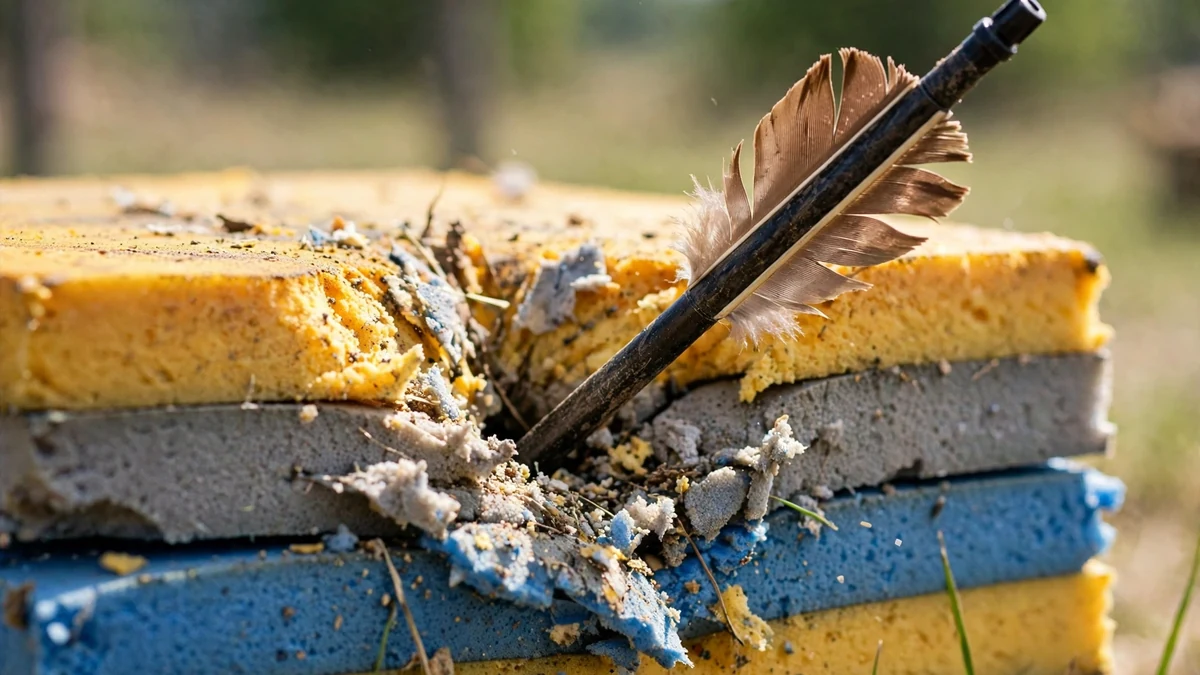
Everything in this guide follows from one fact: a bolt kills by hemorrhage. The broadhead cuts blood vessels and organs, and the deer dies from blood loss. There is no meaningful hydrostatic shock from a bolt. A rifle bullet carries far more energy, creates a much larger wound channel, and breaks bone that would stop a bolt. A crossbow gives you none of that margin, and that is why shot placement matters so much more with a crossbow than with a rifle.
Hemorrhage, not shock
Because there is no shock wave to compensate for a near miss, a bolt must physically pass through vital tissue to be lethal. A bolt that clips only one lung, or stops in the liver, can mean a long wait or a lost deer. That is why every aim point in this guide is built around the lungs first. They are the largest vital target, and a bolt through both of them is the most reliable kill a crossbow hunter can make. The heart is smaller, lower, and farther forward, and I treat it as a bonus on a good lung shot, not as the primary aim point.
Why a pass through matters
A complete pass through creates two wound channels, an entry and an exit, and two holes bleed faster than one. It also leaves a better blood trail, because blood can escape from both sides of the deer instead of pooling inside the chest. A bolt that stops inside the deer can plug the exit hole with fat or intestines and thin the trail to a few drops. That is why the goal on every shot is a double lung pass through.
What a bolt can and cannot punch through
A sharp broadhead passes through ribs on entry and usually on exit. Heavy bone is a different matter: the scapula, humerus, spine, skull, and sternum are not reliably penetrable by a bolt. On energy, I will not give you a single foot pound floor, because the sources do not agree on one. Published figures range from 27 to 40 foot pounds at the low end to 55 foot pounds and above as a preferred figure. What the sources agree on is the principle: a heavier bolt retains more momentum downrange, and momentum, not kinetic energy alone, drives penetration once the broadhead meets resistance. If you want the equipment detail behind that principle, read the fixed vs mechanical broadhead picks guide and the how to pick the right bolts guide.
Deer Vital Anatomy: Where the Heart and Lungs Really Sit
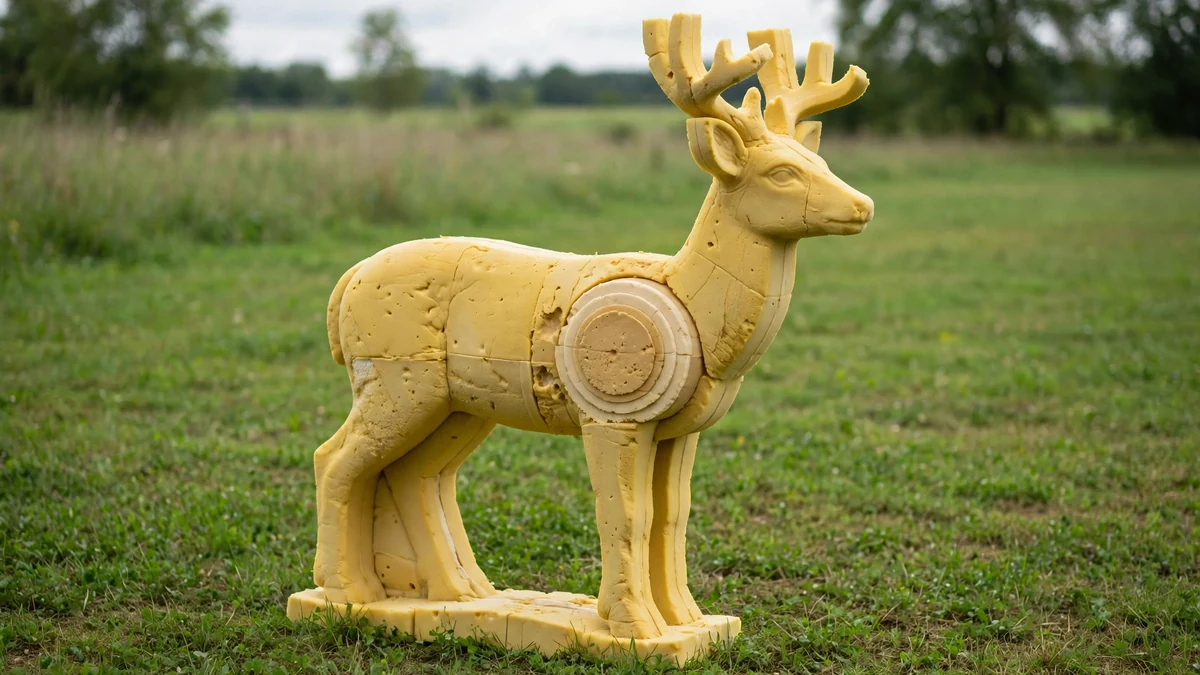
The heart and lungs sit in the chest cavity just behind the front shoulder, roughly one third up from the bottom of the chest. That one sentence is the foundation of the whole guide. The double lung zone is about the size of a volleyball, about 8 to 10 inches across on a mature deer. Treat that size as approximate, because deer vary, but it tells you the real size of the target: generous on a broadside deer, and much smaller once the deer turns.
The vital zone in plain terms
The heart sits low in the chest, and most of it sits directly above the front leg, not behind it. The lungs fill the chest from the belly up to the backbone, with no empty space between the lungs and the spine. They are the largest vital target you have. The liver sits behind the lungs, behind the diaphragm. It is lethal when hit, but slow, and it is never a target to aim for on purpose. The stomach and intestines sit farther back in the abdomen, also behind the diaphragm. The diaphragm slants forward from the spine toward the sternum, so the back wall of the chest is not vertical. That slant matters: a shot that looks just behind the shoulder from a steep angle can land behind the diaphragm in the paunch instead of in the lungs.
The top of the heart is partly covered by the lungs, and the largest blood vessels run along the top of the chest cavity near the spine. Hitting them causes massive hemorrhage, but aiming for them deliberately is a mistake, because a high miss means a non-lethal back wound. The whitetail chest is enclosed by 13 pairs of ribs, and a bolt must pass through ribs on entry and usually on exit. Ribs are penetrable. Heavy shoulder bone is not reliably penetrable.
The no-shot zones on a broadside deer
Four misses define the edges of the vital zone. Too high, and you are in the backstrap and spine area with no vitals, or you catch a high single lung that leaves a sparse trail. Too far back, and you are in the liver at best and the gut at worst. Too far forward, and you are in shoulder bone. Too low, and you are in the brisket, which holds no vitals. Study an anatomy diagram, then practice on a 3D deer target. The same aim points apply to mule deer.
The vital V and the crease: two ways to describe the same spot
Experienced bowhunters argue about two aim points on a broadside deer, and you should know both. The vital V is the window formed where the scapula, the shoulder blade, angles back and the humerus, the leg bone, angles forward, making a sideways V shape about 8 inches wide on a whitetail. Aim right over the near front leg, about 3 inches above the elbow, one third to halfway up from the belly line. A broadhead through this V passes through the front of the lungs and the top of the heart with only ribs in the way. The crease is the fold the front shoulder makes where it meets the midsection. Aim an inch or two behind the crease, along the back of the front leg, one third up from the belly. Its advocates argue the vital V is risky for new hunters, because a shot pulled low or forward hits heavy shoulder bone that the bolt may not pass through, and because the lungs narrow in the forward chest. Aiming for the crease holds for the area where the lungs are tallest and widest.
My recommendation for crossbow hunters, including beginners, is to teach the crease as the primary aim point, and to understand the vital V as the window the crease shot passes just behind. The crease is more forgiving, it matches hunter education guidance, and it keeps the bolt off heavy bone. Both aim points work when hit cleanly, and the difference between them is only an inch or two. The vital V is not a shoulder shot. It is a window between bones, and a shot an inch too far forward from the V hits the heavy joint where the scapula, humerus, and radius meet.
The Broadside Shot: Your Highest Percentage Shot
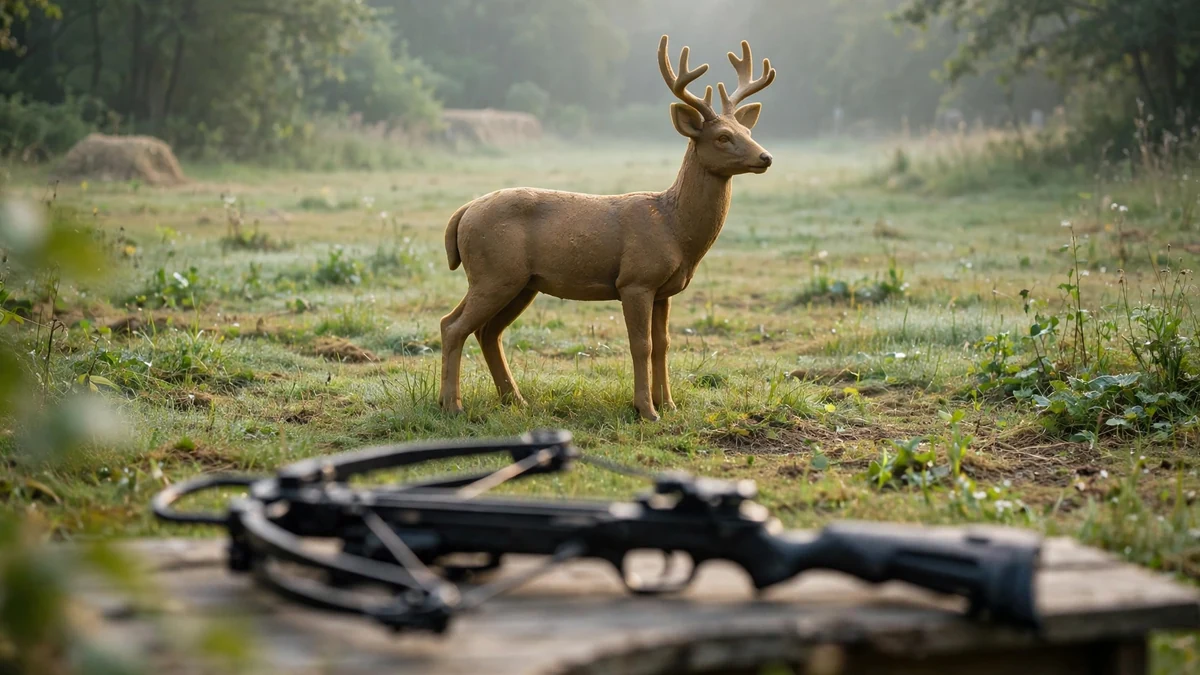
The broadside shot is the best angle a deer can offer, and it is the shot to wait for whenever you can get it. The deer stands perpendicular to you, the full side is visible, the vital area is at its largest, and the shot forgives an inch or two in any direction. An inch or two off still hits vitals.
Here is the aim point, step by step. Find the near front leg. Picture a vertical line running up from just behind the shoulder, along the back of the front leg. Along that line, aim about one third of the way up from the bottom of the chest, measured from the belly line, not the back line. That spot puts the bolt through the top of the heart and both lungs on most whitetail and mule deer. With a scope, line up the vertical reticle with the center of the front leg and the horizontal reticle about one third to one half way up the body.
Take the shot when the deer has stopped moving, is calm, and the near front leg is forward if possible. A deer with its head down feeding is a bonus, because the scapula has rotated away from the vitals. The bolt passes through the near ribs, both lungs, often the top of the heart, and out the far ribs. A good hit leaves a large, bright red, frothy blood trail. The common mistakes are aiming too far back, which lands in liver or gut, aiming too high, which gives a single lung hit or a backstrap wound, and aiming at the shoulder, which puts the bolt into bone. If the deer is not calm, or not stopped, wait. A rushed shot at a moving deer is how good opportunities become lost deer.
Shot Placement by Angle
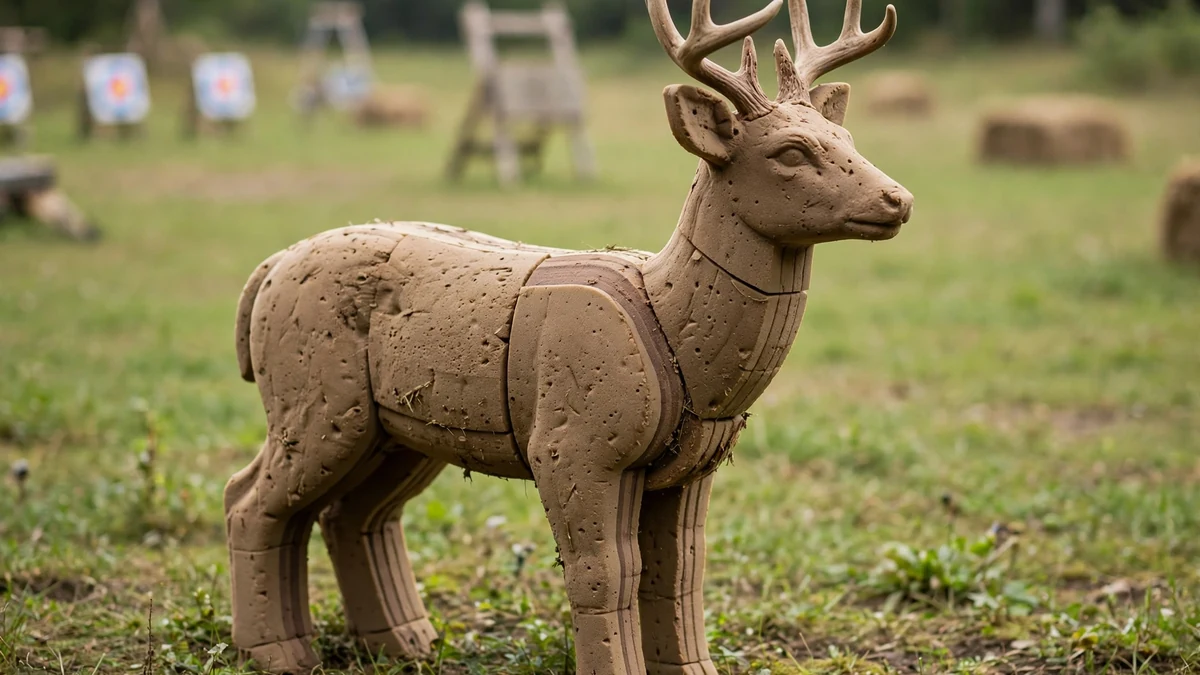
No deer stands perfectly broadside every time. The table below is the whole section in short form, and the detail after it explains what the bolt must pass through at each angle.
| Angle | Aim point | What it hits | Risk | Take it? |
|---|---|---|---|---|
| Broadside | Behind the front leg, one third up from the belly | Both lungs, top of heart, pass through | Low, forgiving by an inch or two | Yes, first choice |
| Quartering away, slight, under 45 degrees | Through the deer toward the off side shoulder, one third to one half up | Both lungs, heart, far shoulder | Medium, window shrinks as the angle increases | Yes, second choice |
| Quartering away, over 45 degrees | No good aim point | Paunch, then maybe liver | High, glancing wound likely | No |
| Quartering toward, slight | Inside edge of the near side leg, one third to one half up | Front of near lung, heart, far lung if perfect | High, shoulder bone and sternum in the way | Experts only, usually pass |
| Quartering toward, hard | No good aim point | Shoulder bone, brisket, single lung | Very high | No |
| Frontal | Narrow gap between the shoulders, center chest | Heart and lungs if perfect, bone if not | Very high for a bolt | No with a crossbow |
| Rear, straight away | No aim point | Pelvis, intestines, ham muscle | Certain wounding | Never |
| Treestand, steep, deer close and below | Slightly higher on the body than the level aim point, mid chest | Top of near lung, bottom of far lung | Medium to high, single lung if held too low | Only if a double lung path remains, pass if directly under the stand |
| Treestand, moderate, deer 20 yards or more out | Near the level aim point, slightly higher | Both lungs | Low to medium | Yes, with practice |
Quartering away, your solid second choice
A slight quartering away deer, angled away from you at 20 to 45 degrees, is a good shot, and some hunter education material calls a slight quartering away, with broadside, the ideal presentation for bowhunters. Do not aim at the entry point you see. Aim through the deer: line up the vertical reticle with the off side leg or shoulder, with the horizontal reticle one third to one half way up the body. The bolt angles forward through both lungs and the heart to exit at or near the far shoulder. The rule of thumb is simple: aim for the opposite shoulder. A good quartering away shot can do maximum heart and double lung damage, because the bolt travels through more vital tissue than a broadside shot. But a steeper angle means a longer path and a smaller window, and the most common mistake is aiming at the visible center of the chest, which sends the bolt behind the vitals into the paunch. The cutoff is 45 degrees. Beyond 45 degrees, do not take the shot.
Quartering toward, experts only, and usually a pass
A deer angling toward you is a high stakes gamble, and the default advice for most hunters, and for all beginners, is to not take it. Wait for the deer to turn. The near side shoulder blade and leg bones stand between you and the heart and lungs, and a misplaced bolt can fail to penetrate the chest or deflect into a non-vital area. State agency guidance is blunt on this point: Texas Parks and Wildlife advises bowhunters to avoid the quartering toward shot, and the National Deer Association recommends waiting for a broadside or slightly quartering away deer. If an experienced hunter takes it at all, it is only at a slight angle, only with extreme accuracy, and only when no better angle is coming. The aim point is the vertical reticle with the inside edge of the near side leg, horizontal one third to one half way up. Sources disagree on this aim point, with some describing it as the front of the near shoulder or just above the sternum, and that disagreement itself is a reason to treat this as an experts-only shot. A perfect shot threads the inside edge of the near leg, the front of the near lung, the heart, and the far lung. An imperfect one finds shoulder bone, sternum, brisket, or a single lung.
Frontal, do not take it with a crossbow
A deer facing directly toward you offers a narrow gap between the two shoulders, framed by heavy shoulder and leg bones on both sides and the brisket and sternum below. A bolt that misses the gap by an inch hits bone and may never reach the vitals. Texas Parks and Wildlife says bowhunters should not take head-on shots, and the National Deer Association says to avoid shots at deer facing toward you. That is the agency position, and I follow it. A rifle hunter can consider a frontal shot, because a bullet can break through the bone framing the gap and still reach the chest. A bolt cannot be counted on to do that. A deer facing you often turns to give a better angle if you wait, and waiting is the correct move.
Rear and straight away, never take it
A deer facing directly away from you offers no ethical path to the heart or lungs. The vitals are completely shielded by the pelvis, intestines, and heavy ham muscle. Any shot here is a gut shot or a hamstring shot, and it is a guaranteed wounding shot. Hunters sometimes call it the Texas heart shot, but the name is a joke, not a technique. There is no heart to hit from behind. Wait for the deer to turn, or let it walk.
Ground blind level shots and treestand steep angles
A level shot from a ground blind is the baseline, and I want to state that plainly, because every other angle in this guide is measured against it. The manufacturer aim diagrams assume the hunter is on the same level as the deer. A level shot has no angle correction: the bolt travels horizontally through both lungs, enters at the aim point, and exits at the same height on the far side.
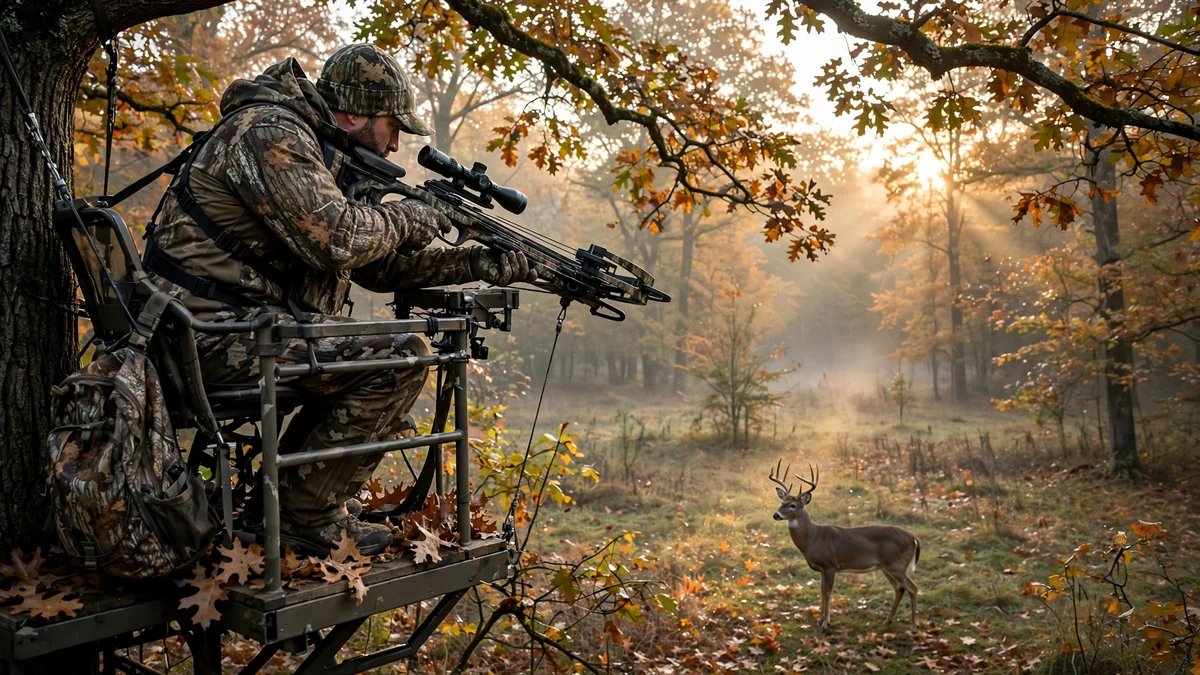
A treestand changes the geometry, and this is the section where older advice disagrees with itself, so here is the position I follow, from the manufacturer guidance and the most recent published shot placement work. On a steep downward shot, the point of impact sits higher than the point of aim, and the steeper the angle, the higher the impact. The wound channel is angled, not horizontal. So on a close, steep shot, hold slightly higher on the body, so the bolt passes through the top of the near lung and the bottom of the far lung. The keyword is slightly: hitting too high with a crossbow is bad. Two lower authority sources say to aim lower from a stand, but that advice appears to confuse trajectory drop with angle geometry, and I do not follow it. A stand 20 feet up with a deer 15 yards away gives about a 60 degree downward angle. Range the deer, not the ground beneath it, because the line of sight distance from a stand overstates the true horizontal range. Use a rangefinder with angle compensation if yours has it. Practice from an elevated position on a 3D target at the same angles as your stand. And know the limit: a deer directly under the stand is a no-shot. The angle is too severe for a double lung pass through, and the best case is a single lung hit and a long tracking day. Uphill and downhill shots follow the same principle: the bolt path is angled through the chest, so the entry and exit heights differ.
The Shoulder Bone Problem: Why a Crossbow Is Not a Rifle
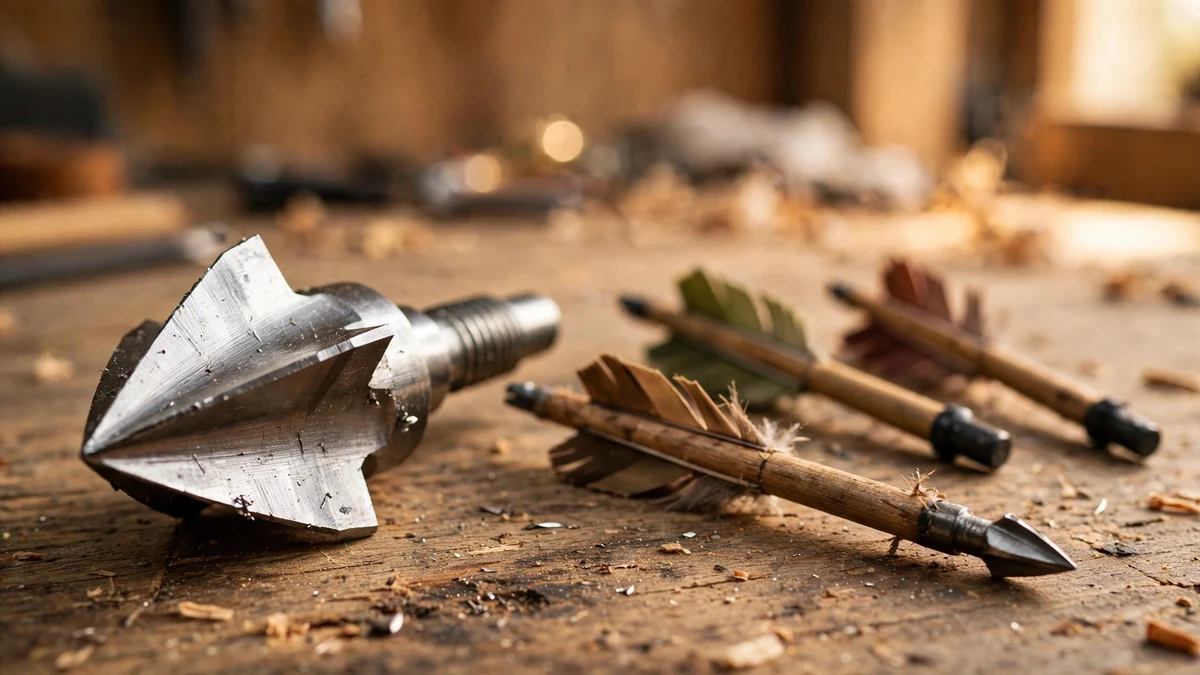
The scapula, the shoulder blade, is a dense bone with a ridge, described by experienced bowhunters as almost impenetrable by most arrows even with an ultra sharp broadhead. The shoulder also includes the humerus, the upper leg bone, and the joints where the scapula, humerus, and radius meet, which are heavy and solid. A bolt hitting heavy shoulder bone often fails to penetrate to the vitals, unlike a rifle bullet, and frequently results in a wounded and unrecovered deer. The practical rule is clear: do not aim at the shoulder with a crossbow.
That is why the high shoulder shot belongs to the rifle and not to the crossbow. With a rifle, a high shoulder hit can break bone and shock the spine, anchoring the deer on the spot. With a crossbow, the same aim point risks a heavy bone hit with no penetration to the vitals, or a high single lung hit. The live article this guide replaces mixed rifle and crossbow shot placement together, including a rifle ammunition question that has no place on a crossbow site. That content is gone here, and the reason is this section: a crossbow cannot take the shots a rifle can, because a bolt must cut its way through tissue and cannot break its way through bone.
The scapula rotates as the deer moves its legs, and that rotation is your friend if you wait for it. The scapula is out of the way when the front leg is forward, or when the deer puts its head down to feed. Wait until the near front leg steps forward or the head drops, then take the broadside shot through the crease. If you do hit bone, mark the spot, check the bolt if you recover it, wait, and track carefully. Do not assume a shoulder hit is a kill. For the broader ethics and safety framing, read the safety rules for handling every bow.
How Far Is Too Far? Ethical Range for Crossbow Shot Placement
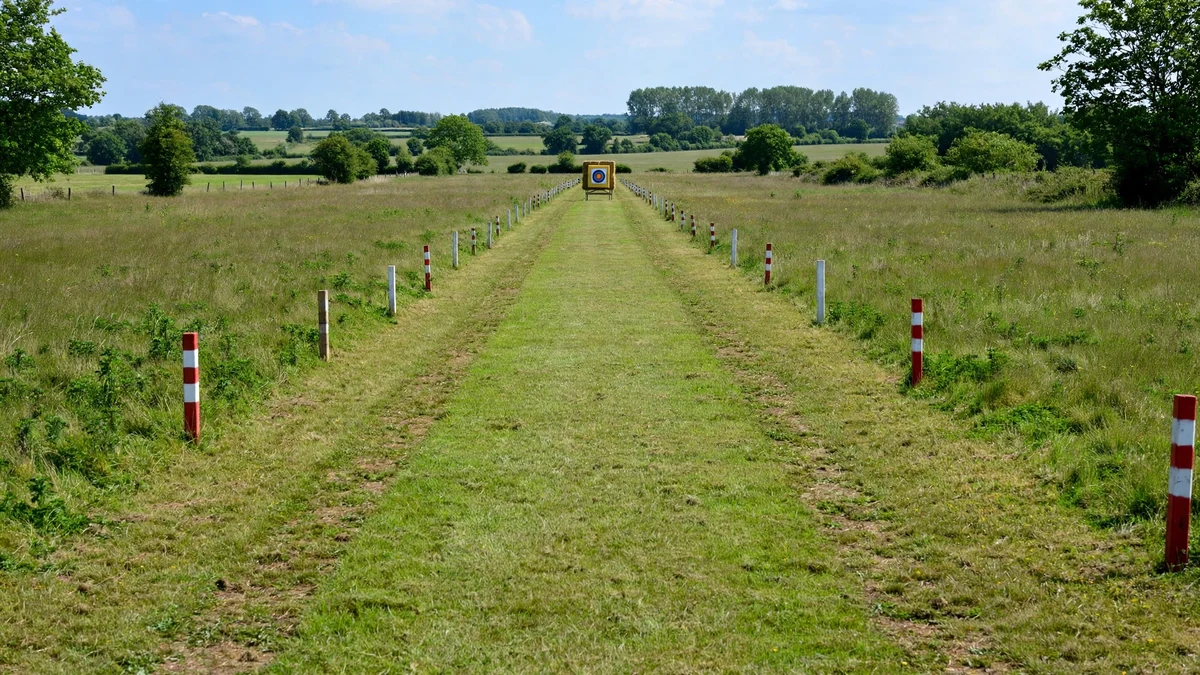
Most ethical crossbow shots happen inside 20 to 40 yards, and 40 yards is the outer limit for most hunters. Thirty yards is a stricter position many experienced hunters set for themselves. Claims of 50 or 60 yard ethical shots are outliers, and I reject them as guidance. A crossbow can group on a target at 60 yards and beyond, but target accuracy is not hunting accuracy.
The 40 yard rule for most hunters
Your ethical range is the shortest of three distances: your accuracy limit under pressure, your bolt energy limit at distance, and the animal reaction limit. Whichever is shortest sets the number.
The personal limit test
Here is the test that matters more than any published number. From your hunting position, sitting, kneeling, or in a blind, in the clothes you will hunt in, can you consistently place every shot into a 3 inch circle? If you cannot do it at 40 yards, your limit is shorter than 40 yards. Determine the distance on the range, then subtract 5 yards for the field, and stick to it. If you are still choosing a crossbow, the tested picks for every budget guide can help you compare bows that hold accuracy at hunting distances, but no bow changes the test. The test measures you, not the bow.
Why distance magnifies every error
Three things shrink your margin as distance grows. First, bolt drop. A 400 grain bolt at 400 feet per second drops roughly 7 to 8 inches between 30 and 50 yards, depending on the setup, and a 5 yard misjudgment in distance at 40 yards is about a 3 inch miss high or low, enough to turn a lung shot into a wound. Treat every drop figure as approximate and dependent on bolt weight and speed. Second, wind. A 10 mile per hour crosswind can push a bolt several inches off course at 40 yards. Third, the deer itself. This is the jumping the string problem, and it is the reason the lower third hold matters at distance.
Jumping the string
Sound travels about 1,125 feet per second. A bolt travels about 400 feet per second. At 40 yards, which is 120 feet, sound reaches the deer in about 0.1 seconds and the bolt arrives in about 0.3 seconds. That leaves a 0.2 second window in which the deer can hear the shot and drop, turn, or leap before the bolt gets there. Sources differ on exactly how far a deer drops in that window: 2 to 6 inches at 30 yards in one source, 6 to 8 inches at 40 yards in another, and more than 10 inches at 40 yards in a third. No single precise number is verified. What is consistent is the mechanism, and the fix. Aim at the lower third of the vital zone on a broadside deer, which is the same spot as the one third up from the belly aim point, so that when the deer drops, it drops into the path of the bolt. If you aim at the center of the lungs, the deer can drop below the bolt and you hit backstrap or miss cleanly. An alert, tense deer is more likely to drop at the shot than a calm one, and a deer with its head down feeding is less likely to react fast. Inside 20 yards most deer have no time to move.
After the Shot: Reading Blood and Knowing How Long to Wait
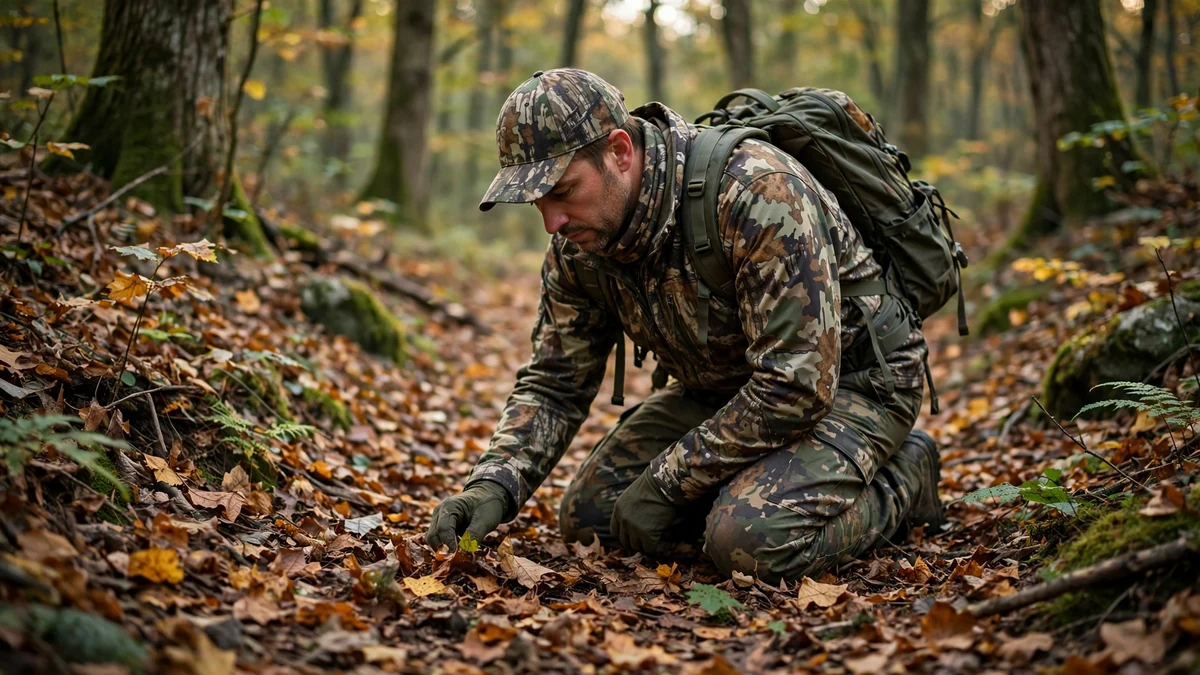
The shot is only half the job. What you do in the minutes and hours after the shot decides whether a good hit becomes a recovered deer. Read the deer first, read the blood second, and wait longer than your impatience wants you to.
What the deer does right after the hit
A heart or lung hit deer usually mule kicks, jumps, and sprints away, often expiring in seconds but able to travel up to 150 yards. The tail may clamp down instead of flagging up. A liver hit deer runs a few paces, then walks in a hunched posture with its tail tucked between its legs. A gut hit deer hunches up, walks or trots a few paces, then walks slowly, and may bed down within sight. A muscle hit deer often keeps running at a normal pace, with no hunch and a thin, inconsistent trail.
Before you move, mark the exact spot where the deer stood at the shot and where you last saw it, with flagging tape or a phone waypoint. Note the time. Replay the shot in your head: where did the bolt hit, did it pass through, what did the deer do. Then find the bolt if you can and read it. The bolt carries the freshest sample: blood color, hair, smell, fat, and green or brown matter.
Blood color and what it means
| What you see | Likely hit | What it means |
|---|---|---|
| Bright red or pink, frothy, bubbly | Lungs | Air from the punctured lung mixes with blood. Heavy trail, short track. |
| Bright red, heavy spray or large pools, no bubbles | Heart or major artery | The heart pumps blood out in spurts. Very heavy trail. |
| Bright red, sparse trail | Single lung, high hit, or marginal pass through | Lethal may be slow. Treat conservatively, wait longer. |
| Dark red, maroon, burgundy, thick, no froth | Liver | Venous blood. Lethal but slow. Moderate trail at first, then sparse. |
| Dark red, sparse | Muscle or liver | Volume and context tell which. Muscle alone is often non-lethal. |
| Green, brown, or yellow tinge, food particles, foul odor, clear or greenish fluid, fat or tallow | Gut, stomach or intestines | Digestive contents in the wound. Sparse, watery trail. Longest wait. |
| Almost no blood, green or brown on the bolt | Gut | Do not assume a miss because there is little blood. |
| White hair, bone fragments, disturbed ground | Marginal hit, possibly leg or brisket | Look for hair and ground sign, not just blood. |
Two cautions belong with this table. Bright red is ambiguous on its own. It can mean heart, artery, or a leg or muscle wound, and volume is the tie breaker: heavy spray means heart or artery, sparse drops mean muscle or a marginal hit. Dark red is also ambiguous: it usually means liver, but it can mean muscle, and the hunched walk plus a sparse, dark trail together point to liver. Frothy pink blood almost always means a lung hit, and it is the most reliable single sign in the table. Blood color is a guide, not a diagnosis.
How long to wait
| Hit | Minimum wait before tracking | Typical recovery distance |
|---|---|---|
| Heart or double lung, deer seen down or crash heard | 30 minutes, most double lung deer are dead within 5 minutes | Usually within 100 yards, often 50 to 150 yards |
| Heart or double lung, deer not seen down | 30 minutes to 1 hour | Same as above |
| Single lung or high lung | Several hours, at minimum 45 to 60 minutes | Uncertain, may be long, grid search may be needed |
| Liver | 4 to 6 hours | Beds within 100 to 200 yards if not pushed |
| Gut or paunch, stomach or intestines | 8 to 12 hours, often overnight in cool weather | Beds within 100 to 200 yards if not pushed |
| Unsure of the hit, or no blood found | Back out, wait several hours, then start slowly | Unknown, do not push |
Sources differ by an hour or two on liver and gut, and the longer wait is the safer choice when you are unsure. The heart and lung wait is 30 minutes in most sources, with outliers at 10 to 15 minutes and about an hour. The liver wait is 4 to 6 hours in the consensus, with outliers at 2 to 4 hours and 8 to 10 hours, and tracking too early is the single most common reason liver hit deer are not recovered. The gut wait is 8 to 12 hours or overnight. The single lung wait is the widest conflict of all, from 45 to 60 minutes to 8 to 10 hours, so treat a suspected single lung hit as a several hour wait.
Two exceptions override the wait. In warm weather above 60 degrees, cap the gut wait at 6 to 8 hours to protect the meat, and note the 50 degree threshold some sources use for leaving a deer overnight. And rain or snow moving in overrides the wait entirely: take the trail immediately, quietly, before it is erased. When in doubt, wait longer, not shorter.
How to track without pushing the deer
Wait first, then go to the shot site quietly. Find the bolt, read it, and mark the spot. Follow slowly and flag every drop with tape or markers. Look past the blood for tracks, broken cover, hair, and disturbed leaves. If the trail dries up, grid search in 10 yard arcs in the direction of travel. If you jump a bedded deer and it gets up and runs, back out immediately and wait longer. Pushing a wounded deer is the main cause of lost deer, especially on liver and gut hits. A gut shot deer that is pushed will run for miles and likely not be recovered. Left alone, it beds within 200 yards and expires in 8 to 12 hours.
When the trail goes cold, or the hit was marginal, or you are unsure, call a blood tracking dog handler before you give up. Availability and legality vary by state, and rules on using dogs and drones to recover deer vary as well, with some states limiting them or not allowing them. Check your state rules, and do not assume tracking dogs or drones are legal everywhere. After recovery, confirm the deer has expired, tag it according to state rules, and field dress promptly to cool the meat. Many states require validating or notching a tag immediately upon recovery, before the deer is moved.
After a Marginal Hit: What to Do Next
Single lung: wait longer than you think, track slowly, expect a sparse trail, and be ready to grid search. Do not assume the deer is dead because you saw lung blood. One lung can keep a deer alive for hours. Liver: back out quietly, wait 4 to 6 hours, and return slowly. The deer is likely dead in its first bed within 200 yards if it was not pushed. Gut: back out quietly, wait 8 to 12 hours or overnight, and return in the morning if the shot was in the evening. Do not take a second shot unless you get a clear, ethical second opportunity at the vitals. Do not push. Muscle or leg: wait 30 minutes to 1 hour and track carefully. A muscle hit alone is often non-lethal, and some muscle hit deer survive, but a careful, slow track is still the right move.
No blood, no bolt, unsure: back out immediately, wait several hours, then search the shot site for hair, bone, fat, and ground sign, not just blood, and grid search from the last known direction of travel. If you find the deer alive and bedded, do not rush in. A second shot must be a clear vital shot, never a head or neck finishing shot. If you cannot get one, back out and wait longer. When in doubt, wait longer, not shorter. Pushing a wounded deer is the main cause of lost deer.
Shots to Never Take With a Crossbow
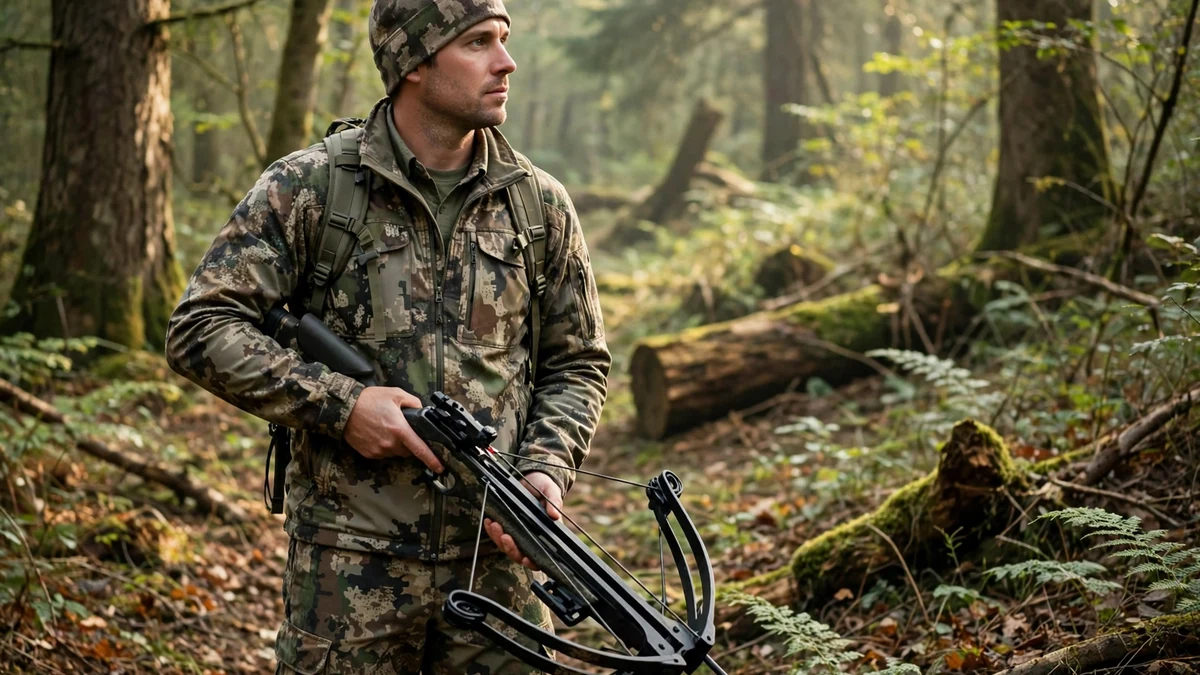
Head: a tiny, constantly moving target. A miss by an inch hits the jaw, sinus, or neck muscle, and the deer runs off with a horrific, non-fatal injury. Never acceptable with a crossbow. Neck: the same problem, a small target, with only the carotid artery as a vital structure, protected by heavy bone and muscle. Wait for the chest shot. Spine and high shoulder: with a rifle this can anchor a deer. With a crossbow it is a bone hit with no reliable penetration to the vitals, or a high single lung hit. Do not aim for the spine with a bolt.
Ham, rear, and straight away: no path to the vitals, a gut or hamstring wound only. Frontal at distance, hard quartering toward, quartering away beyond 45 degrees, and steep straight down from a treestand: all pass. A moving deer: a walking deer is a harder shot, and a running deer is a no-shot with a crossbow. Wait for the deer to stop. Obscured vitals: do not shoot through brush or branches, because a deflected bolt wounds. Beyond your personal range: if the deer is beyond the distance where you can put every shot into a 3 inch circle from your hunting position, do not shoot. The rule that governs all of this: do not take the shot if you are not confident it will cause lethal damage to the vitals. Wait for a better angle.
Practice: How to Train Shot Placement Before the Season
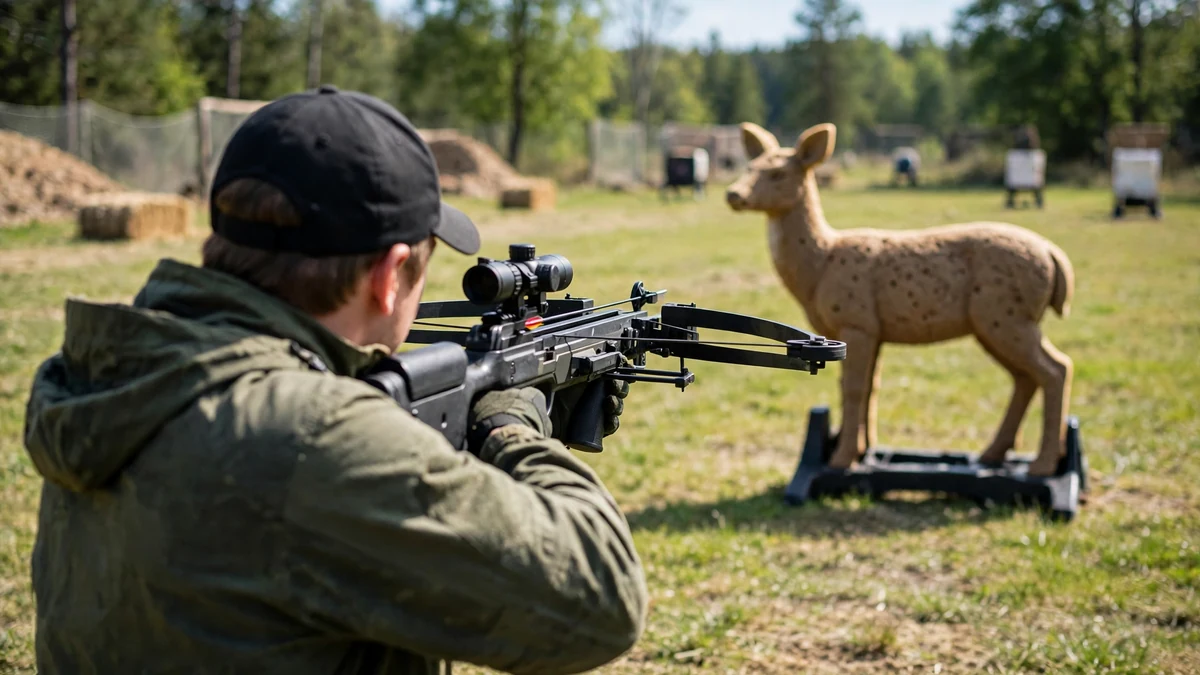
Study an anatomy diagram, then practice on an anatomically correct 3D deer target. Paper targets teach you to group. A 3D target teaches you where the vitals sit inside the shape you will actually see. Practice broadside and quartering away from the ground and from an elevated position, at 20, 30, and 40 yards, from sitting and kneeling, not just from a bench. Practice the lower third hold until it is automatic. Confirm your scope zero and your bolt and broadhead combination at the distances you will hunt, and read the five-step sighting-in walkthrough guide for the step by step detail. Do not practice with field points and hunt with broadheads you never tested at distance.
Practice the after-shot routine too, because it is part of shot placement. Mark the spot, note the time, wait. A good hit lost by rushing is still a lost deer. Run the personal limit test from your hunting position, subtract 5 yards for the field, and write the number down. That number is your ethical range.
Frequently Asked Questions
Where is the best place to shoot a deer with a crossbow?
Aim for the heart and lungs, just behind the front shoulder, about one third of the way up from the belly, on a broadside deer. A double lung hit is the largest and most forgiving target, and a pass through both lungs is the fastest reliable kill a bolt can make.
Should I aim for the heart or the lungs?
Aim for the lungs and let the heart be a bonus. The double lung zone is about the size of a volleyball, about 8 to 10 inches across, larger than the heart, and it does not require splitting the shoulder bone.
Is a quartering away shot ethical with a crossbow?
Yes, if the angle is slight, under 45 degrees, and you aim through the deer toward the far shoulder. Beyond 45 degrees, pass, because the path runs through the paunch.
Can I take a quartering toward shot with a crossbow?
Only if you are experienced, the angle is slight, and conditions are perfect. For most hunters, and for all beginners, wait for broadside or quartering away, because the near side shoulder bone stands between you and the vitals.
Can a crossbow shoot through a deer shoulder?
Not reliably. A bolt hitting heavy shoulder bone often fails to penetrate to the vitals, unlike a rifle bullet. Aim behind the shoulder, in the crease, and wait for the front leg to step forward or the head to drop so the scapula rotates away.
How far can I ethically shoot a deer with a crossbow?
Forty yards or less for most hunters, with 30 yards as a conservative limit. Your personal limit is the distance where you can put every shot into a 3 inch circle from your hunting position, minus 5 yards for the field.
Should I aim higher or lower from a treestand?
Hold slightly higher on the body on a steep downward shot, so the bolt passes through the top of the near lung and the bottom of the far lung. The point of impact sits higher than the point of aim on a steep angle. Practice from elevation, and pass on a deer directly under the stand.
How long should I wait before tracking a deer?
Wait 30 minutes for a good heart or double lung hit, 4 to 6 hours for a liver hit, and 8 to 12 hours or overnight for a gut hit. A suspected single lung hit deserves several hours. When unsure, wait longer. Rain or snow moving in is the exception: take the trail immediately before it is erased.
What does frothy pink blood mean?
A lung hit. Air from the punctured lung mixes with the blood, giving it a frothy, bubbly look. It is the most positive blood sign a crossbow hunter can find, and it usually means a short trail.
What should I do if I gut shot a deer?
Back out quietly, wait 8 to 12 hours or overnight in cool weather, do not push it, and return slowly in the morning. Green or brown matter and a foul odor on the bolt confirm a gut hit. If the trail goes cold, call a tracking dog handler, and check your state rules for dogs first.