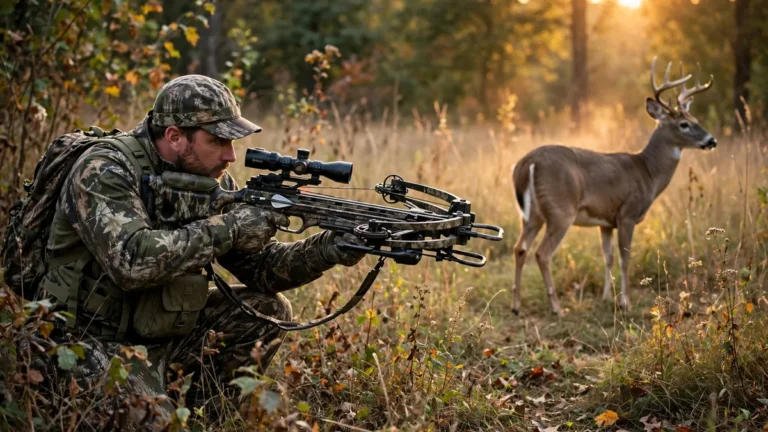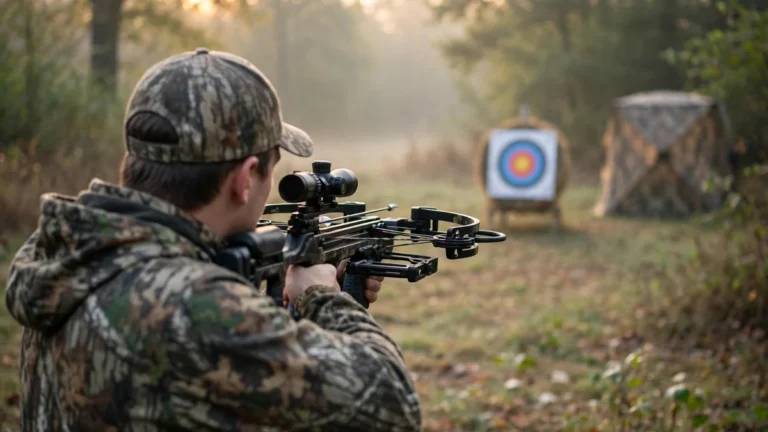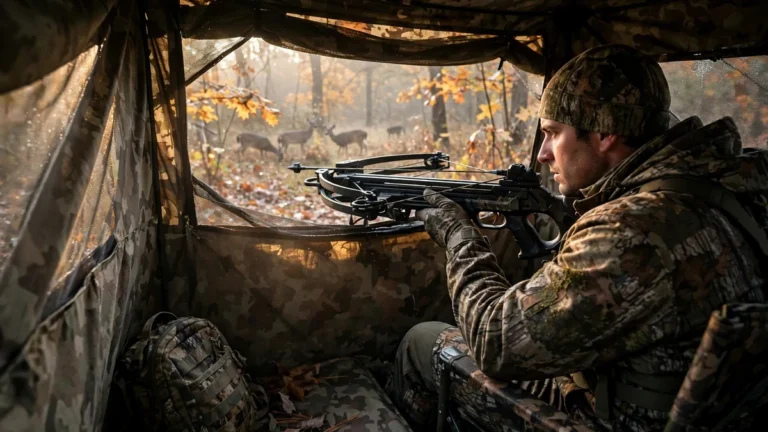
TenPoint Vapor RS470 Review
TenPoint Vapor RS470 Review
I have shot and handled a lot of TenPoint bows over the years, and the Vapor RS470 is the one I keep coming back to in conversation, because it was the bow that changed what a crank cocking system could do. It was TenPoint’s reverse draw flagship when it launched in May 2020, it advertised 470 fps, and it was the first TenPoint bow with the original ACUslide system, which cocks the bow at 5 lb of effort and lets you de-cock it silently and safely without firing an arrow. That system is still the best reason to want one. The hard truth comes first, though: the RS470 is discontinued, it is not sold new, and there is no current new bow price. This review treats it as what it is now, a used flagship, and it gives you the tested speed next to the advertised speed, the real package differences, the corrections to the old review, and the checks to run before you pay for a used one.
The Short Answer
The TenPoint Vapor RS470 is discontinued. TenPoint has no product page for it, it is absent from the 2026 lineup, and the two main retailer listings that still show it both mark it discontinued. If you want one, you are buying used or leftover stock, and you should read this review as a used buying guide, not as a buy new pick.
What the bow was, in one paragraph: a reverse draw flagship that advertised 470 fps with a 370 grain arrow, 225 lb of draw weight, a 17 in power stroke, and a 6.5 in cocked width, all in a 31 in bow that weighed 8 lb bare. Its headline feature was the original ACUslide cocking and de-cocking system, built in, with an Auto-Brake gear system and a 7.5 in Xtend adjustable crank handle. Cocking effort was 5 lb. De-cocking was silent, safe, and controlled, and the handle stopped in place if you let go of it at any point. That is the feature that still matters most, and it is the feature the old review on this site got wrong, because it named a different cocking system entirely.
On speed, be precise about what was measured and what was not. The advertised figures are 470 fps with a 370 grain arrow, 460 fps with a 400 grain arrow, and 440 fps with a 445 grain arrow. The only instrumented test found measured 448 fps with a 420 grain bolt, 430 fps with a 462 grain bolt, and 416 fps with a 500 grain bolt. That test did not shoot a 370 grain arrow, so the advertised 470 fps was never independently confirmed. The 420 grain result of 448 fps sits neatly on the advertised speed curve, so the 470 fps claim is plausible, but plausible is not confirmed, and I will not claim the test proved it.
On price, the base package launched in May 2020 at about $2,900 in Graphite Gray and about $3,000 in Veil Alpine. The rangefinding scope package launched in November 2020 at a MAP of $3,999.99. No reliable used price range could be established, because only one weak used listing price surfaced in the research, and no sold listings were retrieved. Do not let any page quote you a used price range for this bow as if it were a market fact. It is not one.
Who should still want one: a hunter who specifically wants the original 5 lb ACUslide with safe de-cocking, or a buyer who finds a complete rangefinding scope package with a working scope and verified string condition. Who should not: anyone who wants a new bow with a full new purchase warranty, anyone who wants the lightest rig for long walks, and anyone on a budget. A current TenPoint TX Ultra costs about $2,300 new, which is about $600 to $700 less than the RS470 base package cost in 2020, and it is the practical buy for most hunters. If your budget reaches about $3,500, buy the current TRX Ultra new instead of a used RS470 at a similar price. If you are comparing current TenPoint models, start with our guide to the TenPoint lineup, ranked hub, and if you want the current flagship class, read our guide to the top tested bows guide.
Best Discontinued Reverse-Draw Flagship: Vapor RS470
Speed: 470 fps advertised | Price: Discontinued, last known base about $2,900-$3,000 | Width cocked: 6.5 in
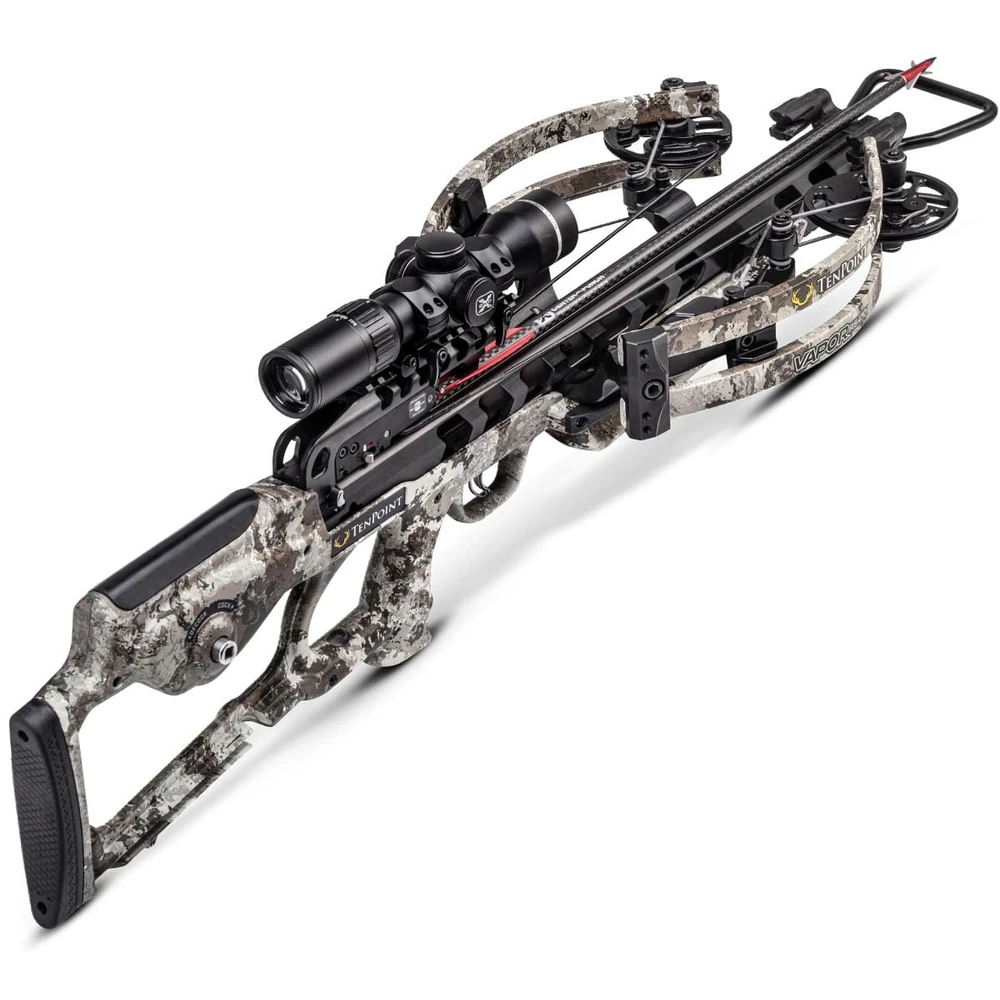
The RS470 arrived in May 2020 as TenPoint’s top bow, and it was a statement of intent. Reverse draw, a 17 in power stroke, RX7 dual cams that rotate 404 degrees, and a crank system that removed the two things hunters disliked most about high power crossbows: the hard cocking effort and the unsafe de-cocking. TenPoint built it in Mogadore, Ohio, and sold it in three main packages, a base package with a standard scope, a rangefinding scope package, and a Rangemaster 100 package. Within a few years it was replaced by faster flagships, and today it survives as a used bow with a loyal following and a thin owner record, because it sold in small numbers at a high price.
I am writing this as David, an experienced hunter who has used TenPoint bows in the stand and the blind, and I am writing it from the research, not from a hunt I did not take. I did not invent a hunt with this bow, and I will not pretend the instrumented test numbers are my own range notes. Where a figure comes from a published test, I label it tested. Where it comes from TenPoint, I label it advertised. That distinction is the whole point of this review, because the old article on this site blurred it, and blurred the cocking system too.
Vapor RS470 Specs: Advertised vs Tested
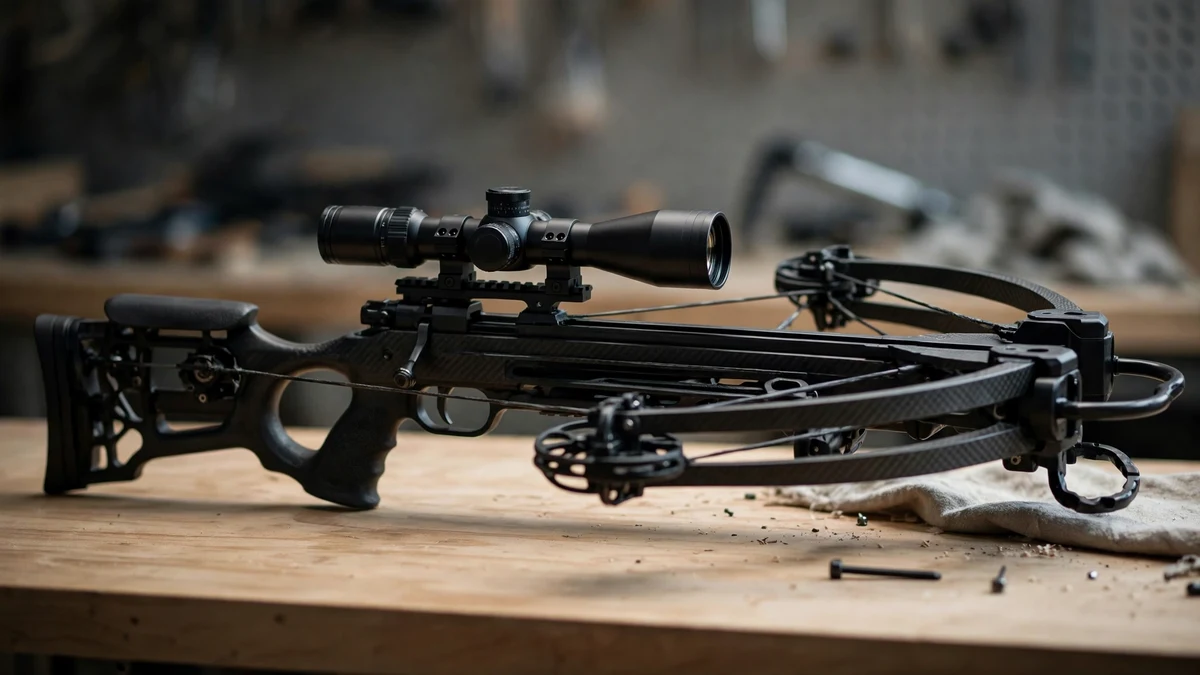
Every figure below is labelled advertised or tested. Advertised means it comes from TenPoint launch copy or the TenPoint spec table. Tested means it comes from the one instrumented magazine test found, which measured speed with three arrow weights, trigger pull, group size, and weights. Do not mix the two columns.
| Spec | Figure | Label |
|---|---|---|
| Speed, 370 grain arrow | 470 fps | Advertised |
| Speed, 400 grain arrow | 460 fps | Advertised |
| Speed, 445 grain arrow | 440 fps | Advertised |
| Speed, 420 grain bolt | 448 fps | Tested |
| Speed, 462 grain bolt | 430 fps | Tested |
| Speed, 500 grain bolt | 416 fps | Tested |
| Kinetic energy, 370 grain | 182 ft-lb | Advertised |
| Kinetic energy, 400 grain | 188 ft-lb | Advertised |
| Kinetic energy, 445 grain | 191 ft-lb | Advertised, the “up to” figure |
| Kinetic energy, 420 grain | 187.2 ft-lb | Tested |
| Kinetic energy, 462 grain | 189.7 ft-lb | Tested |
| Kinetic energy, 500 grain | 192.2 ft-lb | Tested |
| Draw weight | 225 lb | Advertised |
| Power stroke | 17 in | Advertised |
| Length, without foot stirrup | 31 in | Advertised, tested at 30.875 in |
| Width, axle to axle, cocked | 6.5 in | Advertised |
| Width, axle to axle, uncocked | 12 in | Advertised |
| Weight, bare | 8 lb advertised, 8.1 lb tested | Advertised and tested |
| Weight, loaded, no crank | 10.2 lb | Tested |
| Weight, Xero Elite package | 9.0 lb | Retailer listed, as packaged |
| Cocking system | ACUslide, original, built in, Auto-Brake | Advertised |
| Cocking effort | 5 lb, via 7.5 in Xtend crank handle | Advertised |
| Trigger | S1 two stage, 3.5 lb advertised, 2.73 lb tested | Advertised and tested |
| Cams | RX7 dual cams, 404 degrees rotation | Advertised |
| Cables | Vector-Quad, 4 cables, none cross the barrel | Advertised |
| Limbs | Dual Flex split limbs, Gordon Composites laminate, 12 in | Advertised |
| Barrel | Micro-Trac fluted aluminum, 20 in | Advertised |
| Stock | Two piece TEC-X, glass filled polypropylene | Advertised |
| String | BCY X99, 34.125 in, part HCA-70318 | Advertised, see note below |
| Cables | BCY X99, 13 in, quantity 4, part HCA-70418 | Advertised, see note below |
| Length of pull | 14.6 in | Tested |
| Max shot deviation, 35 yards | 0.65 in | Tested |
| Safety | Dry Fire Inhibitor, auto engaging trigger safety, safety wings, bolt retention brush | Advertised |
| Finishes | Veil Alpine or Graphite Gray, base; Veil Alpine only, Xero packages | Advertised |
| Made in | Mogadore, Ohio, USA | Advertised |
Two notes on the table. First, the width figures need care. The advertised axle to axle figures are 6.5 in cocked and 12 in uncocked. The instrumented test measured maximum width at 15.44 in at rest and 10.25 in cocked, but that is a different measurement, the widest point of the whole bow including the stirrup and limbs, not axle to axle. Do not quote 15.44 in or 10.25 in as axle to axle figures. Second, the string and cable part numbers come from TenPoint’s 2025 string and cable guide, string HCA-70318 and cables HCA-70418. One retail listing names a different replacement string, HCA-70717, for the same model group. That conflict is unresolved, and the TenPoint guide is the stronger source, so use HCA-70318 and HCA-70418 when you order parts, and confirm with TenPoint or your dealer before you buy.
The ACUslide System: The Correction That Matters Most
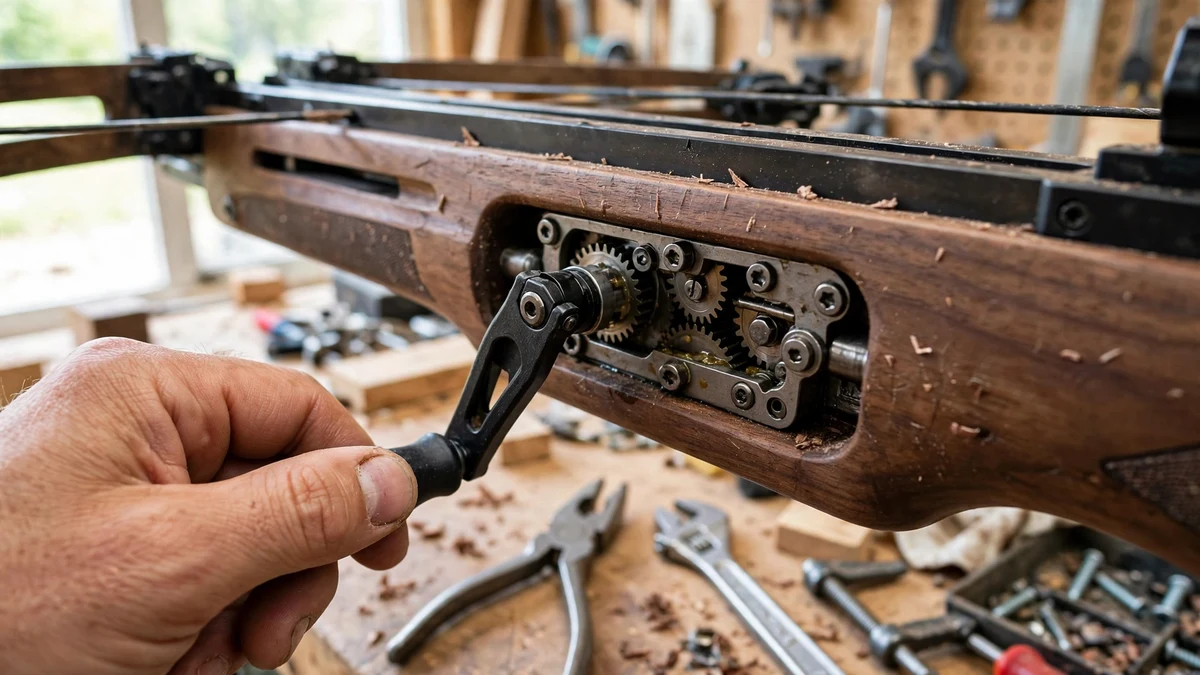
The old review on this site said the RS470 used the ACUdraw Pro. That is wrong, and it is the single most important correction in this rewrite, because the cocking system is the reason this bow exists.
The RS470 uses the original ACUslide, built into the bow, with an Auto-Brake Gear System. It is not the ACUslide MAXX, which is the newer system on current TenPoint bows, and it is not the ACUdraw Pro, which is a different, detachable TenPoint system with 8.5 lb of effort. The original ACUslide cocks the bow at 5 lb of effort through a 7.5 in Xtend adjustable crank handle, and the handle stores in the butt stock when you are not using it.
What the ACUslide actually does for you in the field is simple and practical. You turn the crank, the string draws back smoothly, and the Auto-Brake holds the string at every point. If you let go of the handle at any point, it stops in place. It does not run away, and it does not snap back. When the hunt is over, you de-cock the bow the same way, silently and under control, by cranking it back down. You never have to fire an arrow into the ground to unload it, and you never have to hold a cocked bow while you fumble with a rope.
The instrumented test praised exactly this. The tester found the ACUslide silent in either direction, and noted that you can let go at any point. That matters in a blind at last light, when you are tired and your hands are cold, because a cocking system that punishes a slip is a system you will eventually regret. The ACUslide does not punish a slip. It stops.
Two honest caveats belong here. First, do not state 5 lb for any ACUslide MAXX bow. The MAXX is a different system, and its tested cocking effort on the current TX Ultra is 13.3 lb, which is heavier than the original ACUslide’s 5 lb on the RS470. The original system was lighter to crank, and that is a genuine advantage the RS470 holds over its successors. Second, the crank handle can rattle when the bow is bumped. The instrumented test flagged this, and the tester carried the handle in his pack to stop the noise. It is a small flaw, but it is real, and a hunter who carries the bow through brush should know about it before the first sit, not during it.
The other practical consequence of the ACUslide is dependence. The draw weight is 225 lb, so this bow is fully dependent on its crank system. If the ACUslide fails, you cannot cock the bow by hand. That is why the used buying checklist later in this article puts ACUslide function first, ahead of the scope and the cosmetics. A used RS470 with a faulty ACUslide is not a bargain at any price. If you want to understand cocking systems before you buy, read our guide to cocking devices compared guide and how to cock one safely.
Speed and Energy: Advertised vs Tested, With Arrow Weights Stated
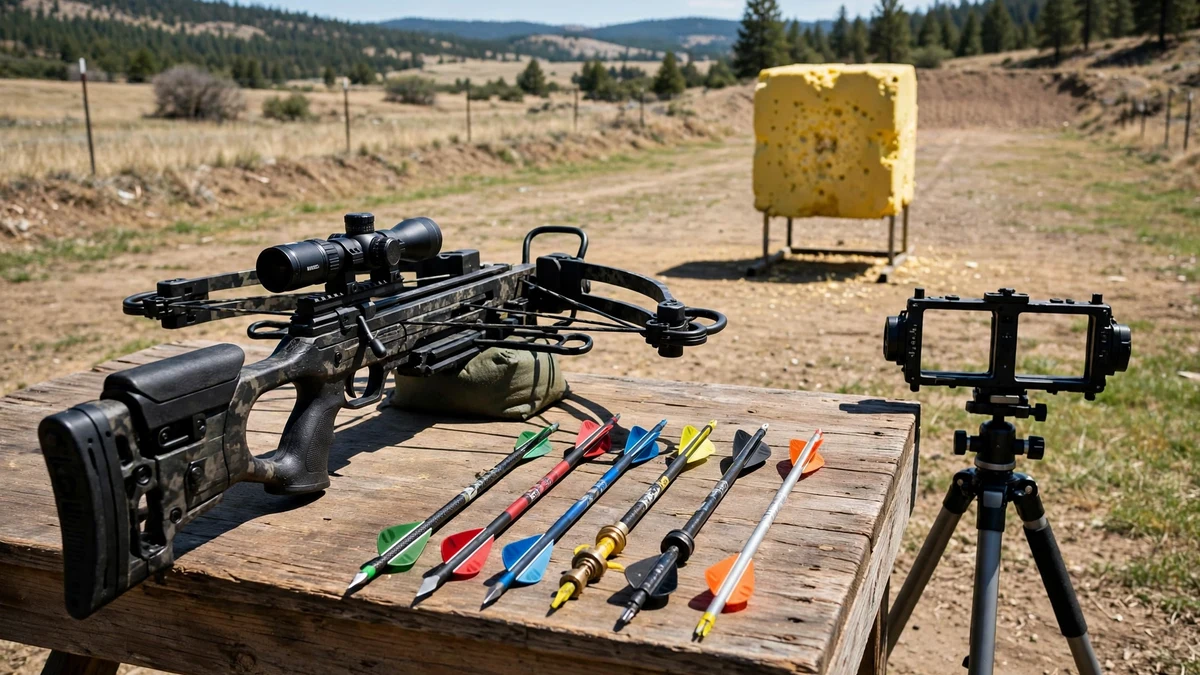
Speed without an arrow weight is a meaningless number, so here are the figures with the weights attached every time. TenPoint advertised 470 fps with a 370 grain Pro Light carbon arrow, 460 fps with a 400 grain Pro Elite 400 arrow, and 440 fps with a 445 grain EVO-X CenterPunch arrow. Those three points describe a speed curve, not a single speed, and a hunter shooting a heavier hunting arrow should expect the lower end of it.
The instrumented test is the only independent measurement found, and it shot three heavier arrows: 448 fps with a 420 grain bolt, 430 fps with a 462 grain bolt, and 416 fps with a 500 grain bolt. The test did not publish a 370 grain speed, so the advertised 470 fps was not independently confirmed. I want to be plain about this, because other pages imply the test proved the headline number. It did not. What it did show is a speed curve that is consistent with the advertised figures. A 420 grain bolt at 448 fps sits between the advertised 460 fps at 400 grains and 440 fps at 445 grains, exactly where you would expect it to sit. The claim is plausible. It is not confirmed.
Kinetic energy needs the same treatment. The old article gave one figure, 182 ft-lb, with no arrow weight, as if it were the only one. It is not. TenPoint’s table gives 182 ft-lb with the 370 grain arrow, 188 ft-lb with the 400 grain arrow, and 191 ft-lb with the 445 grain arrow, and 191 ft-lb is the “up to” figure. The instrumented test measured 187.2 ft-lb with the 420 grain bolt, 189.7 ft-lb with the 462 grain bolt, and 192.2 ft-lb with the 500 grain bolt. Notice the pattern: as the arrow gets heavier, speed falls and energy rises slightly. That is normal physics, and it is why a hunting arrow in the 420 to 445 grain range is the sensible choice for this bow, not the lightest arrow that makes the biggest fps number.
For hunting, the energy is more than enough. At 187 to 192 ft-lb tested, the RS470 clears the energy needed for deer and elk by a wide margin at normal hunting ranges. If you want the full picture on what energy means for the game you hunt, read our guide to powerful bows for elk country guide, and pair the bow with the right projectile from our arrow picks and broadhead picks guides.
Accuracy and Trigger: What the Test Actually Measured
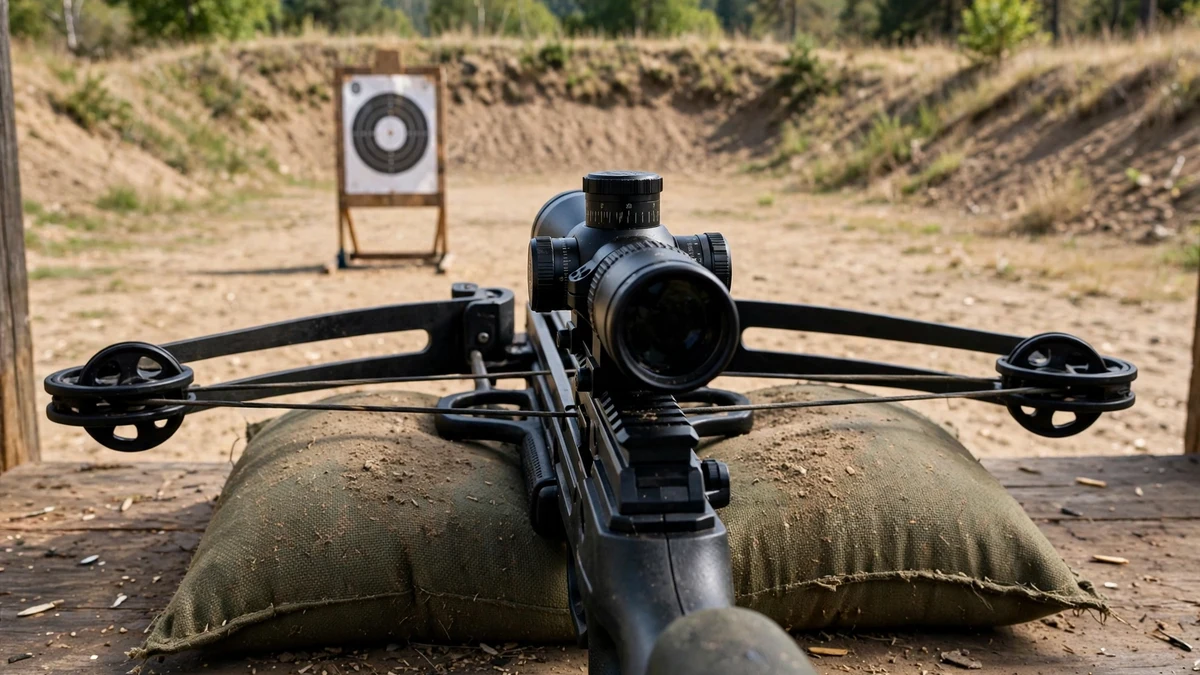
The instrumented test measured a maximum shot deviation of 0.65 in at 35 yards. That is a strong accuracy figure, and it comes from the combination that TenPoint built into this bow: RX7 dual cams with 404 degrees of rotation, Vector-Quad cables with four cables and none crossing the barrel, and a Micro-Trac fluted aluminum barrel that reduces the flight deck surface by 50 percent, so the string touches less of the barrel on the shot. TenPoint also claimed 1,000 plus shot string life from the reduced barrel contact, but no independent long term test verified that claim, so treat it as a manufacturer claim, not a measured fact.
The trigger is the S1, a two stage trigger with zero creep and a roller sear. TenPoint advertised a 3.5 lb pull. The instrumented test measured an average of 2.73 lb, lighter than advertised, and described the second stage as sharp with no creep. That is the best regarded trigger in the test, and it is one of the two features, with the ACUslide, that make the RS470 feel like a flagship rather than a fast bow with a heavy trigger. A light, clean trigger matters more at 40 yards than another 10 fps, because it is the difference between a shot you meant and a shot you pulled.
Two practical notes from the test belong here. First, balance is exceptional. The center mounted riser puts the balance point just forward of the trigger, and the tester could balance the bow in one hand. At 31 in long and 6.5 in wide when cocked, it is compact for a 470 fps bow, and it handles well in a blind or a stand. Second, bolt extraction is very hard at this power. The tester needed a proper target or a helper to pull bolts. That is not a flaw in the bow, it is a consequence of 470 fps, but you should own a target rated for this speed before you sight it in, and you should expect to work at pulling bolts out of it.
Build, Materials, and Fit: What the Old Article Got Wrong
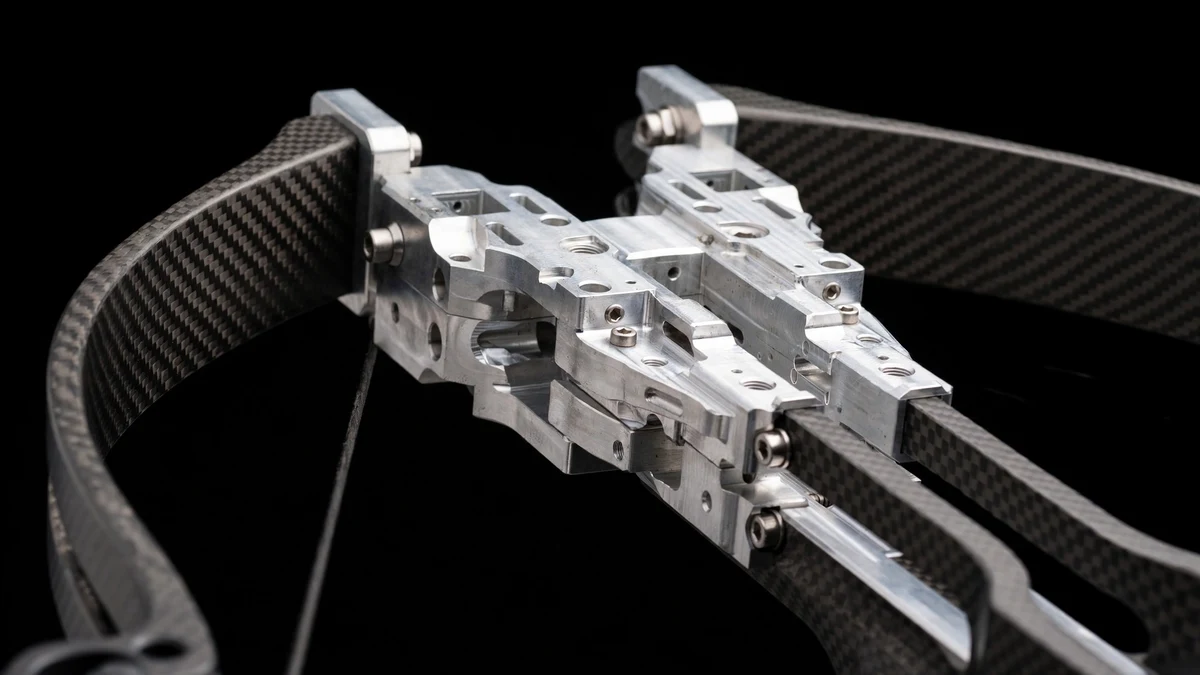
The old article said the stock and limbs were carbon fiber. They are not. The stock is a two piece TEC-X stock in glass filled polypropylene, injection molded, in an open format with weight reducing cutouts and a hollow pocket that houses the ACUslide. The limbs are Dual Flex split limbs in Gordon Composites laminate, 12 in long and double hinged. The barrel is Micro-Trac fluted aluminum, 20 in long, and that barrel claim is the only materials claim the old article got right. The riser is center mounted machined aluminum, black anodized, which is what gives the bow its forward balance.
The old article also claimed a “6 point multi position stock” with an “adjustable fore grip and butt stock.” That is contradicted by the instrumented test, which reports that the rubber cheekpiece and buttpad are not adjustable. Fit is what it is on this bow. The length of pull measured 14.6 in in the test. If the stock does not fit you, there is no adjustment to fix it, so shoulder a used RS470 before you pay for it, and check that your eye lines up naturally with the scope.
Two more claims from the old article have no source at all, and I am not repeating them. The “Sound Dampening System (SDS)” with limb dampeners, over molding, and string dampeners does not appear in any source found. What TenPoint actually cites is the integrated string stop system and the reduced string to barrel contact from the Micro-Trac barrel. The “Tru-Fit stock adjustment system” also has no source, and no decibel figure for this bow exists anywhere, so I am not stating a noise number. The bow also uses Sling-Shot Technology, in which the string contacts rollers partway down the barrel during the draw, adding about 10 fps. That is a real TenPoint feature, described in the test, and it is part of how the bow reaches its speed without an extreme draw weight.
On safety, the bow carries a Dry Fire Inhibitor, an auto engaging trigger safety, safety wings, and a bolt retention brush. Those are standard TenPoint safety features, and they matter on a 225 lb bow, because a dry fire at this power would be expensive. Read our safety basics every hunter should know before your first hunt with any used bow, and never dry fire it. The string is BCY X99, 34.125 in, and the four cables are BCY X99, 13 in each. If you buy used, the string and cable condition is the first thing to inspect, and the used buying section below tells you how.
The stock also deserves a word on weight, because the numbers confuse people. TenPoint advertised 8 lb bare. The test measured 8.1 lb bare, which essentially confirms it, and 10.2 lb loaded with no crank. The Xero Elite package is listed by a retailer at 9.0 lb, as packaged with the scope. Those are four different configurations, not four disagreements, and the figure that matters in the field is the loaded one: 10.2 lb is heavy for a long walk. From a blind or a stand, where the bow rests on your knee or a rail, it is fine. On a still hunt, you will feel it. The old article’s 8.3 lb figure is supported by no source, and I am not using it.
Packages and Scopes: Base, Xero, Xero Elite, and Rangemaster 100
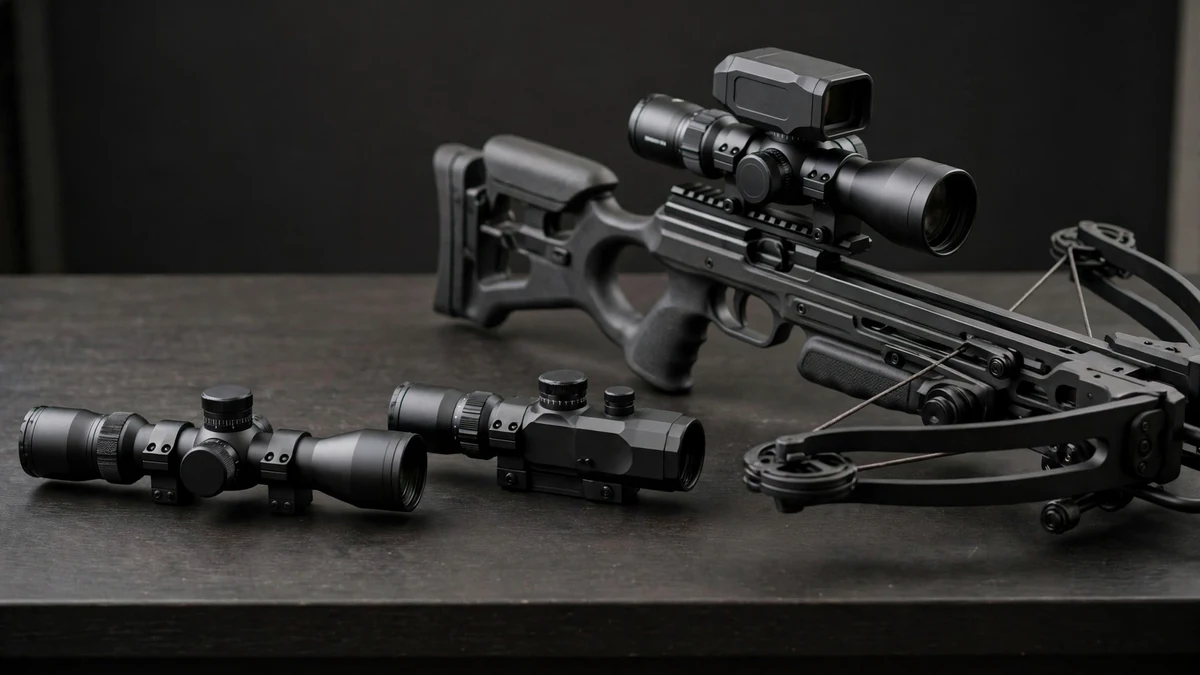
The RS470 sold in four packages, and knowing which one you are looking at is half the used buying decision, because the scope is where most of the price difference lives.
Base package, May 2020
The base package launched in May 2020 with the Evo-X Marksman Precision Scope, a variable speed scope on a Weaver style mount, the TenPoint STAG hard crossbow case, 6 EVO-X CenterPunch premium carbon arrows plus 6 lighted EVO-X CenterPunch arrows, 3 EVO-X CenterPunch rear deploying broadheads, a sling, the integrated string stop system, and a 6 arrow Tech Quiver. The instrumented test’s box list matches this and adds a dovetail bubble level. The base package came in Veil Alpine camo or Graphite Gray. Launch price was $2,899.99 in Graphite Gray and $2,999.99 in Veil Alpine. One test source lists $50 more on each finish, which may be a later price rise or an error, so I use the launch figures as primary and note the $50 difference.
Xero package, November 2020
The Xero package, launched in November 2020, is the same bow with the Garmin XERO X1i scope instead of the Marksman scope, and the TenPoint Narrow Soft crossbow case instead of the STAG hard case. Everything else is the same: 12 arrows, 3 broadheads, sling, string stop system, and 6 arrow Tech Quiver. It came in Veil Alpine only, at a MAP of $3,999.99. One field test states an MSRP of $4,049, which is $50 higher, the same $50 pattern as the base price conflict, so I use $3,999.99 as primary and note $4,049.
The Garmin XERO X1i is a 3.5x scope with a built in laser rangefinder, a multi color display, and auto ranging. It ranges game to 250 yards and reflective targets to 500 yards, with a claimed accuracy of plus or minus 0.1 yard, and it is programmable for multiple arrow configurations. Battery life is claimed at 1 year. The scope alone sold separately at $1,399, which explains why the Xero package cost about $1,000 more than the base package. The scope is the value in a used Xero package, and it is also the risk, because it is battery dependent electronics on a bow that is now several years old. A field test found the setup took about 20 minutes to dial in, with calibration from a 20 yard aim point plus the bow speed, then auto calibration to 80 yards, and the tester recommended the pressure switch ranging button over the scope button.
Xero Elite package
The Xero Elite is a package name, not a scope system, and the old article muddled this. The scope in the Xero Elite package is the same Garmin XERO X1i. The visible difference from the standard Xero package is a bubble level and a neoprene sling. The rest matches the Xero package: Garmin scope, 6 lighted and 6 standard EVO-X CenterPunch bolts, 3 broadheads, integrated string stop system, 6 bolt Tech Quiver, and the Narrow Soft case. No MSRP for the Xero Elite package was found, so do not invent one. A discontinued retailer listing showed $2,900.00, which is far below the Xero MAP of $3,999.99, so it reads as a late clearance or discontinued listing price, not a normal price. Do not present $2,900 as the Elite package’s normal price.
One correction matters here. The old article claimed the Xero Elite package included the STAG hard case. It does not. The STAG hard case belongs to the base package only. The Xero and Xero Elite packages ship with the Narrow Soft case. If a seller shows you a Xero package with a STAG hard case, ask where the case came from, because it did not ship with that package.
Rangemaster 100 package
A fourth package paired the bow with the Rangemaster 100 scope, a 2-7x36mm scope with a custom 100 yard reticle, a red and green illuminated crosshair, and scope rings included. A discontinued retailer listing showed $2,499.99 for this package, marked as a one time offer, not a general street price. The full contents of this package beyond the scope and rings were not retrievable, so do not assume it matches the base package. If you are offered one, ask the seller for a full contents list and compare it against the base package list above.
For scope choices generally, read our guide to picking a scope guide, and for carrying the bow, our case picks and quiver picks guides.
Price and the Used Market: What Is Known and What Is Not
There is no current new bow price for the RS470, and any page that quotes one as if the bow were still sold new is out of date. The last known prices, with dates, are: base package $2,899.99 Graphite Gray and $2,999.99 Veil Alpine at launch in May 2020; Xero package MAP $3,999.99 in November 2020; Rangemaster 100 package $2,499.99 as a discontinued one time listing; Xero Elite package $2,900.00 as a discontinued listing price, not an MSRP. The Garmin X1i scope alone was $1,399 when sold separately in 2020.
On used prices, the honest statement is that no reliable pre-owned price range could be established. Only one weak data point surfaced: an undated scraped dealer listing showing a used RS470 Veil Alpine package at $2,100.00, listed against $2,999.99. That scrape is undated and second hand, so it is a single weak data point, not a market price. No sold listings were retrieved. One low quality price guide claimed $1,200 to $1,800, but the same guide priced other TenPoint models far below their known values and its review page for this bow was about a vaping device, not the crossbow, so its figures are not used here.
What you can say with confidence is this: a used Xero package should command a premium over a used base package, because the Garmin scope alone retailed at $1,399, and a buyer should verify string and cable condition, ACUslide function, and Xero scope function before paying. If a used Xero package is priced anywhere near the cost of a new current flagship, the new bow is the better buy, and the comparison section below makes that case in full. If you are shopping on a budget, our best-value picks and best crossbows under 1000 dollars guides will show you what a new bow costs today, so you can judge a used RS470 price against a real alternative instead of against a 2020 price tag.
Buying a Used RS470: The Checklist

This section is the reason the review exists. A used RS470 can be a superb bow, and it can also be an expensive mistake, and the difference is in the checks below. Run every one of them before you pay.
1. Check the string and cables first
Inspect the string and all four cables for fraying, serving separation, broken strands, and wear at the rail and cam contact points. The string is BCY X99, 34.125 in, part HCA-70318, and the cables are BCY X99, 13 in, quantity 4, part HCA-70418, per TenPoint’s 2025 string and cable guide. Ask the seller when the string and cables were last changed, and how many shots the bow has fired. TenPoint claimed 1,000 plus shot string life from reduced barrel contact, but that is a manufacturer claim, not a guarantee for a used bow. If the string looks worn, budget for a replacement and a shop visit, and use that cost in your negotiation. A bow that needs a string change on day one is not the price on the tag. For ongoing care, read our guide to keeping a bow shooting well.
2. Test the ACUslide through a full cycle
Cock the bow fully with the crank, listening for grinding, skipping, or uneven resistance, then de-cock it fully the same way. Let go of the handle partway through the cycle and confirm it stops in place, which is what the Auto-Brake is supposed to do. Cock it again and confirm the safety engages. If the handle slips, if the crank binds, or if the Auto-Brake does not hold, walk away, because the bow is fully dependent on this system at 225 lb of draw weight and a repair is not a small job. Also check the crank handle for the rattle the test noted, and confirm the handle stores in the butt stock.
3. Test the Xero scope, if the package has one
Power the Garmin X1i on, confirm the display lights, and range a target at a known distance to confirm the laser returns a reading. Check the battery compartment for corrosion, and ask when the battery was last changed. Confirm the pressure switch ranging button works, since the field test recommended it over the scope button. Remember that the scope is battery dependent electronics, and a dead or faulty rangefinder turns a $1,399 scope into a plain 3.5x optic. Price the package accordingly if the scope does not range.
4. Identify the package variant
Confirm which package you are buying: base, Xero, Xero Elite, or Rangemaster 100. Count the arrows: the base, Xero, and Xero Elite packages all shipped with 12 EVO-X CenterPunch arrows, 6 standard and 6 lighted, plus 3 broadheads and a 6 arrow Tech Quiver. Confirm the case: the STAG hard case belongs to the base package only, and the Xero packages ship with the Narrow Soft case. A seller who mixes the case and the package has either swapped parts or does not know what they are selling, and either way you should verify the rest of the contents against the package lists above. Also confirm the scope: the base package has the Evo-X Marksman scope, the Xero packages have the Garmin X1i, and the Rangemaster 100 package has the Rangemaster 100 scope.
5. Check the trigger, safety, and fit
Dry fire is never acceptable, so test the trigger only with a bolt loaded and the bow pointed at a safe target. Confirm the safety engages automatically on cocking and releases cleanly. Confirm the Dry Fire Inhibitor and bolt retention brush are present and working. Shoulder the bow and check the fit, remembering the cheekpiece and buttpad are not adjustable and the length of pull is 14.6 in. If your eye does not line up naturally with the scope, no adjustment will fix it.
6. Ask about warranty, and do not assume it transfers
TenPoint’s current warranty is a limited lifetime operational warranty for the original owner only, except limbs, scope, and cocking devices at 5 years, with strings and cables not covered, and activation within 30 days of purchase. That is the current TenPoint policy, not a 2020 RS470 document, and whether it applied to RS470 purchases at the time, or transfers to a second owner, is unverified. Do not pay a premium for a used bow on the assumption that a warranty follows it. Assume you are buying as is, and price it that way.
RS470 vs Ravin R470, TX Ultra, and TRX Ultra
A discontinued bow is only worth buying if it beats the current alternative, so here are the three comparisons that decide it. All comparison figures are the verified figures from the research, with advertised and tested labels kept apart.
Vs Ravin R470, about $2,500 base, current and sold new
The Ravin R470 advertises the same speed, 470 fps, and a higher advertised kinetic energy, 196 ft-lb against the RS470’s 182 ft-lb at 370 grains, or 191 ft-lb at 445 grains. The difference that matters is in the testing. The R470’s tested speed of 472 fps and tested energy of 198 ft-lb exceed its advertised figures, while the RS470’s advertised 470 fps was never confirmed by the one instrumented test found, which used 420 grain and heavier arrows. On power alone, the R470 wins.
On cocking, the RS470 wins clearly. The RS470 cocks at 5 lb through the built in ACUslide crank, against 17 lb for the R470, and the RS470 de-cocks silently and safely with the crank, which is its main advantage over the Ravin. The R470 is current and sold new at about $2,500 base, with a warranty and dealer support. The RS470 is discontinued, so a buyer choosing between them is really choosing between a new R470 and a used RS470. Buy the R470 if you want 470 fps with a warranty and the highest energy in this class. Buy a used RS470 if you specifically want the ACUslide de-cocking system, or a used Xero package with a rangefinding scope the base R470 does not include, and only if the used price is well below the new R470 price.
Vs TenPoint TX Ultra, about $2,300, current and sold new
The TX Ultra is the current TenPoint alternative and the practical buy. It advertises 460 fps, 10 fps slower than the RS470, and it costs about $2,300 new, which is about $600 to $700 less than the RS470 base price was in 2020. Its tested kinetic energy of 195.6 ft-lb is higher than the RS470’s advertised 191 ft-lb maximum, but the TX Ultra figure is tested and the RS470 figure is advertised, so label them that way and do not present them as a like for like test. The TX Ultra uses the newer ACUslide MAXX, with a tested cocking effort of 13.3 lb, which is heavier than the original ACUslide’s 5 lb on the RS470. Do not state 5 lb for any MAXX bow. The TX Ultra is a forward draw bow, while the RS470 is reverse draw with a 17 in power stroke, and the TX Ultra is sold new with a new purchase warranty while the RS470 is not.
For most buyers, the TX Ultra is the better choice: current, cheaper, nearly as fast, and supported. The RS470 only wins for a buyer who specifically wants the original 5 lb ACUslide, the reverse draw layout, or a used Xero package with the Garmin scope. If you are weighing current TenPoint bows, our guide to the top tested bows guide puts the TX Ultra in context with the rest of the current lineup.
Vs TenPoint TRX Ultra, about $3,500, current 2026 flagship
The TRX Ultra is TenPoint’s current 2026 flagship and the RS470’s successor in spirit: reverse draw, faster, and more expensive at about $3,500. No verified tested speed range or cocking effort figure exists for the TRX Ultra, so I am not quoting either. The buying rule is simple: a buyer with a $3,500 budget should buy the TRX Ultra new, not a used RS470 Xero at a similar price. The new flagship gives you the current bow, the current warranty, and the current dealer support, and a used Xero package at the same money gives you none of those. The RS470 only makes sense used when its price is far enough below the current flagship to pay for the age, the wear, and the missing warranty.
The buying decision, in one paragraph
Buy a used RS470 if you specifically want the original ACUslide at 5 lb of effort, or a complete Xero package with a working Garmin scope at a price below a new TX Ultra plus a Garmin scope bought separately. Buy a new Ravin R470 if you want 470 fps with a warranty and the highest energy in this class. Buy a new TX Ultra if you want a current TenPoint at the lowest price with nearly the same speed. Buy a new TRX Ultra if you want the current TenPoint flagship and your budget reaches about $3,500.
Who the RS470 Is Best For, and Who Should Skip It

The RS470 is best for a hunter who wants a used 470 fps TenPoint flagship specifically for the original ACUslide safe de-cocking system and the S1 trigger, and who hunts from a blind or a stand where the 31 in length and 6.5 in cocked width matter more than the 10.2 lb rigged weight. It is best for a buyer who finds a complete Xero package with a working Garmin scope and verified string condition, since the scope is the main value in that package. It is also a good fit for a hunter who already owns TenPoint EVO-X CenterPunch arrows and wants a reverse draw bow with a long power stroke.
It is not for a buyer who wants a new bow with a full new purchase warranty and current dealer support. It is not for a hunter who wants the lightest rig for long walks, because 10.2 lb loaded is heavy on foot. It is not for a buyer on a budget, because a current TX Ultra costs less new than the RS470 cost in 2020. It is not for a hunter who does not want battery dependent optics, because the Xero packages add electronics and a battery to the bow. And it is not for a beginner, who would be better served by a current, lighter, cheaper TenPoint with a plain scope and the newer cocking system. If you are new to the weapon, read our guide to powerful bows for elk country guide for the hunting context, and start with a current bow, not a discontinued flagship.
Pros and Cons
Pros
- Original ACUslide cocking and de-cocking at 5 lb effort, silent, with Auto-Brake that stops the handle if released
- 470 fps advertised with a 17 in power stroke, and a tested 448 fps with a 420 grain bolt
- S1 two stage trigger, 3.5 lb advertised and 2.73 lb tested, zero creep, roller sear
- Accuracy measured at 0.65 in maximum deviation at 35 yards in the instrumented test
- Compact and well balanced: 31 in long, 6.5 in cocked, balance just forward of the trigger
- Complete ready to hunt packages with 12 arrows, 3 broadheads, quiver, case, and sling
- Garmin XERO X1i option with auto ranging to 250 yards on game
- Parts support continues: TenPoint’s 2025 string and cable guide still lists the RS470
Cons
- Discontinued, with no new bow warranty path as a new purchase and no current dealer stock found
- Heavy when rigged: 10.2 lb loaded with no crank in the tested measurement
- Very expensive for its time, about $2,900 to about $3,000 base and about $4,000 with the Xero scope
- Crank handle rattles when the bow is bumped, so the tester carried it in his pack
- Bolt extraction is very hard at this power, and needs a proper target or a helper
- Cheekpiece and buttpad are not adjustable, despite the old article claiming adjustability
- Xero scope adds cost, weight, and battery dependence, and the Xero packages swap the hard case for a soft case
- Fully dependent on the ACUslide at 225 lb draw weight, so a crank failure leaves the bow uncockable by hand
Bottom line: Should You Buy a Used Vapor RS470?

Bottom line: the Vapor RS470 was a genuinely great flagship in 2020, and its original ACUslide system is still the best cocking and de-cocking system TenPoint has put on a bow for pure ease of use, at 5 lb of effort with safe, silent de-cocking. The S1 trigger and the 0.65 in accuracy at 35 yards back that up. But the bow is discontinued, it is heavy when rigged, the advertised 470 fps was never independently confirmed, and no reliable used price range exists, so the only honest way to buy one is as a used bow with a full inspection. Run the checklist in this article, verify the string and cables, test the ACUslide through a full cycle, test the Xero scope if the package has one, and confirm which package variant you are buying. If the price is far enough below a new TX Ultra at about $2,300, and the bow passes every check, a used RS470 is a fine buy for a hunter who wants the original ACUslide and the reverse draw layout. If the price is anywhere near a new TX Ultra, or anywhere near a new TRX Ultra at about $3,500, buy the new bow instead.
Frequently Asked Questions
Is the TenPoint Vapor RS470 discontinued?
Yes. TenPoint has no product page for the RS470, it is absent from the 2026 lineup, and the two main retailer listings that still show it both mark it discontinued. No current new bow price exists and no live dealer stock was found. If you want one, you are buying used or leftover stock.
What is the Vapor RS470 price?
There is no current new bow price, because the bow is discontinued. The last known prices are the base package at $2,899.99 in Graphite Gray and $2,999.99 in Veil Alpine at launch in May 2020, and the Xero package at a MAP of $3,999.99 in November 2020. No reliable used price range could be established, because only one weak used listing price was found and no sold listings were retrieved.
How fast is the Vapor RS470?
TenPoint advertised 470 fps with a 370 grain arrow, 460 fps with a 400 grain arrow, and 440 fps with a 445 grain arrow. The only instrumented test found measured 448 fps with a 420 grain bolt, 430 fps with a 462 grain bolt, and 416 fps with a 500 grain bolt. The test did not shoot a 370 grain arrow, so the advertised 470 fps was never independently confirmed.
What cocking system does the Vapor RS470 use?
The original ACUslide, built in, with an Auto-Brake Gear System and a 7.5 in Xtend adjustable crank handle, at 5 lb of effort. It is not the ACUslide MAXX, and it is not the ACUdraw Pro, which is a different detachable system with 8.5 lb of effort. The ACUslide cocks the bow silently and de-cocks it silently and safely, and the handle stops in place if you let go of it at any point.
What is the difference between the Xero and Xero Elite packages?
The scope is the same in both: the Garmin XERO X1i rangefinding scope. The visible difference is that the Xero Elite package adds a bubble level and a neoprene sling. Both packages ship with the Narrow Soft case, not the STAG hard case, which belongs to the base package only. No MSRP for the Xero Elite package was found.
What should I check before buying a used Vapor RS470?
Check the string and cables for wear, test the ACUslide through a full cock and de-cock cycle and confirm the Auto-Brake holds, test the Xero scope ranging function and battery compartment if the package has one, confirm which package variant it is and that the case matches the package, and check the trigger, safety, and fit. The string is part HCA-70318 and the cables are part HCA-70418, per TenPoint’s 2025 guide.
How heavy is the Vapor RS470?
TenPoint advertised 8 lb bare, and the instrumented test measured 8.1 lb bare and 10.2 lb loaded with no crank. The Xero Elite package is listed by a retailer at 9.0 lb as packaged. The loaded figure of 10.2 lb is the one that matters in the field, and it is heavy for long walks, though fine from a blind or a stand.
Is the Vapor RS470 good for beginners?
No. It is a discontinued flagship with a 225 lb draw weight, a 10.2 lb loaded weight, and no new purchase warranty, and the Xero packages add battery dependent optics. A beginner is better served by a current, lighter, cheaper TenPoint with a plain scope. The RS470 suits an experienced hunter who specifically wants the original ACUslide and the reverse draw layout.
Should I buy a used RS470 or a new TX Ultra?
For most buyers, buy the new TX Ultra. It costs about $2,300 new, about $600 to $700 less than the RS470 base price was in 2020, advertises 460 fps, and comes with a new purchase warranty and current dealer support. Buy a used RS470 only if you specifically want the original 5 lb ACUslide, the reverse draw layout, or a complete Xero package with a working Garmin scope at a price well below a new TX Ultra plus a Garmin scope bought separately.
Keep Learning
- Best Crossbows 2026: Tested Picks for Every Budget
- Best Crossbow for Elk Hunting 2026: Power for the West
- How to Cock a Crossbow Safely: Rope and Crank Methods
- Best Crossbow Bolts 2026: How to Choose
- Crossbow Safety Guide: How to Handle Every Bow Safely
- Best Crossbow Scope 2026: What to Buy and Why
- TenPoint Vengent S440 Review