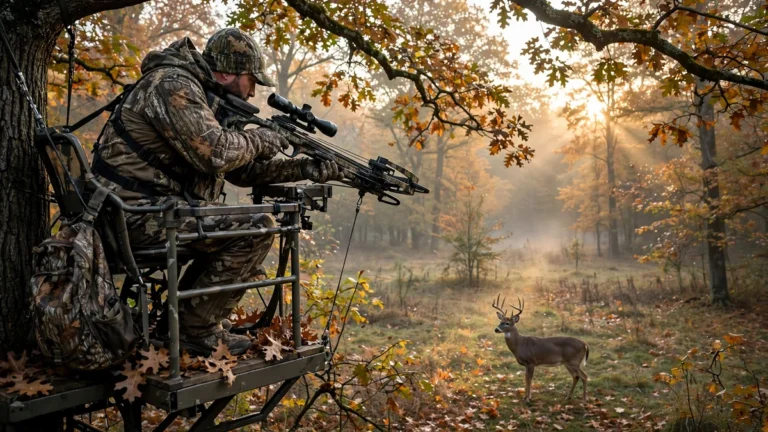
Bow Draw Weight Explained
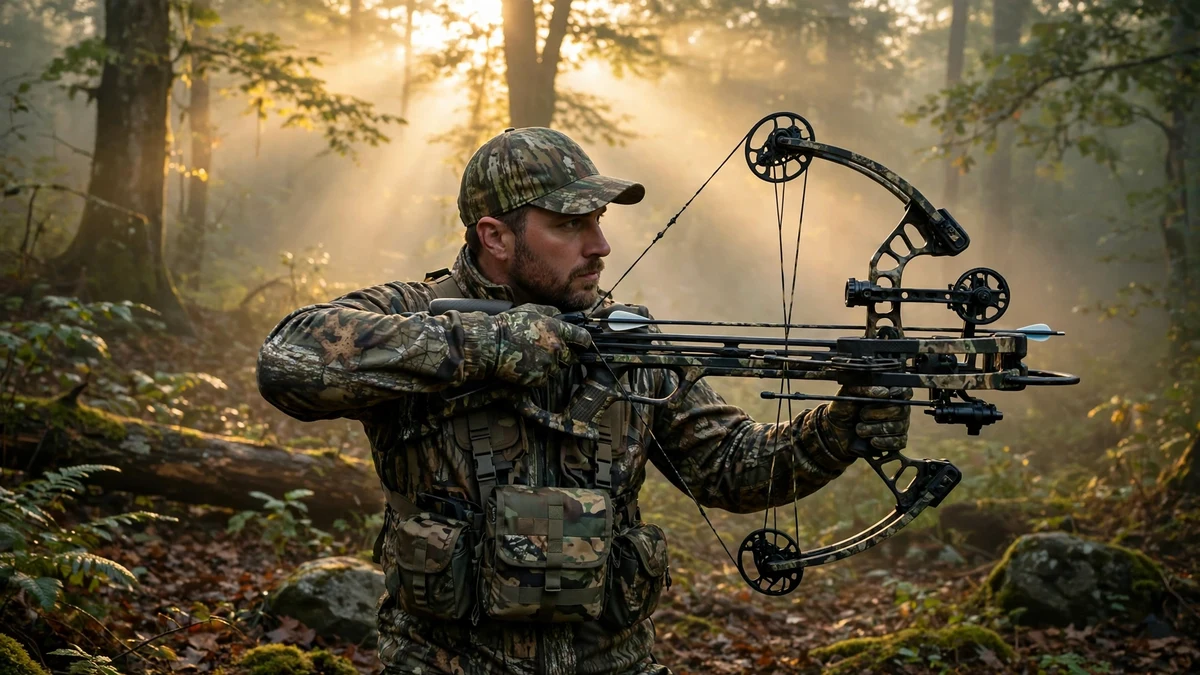
Bow Draw Weight Explained
When I started shopping for my first crossbow, I thought draw weight was the number that told me how hard the bow would be to use. I was wrong in two directions at once. The number on the limb is not the number my arms have to pull, and it is not the number that decides whether a deer is taken cleanly. Draw weight is the force stored in the limbs. Cocking effort is what my hands actually feel. Kinetic energy is what the bolt carries to the target. This guide explains all three in plain language, with real models, real numbers, and the state rules I had to look up myself, so you can pick a weight you can cock every time and that is legal and strong enough for the game you hunt.
The Short Answer
Crossbow draw weight is the peak force, in pounds, needed to pull the string back to the latched, cocked position. It is the energy stored in the limbs. Once the bow is cocked, the trigger mechanism holds the full weight, so you hold zero pounds while you aim. Most hunting crossbows draw 150 to 220 lb. For deer, the consensus recommendation is 150 to 175 lb. For elk and black bear, it is 175 to 200 lb plus. Draw weight alone does not set speed. Power stroke, limb and cam efficiency, and bolt weight matter just as much. And draw weight is not cocking effort. A 200 lb bow can be cocked with 5 to 17 lb of hand effort when a rope cocker or a crank does the work. If you remember only one thing from this guide, make it that one: the number on the limb, the number your hands feel, and the energy that reaches the deer are three different numbers.
What Is Crossbow Draw Weight?
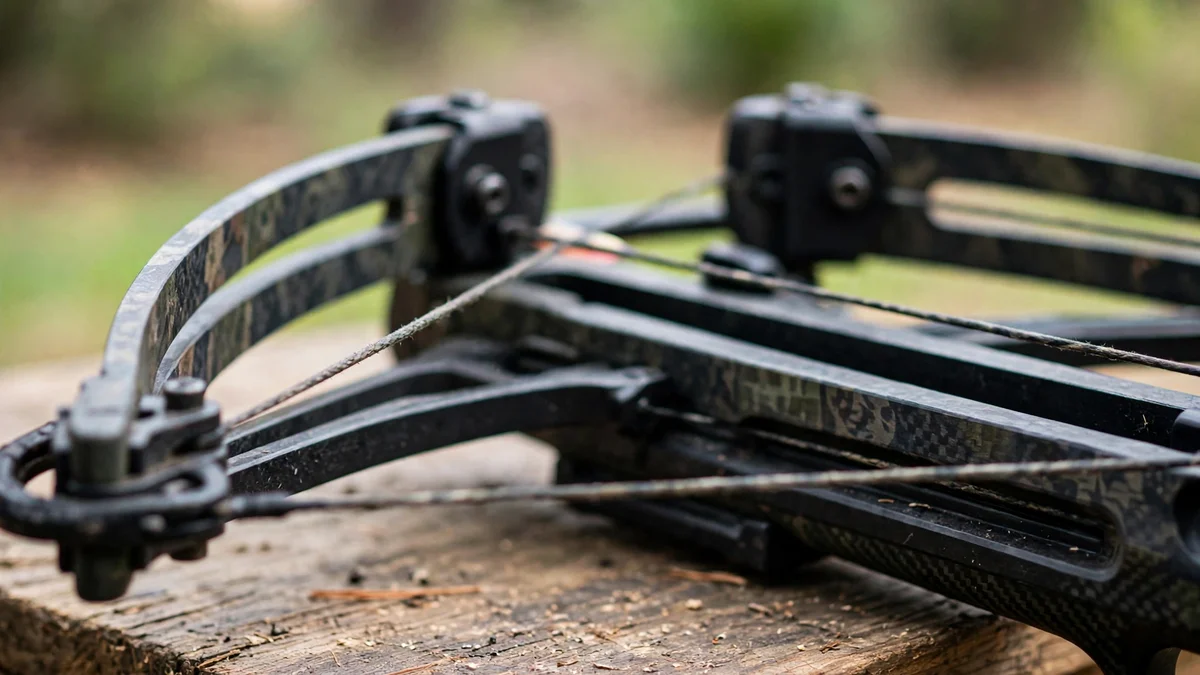
Draw weight is the peak force needed to pull the string from rest to the cocked position, measured in pounds. When I cock a crossbow, I am bending the limbs like a drawn spring, and the pounds are the force it takes to bend them that far. The string travels from rest to cocked, the latch inside the trigger box catches it, and from that moment the trigger holds the full draw weight. I hold nothing. That is the core difference from a vertical bow, and it is the reason a crossbow can hold 200 lb of draw weight while I aim calmly through the scope.
Think of it this way. Draw weight is the input. It is how much force goes into the limbs. Speed is what comes out the front, and kinetic energy is what the bolt carries downrange. A big input does not guarantee a big output, because the bow has to turn that stored force into bolt speed, and some of it is lost to friction, limb mass, noise, and vibration along the way. The rest of this guide is about how that conversion works, and where beginners like me get tripped up by it.
If you are still choosing a first bow, read this guide alongside the first-bow buying guide, which covers the full buying decision, and the starter-bow guide, which picks starter bows that are easy to cock and shoot well.
Why Does a Crossbow Need So Much More Draw Weight Than a Vertical Bow?
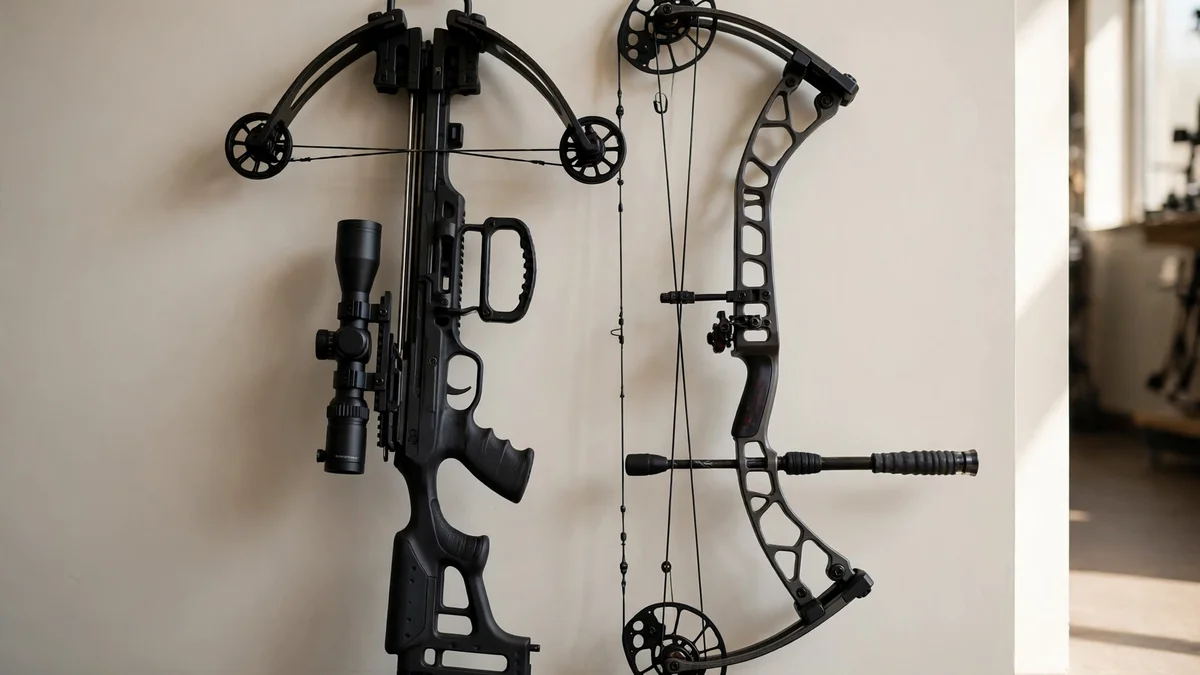
This was the first thing that confused me. A vertical bow hunter takes deer with 35 to 40 lb of peak draw. A crossbow hunter needs 150 to 175 lb for the same deer. That looks like a huge gap until you understand the power stroke, which is the distance the string travels from rest to cocked. It is the distance over which the string pushes the bolt.
A vertical bow has a draw length of about 28 to 30 inches. The string pushes the arrow for that whole distance. A crossbow has a short power stroke, roughly 9.5 to 16 inches on the models in this guide. The string has far less distance to accelerate the bolt, so the bow has to make up for the short push with brute force. Work equals force times distance, so a short distance needs a bigger force to deliver the same energy. That is the whole explanation, and once I understood it, the 150 lb number stopped looking extreme.
Let off is the other difference that confused me at first. On a vertical compound bow, let off drops the holding weight by up to 80 percent at full draw, so the archer holds far less weight while aiming. On a crossbow, let off does not apply in the way it applies to a vertical compound, because the trigger latch holds the string, not my arms. I do not hold the draw weight at all, so there is nothing to let off. Do not describe a crossbow as having let off unless the manufacturer uses that term for that exact model. The full comparison lives in the vertical-bow comparison guide.
| Vertical bow | Crossbow | |
|---|---|---|
| Draw length or power stroke | About 28 to 30 inches of draw length | About 9.5 to 16 inches of power stroke |
| Peak draw for deer | Typically 35 to 40 lb | Typically 150 to 175 lb |
| Who holds the weight while aiming | The archer, with let off dropping the holding weight by up to 80 percent on a compound | The trigger latch holds the full weight, so the shooter holds zero pounds |
| Ohio legal minimum | 40 lb for a longbow | 75 lb for a crossbow |
| Pennsylvania legal minimum | 35 lb peak for a vertical bow | 125 lb for a crossbow |
| Alabama legal minimum | 30 lb for a vertical bow | 85 lb for a crossbow |
The legal minimums in that table tell the same story as the physics. Ohio, Pennsylvania, and Alabama all set a much higher minimum for a crossbow than for a vertical bow, because a crossbow needs far more pounds to deliver the same bolt energy through a short power stroke.
What Is Power Stroke, and Why Does It Matter as Much as Draw Weight?
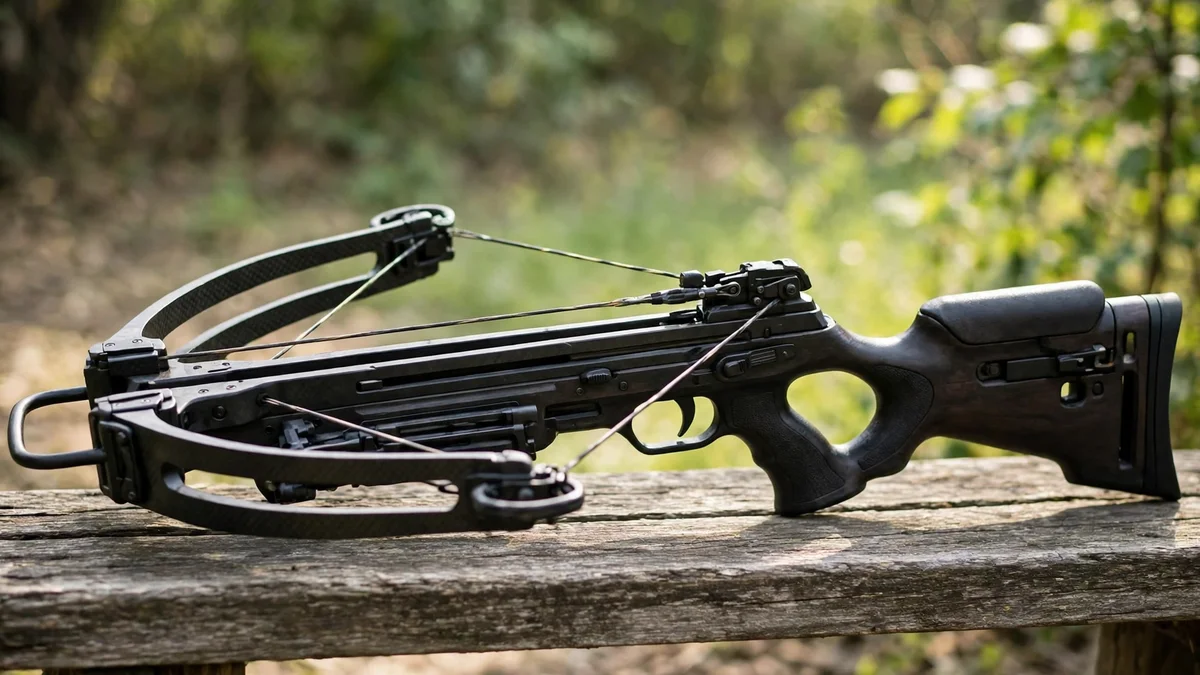
Power stroke is the distance the string travels from rest to cocked. It is the distance over which the string pushes the bolt, and it is the second half of the speed equation. Two verified examples from Ravin make it concrete. The R29X has a 12.5 inch power stroke, and the R26X has a 9.5 inch power stroke. The R29X is longer overall, 29 inches against 26 inches, and the longer stroke is part of why it is faster at 450 fps against 400 fps, even though both are Ravin flagships. I am not stating a power stroke for any other model here, because I have not verified one from the manufacturer for any other model.
A longer power stroke pushes the bolt for longer, so a lower draw weight bow with a long stroke can outrun a higher draw weight bow with a short stroke. One older source notes that a 165 lb draw weight can propel a bolt from 300 to over 400 fps depending on the bow, which is the same point in different words. Speed comes from draw weight plus power stroke plus limb and cam efficiency plus bolt weight. Leave any one of those out and the number on the limb tells you very little.
Does More Draw Weight Always Mean More Speed?
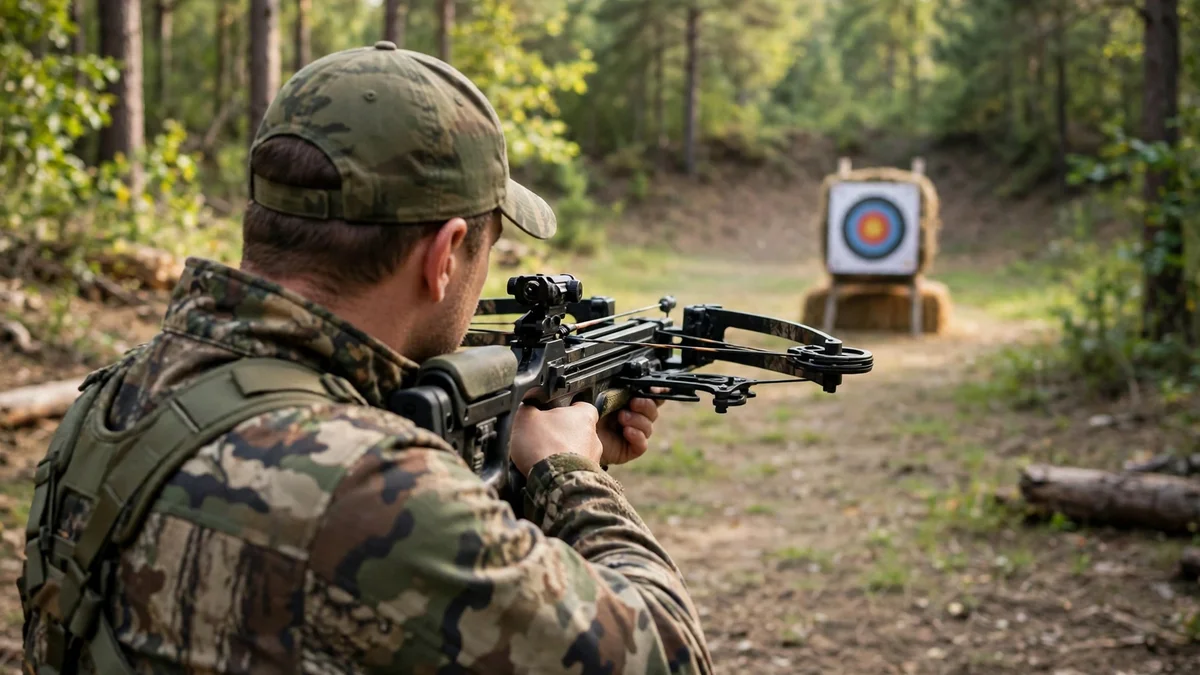
No, and the clearest proof is a single model. The Excalibur Micro MAG 340 has a 270 lb draw weight, the second highest draw weight in the table below, and the lowest speed in the table, 340 fps. It is a short recurve with a short power stroke, so all that draw weight has very little distance to turn into speed. It costs about $800, it is not a takedown bow, and its draw weight is 270 lb, not 135 lb. If draw weight alone set speed, the Micro MAG 340 would be one of the fastest bows here. Instead it is the slowest, and that paradox is the best lesson in this guide. Judge a bow by the speed and energy it delivers with a stated bolt weight, never by the draw weight number alone.
How Do Draw Weight, Speed, and Kinetic Energy Fit Together?
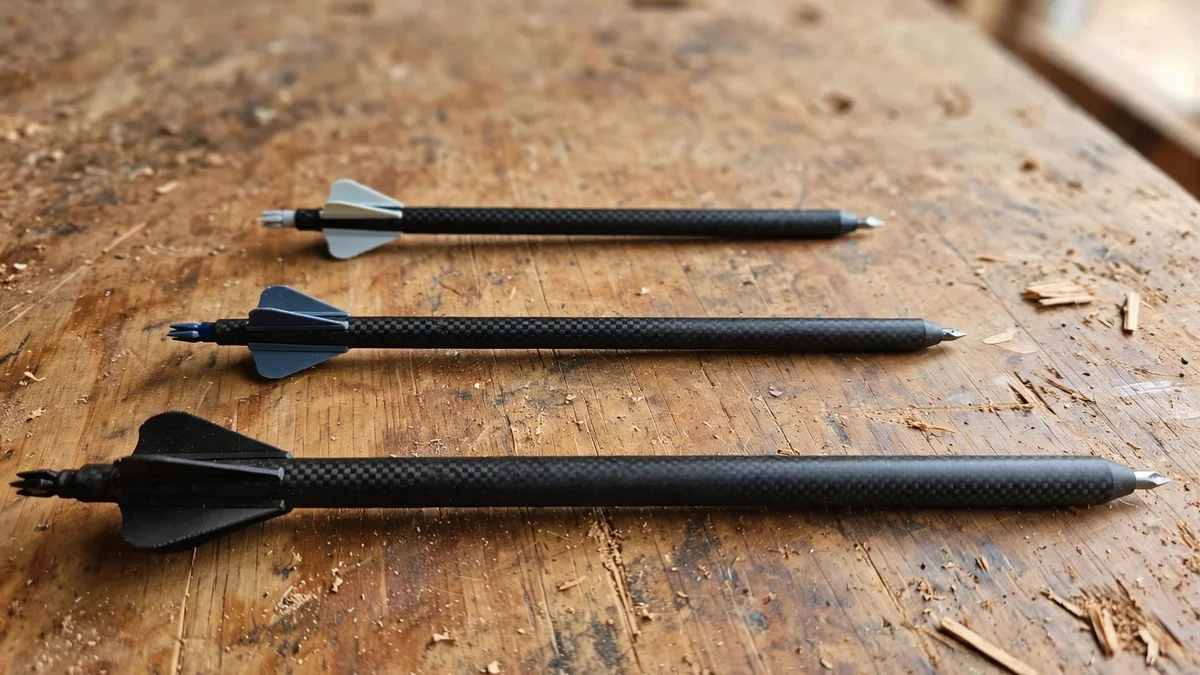
Kinetic energy, usually written as KE, is the energy of the moving bolt, in foot pounds. It is what drives penetration. Draw weight is a force, in pounds. KE is an energy figure, in foot pounds. They are not the same thing, and confusing them is the most common mistake I made when I started shopping.
What Is the Kinetic Energy Formula?
The standard formula is simple, and I use it exactly as written here, with the divisor 450,240 used consistently throughout this guide.
Written out: KE equals grains x fps x fps / 450,240. Speed is squared in the formula, so doubling bolt weight adds energy in a straight line, but increasing speed adds it much faster. A 400 grain bolt at 300 fps gives about 80 ft-lb. The same 400 grain bolt at 400 fps gives about 142 ft-lb, a 78 percent increase in energy for a 33 percent increase in speed. Always state the bolt weight with every KE figure, because a KE number without a bolt weight is meaningless.
Momentum matters too, because it reflects penetration better than KE alone, since it weights bolt mass more heavily. The formula is momentum in slug feet per second equals bolt weight in grains times velocity in feet per second, divided by 225,218. For the Ravin R500 example below, a 400 grain bolt at 500 fps gives a momentum of 0.89 slug feet per second. A heavier bolt flies slower but keeps more momentum downrange, which is why experienced hunters often choose a heavier bolt than the lightest one that gives the highest feet per second number.
Worked Kinetic Energy Examples With Real Models
This table is the part of the guide I wish I had found first. Every row shows the speed used, the bolt weight used, and the KE that comes out of the formula, with the label telling you whether the speed is advertised or tested and whether the bolt weight is a tested pair or an assumed 400 grain bolt used for comparability. Assumed rows are labelled assumed for comparability, never presented as factory ratings. Where the brief gives a tested speed and a tested bolt weight, that pair is used and labelled tested.
| Model | Draw weight | Speed used | Bolt weight | Kinetic energy |
|---|---|---|---|---|
| Ravin R500 | Not stated here, do not guess it | 500 fps advertised | 400 grain assumed | 222.1 ft-lb |
| TenPoint TRX Ultra | Not stated here, do not guess it | 515 fps advertised | 400 grain assumed | 235.6 ft-lb |
| Ravin R29X | Not stated here, do not guess it | 450 fps | 400 grain assumed | 179.9 ft-lb |
| Barnett Hyper Raptor T-Rex | 220 lb | 423 fps tested, 399 grain arrow | 399 grain tested | 158.6 ft-lb |
| TenPoint Turbo X | Not stated here, do not guess it | 415 fps tested, 410 grain | 410 grain tested | 156.8 ft-lb |
| Ravin R10X Pro | Not stated here, do not guess it | 420 fps | 400 grain assumed | 156.7 ft-lb |
| TenPoint Titan X | Not stated here, do not guess it | 400 fps tested, 410 grain | 410 grain tested | 145.7 ft-lb |
| Barnett Boss 405 | 220 lb | 405 fps | 400 grain assumed | 145.7 ft-lb |
| Ravin R26X | Not stated here, do not guess it | 400 fps | 400 grain assumed | 142.1 ft-lb |
| Barnett Whitetail Hunter II | 150 lb | 350 fps | 400 grain assumed | 108.8 ft-lb |
| Excalibur Micro MAG 340 | 270 lb | 340 fps | 400 grain assumed | 102.7 ft-lb |
Two rows deserve a closer look. First, the T-Rex row proves that tested speed beats advertised speed. The T-Rex is advertised at 440 fps, which would give 171.6 ft-lb with a 399 grain arrow, while the tested 423 fps gives 158.6 ft-lb. That is a real gap of about 13 ft-lb between the box number and the tested number, and it is why I compare bows by tested speed with a stated bolt weight whenever I can. The T-Rex weighs 8.2 lbs bare against 9.2 lbs as tested, so flag that difference too when you compare weights. Second, the Micro MAG 340 row is the paradox from the section above: 270 lb of draw weight, 340 fps, 102.7 ft-lb, the lowest energy in the table despite the second highest draw weight.
Advertised speed is measured with a specific bolt weight, and changing the bolt changes the speed. A heavier bolt flies slower but carries more momentum and often more KE at range. A lighter bolt flies faster but sheds energy faster. If you want to go deeper on bolt weight, the best bolts on the market guide covers bolt selection, and the choosing the right arrow weight and length covers arrows and bolts in more detail. Bolts must be no shorter than 14 inches, which matches the Wisconsin statute and the Michigan rule cited in the state table below.
How Much Kinetic Energy Is Enough for Deer?
There is no settled KE minimum for deer, so I am not going to give you one number and pretend the debate is closed. Published recommendations range from 25 to 75 ft-lb, clustering around 40 ft-lb at impact. Some sources put deer at 25 to 40 ft-lb, some at 27 to 40 ft-lb, some at 40 to 45 ft-lb, some at 40 to 60 ft-lb, and some as high as 50 to 60 ft-lb for whitetail. For elk and bear, published recommendations cluster around 65 ft-lb at impact, with some sources going as high as 65 to 85 ft-lb. Those are recommendations from hunting sources, not law, and your state sets its own equipment minimums where they exist.
Here is the practical point that calmed me down when I first saw that range. Every model in the table above clears 100 ft-lb at the muzzle, so any modern hunting crossbow in the table has far more energy than the debated minimums. The real limit is retained energy at range, shot placement, and broadhead performance, not muzzle energy. KE falls with distance. A 400 grain bolt at 400 fps carries about 142 ft-lb at the muzzle and roughly 110 to 120 ft-lb at 40 to 50 yards, per published tables. Treat that retained figure as approximate, not as a measured result, because it comes from published tables rather than a chronograph test in this research. Even at that approximate retained figure, the bolt is still far above the debated deer minimums. Accuracy and shot placement limit you long before energy does.
How Much Draw Weight Do You Need for Each Kind of Game?
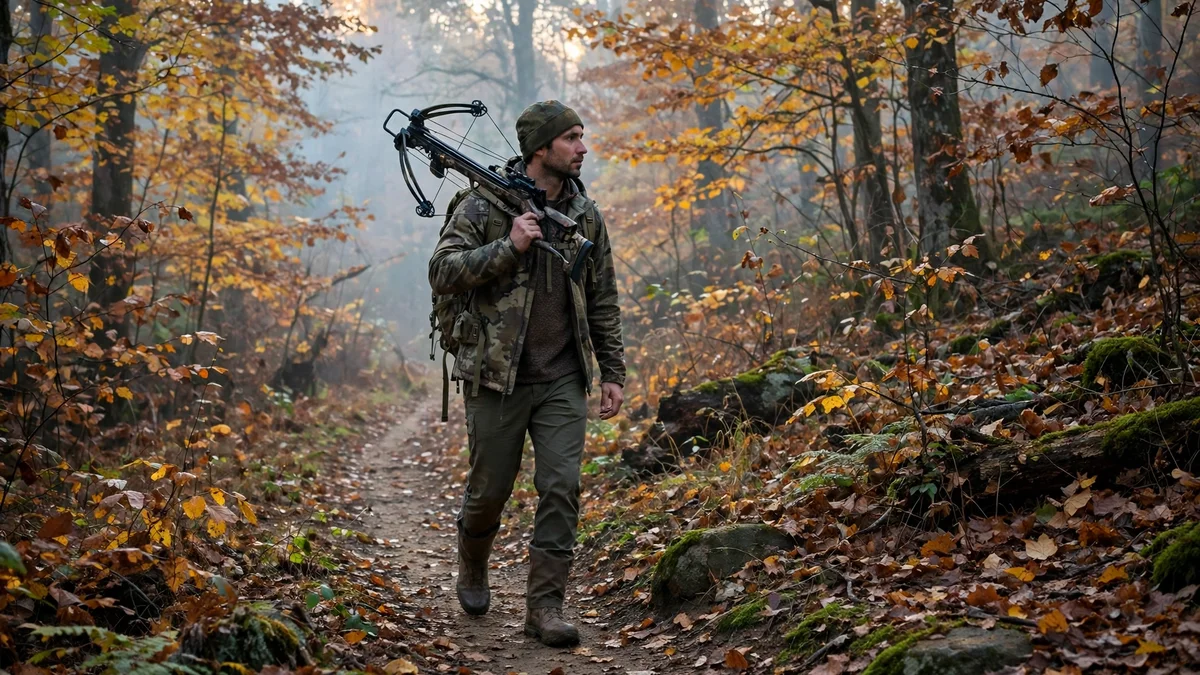
The bands below are recommendations, not law. Keep them separate from the legal minimums in the state table, because a recommendation and a law are different things. A bow can meet the recommendation and still be illegal in your state if it misses the legal minimum, and a bow can be legal and still be a poor choice for the game you hunt.
| Game | Recommended draw weight | Notes |
|---|---|---|
| Small game, rabbit, squirrel, turkey | 125 lb plus | Enough speed for accuracy and a clean takedown at short range. Check the state minimum first, since some states set the same minimum for all game. |
| Whitetail and mule deer | 150 to 175 lb | The consensus sweet spot. Gives deep penetration on broadside shots inside 40 yards. |
| Elk, black bear, moose | 175 to 200 lb plus | Needed to break heavy bone and reach vitals. Pair with a heavier bolt, 450 grain plus, and a fixed or strong mechanical broadhead. |
| Dangerous game, large bear, moose at longer range | About 200 lb plus | Per the older sources. Present as a recommendation, not a rule. |
One rule of thumb is useful if you hunt in more than one state. A crossbow of 150 lb or more clears the legal minimum in every state checked in this research, while a 60 lb youth crossbow clears none of them. That does not make 150 lb right for every hunter, and it does not replace checking the regulations in each state you hunt, but it is a practical floor for a buyer who hunts in more than one state. For elk specifically, read the elk guide, which covers the heavier bolts and higher energy that big game needs.
What Draw Weights Do Real Models Have?
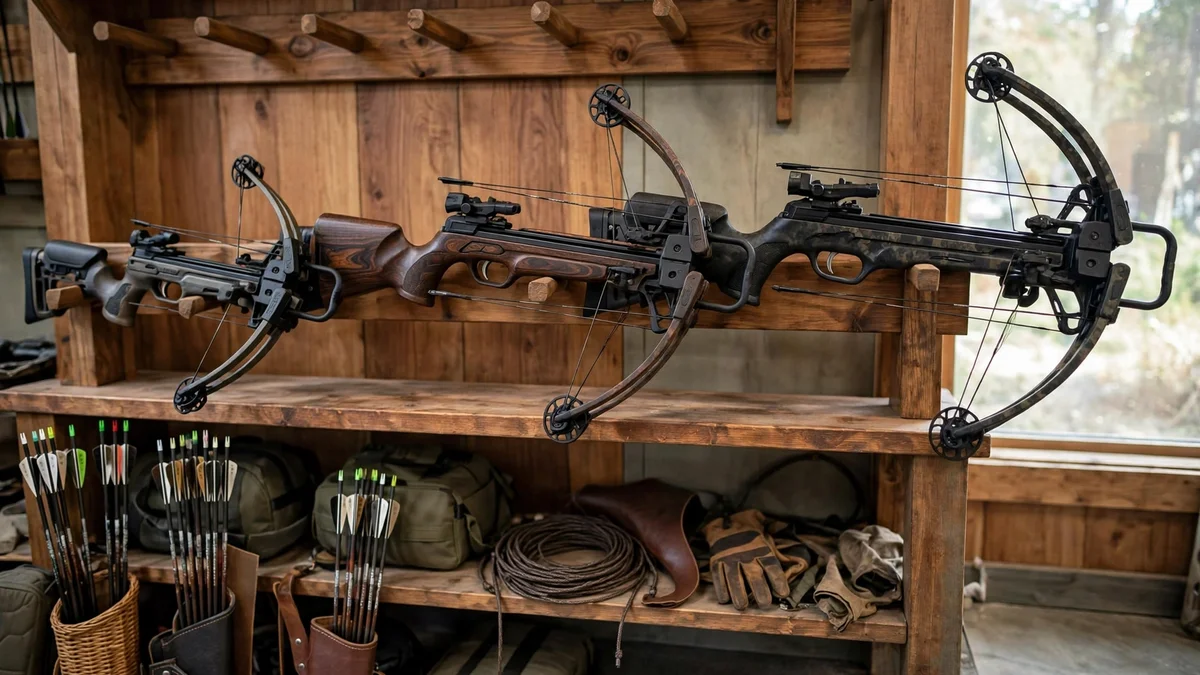
Use only the draw weights in this table. I am not stating a draw weight for any model that is not listed here, because I have not verified one from the manufacturer for it. That includes the Ravin R500, R29X, R26X, and R10X Pro, the TenPoint TX Ultra, TRX Ultra, Titan X, and Turbo X, and the Excalibur Rev X TD. Their speeds, prices, and cocking efforts are given where known, but their draw weights are not, so this guide leaves those cells blank rather than guessing.
| Model | Draw weight | Speed | Price | Notes |
|---|---|---|---|---|
| Excalibur Assassin 400 TD | 325 lb | Not stated here | Not stated here | Highest draw weight in this set. Recurve, so the high poundage is normal for the design. |
| Excalibur Micro MAG 340 | 270 lb | 340 fps | About $800 | Not a takedown bow. Recurve. |
| TenPoint Vengent S440 | 250 lb | Not stated here | Not stated here | |
| TenPoint Vapor RS470 | 225 lb | Not stated here | Not stated here | |
| Barnett Hyper Raptor T-Rex | 220 lb | 440 fps advertised, 423 fps tested | Not stated here | Weight 8.2 lbs bare vs 9.2 lbs as tested. |
| Barnett Boss 405 | 220 lb | 405 fps | About $330 | |
| Barnett Hypertac 420 | 210 lb | Not stated here | Not stated here | |
| Killer Instinct SWAT XP | 200 lb | Not stated here | Not stated here | |
| Killer Instinct Hero 380 | 185 lb | Not stated here | Not stated here | |
| TenPoint Titan M1 | 180 lb | Not stated here | Not stated here | |
| Barnett Whitetail Hunter II | 150 lb | 350 fps | About $370 | Draw weight is 150 lb, not 160 lb or 165 lb. |
General bands, consistent with the current sources and the table: pistol and youth crossbows run around 50 to 80 lb, entry level hunting crossbows run 125 to 175 lb, most modern hunting crossbows run 150 to 220 lb, and high performance and recurve flagships run 220 to 325 lb. The Whitetail Hunter II at 150 lb and about $370 is a useful anchor at the deer ready floor, and you can read a closer look at it in the Barnett Whitetail Hunter guide. For value picks at each draw weight band, including the Boss 405 and the Whitetail Hunter II, see the best bang-for-buck guide. The flagship models in the KE table are covered in the tested bows guide.
What Is the Minimum Draw Weight in Each State?
State law comes first in the decision order, before game, body, and budget. If the bow cannot meet the state minimum, it is not a choice. The table below gives the minimum for each state I could verify, with the source cited so you can check it yourself. Verification status is the point of this table, so I have labelled it plainly. Primary means the regulation text itself was read from the state code, the state agency, or the state legislature site. Secondary citing primary means a secondary source quoted the code section and the quoted text was consistent across sources, but the primary page itself was not opened in this pass. Where I could not verify a figure, I left it out rather than stating it as fact.
| State | Crossbow minimum | Source | Notes |
|---|---|---|---|
| Alabama | 85 lb | Ala Admin Code r 220-2-.03, primary | Vertical bow minimum is 30 lb. One stale secondary source states 100 lb for Alabama. That is wrong. |
| Arkansas | 125 lb | AGFC Code 06.04, primary | Requires a functional mechanical safety device. Vertical bow minimum is 35 lb. |
| Georgia | No minimum | Georgia DNR Bowhunting Equipment Regulations table, primary | Table states Bow Draw Weight Minimum: Not Restricted, and Crossbow Use: Legal. |
| Michigan | 100 lb | MCL 324.40111, secondary citing primary | Michigan law defines a crossbow as a bow with a draw weight of 100 lb or more. Vertical bow minimum is 35 lb. Treat as corroborated, not primary verified, until the DNR page is checked directly. |
| New York | 100 lb, no maximum | NYS DEC 2025 Crossbow Hunting Changes, primary | The old 200 lb maximum is gone. The 2025 law removed the maximum draw weight, the minimum limb width of 17 inches, and the minimum overall length of 24 inches. Current rule is a working trigger safety plus a minimum peak draw weight of 100 lb. Do not state a 200 lb maximum for New York. |
| North Carolina | 100 lb | 15A NCAC 10B .0116(b), primary | The 150 lb figure in some current sources is stale and wrong. The 125 lb figure on some secondary sites is also wrong. Use 100 lb only. |
| Ohio | 75 lb | Ohio Admin Code 1501:31-15-11, secondary citing primary | Vertical bow minimum is 40 lb for a longbow. Treat as corroborated, not primary verified, until the ODNR page is checked directly. An Ohio 200 lb maximum is reported by secondary sources only and is not verified from a primary source, so I am not stating it as fact. |
| Pennsylvania | 125 lb | 58 Pa Code 141.43, primary | Peak draw weight of at least 125 lb for deer, bear, and elk. Vertical bow minimum is 35 lb peak. Do not state a Pennsylvania maximum, because current sources citing 141.43 state no maximum is imposed now. |
| West Virginia | 125 lb | WV Code 20-2-5g, primary | Bolts not less than 16 inches. Crossbows are not permitted in Logan, McDowell, Mingo, and Wyoming counties unless the hunter has a Class Y permit. |
| Wisconsin | 100 lb | Wis. Stat. 29.171(4)(b), primary | Also requires a working safety and bolts of not less than 14 inches with a broadhead. |
Two corrections in that table are worth calling out, because the current leading guide gets one of them wrong. North Carolina is 100 lb, not 150 lb. The 150 lb figure still appears in current sources, but the regulation text says 100 lb. New York is 100 lb with no maximum. The old 100 to 200 lb band still appears in stale secondary sources and in the pre 2025 regulation text, but the 2025 law removed the maximum, so do not state a 200 lb maximum for New York.
Texas is not in the table, and that is deliberate. The majority position from secondary sources is that Texas has no minimum, but one secondary source claims a 125 lb minimum, and the state page itself was not checked directly in this research. Until that page is checked, I am not stating a Texas figure as fact. Illinois and Maryland are also left out for the same reason: Illinois is reported at 125 to 200 lb with a 24 inch minimum length and a 14 inch minimum bolt, and Maryland is cited at 75 lb, but neither was verified from a primary source in this pass. Do not expand this table without a fresh primary check per state. Regulations change every season, so check your current state regulations before you hunt.
Is Draw Weight the Same as Cocking Effort?
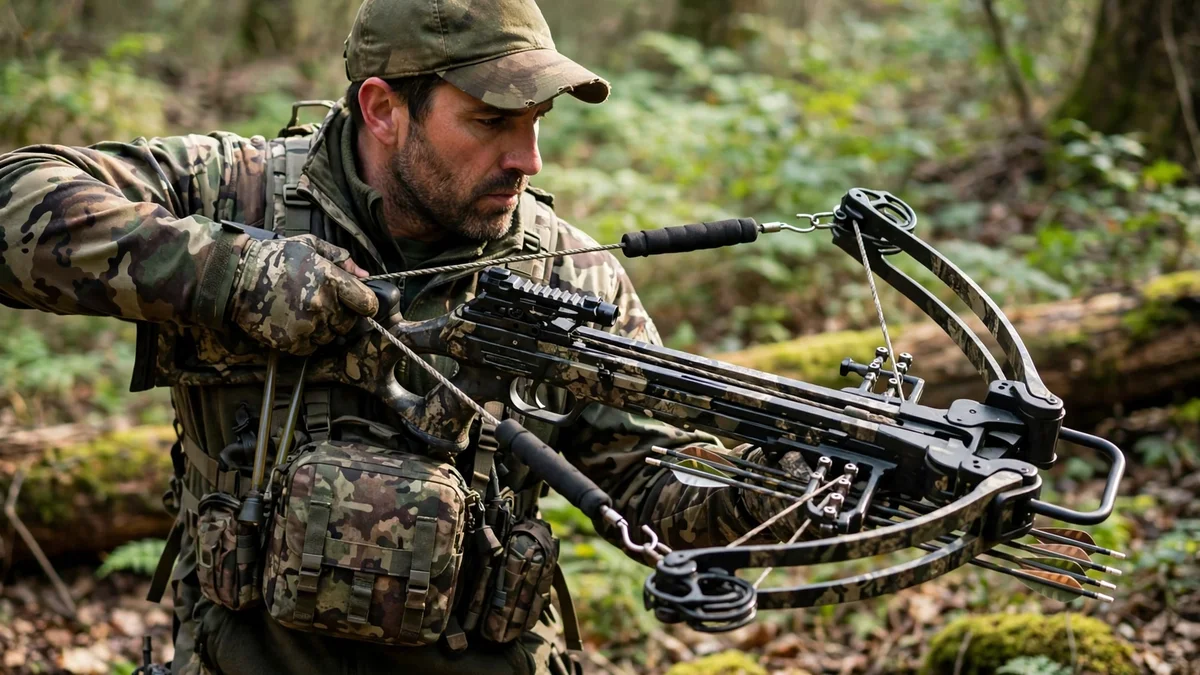
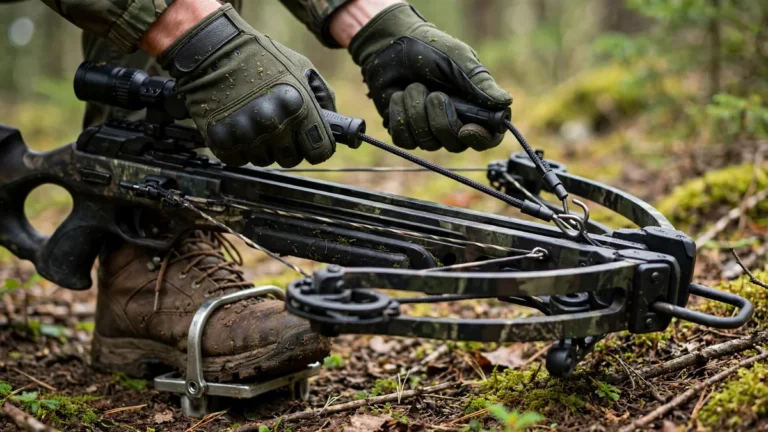
No, and this is the most important correction in this guide. Draw weight is the force stored in the limbs. Cocking effort is the force I actually pull with my hands or a device. A cocking device is a lever, a pulley, or a screw drive that trades distance and time for force, so a 200 lb bow can be cocked with 5 to 17 lb of hand effort. Confusing the two numbers is how a beginner either buys a bow they cannot cock or fears a bow they could easily cock with a crank.
Here is the worked comparison that made it click for me. A 220 lb T-Rex cocked with a 5 lb ACUdraw style device needs 5 lb from the hunter, while the same 220 lb bow cocked by hand needs the full 220 lb. A 150 lb Whitetail Hunter II cocked with a rope cocker needs about 75 lb from the hunter, because a rope cocker roughly halves the pull. A Ravin R500 with 17 lb VersaDrive effort is easier on the shoulders than a 150 lb bow cocked by hand with no device at all. The draw weight never changed in any of those examples. Only the tool between my hands and the string changed.
| Bow or device | Draw weight | Cocking effort | How it works |
|---|---|---|---|
| TenPoint ACUdraw, plain | Varies by bow | 5 lb | Rope and sled cocker, built in or detachable. The 5 lb figure is the hand effort, not the draw weight. |
| TenPoint ACUdraw De-Cock | Varies by bow | 5 lb | Same 5 lb effort, plus safe de cocking. |
| TenPoint ACUdraw Silent | Varies by bow | 5 lb | Same 5 lb effort, quieter operation. |
| TenPoint ACUdraw Pro | Varies by bow | 8.5 lb | Higher effort variant. State which ACUdraw per product, never just ACUdraw 5 lb without naming the variant. |
| TenPoint ACUslide MAXX, on TX Ultra | Not stated here | 13.3 lb tested | Built in cocking and de cocking system. Do not state 5 lb for any MAXX bow. The 5 lb figure belongs to ACUdraw, not ACUslide MAXX. |
| Ravin R500 VersaDrive | Not stated here | 17 lb | Screw drive crank. Not 12 lb. VersaDrive is a screw drive, distinct from Versa-Draw. |
| Ravin R10X Pro Versa-Draw | Not stated here | 12 lb | Crank system. Versa-Draw, not VersaDrive. |
| TenPoint Titan X | Not stated here | 5 lb | Cocking effort 5 lb. Do not confuse it with the 5 lb ACUdraw figure. They are separate facts that happen to match. |
| Excalibur Charger X, built into Rev X and Hybrid X | Not stated here | 16 lb verified | Integrated crank. Built in, no standalone price. |
| Excalibur Charger EXT, detachable accessory | Varies by bow | 12 lb | Separate detachable crank, about $250. The about $85 figure is stale and wrong, never use it. |
| Rope cocker, generic | Varies by bow | Roughly half the draw weight | A rope cocker roughly halves the pull: a 150 lb bow feels like about 75 lb, a 200 lb bow feels like about 100 lb. The exact reduction depends on the pulley setup, so present it as approximate. |
ACUdraw needs a warning of its own, because it is four different systems and writers keep collapsing them into one name. Plain ACUdraw is 5 lb with no safe de cock. ACUdraw De-Cock is 5 lb with safe de cock. ACUdraw Silent is 5 lb. ACUdraw Pro is 8.5 lb. Always name which one, per product. The TX Ultra costs about $2,300, and its ACUslide MAXX effort is 13.3 lb tested. Never state 5 lb for a MAXX bow. The R10X Pro costs about $1,850, weighs 7.95 lbs bare against 8.9 lbs as tested, measures 6.5 inches cocked, and uses Versa-Draw at 12 lb. The R500 costs about $2,650, measures 3.6 inches cocked and 28 inches long, and uses VersaDrive at 17 lb. The TRX Ultra costs about $3,500. The Titan X costs about $800, weighs 7.3 lbs, has a trigger listed at 3.5 lb against 4.4 lb tested, and tested at 400 fps with a 410 grain bolt. The Turbo X costs about $1,300 and tested at 415 fps. The Rev X TD costs about $1,900. For the full step by step on cocking, read the cocking basics guide, and for every device compared side by side, read the best cocking device guide. Cocking safety, never dry firing, finger position, and de cocking are covered in the safe-handling.
How Do I Choose the Right Draw Weight?
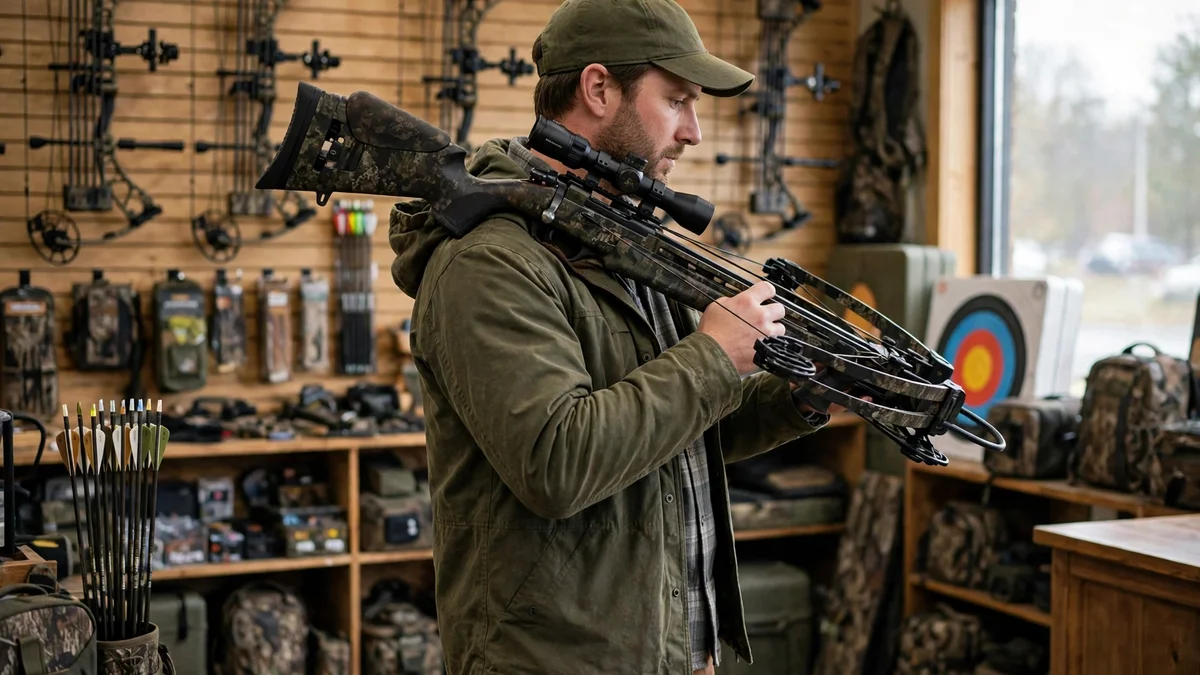
My decision order is state law first, game second, body third, budget fourth. If the bow cannot meet the state minimum, it is not a choice. If it cannot deliver enough energy for the game, it is not a choice. If I cannot cock it consistently, cold, tired, in a treestand, it is not a choice, unless a crank closes the gap. Budget comes last, because a cheap bow I cannot cock or cannot legally hunt with is not a bargain.
Start With Your Body, Not the Flagship
Strength, age, disability, and injury belong in this decision, not as an afterthought. A crank or an integrated cocking system is not a luxury for many hunters. It is what makes hunting possible. If your shoulders will not do it by hand, a crank closes the gap, and there is nothing second rate about that. Smaller framed hunters should look at the women’s picks guide, which covers crank options and lower strength setups, and young hunters should start with the youth picks guide, which covers youth draw weights and the cocking test below.
Start low, and prioritize a bow you can cock and shoot accurately over a flagship you cannot cock. A 150 lb bow you cock cleanly every time beats a 250 lb bow you dread cocking. That is true for youth and smaller framed hunters, and it is true for me too. Accuracy comes from a bow you can handle without straining, not from the biggest number on the shelf.
Use the Three Cock Test
Before you buy, use this test. If you cannot cock the bow three times in a row without straining, it is too much bow for you without a device. Try it cold, not warmed up after practice, and try it the way you will actually cock it in the field, with the device you will actually carry. If the bow passes with a crank and fails by hand, that is a fine result, as long as you will always have the crank with you. If it fails even with the device, step down in draw weight or step up in cocking help. The glowing nocks guide is worth a read once you have a bow you can cock, because seeing the bolt in flight helps you learn from every shot, and the archery benefits guide is a good reminder of why the practice is worth it. Pack for a long sit with the hunting pack guide, and after you choose a draw weight, sight in with the chosen bolt weight using the zeroing guide guide.
Know the Trade Offs of High Draw Weight
More draw weight is not free. It means more wear on strings, limbs, and servings, more noise and vibration, more fatigue across a day of practice, and magnified shooter errors. A heavy bow punishes a rushed shot more than a light bow does, because every small error in form is amplified by the extra energy. That is another reason to pick the lowest draw weight that meets the law and the game, rather than the highest draw weight you can afford. The Barnett Whitetail Pro STR is covered in its own guide at Barnett Whitetail Pro STR, and it is worth comparing against the Whitetail Hunter II when you weigh draw weight against price and cocking ease.
Can I Change the Draw Weight on My Crossbow?
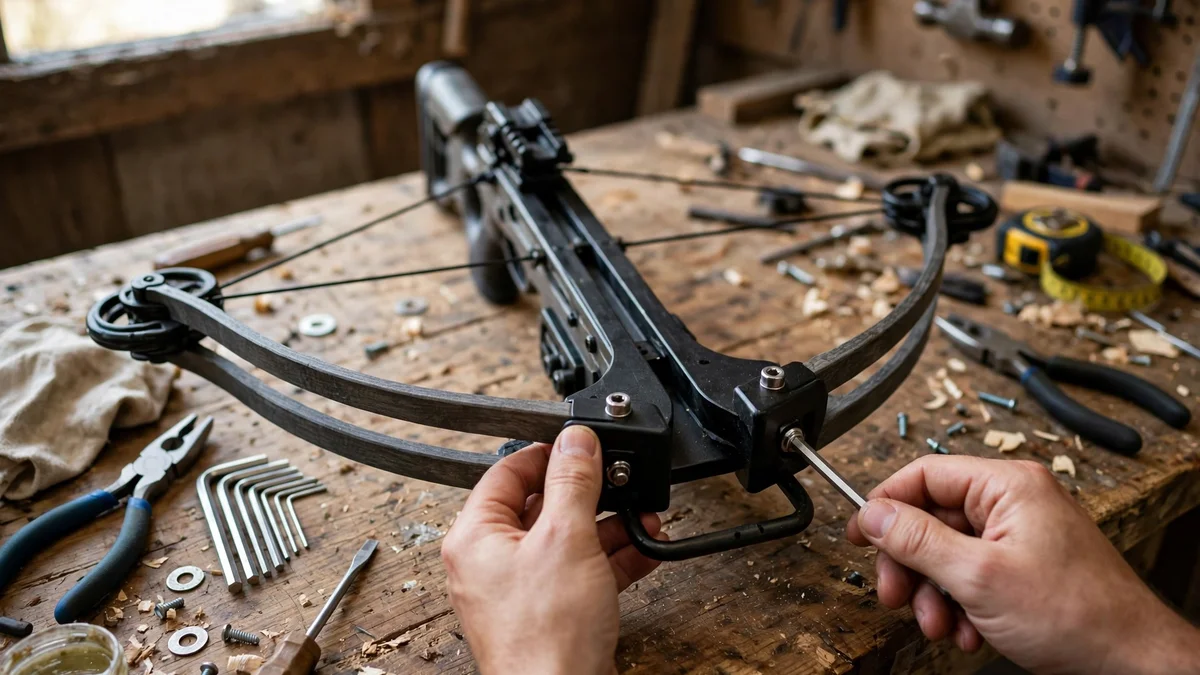
Most crossbows do not have an adjustable draw weight range the way vertical compound bows do. Do not loosen limb bolts to lower draw weight. That advice belongs to vertical bows and is unsafe as crossbow guidance. If a crossbow draw weight needs changing, the correct routes are a different limb set where the manufacturer offers one, or a different bow. Verify any adjustment claim against the manufacturer manual for the specific model before stating it or acting on it, and follow the manual for your exact model. The old live article on this topic said many modern bows offer a weight adjustment range and that changing limbs or modules can adjust draw weight. That is vertical bow guidance, and this rewrite does not repeat it.
That old article had other problems this rewrite fixes. It talked about recurve bows, compound bows, and longbows, and never once addressed crossbows specifically. It never mentioned cocking, a trigger, a power stroke, or a bolt. It had no draw weight range, no speed, no kinetic energy, no state minimum, no model, and no price. It said draw weight determines how much energy is transferred and never quantified it. It talked about drawing and holding the bowstring steadily, which is vertical bow language, because on a crossbow the trigger holds the weight once cocked. This guide replaces all of that with crossbow first numbers, and it carries a 2026 date and a regulations change warning, because state rules change every season.
Frequently Asked Questions
What is crossbow draw weight in simple terms?
It is the peak force, in pounds, needed to pull the string back to the latched, cocked position. It is the energy stored in the limbs. Once cocked, the trigger holds the full weight, so you hold zero pounds while you aim. Most hunting crossbows draw 150 to 220 lb.
How much draw weight do I need for deer?
The consensus recommendation for whitetail and mule deer is 150 to 175 lb, with deep penetration on broadside shots inside 40 yards. That is a recommendation, not law. Check the state minimum in the table above first, because the law comes before the recommendation. A crossbow of 150 lb or more clears the legal minimum in every state checked in this research.
Does more draw weight always mean more speed?
No. Power stroke, limb and cam efficiency, and bolt weight matter just as much. The Excalibur Micro MAG 340 has a 270 lb draw weight and only 340 fps, the lowest speed in the KE table, because it is a short recurve with a short power stroke. A 165 lb bow can shoot anywhere from 300 to over 400 fps depending on the bow. Judge a bow by the speed and energy it delivers with a stated bolt weight, never by draw weight alone.
What is the difference between draw weight and cocking effort?
Draw weight is the force stored in the limbs. Cocking effort is the force you actually pull with your hands or a device. A cocking device is a lever, a pulley, or a screw drive that trades distance and time for force, so a 200 lb bow can be cocked with 5 to 17 lb of hand effort. For example, the Ravin R500 VersaDrive takes 17 lb of effort, the Ravin R10X Pro Versa-Draw takes 12 lb, the TenPoint ACUslide MAXX on the TX Ultra takes 13.3 lb tested, and plain ACUdraw takes 5 lb.
How do I calculate kinetic energy for my crossbow?
Use KE in foot pounds equals bolt weight in grains times velocity in feet per second squared, divided by 450,240. For example, a 400 grain bolt at 400 fps gives 400 times 400 times 400 divided by 450,240, which is about 142 ft-lb. Always state the bolt weight with the KE figure. Speed is squared, so a small speed gain adds far more energy than the same proportional weight gain.
How much kinetic energy do I need for deer?
There is no settled minimum, so be wary of any source that gives one number as fact. Published recommendations for deer range from 25 to 75 ft-lb, clustering around 40 ft-lb at impact, and for elk and bear around 65 ft-lb at impact. Every model in the KE table above clears 100 ft-lb at the muzzle, so any modern hunting crossbow in the table has far more energy than the debated minimums. The real limits are retained energy at range, shot placement, and broadhead performance.
What is the minimum draw weight in my state?
It varies by state. In the states verified in this guide, Alabama is 85 lb, Ohio is 75 lb, Michigan and Wisconsin and New York and North Carolina are 100 lb, and Arkansas and Pennsylvania and West Virginia are 125 lb. Georgia has no minimum. New York has no maximum since the 2025 law removed it. Texas is not listed because the figure could not be verified from a primary source. Check your current state regulations before you hunt, because rules change every season.
Can I change the draw weight on my crossbow?
Most crossbows do not have an adjustable draw weight range the way vertical compound bows do. Do not loosen limb bolts to lower draw weight. That is vertical bow advice and is unsafe as crossbow guidance. The correct routes are a different limb set where the manufacturer offers one, or a different bow. Verify any adjustment claim against the manufacturer manual for your exact model.
Can I cock a 200 lb crossbow if I am not very strong?
Often yes, with a device. A rope cocker roughly halves the pull, so a 200 lb bow feels like about 100 lb. A crank does far more: plain ACUdraw takes 5 lb of hand effort, the Excalibur Charger EXT takes 12 lb, and the Ravin R500 VersaDrive takes 17 lb. Use the three cock test. If you cannot cock the bow three times in a row without straining, even with the device, it is too much bow for you. A crank or an integrated cocking system is not a luxury for many hunters. It is what makes hunting possible.
Does let off apply to crossbows?
Not in the way it applies to a vertical compound bow. On a vertical compound, let off drops the holding weight at full draw so the archer holds less while aiming. On a crossbow, the trigger latch holds the string, so you hold zero pounds while aiming and there is nothing to let off. Do not describe a crossbow as having let off unless the manufacturer uses that term for that exact model.
Keep Learning
- How to Choose a Crossbow: A Beginner’s Buying Guide
- How to Cock a Crossbow Safely: Rope and Crank Methods
- Best Crossbow Cocking Device 2026: Rope vs Crank vs Built-In Compared
- Best Crossbows 2026: Tested Picks for Every Budget
- Best Crossbow for Beginners: 5 Picks to Start Hunting Right
- Best Crossbow for the Money: 7 Picks That Punch Above Their Price
- Best Crossbows for Women: 5 Picks That Fit Right
- Best Youth Crossbow: Safe Starter Picks for Young Hunters
- How to Sight In a Crossbow in 5 Steps
- Best Crossbow Bolts 2026: How to Choose
- Crossbow Arrows Guide
- Crossbow vs Compound Bow: Which Should You Hunt With?
- Best Crossbow for Elk Hunting 2026: Power for the West
- Crossbow Safety Guide: How to Handle Every Bow Safely