Best Rangefinder for Crossbow Hunting 2026: 6 Compared
Disclosure: This article contains affiliate links. If you buy through them, we may earn a commission at no extra cost to you. It helps keep our reviews independent and honest. See our affiliate disclosure for details.
The Short Answer
A crossbow hunter’s rangefinder is not a rifle hunter’s rangefinder with fewer yards. Your shots happen at 20–60 yards, usually from a treestand, where the number that matters is not the straight-line distance. It is the horizontal distance, because gravity only works on the horizontal part of the shot.
Buy a rangefinder with real angle compensation (Leupold calls it TBR, SIG calls it AMR, Vortex calls it HCD, Bushnell calls it ARC, Halo calls it Angle Intelligence), accurate to half a yard at close range, a scan mode for sweeping shooting lanes, and a red display you can read at first and last light. For most hunters, the Leupold RX-1400i TBR/W is the one I would hand you: Bow Mode built for archers, a 6-yard minimum range for treestand lanes, and a red TOLED display that stays readable when the light goes flat. On a tighter budget, the Vortex Crossfire HD 1400 gives you angle compensation, scan mode, and a lifetime warranty for noticeably less money.
One honest swap before we start: SIG’s KILO1000 shows out of stock on SIG’s own site and at least one retailer marks it discontinued. SIG’s current equivalent is the KILO1400BDX, so that is the model reviewed below.
Why a Crossbow Rangefinder Is a Different Tool Than a Rifle Rangefinder
Most rangefinder roundups are written for rifle hunters. They lead with 1,000-yard reflective ratings and ballistics engines built for 300-yard shots. None of that helps you. A crossbow is a 20–60-yard weapon: flat enough to 30 yards, then the bolt drops fast. Several inches between 30 and 40 yards is normal, and the difference between 40 and 45 yards can turn a heart shot into a high miss. You need these four things.
Angle compensation. Non-negotiable for treestand hunters. Explained in full below, because this is the single most misunderstood spec in the category.
Close-range accuracy and a short minimum range. Half-yard accuracy where you shoot (30–60 yards) and a unit that reads as close as 5–6 yards, because a deer can walk right under your stand.
Scan mode. Hold the button and sweep your shooting lanes before the deer shows up. Pre-ranging lanes at first light is one of the highest-value habits in treestand hunting; our treestand tips guide treats it as part of the stand setup routine.
Quiet, readable operation. Rangefinders are silent by nature, but the display must be readable at dawn and dusk (red OLED/TOLED beats black LCD in flat light), and any audio beep should be defeatable.
What Is Angle Compensation? The Treestand Problem in Plain English
Here is the problem every treestand hunter has felt even if nobody named it for them. You are 20 feet up a tree. A deer steps out at what your rangefinder calls 35 yards. You hold your 35-yard mark and the bolt flies over its back. What happened?
Gravity only pulls the bolt down over the horizontal part of the trip, but the laser measures the straight line from your hand to the deer, which is always longer. From a 20-foot stand, a deer that reads 35 yards line-of-sight is only about 34 yards of horizontal travel, so the bolt flies flatter relative to your line of sight and lands high.
An angle-compensating rangefinder carries a tiny inclinometer that measures the slope angle and does the triangle math for you, handing you the shoot-to distance your aim should be based on. Every manufacturer gives it a brand name, so here is the translation:
- Leupold TBR (True Ballistic Range): Bow Mode returns the angle-compensated shoot-to range; TBR/W adds wind compensation for rifle shooters.
- SIG AMR (Angle Modified Range): the equivalent horizontal range, usable with any holdover reference.
- Vortex HCD (Horizontal Component Distance): the angle-compensated distance; the manual’s primary mode.
- Bushnell ARC (Angle Range Compensation): Bow Mode shows true horizontal distance beside the line-of-sight number.
- Halo Angle Intelligence: true horizontal distance on sloped shots.
The rule I hunt by: from a stand, always range in the angle-compensating mode, and range the spot the deer is likely to stand, not the deer itself. Lasers read the first solid thing they hit, so a branch at 25 yards will steal the reading off a deer at 32. Range your lanes when you settle in, pick landmarks at 20, 30, and 40 yards, and when the deer arrives you already know the number.
The 6 Best Rangefinders for Crossbow Hunting: Quick Comparison
Every number below is the manufacturer’s advertised figure, ranked by deer range rather than the headline reflective number, because a deer’s hide returns far less laser light. Note that every unit here ranges far beyond any ethical crossbow shot: the big deer ratings just mean laser headroom, so at 40 yards you get an instant reading. For most hunters the ethical ceiling sits well under 60 yards. See our crossbow safety guide for the full discussion.
| Model | Angle comp mode | Deer range (advertised) | Min range | Weight | Display | Typical price |
|---|---|---|---|---|---|---|
| Leupold RX-1400i TBR/W | TBR (Bow Mode) | 900 yd | 6 yd | 5.1 oz | Red TOLED | ~$200 |
| SIG Sauer KILO1400BDX | AMR | 750 yd | Not published | 5.0 oz | Black LCD (red illuminated reticle) | ~$180 |
| Vortex Crossfire HD 1400 | HCD | 750 yd | 5 yd | 4.8 oz | Red TOLED | ~$180 |
| Bushnell Prime 1500 | ARC (Bow Mode) | 600 yd | 5 yd | 6.3 oz | Black LCD | ~$190 |
| Halo Z1000 | Angle Intelligence | 600 yd (nonreflective) | Not published | Not published | Black LCD | ~$130 (MSRP $149.99) |
| Leupold RX-FullDraw 5 | TBR-Archery | 900 yd | 6 yd | 7.5 oz | Red OLED | ~$500 (MSRP $499.99) |
Best Overall: Leupold RX-1400i TBR/W
Deer Range: 900 yd advertised | Price: ~$200 | Weight: 5.1 oz
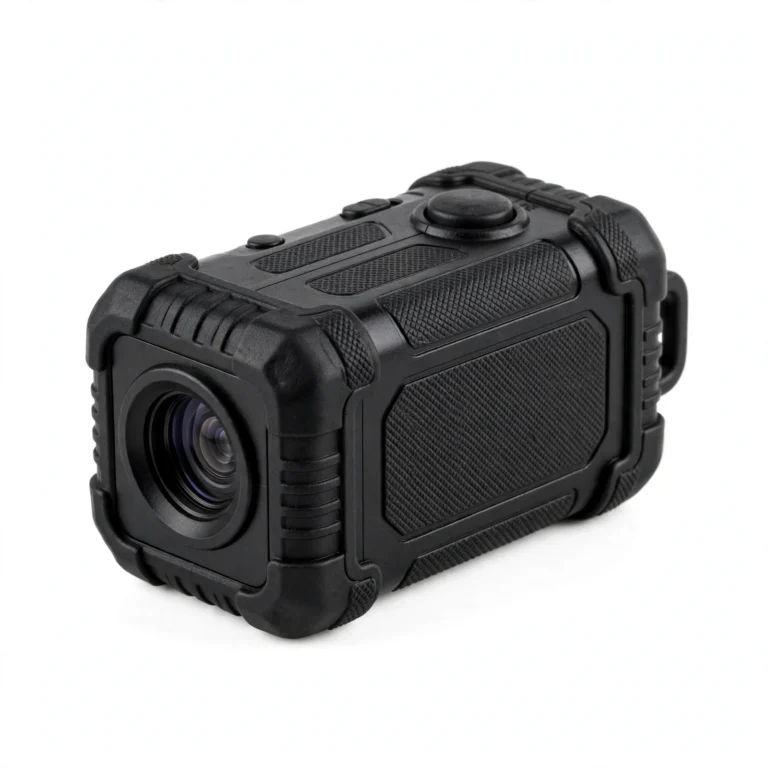
This is the unit I would buy if I owned one rangefinder for crossbow season. Bow Mode is the star: one mode, built for archers, that returns the angle-compensated shoot-to number without rifle ballistics you will never use. The 6-yard minimum range matters more than it looks, because close deer are common from a 15–20-foot stand and plenty of rangefinders go blind under 10 yards. The red TOLED display stays readable at first and last light, when black-LCD units turn into gray guesses. Last Target mode reads the farthest target in the beam instead of the twig when light brush sits between you and the deer. Pair it with a practiced sight-in routine and it covers everything a crossbow hunter asks a rangefinder to do.
Pros
- Dedicated Bow Mode: angle-compensated shoot-to range with no rifle clutter
- 6-yard minimum range, best in class for close treestand shots
- Red TOLED display readable at dawn and dusk
- Last Target mode reads through light brush
Cons
- Flightpath obstruction tech is NOT on this base model (only the Gen 2 / Mossy Oak variant)
- CR2 battery, not the AAAs some hunters prefer to stock
Who it is for: the treestand hunter who wants one rangefinder that does the archery job perfectly for around $200. Check the typical price on Amazon:
Best Readings: SIG Sauer KILO1400BDX
Deer Range: 750 yd advertised | Price: ~$180 | Weight: 5.0 oz
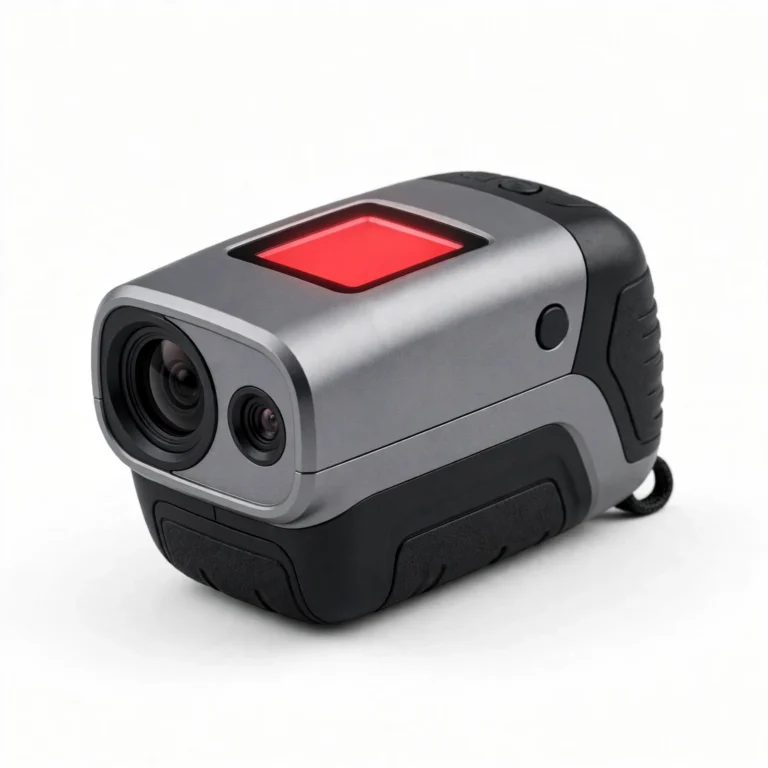
As noted up top: the KILO1000 is the discontinued predecessor. SIG’s site shows it out of stock and at least one retailer lists it as discontinued, so the KILO1400BDX is SIG’s current equivalent and the unit I am comfortable recommending. It is the fastest-feeling rangefinder here. HyperScan refreshes four times per second in scan mode, and the tenth-yard resolution under 100 yards is a genuine crossbow advantage at 20–60 yards. The 6x magnification is the strongest in the group, handy for picking a deer’s shoulder out of brush. One honest flag: the BDX Bluetooth system and its ballistic app are rifle tools that do nothing for a crossbow. New to the whole setup? Our beginner crossbow guide covers how ranging fits into learning your effective range.
Pros
- Fastest scan in the group (4 readings per second)
- Tenth-yard resolution under 100 yd, ideal for 20–60 yd crossbow shots
- Strongest magnification (6x) for picking targets out of cover
- Advertised ±0.5 yd accuracy to 500 yd, far beyond crossbow needs
Cons
- BDX Bluetooth/app is rifle-focused; no crossbow benefit
- Minimum range not published by SIG; very close targets are unconfirmed
Who it is for: the hunter who wants the fastest, most granular readings at archery distances. Check the typical price on Amazon:
Best Value: Vortex Crossfire HD 1400
Deer Range: 750 yd advertised | Price: ~$180 | Weight: 4.8 oz
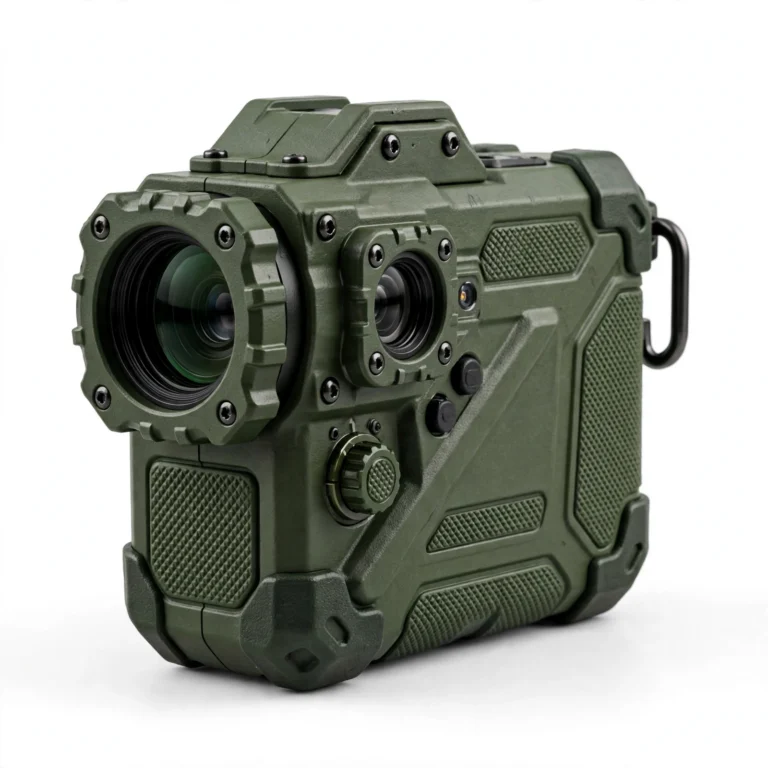
This is the pick I recommend to budget-minded hunters more than any other, and the reason is the warranty as much as the specs. Vortex’s VIP warranty is genuinely unconditional: break it, drop it out of a stand, and they repair or replace it. For a tool that lives in a coat pocket through rain, snow, and treestand climbs, that matters. HCD is the angle-compensation mode the manual calls primary, the 5-yard minimum range handles close-stand deer, and the three target modes (Normal, First, Last) cover every treestand situation: First locks the nearest return, Last reads the farthest through rain or light cover. The red TOLED display matches the Leupold’s readability at low light. Accuracy is advertised at 1 yard at 100 yards rather than the Leupold’s half yard, the one place the cheaper price shows. Pair it with one of the value bows in our best crossbows under $500 guide and you have a complete budget rig.
Pros
- Unconditional lifetime warranty, best in the category
- 5-yard minimum range and full target-mode set (Normal/First/Last)
- Red TOLED display for low-light sits
- Strong value at a typical ~$180 street price
Cons
- Advertised accuracy is ±1 yd at 100 yd, not ±0.5 yd like the top picks
- No dedicated archery-only mode; HCD serves both bow and rifle
Who it is for: the hunter who wants near-flagship capability, the best warranty in optics, and money left for bolts. Check the typical price on Amazon:
Best Bow-Mode Interface: Bushnell Prime 1500
Deer Range: 600 yd advertised | Price: ~$190 | Weight: 6.3 oz
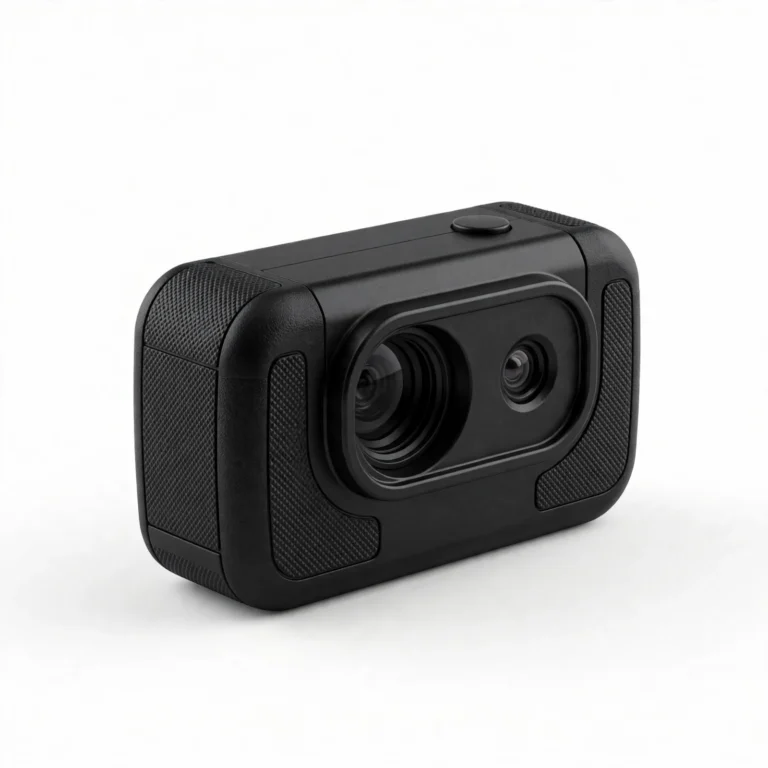
The Prime 1500’s Bow Mode is the clearest angle-compensation interface I have used: it shows the line-of-sight distance and the true horizontal distance together, so you see the correction happening instead of trusting a black box. Brush Mode ignores foreground clutter when a lane is not perfectly trimmed; BullsEye locks small or close targets without background interference. The trade-offs: 6.3 ounces makes it the heaviest of the mainstream picks, the black LCD is harder to read than red TOLED at last light, and the 600-yard deer rating is the lowest here (still far beyond any crossbow shot, so treat it as laser headroom, not a limitation). The EXO Barrier coating, which sheds water and fog off the objective lens, earns its keep on damp November mornings. It slots naturally into a mid-budget kit like the ones in our best crossbow for the money guide.
Pros
- Bow Mode shows line-of-sight AND true horizontal distance side by side
- Brush and BullsEye modes solve real treestand lane problems
- EXO Barrier coating sheds rain and fog
Cons
- Heaviest mainstream pick at 6.3 oz
- Black LCD display, weaker at dawn/dusk than red TOLED
- 600-yd deer rating is lowest in the group (still plenty for crossbows)
Who it is for: the hunter with brushy lanes who wants to see the angle correction explicitly. Check the typical price on Amazon:
Best Budget: Halo Z1000
Deer Range: 600 yd advertised (nonreflective) | Price: ~$130 | Weight: Not published
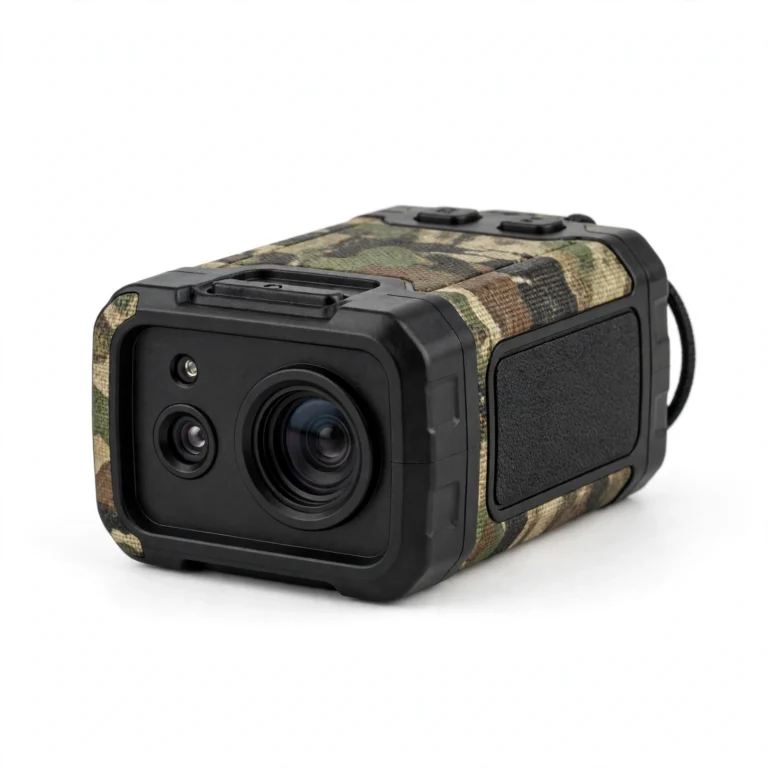
The Z1000 exists for one reason: it puts angle compensation in your pocket for the least money from an established optics brand. Angle Intelligence returns the true horizontal distance on sloped shots, the 6x magnification matches units costing more, and Auto Acquisition means one-button ranging with no mode confusion for a new hunter. I recommend this to beginners pairing it with an entry-level bow from our under-$500 crossbows guide: the money you save goes toward practice bolts. The honest limitations: accuracy is advertised at ±1 yard rather than half a yard, the black LCD is harder to read in the last ten minutes of light, and Halo’s own product page could not be located, so these specs come from multiple consistent retailers. It publishes no minimum range, so test yours on a close target first.
Pros
- Cheapest angle-compensating rangefinder from a known brand
- Simple one-button operation, good for new hunters
- 6x magnification at a budget price
Cons
- Advertised ±1 yd accuracy, not ±0.5 yd
- Black LCD is harder to read at dawn/dusk
- Minimum range not published; untested on very close targets
- Manufacturer product page not locatable; specs from retailers
Who it is for: the new hunter who needs angle compensation on day one and would rather spend the savings on bolts. Check the typical price on Amazon:
Best Dedicated Bowhunter: Leupold RX-FullDraw 5
Deer Range: 900 yd advertised | Price: ~$500 | Weight: 7.5 oz
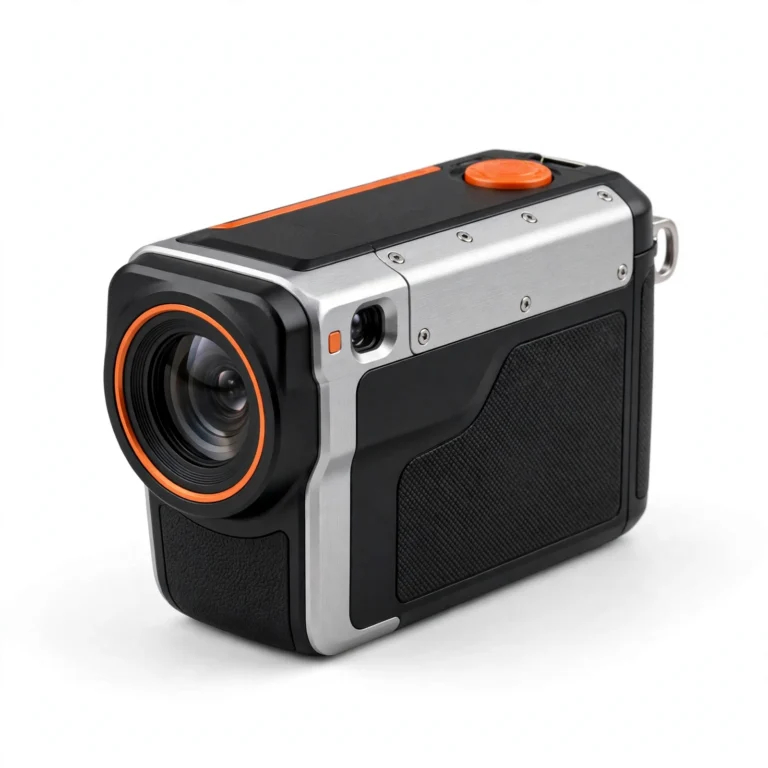
The RX-FullDraw 5 is the only rangefinder here built exclusively for archers, and it shows. Flightpath is the feature nothing else in this roundup has: it shows you the highest point of your arrow’s flight, so you can tell whether that limb hanging over the lane will eat your bolt before you ever draw. It works out to a typical 85 yards. Archer’s Advantage takes your setup’s velocity, arrow weight, and shot angles and computes ranges tuned to your actual rig. One honest caveat for crossbow hunters: the software asks for peep height, a vertical-bow concept with no direct crossbow equivalent, so you will adapt the inputs rather than filling them in literally. It is also the heaviest unit here at 7.5 ounces and costs roughly what a good entry-level crossbow costs. Is it overkill for a crossbow that shoots 40 yards? Mostly, yes. But if you also bowhunt with a vertical bow, nothing else touches it. Shoppers comparing premium setups in our best crossbows under $1,000 guide are its natural audience.
Pros
- Only archery-dedicated rangefinder in the roundup
- Flightpath shows arrow obstructions before you shoot
- Archer’s Advantage computes ranges for your specific setup
- Red OLED display, excellent in low light
Cons
- $499.99 MSRP, the most expensive pick by far
- Heaviest unit here at 7.5 oz
- Peep-height input is a vertical-bow concept; crossbow users must adapt it
Who it is for: the serious bowhunter who wants the most advanced archery ranging available and accepts the premium. Check the typical price on Amazon:
Handheld Rangefinder or Rangefinding Scope: Which Do You Need?
A handheld rangefinder (everything above) ranges any target you point it at, then you hold the right mark in your scope. A rangefinding scope ranges with a button on the scope and lights up the correct holdover dot automatically. The Garmin Xero X1i and Burris Oracle X both range and compute the hold for you, and TenPoint’s Vision HD system follows the same idea. Our best crossbow scope guide covers them in detail. Many hunters also pair a handheld with one of the simple optics in our best red dot for crossbow roundup for a fast, light treestand rig. My honest take after eight seasons: a handheld plus a practiced scope is the more versatile setup, and it is what I hunt with.
A handheld wins if you shoot multiple bows or hunt on a budget. A rangefinding scope wins if you want the fastest possible shot sequence and never want to juggle two devices with gloves on.
How I Range From a Treestand: The Routine That Actually Works
Range the lanes before the deer, not the deer before the shot. When I settle into a stand, I scan-sweep my shooting lanes and memorize three numbers: the close lane marker, the mid marker, and the far edge. When a deer walks into the close marker, I already know the range.
Range in angle-compensating mode, always. Set Bow Mode, AMR, HCD, ARC Bow, or Angle Intelligence once and leave it there for the season. Compare the compensated number against line-of-sight once so you learn how big the correction is from your stand height. Then trust the compensated number.
Learn First and Last target modes before you need them. First locks the nearest return (the deer, not the hillside behind it). Last reads through rain, snow, and light grass. From a stand in November weather, Last mode is the one that saves a hunt.
Keep it accessible and silent. Chest pocket or a tethered harness pouch, never the bottom of a pack. Turn off any audio beep. And when the day ends: lower the bow on a haul line, unload, and de-cock before you climb down, as our uncocking guide and cocking guide both insist. Complete the field kit with a cocking device you trust and a quiver that stays quiet in the stand.
What to Look For When You Buy: The Crossbow Checklist
Use this checklist against any rangefinder, including ones not in this roundup, ordered by what matters at 20–60 yards.
- Angle compensation with an archery-friendly mode. Bow Mode, AMR, HCD, ARC Bow, or Angle Intelligence. Rifle-only ballistics do not count.
- Half-yard accuracy at close range. ±0.5 yd is the standard worth paying for; ±1 yd is acceptable on a budget.
- Minimum range of 10 yards or less. Six yards or less is ideal for treestand hunting.
- Scan mode. Hold the button, sweep the lanes. Non-negotiable for stand setup.
- First and Last target modes. For brush, rain, and background clutter.
- Red OLED/TOLED display. Readable at first and last light beats a brighter spec sheet you cannot see.
- Deer range of at least 400–500 yards advertised. Laser headroom means instant readings at 40 yards.
- Water resistance. IPX4 or equivalent. November is wet.
Still choosing the bow itself? Start with our how to choose a crossbow guide or the best hunting crossbow roundup, then match the rangefinder to the weapon. And for a quiet carry system, see our crossbow sling guide.
Frequently Asked Questions
Do I really need a rangefinder for crossbow hunting?
Yes, and more than a rifle hunter does. A rifle bullet flies flat enough that a 10-yard ranging error at 200 yards barely matters. A crossbow bolt drops several inches between 30 and 40 yards, so a 5-yard guessing error at 40 yards can mean a miss or a wounded deer. See the ethical-distance principles in our crossbow safety guide.
What exactly does angle compensation do?
It corrects for slope. A laser measures the straight line to the target, but gravity only acts over the horizontal part of the shot. From a treestand the straight line is always longer, so without compensation you hold for too many yards and shoot high. The rangefinder’s inclinometer measures the angle and returns the shorter shoot-to distance. Leupold calls it TBR, SIG calls it AMR, Vortex calls it HCD, Bushnell calls it ARC, Halo calls it Angle Intelligence.
Can I just use my rifle rangefinder for my crossbow?
Only if it has an archery or angle-compensation mode. Many rifle rangefinders compensate using bullet ballistics, which mean nothing to a bolt, or they go blind under 10–15 yards, exactly where treestand deer appear. Check for a Bow or angle-comp mode, a minimum range of 10 yards or less, and half-yard accuracy at close range.
Should I buy a handheld rangefinder or a rangefinding scope?
A handheld is the versatile, budget-friendly choice: it works with any bow, ranges anything you point it at, and costs far less than an integrated scope. A rangefinding scope ranges with a scope-mounted button and lights up the holdover for you, which is faster but locks you into one expensive optic on one bow. See our best crossbow scope guide for the integrated options.
What is scan mode, and when do I use it?
Hold the range button and the unit updates the reading continuously as you sweep across the landscape. Use it when you first settle into a stand to map your shooting lanes: sweep left to right and note the distances to trees, stumps, and trail crossings at 20, 30, and 40 yards. When a deer steps into a pre-ranged lane, you already know the number.
What is the difference between First and Last target modes?
Both solve the “what did the laser actually hit?” problem. First mode returns the nearest target in the beam, locking the deer instead of the brush behind it. Last mode returns the farthest target, punching through rain, snow, or light grass. Learn both before the season, not during it.
How far is too far to shoot a deer with a crossbow?
For most hunters, the ethical ceiling is well under 60 yards, and many keep it at 40 or under. Beyond that, bolt drop becomes severe, wind drift grows, and the deer can move enough between the shot and the bolt’s arrival to turn a good shot bad.
Does the display type really matter at dawn and dusk?
Yes, more than most specs. Deer move most at first and last light, exactly when black LCD displays wash out against a gray sky or dark timber. Red OLED and TOLED displays project the numbers in glowing red that stays readable in flat light.
The Bottom Line
A rangefinder is the cheapest accuracy upgrade in crossbow hunting. Buy for your actual shots: angle compensation for the stand, half-yard accuracy at 20–60 yards, scan mode for lane mapping, and a red display for the minutes that matter.
The Leupold RX-1400i TBR/W is the best all-around pick: purpose-built Bow Mode, a 6-yard minimum range, and a red TOLED display, all around $200. The Vortex Crossfire HD 1400 is the value king: near-flagship capability with an unconditional lifetime warranty for less. The SIG KILO1400BDX is the speed pick for hunters who live in scan mode. And the Halo Z1000 gets you real angle compensation for the least money in the category.
Whatever you choose, do the unglamorous work: range your lanes when you climb in, trust the compensated number, and know your distance limit before the deer shows up.
Affiliate note: The product links above are affiliate links, which means we may earn a commission if you buy through them, at no extra cost to you. We only recommend gear we would hunt with ourselves, and commissions keep this site’s reviews independent. Full details in our affiliate disclosure.